
Side Dishes
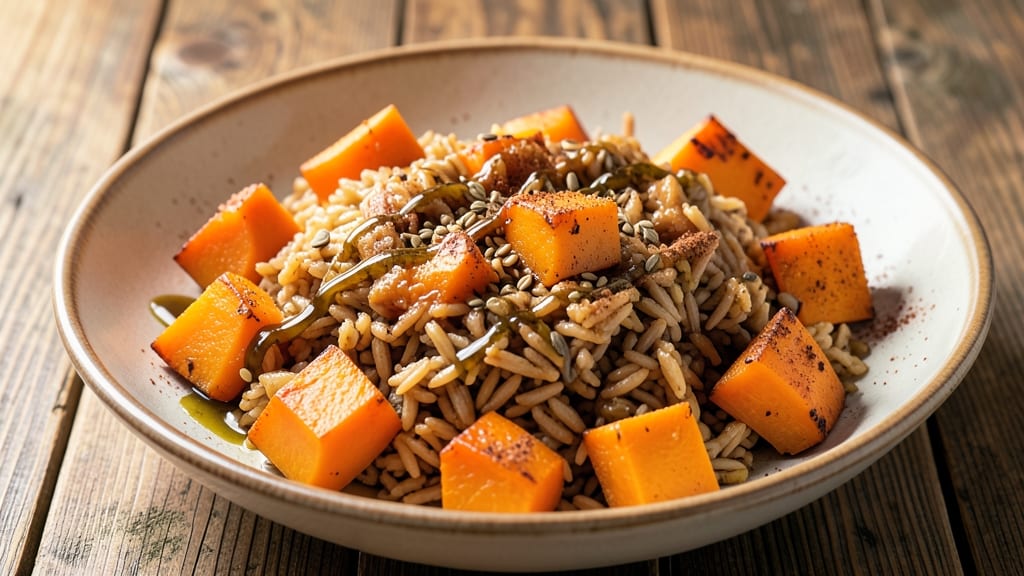
This brown rice and butternut squash recipe transforms simple ingredients into a hearty, vegetarian meal that balances earthy sweetness with nutty depth. The key lies in roasting the squash until tender and caramelized while cooking the brown rice in the same flavorful broth—minimal effort, maximum flavor.
The dish delivers a satisfying texture contrast, with creamy squash and chewy rice, all infused with warm spices like cinnamon and cumin.
What sets this recipe apart is its versatility—serve it as a standalone side for roasted meats or as a complete vegetarian main with a sprinkle of toasted pecans and fresh herbs.
The natural sweetness of the squash pairs beautifully with the nutty brown rice, creating a dish that feels both comforting and refined. Ready in under 45 minutes, this one-pan meal is perfect for weeknight dinners or meal prep.
Ingredients for brown rice and butternut squash
Twelve ingredients blend earthy sweetness with nutty depth for a vegetarian masterpiece.
| Ingredient | Amount | Notes |
|---|---|---|
| Medium Butternut Squash 🎃 | 1 ½ lb | Peeled, cubed, seeds removed |
| Long-Grain Brown Rice 🌾 | 1 cup | Uncooked, rinsed thoroughly |
| Vegetable Broth 💧 | 2 ½ cups | Low-sodium preferred |
| Extra-Virgin Olive Oil 🫒 | ½ cup | For roasting and tossing |
| Ground Cinnamon 🌿 | 1 tsp | Freshly ground preferred |
| Ground Cumin 🌿 | ½ tsp | Toasted for depth |
| Salt 🧂 | 1 tsp | Diamond Crystal preferred |
| Black Pepper 🌶️ | ½ tsp | Freshly cracked |
| Garlic Cloves 🧄 | 3 cloves | Minced finely |
| Fresh Thyme Leaves 🌿 | ¼ cup | Chopped, stems removed |
| Raw Pecans 🥜 | ¼ cup | Toasted, chopped |
| Fresh Parsley 🌿 | 0.15 cup | Chopped, for garnish |
| Maple Syrup 🍯 | 1 tbsp | Grade B preferred |
The butternut squash is the foundation—look for firm, heavy squash with no soft spots. Whole Foods or local farmers' markets carry the best quality, though standard grocery stores usually have reliable options. For the brown rice, jasmine or basmati varieties can substitute if brown isn't available, though the nutty flavor is key here. The vegetable broth should be rich and flavorful—Homemade or Pacific Foods brand are excellent choices. Toast your cumin seeds separately for an extra layer of complexity, though pre-ground works in a pinch. Garlic and thyme should be vibrant and fragrant—wilted herbs indicate old stock.
No butternut squash? Delicata or acorn squash works equally well, though the texture will differ slightly. Substitute maple syrup with agave nectar or date syrup if needed, though maple's caramel notes complement the dish perfectly. Fresh thyme and parsley can be swapped for dried at one-third the amount, but fresh imparts superior brightness. The pecans can be omitted entirely if nut allergies are a concern, though they add a delightful crunch. For extra depth, toast the pecans in the same olive oil used for roasting the squash—double flavor, minimal effort.
Store any leftovers in an airtight container in the refrigerator for up to 5 days, though this dish reheats beautifully. The squash softens further when reheated, so undercook slightly if serving immediately. For meal prep, portion into individual containers—pecans and herbs can be added fresh when serving. Freeze portions for up to 3 months by wrapping tightly in plastic wrap before sealing in a freezer bag. The dish also makes a stunning cold salad when cooled completely and dressed with a touch of lemon juice.
Why You'll Love This Recipe
- One-Pan Magic: I swear by this when I’m too tired to wash dishes—just roast the squash and rice together. The cinnamon caramelizes right into the broth, so you end up with a dish that’s basically self-saucing.
- Sweet-Savory Balance: That first bite of tender squash with its natural sweetness, then the warm, nutty brown rice—it’s like autumn in a bowl. Honestly, the cinnamon takes it from good to I’ll make this twice.
- Meal Prep MVP: I make a big batch on Sundays and eat it all week—lunch at work, dinner with friends, or straight from the fridge. The rice stays firm, and the squash reheats beautifully, so it’s my go-to for lazy days.
- Budget-Friendly Warmth: Brown rice and squash are cheap staples, but this feels like a fancy dish. Between us, I’ve served this to guests who thought it was gourmet, and they had no idea it cost me less than $10.
Step-by-step instructions for brown rice and butternut squash
This one-pan method delivers perfectly caramelized squash and nutty brown rice with minimal effort.
Prep and Roast the Butternut Squash
Preheat your oven to 400°F. In a large oven-safe skillet, toss the 1.5 lb medium butternut squash cubes with 0.25 cup extra-virgin olive oil, 1 tsp salt, 0.5 tsp black pepper, 1 tsp ground cinnamon, and 0.5 tsp ground cumin. Spread the squash in a single layer, leaving space between pieces for even browning.
Roast for 25-30 minutes, stirring once halfway through, until the edges are deep golden brown and the squash yields slightly when pierced with a fork. The squash should have a caramelized exterior while remaining tender inside—this balance is key to the dish's harmony. Remove the skillet from the oven and set aside temporarily.
Toast the Pecans and Sauté Aromatics
While the squash roasts, heat 0.25 cup extra-virgin olive oil remaining in a separate skillet over medium heat. Add the 0.25 cup raw pecans and toast for 3-4 minutes until fragrant and lightly golden. Remove the pecans with a slotted spoon and set aside on a paper towel-lined plate.
In the same skillet, add the 3 minced garlic cloves and 0.25 cup chopped fresh thyme leaves. Sauté for 30 seconds until the garlic is fragrant but not browned. This aromatic base will infuse the entire dish with depth. Transfer the garlic-thyme mixture to the roasted squash in the skillet.
Cook the Brown Rice
Add the 1 cup uncooked long-grain brown rice to the skillet with the squash and aromatics. Pour in the 2.5 cups vegetable broth and stir gently to combine. The liquid should just cover the rice—this ensures proper hydration without making the dish watery.
Return the skillet to the oven and cook for 40-45 minutes at 400°F, stirring once halfway through. The rice should be tender with a slight bite, and the liquid should be mostly absorbed. If it's still too moist after 45 minutes, cover the skillet with a lid and cook for an additional 5-10 minutes off the heat to steam.
Finish with Maple Syrup and Garnish
Remove the skillet from the oven and stir in the 1 tbsp maple syrup. This final touch balances the dish's earthy flavors with a subtle sweetness. Taste and adjust seasoning with additional salt if needed—the squash should be sweet, the rice nutty, and the pecans toasty.
Garnish with the 0.15 cup chopped fresh parsley and the toasted pecans. The parsley adds a bright finish, while the pecans provide texture and a nutty crunch. Serve immediately while the rice is warm and the squash is tender—this dish tastes best straight from the pan.
Pro Tips For Making Brown Rice And Butternut Squash
- CHAR THE SQUASH FIRST: I learned this the hard way—roasting the squash before cubing makes it tender faster and caramelizes the edges. Cut it in half, scoop out the seeds, brush the flesh with olive oil, and roast cut-side down at 400°F (200°C) for 30 minutes before dicing. The skin crisps up just enough to add texture without burning.
- SALT THE RICE WATER: Brown rice needs more salt than you’d think, especially since it absorbs broth. Use about 1½ teaspoons of salt per 4 cups of water—more if your broth is unsalted. Taste the cooking liquid after 20 minutes; if it’s bland, add a pinch. Under-seasoned rice ruins the whole dish.
- COOK THE RICE LOW AND SLOW: After the initial boil, drop the heat to a simmer and cover the pot. If you leave it at a rolling boil, the rice will turn mushy and release too much starch. A gentle simmer (small bubbles, occasional steam) guarantees fluffy, separate grains. Yes, it takes longer, but it’s worth it.
- TOAST THE CINNAMON: Skip the ground cinnamon straight from the jar—it tastes bitter and one-dimensional. Lightly toast a whole cinnamon stick in a dry pan over medium heat for 1-2 minutes until fragrant, then grind it fresh. The warm, nutty depth it adds to the squash and broth is the thing that makes this dish feel special. (Store the extra ground cinnamon in the fridge to preserve freshness.)
Essential equipment for perfect results
Oven-Safe Skillet
An oven-safe skillet is your secret weapon for this recipe—it eliminates extra pans and keeps flavors cohesive. I recommend a 12-inch cast iron skillet like the Lodge Pre-Seasoned for even heat distribution and natural non-stick properties.
Cast iron retains heat beautifully, ensuring your squash caramelizes perfectly while the rice cooks evenly underneath. If you don’t own cast iron, a stainless steel skillet (like All-Clad) works well too—just ensure it’s oven-safe up to 450°F. 🔥
Digital Meat Thermometer
For foolproof squash doneness, a digital instant-read thermometer (like the Thermoworks Thermapen) is a game-changer. Insert the probe into a squash cube when it looks tender—it’s ready at 200°F internal temperature. This prevents overcooking, which turns squash mushy.
I also use it to check rice doneness by inserting it into the center of the rice pile—it should read 205°F when fully cooked. No more guesswork!
Fine-Mesh Strainer
A fine-mesh strainer (like the OXO Good Grips) is perfect for rinsing your brown rice thoroughly before cooking. This removes excess starch, preventing gummy rice.
I also use it to drain any excess liquid from the roasted squash if needed—just place the skillet over the strainer for a few seconds to let moisture evaporate. A colander works in a pinch, but a fine-mesh strainer catches finer particles for a cleaner result.
Slotted Spoon
When toasting pecans and transferring aromatics, a slotted spoon (like the Mercer Culinary Genius) is indispensable. It lets you easily remove pecans from hot oil without drips, and its slots allow broth to drain when transferring the garlic-thyme mixture.
I keep one in my kitchen solely for this purpose—it’s worth the $10 investment for tasks like this. Avoid regular spoons, which can cause splattering.
Chef’s Knife
A sharp 8-inch chef’s knife (like the Wüsthof Classic) is essential for prepping butternut squash and chopping herbs. A dull knife makes squash prep dangerous and uneven. I always hone my knife before cutting squash to ensure clean, precise cubes.
For extra safety, use a squash cutter (like the Microplane Squash Cutter) if you’re uncomfortable with knives—it removes seeds and skin in one motion. 💪
Baking Sheet
If your skillet isn’t oven-safe or you’re roasting squash separately, a rimmed baking sheet (like the Nordic Ware Half Sheet Pan) is a must. Line it with parchment paper for easy cleanup. I like to spread squash cubes in a single layer to ensure even browning.
For large batches, use two sheets at once. A wire cooling rack placed over the baking sheet after roasting helps prevent soggy squash while cooling.
Nutrition facts
Frequently asked questions
Can I use regular white rice instead of brown?
While you can substitute white rice, you'll lose the nutty depth and extra fiber that make brown rice perfect for this dish. If you must use white rice, reduce the cooking time to 30-35 minutes (it cooks faster) and consider adding a pinch of cinnamon to mimic the brown rice's earthiness. The texture will be softer, but the sweet-savory balance will still shine.
How do I store leftovers without drying out the squash?
Store leftovers in an airtight container with a damp paper towel layered over the top to preserve moisture. Reheat gently in a skillet with 1 tablespoon of water or broth on medium-low heat for 5-7 minutes, stirring occasionally. For microwave reheating, cover with a damp cloth and heat in 30-second bursts until warmed through. Avoid reheating squash more than once.
What's the best way to prep butternut squash for this recipe?
Cut the squash in half lengthwise, remove seeds with a spoon, then peel the skin using a vegetable peeler or chef's knife. Cut into 1-inch cubes for even cooking. For faster prep, microwave the whole squash for 3-4 minutes to soften the skin slightly before peeling. Always look for squash that's heavy for its size with a firm, unblemished exterior.
Can I make this dish ahead of time for meal prep?
This dish actually tastes better the next day as flavors meld. Cook and cool completely, then store in airtight containers for up to 5 days. Reheat with a splash of broth or water. For meal prep, portion into individual containers and store pecans and parsley separately to add fresh when serving. The rice may firm up slightly but reheats beautifully with moisture.
What's the secret to getting caramelized squash every time?
The key is high heat and proper spacing. Roast at 400°F with squash cubes spread in a single layer, not touching. Stir once halfway through to ensure even browning. Use a baking sheet under the skillet if needed to catch drips. If your oven runs hot, reduce temperature to 375°F and add 5 extra minutes to cooking time. Patience prevents burning!