
Sauces & Condiments
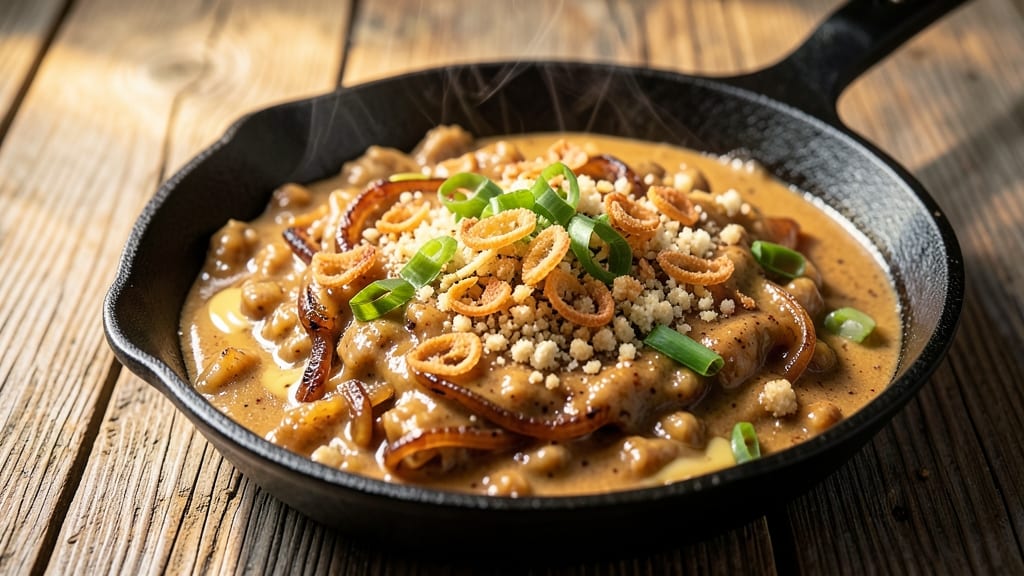
This Cajun dirty rice dressing transforms game day bites into bold, spicy sensations with just a few simple ingredients. The rich blend of Cajun seasoning, smoky paprika, and savory broth creates a dressing that’s perfect for dipping, drizzling, or tossing with salads.
It’s the kind of flavor that turns ordinary snacks into crowd-pleasing favorites.
What makes this dressing special is its versatility—use it as a dip for wings, a sandwich spread, or a salad topper. The roux base adds depth, while the slow simmer develops layers of warmth and spice.
Best of all, it keeps well in the fridge for up to a week or freezes for months, so you can always have bold flavor on hand.
Ingredients for cajun dirty rice dressing
Nine ingredients blend into a bold Cajun dressing perfect for game day dips and salads.
| Ingredient | Amount | Notes |
|---|---|---|
| Unsalted Butter 🧈 | ½ cup | Cold, cubed for roux |
| All-Purpose Flour 🌾 | ½ cup | White or whole wheat |
| Cajun Seasoning 🌶️ | 2 tbsp | High-quality, like Tony Chachere's |
| Smoked Paprika 🌶️ | 1 tbsp | For deep smoky flavor |
| Garlic Powder 🧄 | 1 tbsp | Freshly ground preferred |
| Onion Powder 🧅 | 1 tbsp | For aromatic depth |
| Chicken Broth 🍲 | 2 cups | Low-sodium preferred |
| Heavy Cream 🥛 | ½ cup | Full-fat for richness |
| Dried Parsley 🌿 | 1 tbsp | For fresh finish |
| Salt 🧂 | ½ tsp | Adjust to taste |
The Cajun seasoning and smoked paprika are the heart of this dressing. Tony Chachere's or Zatarain's are my go-tos—they’ve got that perfect balance of heat and depth. For the roux, use unsalted butter and all-purpose flour to avoid adding extra salt early. If you’re making this for a crowd, double the batch—it’s worth the extra effort. The chicken broth should be low-sodium to let the Cajun seasoning shine without overpowering.
No Cajun seasoning? Mix 1 tbsp each chili powder, garlic powder, onion powder, and smoked paprika for a close substitute. Heavy cream can be swapped for half-and-half or coconut milk if you prefer a lighter texture. For extra richness, add a splash of hot sauce or a pinch of cayenne pepper. The dried parsley adds freshness—if you’ve got fresh, use half the amount. Always taste as you go, especially when adjusting heat levels.
This dressing thickens as it cools, so stir well before serving. Keeps in the fridge for 5-7 days in an airtight container, or freeze for up to 3 months. For a smoother texture, blend briefly before serving. It’s perfect for dipping wings, drizzling over roasted veggies, or mixing into mashed potatoes for a Cajun kick.
Why You'll Love This Recipe
- Pantry Magic: I swear by this recipe when I’ve got nothing but butter, flour, and spices staring back at me. No fresh herbs, no fancy ingredients—just that smoky Cajun kick and garlic powder doing all the heavy lifting.
- One-Pot Wonder: Five ingredients, one bowl, zero stress. Melt butter, whisk in flour, add spices—done. No chopping, no measuring cups of this or that. It’s the kind of recipe that makes me feel like I’ve actually cooked something.
- Game Day Gold: Between us, this is my go-to for tailgates and lazy Sundays. Spread it on grilled chicken, dollop it on baked potatoes, or just eat it with a spoon—it’s the kind of flavor that turns everything into a party.
- Budget-Friendly Crutch: Honestly, I make this when I’m broke and need to feed my family something that feels special. A stick of butter and a bag of flour stretch far, and the Cajun seasoning? That little jar lasts forever. Taste like luxury, costs like a steal.
Step-by-step instructions for Cajun dirty rice dressing
This rich, spiced dressing delivers bold Cajun flavor perfect for game day dips and appetizers.
Create the Spiced Roux Foundation
Melt the 0.5 cup unsalted butter in a heavy-bottomed saucepan over medium heat. Once fully melted and foaming subsides, add the 0.5 cup all-purpose flour all at once. Stir constantly with a wooden spoon or whisk for 3-4 minutes until the mixture turns a deep, nutty brown color and smells toasty.
This roux forms the backbone of your dressing—don't rush it. If it darkens too quickly, reduce heat slightly. You're looking for a medium-brown roux that coats the back of a spoon smoothly. This step builds flavor through the Maillard reaction, so resist the urge to skip it or you'll end up with a bland dressing.
Develop the Cajun Flavor Profile
Immediately after the roux reaches medium-brown, whisk in the 2 tbsp Cajun seasoning, 1 tbsp smoked paprika, 1 tbsp garlic powder, and 1 tbsp onion powder. Stir for 1-2 minutes until the spices are fully incorporated and the mixture smells deeply aromatic. The spices will darken slightly, intensifying their flavors.
Here's where the magic happens: the spices bloom in the hot fat, releasing their full potential. You'll notice the mixture becomes more fragrant and slightly oily—this is normal and desirable. Keep stirring to prevent burning, as spices can scorch quickly when overheated. The goal is to create a flavorful base that will carry through the entire dressing.
Build the Sauce with Broth and Cream
Slowly pour in the 2 cups chicken broth while whisking continuously to prevent lumps from forming. Bring the mixture to a gentle simmer over medium-low heat, then reduce heat to maintain a gentle bubble. Cook uncovered for 8-10 minutes, stirring occasionally, until the sauce thickens enough to coat the back of a spoon.
Next, stir in the 0.5 cup heavy cream and 0.5 tsp salt. The cream will create a velvety texture while adding richness to balance the spices. Simmer for another 3-4 minutes until the sauce reaches your desired consistency—it should be thick enough to cling to crackers or bread but still pourable. Taste and adjust seasoning if needed, adding more salt or spices as desired.
Finish and Rest for Optimal Texture
Remove the saucepan from heat and stir in the 1 tbsp dried parsley. Let the dressing sit off the heat for 5 minutes to allow the flavors to meld together. This resting period is crucial—it lets the spices fully infuse and the sauce reach its peak consistency.
For best results, transfer the dressing to a clean jar or container and let it rest at room temperature for 1 hour before serving. This additional time allows the flavors to develop even further, creating a more complex, well-rounded taste. The dressing will thicken slightly as it cools, so you may want to thin it with a splash of warm broth if needed before serving.
Pro Tips For Making Cajun Dirty Rice Dressing
- Cook on Medium-Low: This isn’t a fry-up—your roux for Cajun dirty rice dressing needs patience. Too hot, and you’ll end up with a burnt flavor bomb instead of a rich, nutty base. Keep it at a steady simmer, stirring every 30 seconds like you’re babysitting a toddler (yes, even if you’re impatient like me).
- Toast the Flour First: Before adding butter, dry-toast the flour in the pan for 30 seconds. This removes the raw taste and deepens the flavor—like preheating your spices. Skip it, and your dressing will taste flat, no matter how much Cajun seasoning you throw in.
- Whisk Like Your Life Depends on It: Lumps in your roux mean lumps in your dressing. Whisk aggressively for the first 2 minutes until it’s smooth as butter. I learned this the hard way—my first attempt had gritty bits that ruined the texture. (Your future self will thank you.)
- Balance the Heat: Smoked paprika and Cajun seasoning pack a punch—don’t overdo it. Start with half the recommended amount, taste as you go, and add more if needed. Too much, and your dressing turns bitter; too little, and it’s just bland butter. Find that sweet spot.
Essential equipment for perfect results
Heavy-Bottomed Saucepan
Your heavy-bottomed saucepan is non-negotiable for this recipe—I swear by my All-Clad Stainless Steel 3-Quart Saucepan. The thick base prevents hot spots that can burn your roux or scorch the spices.
If you're on a budget, Cuisinart MultiClad Pro delivers similar performance for less. Avoid thin, lightweight pans—they cause uneven heating and make temperature control nearly impossible. 🔥
Whisk for Smooth Sauces
A balloon whisk is essential for creating that silky-smooth texture, especially when combining the roux with broth. I recommend the OXO Good Grips Balloon Whisk—it’s ergonomic and won’t clog when working with thick mixtures.
For extra insurance, keep a small rubber spatula nearby to scrape up any stubborn bits from the pan’s edges. A whisk also helps prevent lumps when adding flour to the butter.
Wooden Spoon or Spatula
While whisking is key for the broth stage, you’ll need a wooden spoon or heat-resistant silicone spatula for stirring the roux. Wooden spoons distribute heat evenly and won’t scratch your pan.
My go-to is a Lodge Cast Iron Wooden Spoon—it’s sturdy enough to handle the roux’s intense heat without warping. Avoid metal spoons here, as they can conduct heat too quickly and risk burning your spices prematurely.
Measuring Spoons & Cups
Precision matters with spices and liquids, so invest in stainless steel measuring spoons (like West Bend 10-Piece Set) for accurate measurements of your Cajun seasoning, smoked paprika, and garlic powder.
For the broth and cream, use liquid measuring cups with clear markings—I prefer Pyrex Glass Measuring Cups for their durability. Don’t skimp here; cheap plastic spoons lose accuracy over time and can harbor flavors from previous uses.
Fine-Mesh Strainer (Optional)
If you prefer an ultra-smooth dressing, a fine-mesh strainer removes any flour grit or herb stems. I keep a Eberhardts Stainless Steel Conical Strainer on hand for this purpose. It’s especially useful if you’re using fresh parsley instead of dried.
For most uses, though, the dressing’s texture works perfectly without straining—just give it a quick stir before serving. 💫
Nutrition facts
Frequently asked questions
Can I make this dressing without a roux?
The roux creates the rich, velvety texture that makes this dressing special, but you can adapt it! For a quicker version, whisk 2 tbsp cornstarch with 2 tbsp cold water and stir it into the simmering broth instead. Cook for an extra 2-3 minutes until thickened. The flavor will be slightly different but still delicious—just less deep and complex.
How spicy will this dressing be?
The heat level depends on your Cajun seasoning, but expect a medium-spicy kick—think warm, aromatic, with a lingering but not overwhelming burn. For milder flavor, reduce the Cajun seasoning to 1.5 tbsp and add ½ tsp cayenne only if you want extra heat. Always taste as you go and adjust to your preference.
What are the best ways to use this dressing?
This versatile dressing shines as a dip for wings, fries, or veggie sticks, a sandwich spread, or a salad topper. Try drizzling it over roasted potatoes, mixing into mashed potatoes for a Cajun twist, or using it as a marinade for grilled meats. The creamy texture also makes it perfect for dipping breadsticks or crackers during game day.
Why did my dressing turn out too thick?
This happens when the sauce cools and the starches fully set. To fix it, stir in 1-2 tbsp warm chicken broth and reheat gently until smooth. For future batches, remove the pan from heat slightly earlier and let it rest 10 minutes before transferring to a jar. If storing, the dressing will thicken further in the fridge—just thin with broth when ready to use.
Can I make this dressing dairy-free?
Replace the heavy cream with ½ cup full-fat coconut milk or ½ cup cashew cream (blend soaked cashews with water). For the roux, use olive oil or vegan butter instead of butter. The texture will be slightly lighter but still rich and flavorful. Adjust salt if using unsalted coconut milk.