
Main Courses
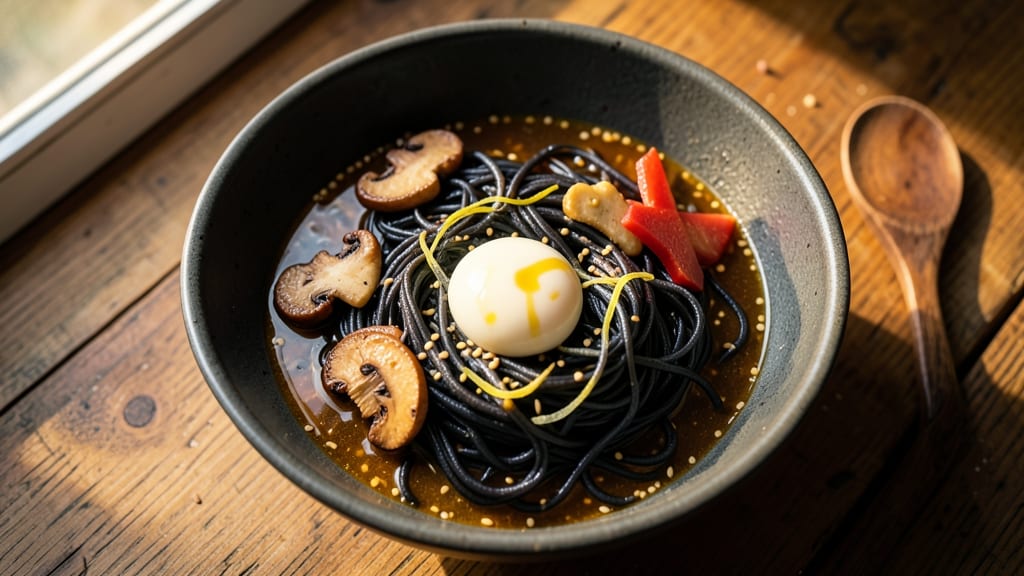
This black rice ramen recipe transforms a simple bowl into a luxurious experience where deep umami broth meets the earthy nuttiness of forbidden rice. The secret lies in slow-simmered broth infused with mushrooms, garlic, and ginger—layered with chewy black rice noodles that absorb flavor like a sponge.
I developed this after years of refining my ramen technique, balancing rich umami with the subtle sweetness of black rice, which adds a striking visual contrast to every slurp.
The result is a bowl that’s restaurant-quality at home—silky broth, perfectly cooked noodles with a slight bite, and optional protein (pork, chicken, or tofu) that melts into the rich sauce.
Garnishes like soft-boiled eggs, scallions, and sesame seeds elevate each bite, while the deep purple hue of the black rice makes every serving feel special. Ready in about 45 minutes, this recipe delivers depth and satisfaction without shortcuts.
Ingredients for black rice ramen
Transform these earthy, umami-rich ingredients into restaurant-quality black rice ramen.
| Ingredient | Amount | Notes |
|---|---|---|
| Black Rice Noodles 🍜 | 8 oz | Dried, chewy variety preferred |
| Dried Shiitake Mushrooms 🍄 | 8 whole | Rehydrated for deep umami |
| Garlic Cloves 🧄 | 8 cloves | Freshly minced for aromatic base |
| Fresh Ginger 🌿 | 2 tbsp | Finely grated, organic preferred |
| Dried Kombu Seaweed 🍃 | 1 sheet | For natural umami depth |
| Chicken or Vegetable Broth 💧 | 6 cups | Homemade preferred, low-sodium |
| Sesame Oil 🫒 | 1 tbsp | Toasted for nutty aroma |
| Soy Sauce 🍶 | ½ cup | Kosher-style for balance |
| Miso Paste 🧈 | 2 tbsp | White or red, high-quality |
| Optional Protein 🍗 | 1 lb | Chicken thigh, pork shoulder, or tofu |
| Green Onions 🧅 | 4 whole | Thinly sliced for garnish |
| Sesame Seeds 🌾 | 1 tbsp | Toasted for crunch |
| Soft-Boiled Eggs 🥚 | 2 whole | Optional garnish |
| Diamond Crystal Kosher Salt 🧂 | 1 tsp | Adjust to taste |
| Black Peppercorns 🌶️ | ½ tsp | Freshly cracked |
The black rice noodles are the foundation—look for chewy varieties like those from Hain Celestial or Asian grocery stores that carry specialty noodles. Dried shiitake mushrooms are non-negotiable for depth; rehydrate them in hot broth rather than cold water to preserve their flavor. Garlic and ginger should be organic if possible—their freshness directly impacts the broth's complexity. For kombu seaweed, buy from Japanese markets or specialty stores like Mitsua; it's the secret weapon for umami without added salt. The miso paste must be high-quality—Miso Master or Honten brands deliver consistent results.
No chicken broth? Vegetable broth with a splash of fish sauce works for vegetarian versions, though umami will be subtler. Substitute pork with extra-firm tofu pressed for 30 minutes—it holds up beautifully. Running low on sesame oil? Toast the seeds first and grind them into a paste with a pinch of salt as a makeshift alternative. For the protein, chicken thighs stay juicier than breasts when simmered, while pork shoulder becomes fork-tender. The green onions can be swapped for chives or scallions, but their mild sweetness pairs perfectly with the richness of the broth.
Store the dried noodles in an airtight container away from light for up to 12 months. Rehydrated mushrooms keep for 5 days in the fridge, while the broth freezes exceptionally well for 3 months—portion it into ice cube trays before transferring to a freezer bag. Garnishes like soft-boiled eggs and sesame seeds should be added just before serving to maintain their texture. The miso paste and kombu can be prepped ahead and stored in the fridge for 1 week, streamlining assembly on busy days.
Why You'll Love This Recipe
- No-Chop Nightmare: Soaking the dried shiitake and kombu in warm water? That’s it. No knife skills, no stress—just steep, simmer, and slurp. The noodles cook in minutes, and honestly, the hardest part is deciding whether to add more ginger.
- Umami Bomb: That kombu seaweed? It’s the secret weapon—deep, savory, with none of the fishy aftertaste. The shiitake mushrooms add a meaty chew, while the black rice noodles bring a nutty, almost chocolatey richness. Between us, this broth is dangerously addictive.
- Lunchbox Hero: Pack it cold for work or reheat it for dinner—this ramen holds up like a champ. The noodles stay tender, the mushrooms keep their texture, and the broth? Still flavorful after two days. My go-to when I’m too tired to think.
- Pantry Magic: Dried shiitake, kombu, and black rice? All shelf-stable until you need them. No last-minute grocery runs, no wasted ingredients. I’ll be real: this is my budget-friendly flex when I want restaurant-quality without the splurge.
Step-by-step instructions for black rice ramen with deep umami broth
This method transforms simple ingredients into a restaurant-quality bowl where nutty black rice noodles meet a rich, layered broth.
Prepare the Dried Shiitake Mushrooms and Kombu Seaweed
Begin by rehydrating the 8 whole dried shiitake mushrooms in hot water for 20 minutes. This step extracts their deep umami essence into the water, which we'll use later. While they soak, place the 1 sheet dried kombu seaweed in a clean bowl and cover it with 4 cups of the chicken or vegetable broth. Let it steep for 15 minutes at room temperature—this infusion adds a subtle oceanic depth to the broth.
After steeping, remove the kombu seaweed (you can compost it) and reserve the infused broth. The mushrooms should now be pliable—drain them, reserving 1 cup of the soaking liquid for the broth. Slice the rehydrated mushrooms into ¼-inch thick pieces and set aside. The kombu-infused broth will form the aromatic base of your ramen.
Build the Umami-Packed Broth Base
In a large pot, combine the 4 cups reserved kombu-infused broth, 1 cup reserved mushroom soaking liquid, 6 cups remaining chicken or vegetable broth, 2 tbsp finely grated fresh ginger, and 8 cloves minced garlic cloves. Bring to a gentle simmer over medium heat, then reduce to a low boil. Skim off any foam that rises to the surface—this ensures a clear, clean broth.
Add the sliced shiitake mushrooms and simmer for 10 minutes to meld their earthy flavors. Stir in the 2 tbsp miso paste and ½ cup soy sauce, letting the mixture cook for another 5 minutes until the miso dissolves completely. The broth should now have a rich, complex aroma with layers of umami and subtle sweetness.
Cook the Black Rice Noodles and Protein
While the broth simmers, cook the 8 oz black rice noodles according to package instructions—typically 4-5 minutes in boiling water until just tender. Drain immediately and rinse briefly with cold water to stop the cooking process. This prevents the noodles from becoming mushy when added to the hot broth.
In a separate pan, cook the 1 lb optional protein (chicken thigh, pork shoulder, or tofu) until fully done—10-12 minutes for chicken, 15-18 minutes for pork, or 8-10 minutes for tofu. Slice into thin strips and set aside. The protein should be cooked through but still retain moisture for the best texture in the ramen.
Assemble and Finish the Ramen
Divide the cooked noodles among 4 bowls. Ladle the hot broth over the noodles, ensuring each portion is generously covered. Add the sliced protein and let it soak for 1-2 minutes to absorb the flavors. Drizzle with 1 tbsp sesame oil and sprinkle with 1 tbsp toasted sesame seeds for texture and aroma.
Garnish each bowl with 2 halves of the soft-boiled eggs, 1 whole sliced green onion, and a final sprinkle of ½ tsp freshly cracked black peppercorns. The contrast of the creamy egg yolk with the nutty noodles and rich broth creates the perfect balance. Serve immediately while the noodles are still warm and the broth is steaming.
Adjust Seasoning to Perfection
Taste the ramen and adjust the seasoning if needed. If the broth lacks depth, add a splash more soy sauce or a pinch of diamond crystal kosher salt. For extra umami, stir in 1 tsp additional miso paste or a few drops of the reserved mushroom soaking liquid. The goal is a harmonious blend of flavors where each component—noodles, broth, protein, and garnishes—shines without overpowering the others.
This ramen delivers a symphony of textures and flavors: the chewy black rice noodles, the silky broth infused with umami, the tender protein, and the crunch of toasted sesame seeds. Each bowl is a celebration of balanced, deeply satisfying comfort food.
Pro Tips For Making Black Rice Ramen
- SOAK NOODLES SEPARATELY: Black rice noodles need a gentler touch—soak them in warm (not boiling) water for 10-15 minutes before cooking. I learned this the hard way: boiling them directly turns them mushy. Use twice the water volume as noodles, and swirl them occasionally to prevent clumping.
- REHYDRATE MUSHROOMS PROPERLY: Dried shiitake mushrooms soak up flavor like sponges—cold water for 20 minutes, then hot for 5 more. Skip the hot start, and they’ll stay tough. After soaking, squeeze out excess water (yes, even if it’s messy) so they don’t dilute your broth.
- CHAR GARLIC LOW AND SLOW: Garlic burns faster than you think, especially with black rice’s deep flavors. Cook it on medium-low heat for 3-4 minutes until golden, not black. Add a splash of water if it sticks—this keeps the aroma intact and stops bitterness.
- USE KOMBU LAST MINUTE: Toss dried kombu into simmering broth just 5 minutes before serving. It infuses umami without overpowering, and the texture stays delicate. If you forget, no big deal—but the broth will taste flatter if you add it too early.
Storing and reheating this recipe
Broth Storage Secrets
The broth is the heart of your ramen, so treat it right. Store it in an airtight glass container (like Le Parfait containers) in the fridge for up to 5 days. For longer storage, freeze it in ice cube trays—this makes reheating a breeze.
Once frozen, transfer cubes to a freezer bag with 1 inch headspace to prevent ice crystals. Thaw overnight in the fridge before reheating. 💧
Noodle Prep Ahead
Cook the black rice noodles just before assembling to keep them chewy. If prepping ahead, store them in a damp paper towel inside a ziplock bag for up to 24 hours.
When ready to serve, quickly reheat in boiling water for 30 seconds—no need to rinse again. This preserves their texture perfectly. ✨
Protein Make-Ahead
Cook the protein (chicken, pork, or tofu) up to 3 days ahead and store it in an airtight container in the fridge. Reheat gently in a skillet with 1 tbsp broth over medium-low heat for 3-5 minutes until warmed through.
For tofu, add a splash of soy sauce while reheating to restore moisture. 🍗
Garnish Freshness
Keep soft-boiled eggs and green onions separate until serving. Store eggs in their shells in the fridge for up to 1 week—boil them fresh when ready.
Toast sesame seeds just before garnishing to keep them crisp. If using scallions, chop them right before adding to maintain their bright flavor. 🧅
Reheating Like a Pro
For stovetop reheating, combine 1 cup broth with ½ cup water in a pot and bring to a simmer. Add noodles and protein, then heat for 2-3 minutes until steaming.
For microwave reheating, cover with a damp paper towel and heat in 1-minute intervals on 70% power. Stir between intervals to distribute heat evenly. 🔥
Freezer-Friendly Bowls
Assemble complete bowls (without eggs) and freeze them in single-serving portions for up to 1 month. To reheat, thaw overnight in the fridge, then warm in a skillet with 2 tbsp broth over medium heat for 5-7 minutes. Add fresh garnishes after reheating to keep them vibrant. 💫
Nutrition facts
Frequently asked questions
What makes black rice noodles different from regular ramen noodles?
Black rice noodles are made from forbidden rice, giving them a nutty, earthy flavor and a deep purple color that sets them apart from traditional white or brown noodles. They also have a slightly chewier texture that absorbs broth beautifully while maintaining structure. The antioxidant-rich black rice adds nutritional depth too!
Can I make this recipe vegetarian or vegan?
Replace the protein with extra-firm tofu (pressed for 30 minutes) or tempeh, and use vegetable broth instead of chicken. For extra umami, add 1 tbsp fish sauce to the broth (or 1 tbsp soy sauce + 1 tsp mushroom powder for vegan). The mushrooms and kombu will still provide rich depth without meat.
How do I prevent my black rice ramen from being too slimy?
Sliminess usually comes from overcooking the noodles or using too much water when rinsing. Cook noodles for just 4-5 minutes (check package instructions), drain immediately, and rinse with cold water for 10 seconds max. Never soak them in water—this breaks down their texture. Also, avoid adding cold water to hot broth when serving.
What's the best way to adjust the spice level?
Start with the base recipe, then adjust to taste. For mild heat, add ½ tsp chili flakes or a dash of gochujang to the broth. For smoky depth, stir in ½ tsp smoked paprika. For heat lovers, top with sriracha or chili crisp just before serving. The black rice's earthiness balances spice perfectly!
Can I use instant ramen noodles instead of black rice noodles?
While possible, it won't deliver the same experience. Instant noodles lack the chewy texture and nutty flavor of black rice noodles. For a compromise, try udon or soba noodles (both chewier than instant). If you must use instant, look for high-quality brands** like Nissin Wontons or Maruchan Premium—rinse them thoroughly to remove excess sodium.