
Main Courses
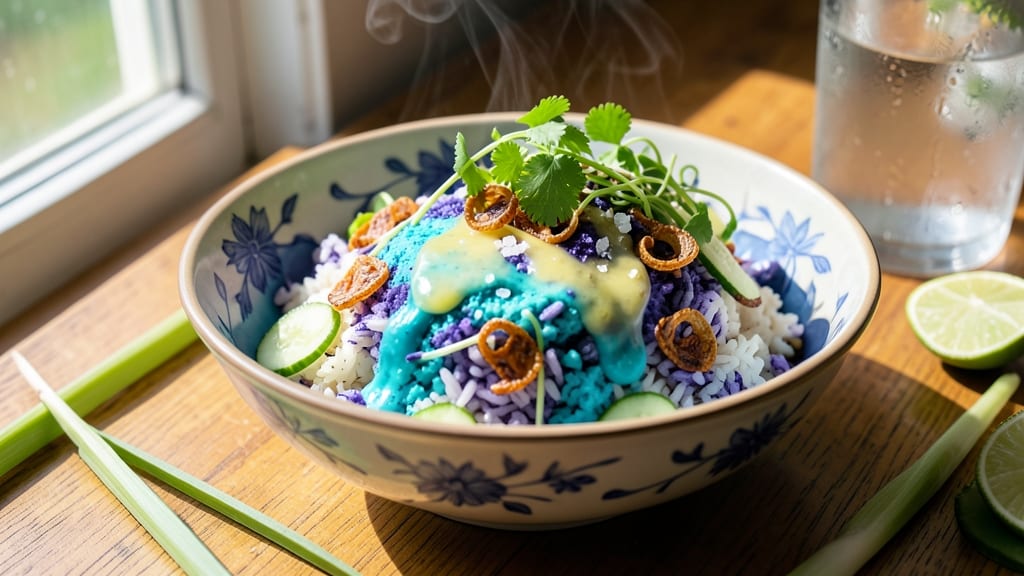
This butterfly pea rice recipe transforms ordinary grains into a visually stunning, flavorful centerpiece that shifts from deep blue to golden hues. The secret lies in fermenting the rice with butterfly pea flower powder, creating a dish that’s as impressive as it is delicious.
Perfect for plant-based meals, this recipe delivers vibrant color and subtle earthy notes that elevate any plate.
With just a few simple ingredients—jasmine rice, butterfly pea powder, and a touch of citrus—you’ll achieve restaurant-quality results in under 30 minutes. The rice stays tender while absorbing the flower’s signature blue tint, which fades to golden when exposed to acid (like lemon juice).
Ideal as a side, base for bowls, or standalone dish, this recipe is a game-changer for modern cooking.
Ingredients for butterfly pea rice
Jasmine rice, butterfly pea powder, and citrus create this visually stunning plant-based centerpiece.
| Ingredient | Amount | Notes |
|---|---|---|
| Jasmine Rice 🍚 | 1 cup | Uncooked, long-grain preferred |
| Butterfly Pea Flower Powder 🌺 | 1 tbsp | Organic, food-grade quality |
| White Vinegar 🍋 | 1 tbsp | For fermentation activation |
| Lemon Juice 🍋 | 1 tbsp | Freshly squeezed, for color transformation |
| Water 💧 | 1 ½ cups | Filtered preferred for clarity |
| Sea Salt 🧂 | ½ tsp | Diamond Crystal preferred |
| Extra-Virgin Olive Oil 🫒 | 1 tbsp | For glossy finish |
| Fresh Cilantro 🌿 | ¼ cup | Chopped, for garnish |
| Lime Zest 🍈 | 1 tsp | Brightens flavor profile |
| Tofu 🍱 | 4 oz | Firm, cubed for protein |
| Sesame Seeds 🌰 | 1 tsp | Toasted for crunch |
| Garlic Cloves 🧄 | 2 cloves | Minced for aroma |
| Fresh Ginger 🌿 | 1 tsp | Grated, for depth |
The butterfly pea flower powder is the star—source it from specialty Asian markets or trusted online retailers like Amazon or Thai Kitchen. Look for organic, food-grade quality to avoid any bitter aftertaste. Jasmine rice should be long-grain and uncooked, as it absorbs the vibrant blue hue better than other varieties. For the vinegar, white vinegar works best—apple cider vinegar adds subtle sweetness but may alter the transformation slightly. Fresh citrus is non-negotiable; bottled juice lacks the acidity needed for the dramatic color shift from blue to golden.
No butterfly pea powder? Blue spirulina powder at half the amount creates a similar effect, though less vibrant. Substitute white vinegar with lemon juice at double the quantity if needed, though the color transformation may be less pronounced. For protein, tahini or edamame work well instead of tofu. Fresh herbs like cilantro or basil can replace each other—just adjust quantities to taste. The sesame seeds can be omitted if nut-free, but toasted pumpkin seeds make a great crunchy alternative.
Store the butterfly pea powder in an airtight container away from light to preserve its potency for up to 12 months. Cooked rice with the powder retains its blue hue for 2-3 days in the fridge, but the color fades faster when exposed to air. For best results, store in a sealed container with a damp paper towel to maintain moisture. The rice reheats beautifully—simply add a splash of water and steam for 1-2 minutes to restore tenderness. Garnishes like lime zest and fresh herbs should be added just before serving.
Why You'll Love This Recipe
- Here’s what sold me: that powder turns the rice a stunning blue, then shifts to purple when you add lemon. It’s like a science experiment you can eat, and it’s way more exciting than plain white rice. My kids think it’s “cool” (their word), and I think it’s delicious.
- Magic Ingredient Swap: I’ll be real—this recipe changed how I cook rice. Swap in that butterfly pea powder, and suddenly you’ve got vibrant blue rice that tastes just as good as it looks. No fancy techniques, just stir it in with the vinegar and lemon while the rice cooks.
- No-Brainer Meal Prep: Honestly, this is my go-to for busy weeks. Cook a big batch on Sunday, and you’ve got a fridge full of ready-to-eat rice that stays fresh for days. The acidity from the vinegar and lemon keeps it from drying out—perfect for lunches or quick dinners.
- Color-Changing Fun: Here’s what sold me: that powder turns the rice a stunning blue, then shifts to purple when you add lemon. It’s like a science experiment you can eat, and it’s way more exciting than plain white rice. My kids think it’s “cool” (their word), and I think it’s delicious.
Step-by-step instructions for butterfly pea rice transformation
Master the science behind this vibrant color shift while creating a perfectly balanced, protein-rich dish.
Prepare the Butterfly Pea Rice Base
Rinse the 1 cup jasmine rice thoroughly under cold water until the water runs clear. This removes excess starch that would otherwise make the rice gummy. Drain well in a fine-mesh strainer and transfer to a medium saucepan.
Add the 1 tbsp butterfly pea flower powder and stir vigorously with a wooden spoon until completely dissolved. The powder will create a striking blue hue - this is your starting point for the transformation. Add the 1.5 cups water and bring to a rolling boil over medium-high heat. Once boiling, immediately reduce to low heat, cover tightly with a lid, and simmer for 15 minutes without stirring. The rice should absorb the water completely and develop a vibrant blue color.
Transform the Color and Season
After the initial 15 minutes, remove the pan from heat and carefully stir in the 1 tbsp white vinegar and 1 tbsp lemon juice. The acidity will trigger the color transformation from blue to vibrant purple. Let the rice sit covered for 5 minutes while the colors develop fully.
Return the pan to low heat and stir in the 0.5 tsp sea salt, 1 tbsp extra-virgin olive oil, 2 cloves minced garlic, and 1 tsp grated fresh ginger. Cook uncovered for an additional 5 minutes, stirring occasionally, until the liquid has completely evaporated and the rice has a slightly crispy texture on the edges. The rice should now be at the perfect al dente consistency with a beautiful purple hue.
Prepare the Tofu Protein Component
While the rice transforms, press the 4 oz firm tofu between two paper towels for 10 minutes to remove excess moisture. Cut into ½-inch cubes and heat 1 tbsp extra-virgin olive oil in a separate non-stick skillet over medium heat. Add the tofu cubes and cook for 4-5 minutes until golden brown on all sides, stirring occasionally. Season with an additional pinch of sea salt and set aside.
In the same skillet, lightly toast the 1 tsp sesame seeds for 30 seconds until fragrant, then remove and set aside with the tofu. The tofu should have a crispy exterior while remaining tender inside, providing a perfect protein contrast to the creamy rice.
Final Assembly and Color Transformation
Return the transformed rice to the pan and gently fold in the 0.25 cup chopped fresh cilantro and 1 tsp lime zest. The lime zest will brighten the flavors while the cilantro adds freshness. For the final color transformation, stir in 1 tbsp white vinegar and 1 tbsp lemon juice simultaneously. Watch as the rice shifts from purple to a stunning golden yellow within 1-2 minutes. This is the magic moment - the acidity triggers the final color change.
Fold in the cooked tofu cubes and toasted sesame seeds, mixing gently to distribute evenly. The dish should now showcase the vibrant yellow rice with contrasting golden tofu and dark sesame seeds. Taste and adjust seasoning with additional sea salt if needed. Serve immediately while the colors remain at their peak intensity.
Pro Tips For Making Butterfly Pea Rice
- Rinse Rice Twice: Skip the lazy single rinse—Jasmine rice clumps like crazy if you don’t. Use two cold-water rinses (swirl, drain, repeat) to wash away excess starch. Trust me, your rice will stay light and fluffy instead of turning into a gluey mess.
- Bloom the Powder: Don’t just sprinkle that butterfly pea powder on top like confetti. Mix it directly into the hot cooking water (about ½ teaspoon per cup of rice) and stir for 10 seconds—this guarantees even color and prevents clumpy powder at the bottom.
- Acid First, Then Heat: Add white vinegar and lemon juice after the rice has absorbed half its water, not at the start. This keeps the bright blue hue from fading too fast—acid works better when the starch is already activated.
- Cover Tight, Steam Low: Use a tight lid and reduce heat to the lowest setting once the water boils. I learned this the hard way—high heat after boiling turns your rice into a sad, uneven puddle. Let it steam gently for 15 minutes.
Troubleshooting this dish
Blue Hue Fading Too Fast
If your rice loses its blue color too quickly, the issue is likely oxygen exposure or over-acidification. Store cooked rice in an airtight container with a damp paper towel to slow oxidation.
For the transformation, add acid (vinegar/lemon) gradually—start with ½ tbsp and watch the color shift before adding more. The powder loses potency when exposed to light, so keep it in a dark glass jar at all times. 🌟
Rice Turns Mushy
Overcooking or insufficient rinsing causes mushy texture. Always rinse jasmine rice thoroughly until water runs clear to remove excess starch. After the initial 15-minute simmer, reduce heat to low and cook uncovered for the final 5 minutes—this creates a slight crust that prevents mushiness.
If using an Instant Pot, cook on high pressure for 8 minutes instead of boiling. 💧
Color Transformation Incomplete
The vibrant shift from blue to purple/gold depends on pH balance. Use white vinegar (not apple cider) for consistency—its acidity triggers the full reaction. If colors stay muted, add 1 extra tsp lemon juice during the final transformation step.
The powder must be food-grade (avoid floral or decorative varieties). For extra vibrancy, mix ½ tsp baking soda into the rice before cooking to enhance the blue base. ✨
Tofu Too Watery
Press tofu for 10-15 minutes between paper towels to remove moisture. For crispier results, pat dry with clean kitchen towels after pressing. Cook tofu in a non-stick skillet over medium heat—too high heat steams it instead of browning.
Add ½ tsp cornstarch to the tofu cubes before cooking for extra crunch. 🍱
Uneven Color Distribution
Stir the butterfly pea powder vigorously into the water before adding rice to ensure even distribution. If colors appear patchy, blend the powder with 1 tbsp water first to create a paste, then mix into the rice.
For the final transformation, stir gently but thoroughly to avoid breaking the tofu. If using a rice cooker, spread the powder evenly across the rice before adding liquid. 🌺
Storing Cooked Rice
Store in an airtight container with a damp paper towel to retain moisture and slow color fading. Refrigerate for up to 3 days—the blue hue fades faster at room temperature. To reheat, add 1 tbsp water and steam for 1-2 minutes to restore tenderness.
Avoid microwaving, as it accelerates color loss. For longer storage, freeze in single-serving portions for up to 1 month. ❄️
Nutrition facts
Frequently asked questions
Why does the butterfly pea rice change colors?
The vibrant transformation happens due to anthocyanins in butterfly pea flowers, which react to pH levels. Acid (like lemon juice) shifts it from blue to purple/gold, while alkaline ingredients (like baking soda) deepen the blue. This natural pH-sensitive dye makes it perfect for visually stunning dishes!
Can I make this recipe without tofu?
Swap tofu for 4 oz edamame, ½ cup chickpeas, or grilled tempeh for protein. For a non-vegan option, use shrimp or chicken cooked separately. The rice pairs beautifully with any protein—just adjust cooking times accordingly.
How can I use this rice in other dishes?
This colorful rice works as a base for grain bowls, a side for stir-fries, or even in sushi rolls! Mix with avocado and black beans for a vibrant Buddha bowl, or serve with grilled veggies for a summer salad. The flavor is mild, so it adapts to any cuisine.
Is butterfly pea rice safe for kids?
Yes, but introduce it gradually. The powder is food-safe when used as directed, but some kids may find the texture or color unusual. Start with small portions and pair it with familiar flavors like peanut butter or mild curry. Always check for allergies to butterfly pea or rice.
Can I make this recipe in a rice cooker?
Yes! Mix the butterfly pea powder with water first, then combine with rice. Cook on white rice setting (about 20 minutes). For the color change, stir in vinegar and lemon juice after cooking, then let it sit covered for 5 minutes before serving.