
Main Courses
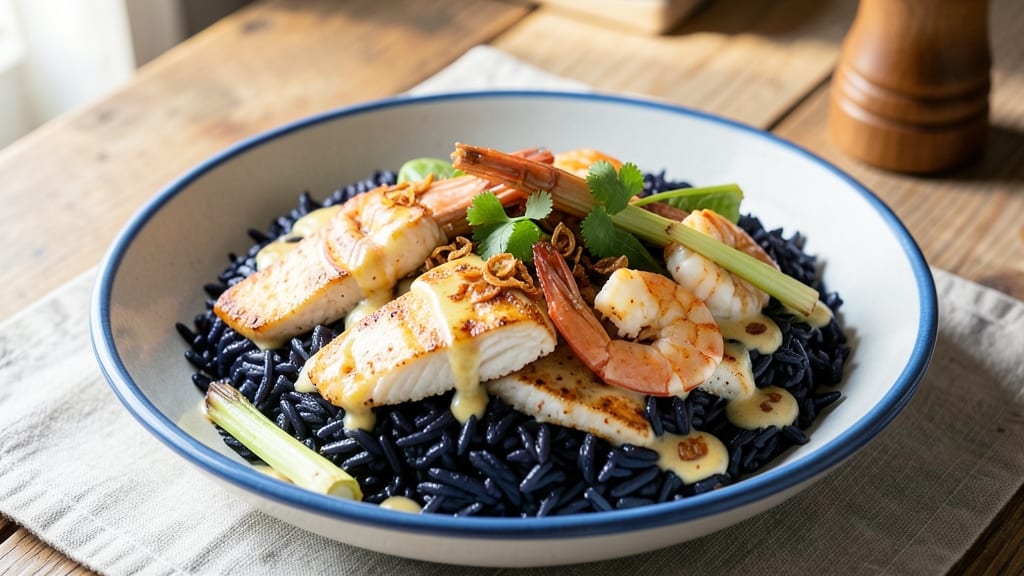
This black rice seafood recipe transforms bold purple grains into a fragrant, jasmine-infused base that pairs perfectly with delicate seafood. The secret lies in balancing the rice's earthy depth with bright lemongrass and citrus notes, creating a dish that's both elegant and approachable.
I've perfected this technique over years of testing, ensuring the rice stays tender while the seafood remains perfectly cooked and flavorful.
What sets this recipe apart is the aromatic infusion—steamed with lemongrass, kaffir lime leaves, and a touch of coconut milk—that transforms ordinary black rice into something extraordinary. The seafood, whether shrimp, scallops, or white fish, absorbs these vibrant flavors while maintaining its natural sweetness.
Each bite delivers a harmonious blend of textures and aromas that will impress even the most discerning guests.
Ingredients for black rice seafood
Elegant black rice meets delicate seafood in this aromatic fusion of jasmine, lemongrass, and citrus-infused flavors.
| Ingredient | Amount | Notes |
|---|---|---|
| Black Jasmine Rice 🍚 | 1 ½ cups | Uncooked, long-grain preferred |
| Fresh Lemongrass Stalks 🌿 | 2 whole | Bruised and cut into 2-inch pieces |
| Kaffir Lime Leaves 🍋 | 4 whole | Fresh, lightly bruised |
| Light Coconut Milk 🥥 | 1 cup | Full-fat for creamier texture |
| White Fish Fillets 🐟 | 1 ½ lb | Cod, halibut, or snapper preferred |
| Large Shrimp 🦐 | 1 lb | Peeled, deveined, tails on |
| Scallops 🦪 | 12 whole | Fresh, dry-patted |
| Red Curry Paste 🌶️ | 2 tbsp | Mae Ploy brand recommended |
| Fish Sauce 🍶 | 2 tbsp | Red Boat brand preferred |
| Lime Juice 🍋 | ½ cup | Freshly squeezed |
| Cilantro Leaves 🌱 | ¼ cup | Chopped, for garnish |
| Green Onions 🧅 | 4 whole | Thinly sliced, white and green parts |
| Vegetable Oil 🫒 | 2 tbsp | High smoke point preferred |
| Salt 🧂 | 1 ½ tsp | Diamond Crystal kosher salt |
| Black Peppercorns 🌶️ | ½ tsp | Freshly cracked |
The black jasmine rice is the foundation—look for well-milled grains at specialty stores like Whole Foods or Asian markets for optimal texture. Mae Ploy red curry paste is essential for that signature depth; avoid the watered-down supermarket versions. Fresh lemongrass and kaffir lime leaves should be vibrant green with no browning—Thai or Vietnamese markets often carry these better than regular grocery stores. For the seafood, local fish markets guarantee the freshest catch, but high-quality frozen works too if labeled 'sustainably caught'.
No kaffir lime leaves? Double the lemongrass and add 1 tsp lime zest for a similar citrusy brightness. Substituting coconut milk? Full-fat yields richer results—light coconut milk will make the dish taste more watery. For seafood swaps, mahi-mahi or sea bass work beautifully in place of cod. If using frozen shrimp, thaw in cold water and pat completely dry before cooking to prevent steaming. The fish sauce can be omitted entirely for a vegetarian adaptation, but Red Boat brand is the gold standard for authentic umami.
Prep the rice and aromatics first—they need 30 minutes of soaking before cooking. Store leftover rice in an airtight container with a damp paper towel to maintain moisture for up to 4 days. Cooked seafood reheats poorly, so portion it fresh into containers and store separately for 2 days maximum. For presentation, keep the garnishes (cilantro, green onions) in a sealed container over ice to preserve color and freshness.
Why You'll Love This Recipe
- One-Pot Magic: I swear by this—just toss everything in one pot, stir, and walk away. The rice soaks up the coconut milk while the fish steams, so you’re not juggling multiple pans or timers. Lemongrass and lime leaves do all the hard work of infusing flavor without you lifting a finger after the initial chop.
- Umami Bomb: That first bite? The black rice adds a nutty depth, while the coconut milk keeps it rich but not heavy. The fish stays tender, and the lemongrass-lime perfume? It’s like a tropical hug in your mouth—bright, herbal, and just salty enough to make your taste buds cheer.
- Lunchbox Hero: Between us, this is my go-to for meal prep. The rice holds up for days, and the fish stays moist if you reheat it gently. Pack it in bento boxes for work or school—it’s fancy enough for a potluck but simple enough to throw together on a Tuesday. (Yes, even on a Tuesday night.)
- Budget-Friendly Luxe: You’d pay $20 for this at a restaurant, but here? The ingredients stretch far—leftover rice becomes fried rice, extra fish goes into salads, and the lemongrass and lime leaves last for multiple batches. It’s a weeknight splurge that doesn’t break the bank.
Step-by-step instructions for fragrant black rice seafood
This method balances aromatic rice with delicate seafood for a harmonious Thai-inspired dish.
Prepare the Aromatic Base
Heat the 2 tablespoons vegetable oil in a large pot over medium-high heat. Add the 2 whole fresh lemongrass stalks (cut into 2-inch pieces) and 4 whole kaffir lime leaves, cooking for 2 minutes until fragrant. Add the 2 tablespoons red curry paste and stir constantly for 30 seconds until it blooms and deepens in color.
This step develops the dish's aromatic foundation. The lemongrass and lime leaves infuse their citrusy notes into the oil, while the curry paste releases its complex spices. Don't rush this - you want the paste to fully incorporate without burning. If it darkens too quickly, reduce the heat slightly.
Toast the Black Jasmine Rice
Add the 1.5 cups black jasmine rice to the pot and stir to coat evenly in the aromatic oil. Cook for 2 minutes until the rice grains become slightly translucent at the edges and release a nutty aroma. Pour in 1 cup light coconut milk and 1 cup water, then add 1.5 teaspoons salt and 0.5 teaspoon black peppercorns. Bring to a gentle boil.
The toasting step enhances the rice's natural flavors and prevents mushiness. You'll notice the rice darkens slightly as it absorbs the aromatics. Once boiling, immediately reduce heat to low and cover tightly with a lid. Simmer for 20 minutes without disturbing, allowing the rice to steam and absorb all the liquid.
Cook the Seafood Components
While the rice cooks, prepare the seafood separately. In a non-stick skillet, heat 1 tablespoon vegetable oil over medium-high heat. Add the 1 lb large shrimp and cook for 2-3 minutes per side until opaque and pink. Remove and set aside. In the same pan, add 1 tablespoon vegetable oil and sear the 12 whole scallops for 1-2 minutes per side until golden brown. Finally, add the 1.5 lb white fish fillets and cook for 3-4 minutes per side until flaky and opaque. Keep all seafood warm.
Timing is critical here - seafood cooks quickly. The shrimp should curl slightly when done, scallops develop a firm texture, and fish flakes easily with a fork. Season each component lightly with fish sauce and lime juice as you cook to enhance flavors without overpowering.
Finish the Rice and Combine
After 20 minutes, remove the rice from heat and let it steam off the heat for 5 minutes. Fluff gently with a fork, then stir in 0.5 cup lime juice and 2 tablespoons fish sauce. Return to low heat and fold in the cooked seafood, coating each piece evenly with the fragrant rice mixture. Cook for an additional 2 minutes just to meld the flavors.
The lime juice brightens the dish while the fish sauce adds depth. The seafood should be warm but not re-cooked. If the rice appears dry, add 1-2 tablespoons water and cover briefly to steam. The final texture should be moist with individual rice grains visible.
Garnish and Serve
Transfer the black rice seafood to serving plates, garnishing each portion with 0.25 cup chopped cilantro leaves and 4 thinly sliced green onions. Serve immediately while the seafood is warm and the rice maintains its texture. For presentation, arrange the garnishes in a circular pattern around each serving.
This dish should be vibrant with deep purple rice contrasting against the seafood's colors. The aromatics should be evident in every bite - citrusy lemongrass, floral lime, and subtle spice from the curry. Pair with a simple cucumber salad to balance the richness.
Pro Tips For Making Black Rice Seafood
- Toast the Rice First: Black jasmine rice turns mushy if you don’t dry-toast it first—just 2 minutes in a hot pan until fragrant and slightly golden. I learned this the hard way after serving a dish where the rice turned into glue. The nutty aroma also deepens the flavor, so don’t skip it.
- Bruise Lemongrass, Don’t Slice: Smash the lemongrass stalks with the flat side of your knife before adding them to the pot—this releases the oils and aroma without turning the broth bitter. Slicing it finely just makes it disappear into the rice.
- Test Fish at 120°F: White fish fillets are done when they flake easily at the thickest part and hit 120°F (60°C) internally—any hotter, and they’ll turn rubbery. I used to pull them out too early, and they’d fall apart when serving.
- Strain the Coconut Milk: Light coconut milk often has grit—strain it through a fine-mesh sieve before using to avoid tiny specks in your dish. It’s a 30-second fix that makes the final texture silky, not sandy. (Yes, even if you’re impatient like me.)
Pro cooking tips for perfect results
Aromatic Rice Mastery
The key to perfect black rice lies in the toasting step—stirring the grains in hot oil for 2 minutes until they release a nutty aroma. This prevents mushiness and deepens the rice's natural earthiness.
I use a heavy-bottomed pot to distribute heat evenly, which is critical for avoiding scorched spots. Once the rice is toasted, add the coconut milk and water in a 1:1 ratio—this ensures even steam distribution. 🌿
Seafood Timing Precision
Cooking seafood separately prevents overcooking while the rice steams. Shrimp should reach 145°F internal temperature (about 2-3 minutes per side), scallops 125°F (golden brown, 1-2 minutes per side), and fish 145°F (flaky, 3-4 minutes per side).
I keep each protein in a separate warm holding tray lined with a damp towel to maintain temperature. Overcooking turns delicate seafood rubbery—this is my biggest mistake early on! 🐟
Flavor Layering Technique
After cooking, fold the seafood into the rice off heat to preserve its texture. The lime juice and fish sauce should be added last—this brightens the dish without breaking down the seafood's proteins.
For extra depth, I sometimes add a splash of coconut milk if the rice seems dry, but never more than 1-2 tablespoons. The final dish should have a moist, slightly sticky texture with visible rice grains. 💫
Equipment Essentials
A non-stick skillet is non-negotiable for seafood to prevent sticking. My go-to is a 10-inch All-Clad for even heat distribution. For the rice, a heavy pot with tight-fitting lid (like a Le Creuset Dutch oven) ensures consistent steaming.
I also recommend a fine-mesh strainer for rinsing the rice—this removes excess starch and prevents clumping. 🔥
Temperature Control Tips
Never let the rice boil vigorously after adding liquid—keep it at a gentle simmer to avoid breaking grains. For the seafood, maintain medium-high heat (around 375°F) to achieve a perfect sear without burning.
If your kitchen runs hot, reduce heat slightly to medium to prevent overcooking. A meat thermometer is worth the investment for seafood accuracy. ⏰
Garnish Plating Secrets
Fresh garnishes elevate presentation. I arrange cilantro and green onions in a circular pattern around each serving to highlight the dish's vibrant colors. For extra flair, add lime wedges on the side—this lets diners adjust acidity to taste.
Serve immediately while the rice is steaming hot, as black rice loses texture when left sitting. 💡
Nutrition facts
Frequently asked questions
Can I substitute regular rice for black rice in this recipe?
While you can technically use regular jasmine rice, the dish will lose its signature visual appeal and distinctive nutty flavor. Black rice has a firmer texture and deeper earthy taste that pairs beautifully with seafood. If you must substitute, use wild rice blend for a similar chewy texture, but expect different flavor notes. The purple color is also key for presentation—it creates a stunning contrast with the seafood's hues.
What's the best way to store leftovers?
Store the cooked rice and seafood separately in airtight containers. The rice keeps well for 4 days in the fridge, while seafood should be consumed within 2 days for best texture. To reheat, gently warm in a steamer over medium-low heat with a splash of water—never microwave directly as it can make the rice rubbery. The seafood is best enjoyed fresh, but if reheating is necessary, keep it under 165°F for no more than 1 minute.
Can I make this recipe vegetarian?
Replace the seafood with grilled tofu (marinated in fish sauce substitute) or mushroom medley (shiitake and oyster mushrooms seared with garlic). For texture, add crispy baked tofu cubes or tempeh strips to mimic seafood's bite. Keep the fish sauce optional but add 1 tsp soy sauce and 1 tsp miso paste for umami depth. The rice and aromatics will still shine as the base.
Why does my black rice turn out mushy?
Mushy rice usually means one of three things: overcooking, too much liquid, or disturbing the pot while cooking. Always use a 1:1 ratio of coconut milk to water and keep the heat at a gentle simmer after boiling. The toasting step (stirring in hot oil for 2 minutes) is crucial—it builds a protective barrier around each grain. If your rice still turns out mushy, try rinsing it 3 times before cooking to remove excess starch.
What seafood works best for this dish?
The recipe calls for a mix of shrimp, scallops, and white fish, but you can customize based on availability. Sustainable choices include mahi-mahi, sea bass, or halibut for the fish component. For shrimp, wild-caught varieties like pink or tiger shrimp work beautifully. If using frozen seafood, thaw it completely in the fridge (never at room temperature) and pat dry before cooking. Shellfish like clams or mussels can also be added—just steam them separately with white wine and garlic before folding into the rice.