
Main Courses
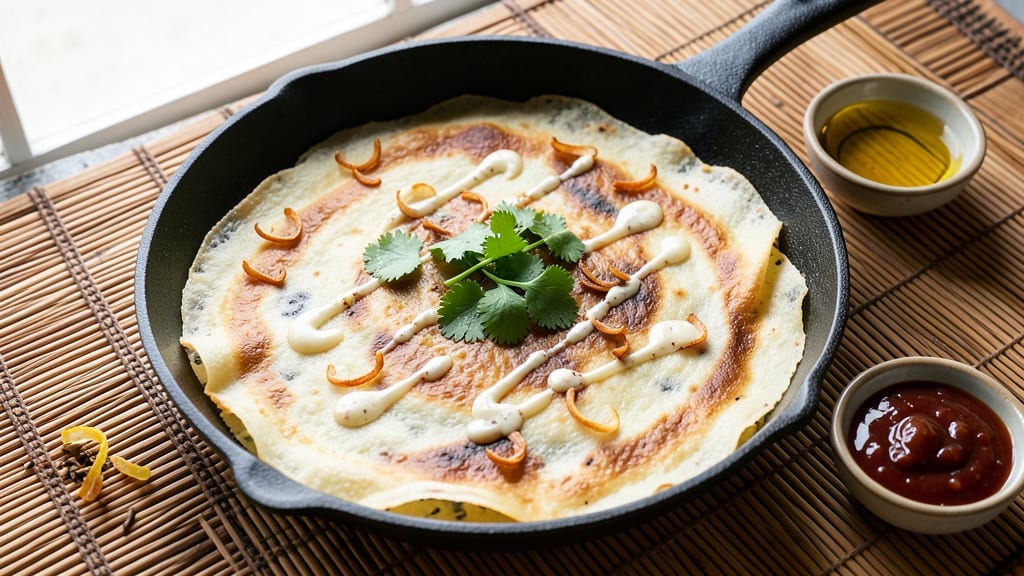
This boiled rice dosa recipe transforms simple ingredients into South India's beloved crispy crepes, where fermented batter meets sizzling heat. The secret lies in the fermentation process—letting rice and lentils sit overnight develops tangy depth while keeping the texture light and airy.
I've perfected this method over years of testing, ensuring every dosa achieves that signature crispy edge and tender center that makes it irresistible.
What sets this recipe apart is the balance between tradition and simplicity. No special equipment is needed—just a nonstick pan and your hands for rolling. The batter ferments naturally at room temperature, creating a subtle sourness that elevates the flavor without overpowering it.
The key to crispy edges? Medium-high heat and just enough oil to create that golden-brown finish.
By the time you're done, you'll have perfectly rolled dosas with crispy, lacy edges that shatter slightly when you bite in, revealing a soft, pillowy interior. The aroma alone—warm, slightly tangy, with a hint of caramelization—will have everyone at the table asking for seconds.
Serve with coconut chutney and sambar for the full South Indian experience.
This recipe is perfect for weekend breakfasts, brunch gatherings, or even as a light lunch. The batter can be made ahead, and the dosas cook in minutes, making it ideal for busy mornings.
Whether you're a seasoned cook or trying dosas for the first time, this method delivers restaurant-quality results at home.
Ingredients for boiled rice dosa
Nine essential ingredients for South India's crispy, fermented crepes that balance tradition with simplicity.
| Ingredient | Amount | Notes |
|---|---|---|
| Short-Grain White Rice 🍚 | 1 cup | Uncooked, washed thoroughly |
| Urad Dal (Black Gram) 🌾 | ½ cup | Split, washed well |
| Rice Fermenting Agent 🍞 | 1 tbsp | Or 1 tsp active dry yeast |
| Filtered Water 💧 | 1 ½ cups | Room temperature preferred |
| Extra-Virgin Coconut Oil 🫒 | 2 tbsp | For crisping dosas (plus extra) |
| Salt 🧂 | ½ tsp | Fine sea salt preferred |
| Fresh Fenugreek Leaves 🌿 | ¼ cup | Optional, for aroma |
| Asafoetida (Hing) 🧂 | ⅛ tsp | Pinch for authentic flavor |
| Fresh Cilantro 🌿 | ⅛ cup | Chopped, for garnish |
| Lemon Juice 🍋 | 1 tbsp | Freshly squeezed |
The rice and urad dal form the batter's backbone—short-grain white rice gives the signature crispy edges, while urad dal provides protein and structure. For the rice, jasmine or basmati varieties work best, but avoid long-grain types. The dal should be split and washed thoroughly to remove bitterness. Indian grocery stores like Patel Brothers or local South Asian markets carry pre-split urad dal, but you can also find it in bulk bins at Whole Foods or Trader Joe's. Fresh fenugreek leaves add an authentic aroma, but if unavailable, skip them—the recipe still shines. The fermenting agent (either traditional rice ferment or active dry yeast) is crucial for developing that subtle tang without overpowering the batter.
No rice ferment on hand? Active dry yeast works perfectly as a substitute, though the flavor will be slightly milder. For the oil, coconut oil is traditional, but avocado or refined sunflower oil work well for crisping. The asafoetida (hing) is non-negotiable for authentic flavor—Patel Brothers or Indian grocery stores stock it in tiny tins. Fresh cilantro and lemon juice can be swapped for dried cilantro (one-third amount) or lime juice, though fresh delivers brighter notes. The batter ferments best at room temperature (75-80°F)—if your kitchen is cooler, place the bowl near a warm spot (like the oven with the light on) to speed up fermentation.
The batter ferments optimally for 8-12 hours at room temperature, developing just the right tang. Store any unused batter in an airtight container in the fridge for up to 3 days, letting it come to room temperature before using. For crispy edges, medium-high heat is key—preheat your nonstick pan for 2-3 minutes before adding oil. The dosas freeze beautifully: cook them first, then layer with parchment paper between each, storing for up to 1 month. Reheat in a dry pan for 30 seconds per side to restore crispiness. Leftovers keep for 2 days in the fridge, best reheated in a steamer or microwave with a damp paper towel.
Why You'll Love This Recipe
- No Soaking Nightmare: I swear by this recipe because it skips the overnight soak—just boil the rice, grind it fresh with urad dal, and ferment for 6-8 hours. That means no forgotten jars in the fridge or waking up to a kitchen that smells like a wet sock.
- Crispy-Creamy Magic: The secret’s in the coconut oil—just a tablespoon in the batter gives those dosas that golden, shatteringly crisp edge while keeping the inside pillowy soft. Honestly, the first time I tried it, I nearly burned my finger testing the heat.
- Weeknight to Party Star: Same batter, endless uses. Serve it with coconut chutney for a lazy Sunday breakfast or stack it high with spicy potato masala for a crowd-pleasing lunch. My roommates still ask for seconds even after I’ve made it three times in a row.
- Budget Breakfast Hero: Urad dal and rice? Two of the cheapest staples out there. A batch of this feeds four for under $3, and leftovers reheat like a dream—just a quick pan-fry to restore that crisp. (Yes, even on a Tuesday night.)
Step-by-step instructions for fermented rice dosas
Mastering this technique yields perfectly crisp dosas with tender centers—here's how to achieve it every time.
Prepare the Rice and Dal Batter
Soak the 1 cup short-grain white rice and 0.5 cup urad dal (black gram) separately for 4-5 hours or overnight. I use two separate bowls for this—the rice absorbs more water and needs longer soaking. Drain thoroughly before mixing.
In a large mixing bowl, combine the drained rice, dal, 1 tbsp rice fermenting agent, 0.5 tsp salt, 0.125 tsp asafoetida (hing), and 0.25 cup fresh fenugreek leaves. The fenugreek adds a subtle aroma, but it's optional if you prefer a milder flavor. Mix well until no dry spots remain.
Ferment the Batter Overnight
Cover the bowl with a clean kitchen towel or plastic wrap and let it ferment in a warm place for 8-12 hours. The ideal fermentation temperature is around 80-85°F—your kitchen should feel comfortably warm. You'll know it's ready when the batter rises significantly and develops a slightly tangy, yeasty smell.
Real talk: fermentation time varies based on your environment. If your kitchen is cooler, extend it to 14 hours. Over-fermented batter (with a strong alcohol smell) can make dosas bitter, while under-fermented batter won't rise properly. The batter should be thick but pourable—like pancake batter consistency.
Grind and Rest the Batter
Transfer the fermented batter to a wet grinder or food processor and grind it into a smooth, lump-free batter. Add 1.5 cups filtered water gradually while grinding to achieve the right consistency. The batter should be thick enough to hold its shape when poured but still flow easily.
Let the batter rest for 30 minutes after grinding. This resting period allows the flavors to meld and the gluten to relax slightly, making it easier to spread evenly. Cover the bowl again with a damp cloth to prevent a skin from forming on the surface.
Heat the Griddle and Prepare Dosa Batter
Heat a non-stick dosa pan or heavy skillet over medium-high heat. Add 1 tbsp extra-virgin coconut oil and let it get hot but not smoking. The oil should shimmer gently—this ensures your dosas develop that signature crispy edge without burning.
Take about ½ cup of the rested batter and pour it onto the center of the hot griddle. Quickly spread it into a thin, even circle using a wet spatula. The edges should be slightly thicker than the center—this creates the classic dosa shape with crispy edges and soft middle. If the batter feels too thick, add 1-2 tablespoons of water to adjust consistency.
Cook to Crispy Perfection
Let the dosa cook undisturbed for 1-2 minutes until the edges turn golden brown and the surface develops small bubbles. This is when you'll see the classic dosa pattern forming—those crispy, lacy edges are what we're after. Here's the thing—don't flip too early. The center should still look slightly undercooked when you see the edges crisping.
Carefully flip the dosa and cook the other side for another 30-45 seconds until lightly browned. Press down gently with a spatula during the first few seconds after flipping to ensure even cooking. Transfer to a plate and keep warm in a 200°F oven while you prepare the remaining dosas. Serve immediately with coconut chutney or sambar for the ultimate experience.
Pro Tips For Making Boiled Rice Dosa
- Soak Urad Dal Overnight: I used to skip this and wonder why my dosa batter tasted flat. Soak the urad dal for at least 8 hours—or better yet, overnight—until it’s soft and doubles in size. This breaks down the proteins properly, making your batter silky and your dosa crispy. (Yes, even if you’re impatient like me.)
- Cook Rice Until Just Tender: Boiled rice dosa isn’t about mushy rice—it’s about rice that’s cooked through but still holds its shape. Test it at 14 minutes: press a grain between your fingers. If it squishes but doesn’t turn to paste, it’s perfect. Overcooking turns your dosa into a sad, gluey mess.
- Ferment at Room Temp: Skip the fridge for the first 6 hours—let the batter ferment at room temperature (around 80°F/27°C) where it’s warmest. This kickstarts the fermentation faster and gives you that signature tang. Only move it to the fridge after it’s bubbly and smells sour (not rotten).
- Use Coconut Oil Sparingly: Extra-virgin coconut oil is rich, but too much makes your dosa greasy and heavy. Use just 1 tablespoon per batch—enough to coat the pan lightly. Heat it until it shimmers (not smokes) before pouring the batter. Trust me, your dosa will thank you.
Make-ahead tips for this boiled rice dosa
Batter Prep Ahead
Make the batter the night before for maximum flavor development. After soaking the rice and dal, mix everything (including fermenting agent) and let it ferment overnight. I store mine in a large glass bowl covered with a damp towel—this keeps it moist and ready for grinding in the morning.
The overnight fermentation creates that signature tangy depth that's impossible to achieve with shorter rests. 🌱
Fermented Batter Storage
Unused batter keeps beautifully in the fridge for up to 3 days in an airtight container. Before using, let it sit at room temperature for 30-60 minutes and adjust consistency with water if needed.
I like to portion it into quart-sized freezer bags for easy grab-and-go mornings. Just thaw overnight in the fridge before grinding. The batter's texture will be slightly thicker after refrigeration—add water gradually while grinding. ❄️
Pre-Cooked Dosa Freezing
Cooked dosas freeze exceptionally well for up to 1 month. After cooking, let them cool completely, then stack with parchment paper between each to prevent sticking. I use quart-sized freezer bags for portion control—just squeeze out excess air before sealing.
To reheat, pop them in a dry skillet over medium heat for 30 seconds per side until crispy again. The edges will regain their signature crunch while the center stays soft. 🍚
Batch Cooking Tips
For large gatherings, make a double batch of batter and cook dosas in batches. Keep the first batch warm in a 200°F oven while you cook the rest. I find that cooking 6-8 dosas at a time maintains perfect crispiness without overcrowding the pan.
Pro tip: Use a nonstick dosa pan—it heats evenly and prevents sticking better than regular skillets. The secret to restaurant-quality results is maintaining consistent heat throughout the cooking process. 🔥
Reheating Leftovers
Leftover dosas reheat best in a steamer basket for 2-3 minutes—this restores crispiness without making them soggy. For a quick fix, microwave them for 20 seconds covered with a damp paper towel, then finish in a dry pan for 10 seconds per side.
The key is speed: don't overheat or the edges will lose their crunch. I always keep a few extra dosas on hand for lazy mornings—just reheat and serve with fresh chutney. 💫
Batter Consistency Troubleshooting
If your batter seems too thick after refrigeration, thin it with 1-2 tablespoons of water at a time while grinding. Too thin? Add 1 tablespoon of cooked rice or soaked dal to thicken.
I've found that batter consistency is more forgiving when it's slightly thicker—you can always add water while cooking if needed. The ideal batter should coat the back of a spoon but still flow freely when poured. 💡
Nutrition facts
Frequently asked questions
Why does my dosa batter smell like alcohol?
That's normal fermentation! The yeast or natural bacteria produce small amounts of alcohol as they break down sugars. If it smells strongly like hard liquor, the batter has over-fermented—use it immediately for cooking or thin with water to balance the flavor. The alcohol burns off during cooking, so it won't affect the taste of your crispy crepes.
Can I make dosas without a wet grinder?
Use a high-powered blender or food processor, adding 1-2 tablespoons of water at a time to prevent overheating. For extra smoothness, pulse in 30-second bursts with 1-minute rests between. The batter should be lump-free—if needed, press through a fine-mesh sieve for that perfect restaurant texture.
How do I fix dosas that stick to the pan?
First, ensure your pan is properly heated—it should be hot enough to sizzle when oil is added. Use coconut oil (not butter or ghee) as it has a higher smoke point. If sticking occurs, reduce heat slightly and add ½ teaspoon more oil to the pan before pouring the next dosa. A well-seasoned cast-iron skillet works wonders too!
What's the best way to adjust the batter for thicker/thinner dosas?
For thicker dosas (like masala dosas), use batter straight from the fridge—it naturally thickens. For thinner, crispier versions, add 1-2 tablespoons of water at a time while grinding. Pro tip: Let the batter rest 10 minutes after adjusting to even out the consistency. The ideal batter should flow like heavy cream but hold its shape when poured.
Can I use instant rice instead of soaked rice?
Not recommended! Instant rice lacks the starch needed for proper fermentation and crispy edges. For authentic results, always use short-grain white rice (jasmine or basmati) soaked for 4-5 hours. If you're short on time, soak for 2 hours and extend fermentation to 14 hours** for similar texture. The extra soaking helps develop the gluten structure crucial for dosa's signature crispiness.