
Main Courses
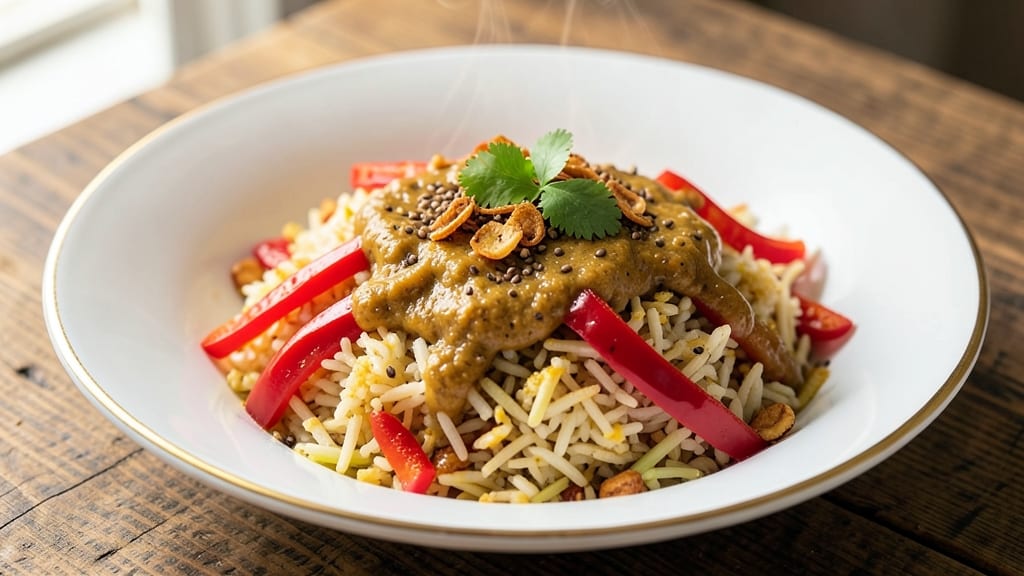
This capsicum rice recipe without onion and garlic delivers bold, aromatic flavors in a single pan while keeping preparation straightforward and adaptable. The secret lies in balancing ginger, lemongrass, and warm spices that create depth without relying on traditional aromatics.
Perfect for those avoiding alliums or seeking a lighter yet flavorful vegetarian dish, this one-pan method ensures minimal cleanup while maximizing taste.
Bright red bell peppers sauté until tender-crisp, absorbing a fragrant paste of ginger, lemongrass, and turmeric that builds layers of warmth. Basmati rice cooks directly in the same pan, absorbing the spiced vegetable broth into fluffy, separate grains.
The result is a vibrant, aromatic dish where sweet capsicum meets earthy spices—ideal for weeknight dinners or meal prep. Ready in 30 minutes, it's a foolproof way to enjoy restaurant-quality rice without the fuss.
Ingredients for capsicum rice recipe without onion and garlic
Aromatic ginger, lemongrass, and turmeric create vibrant depth without onion or garlic in this one-pan vegetarian dish.
| Ingredient | Amount | Notes |
|---|---|---|
| Red Bell Peppers 🍅 | 2 whole | Large, seeds removed |
| Basmati Rice 🌾 | 1 cup | Uncooked, long-grain preferred |
| Fresh Ginger 🌿 | 1 ½ tbsp | Grated, finely minced |
| Lemongrass 🌿 | 3 cloves | Bruised, white parts only |
| Turmeric Powder 🌶️ | ½ tsp | Freshly ground preferred |
| Ground Cumin 🌿 | ½ tsp | Toasted for depth |
| Ground Coriander 🌶️ | ½ tsp | Freshly ground preferred |
| Vegetable Broth 💧 | 1 ½ cups | Low-sodium preferred |
| Extra-Virgin Olive Oil 🫒 | 2 tbsp | High-quality, fruity |
| Lime Juice 🍋 | 1 tbsp | Freshly squeezed |
| Salt 🧂 | ¾ tsp | Diamond Crystal preferred |
| Black Pepper 🌶️ | ¼ tsp | Freshly ground |
| Fresh Cilantro 🌿 | ¼ cup | Chopped, for garnish |
The red bell peppers should be vibrant and firm—Heirloom varieties from Whole Foods or local farmers markets add the most sweetness. Fresh ginger and lemongrass are non-negotiable here; Asian markets often carry the best quality. The turmeric should be deep orange—Penzeys or bulk bins ensure potency. For the rice, Basmati from India (like Tilda brand) stays separate and fluffy. Toast your spices in the pan for 30 seconds before adding liquid—this awakens their flavors.
No fresh lemongrass? Lemongrass paste from a tube works in a pinch, though texture differs. Substitute ginger with 1 tsp ground ginger at half the amount, but fresh is ideal. The vegetable broth can be homemade or quality store-bought—Pacific Foods or Imagine brands are reliable. For extra heat, add a pinch of cayenne pepper. If you're avoiding all spices, garlic-infused oil (1 tsp) can mimic depth, though it contains garlic. The lime juice must be fresh—bottled won't cut it.
This dish reheats beautifully—just add a splash of water and cover. Keeps for 4-5 days in the fridge, though flavor peaks on day 2. For meal prep, portion into glass containers to maintain freshness. The cilantro wilts fast, so add it fresh when serving. Freezes for 3 months if stored in an airtight container with parchment between layers. The rice-to-broth ratio is critical—use a 1:1.5 ratio for perfect texture.
Why You'll Love This Recipe
- I swear by this trick: slice those red bell peppers into thick strips before you even think about dinner. No dicing, no fuss—just toss them in while the rice simmers, and they soften into sweet, melt-in-your-mouth perfection. The ginger and lemongrass do all the flavor work for you.
- No-Chop Needed: I swear by this trick: slice those red bell peppers into thick strips before you even think about dinner. No dicing, no fuss—just toss them in while the rice simmers, and they soften into sweet, melt-in-your-mouth perfection. The ginger and lemongrass do all the flavor work for you.
- Bright & Zesty: That first whiff of turmeric and fresh ginger hits different—warm, earthy, but never heavy. The lemongrass adds this lift, like a citrusy hug, while the peppers bring natural sweetness. It’s the kind of dish that makes you pause mid-bite, even if you’ve eaten it three times this week.
- Lunchbox Hero: Pack this cold or at room temp—it’s that reliable. My kids grab it for school lunches (yes, even the picky ones), and I stash leftovers for work. The rice stays fluffy, the peppers hold their shape, and the ginger-lemongrass punch keeps it exciting. No sad, soggy rice here.
Step-by-step instructions for vibrant capsicum rice
Here's the method for creating a fragrant, one-pan dish where sweet bell peppers meet aromatic spices.
Prepare the Aromatic Base
Heat the 2 tablespoons extra-virgin olive oil in a deep skillet or pot over medium heat. Add the 3 cloves bruised lemongrass and 1.5 tablespoons finely minced fresh ginger. Cook for 2-3 minutes until the lemongrass releases its citrusy aroma and the ginger becomes fragrant but doesn't brown.
Here's the thing—lemongrass needs to be bruised properly. I like to gently crush the cloves with the side of my knife before adding them to the pan. This releases the essential oils that will infuse the entire dish. If you skip this step, you'll miss that bright, citrusy depth that makes this recipe special.
Toast the Spices and Add Bell Peppers
Stir in the 0.5 teaspoon turmeric powder, 0.5 teaspoon ground cumin, and 0.5 teaspoon ground coriander. Toast for 30 seconds until the spices are fragrant and you can smell their warm, earthy notes filling the kitchen. This is where the foundation of your dish's complex flavor profile begins.
Add the 2 whole red bell peppers, cut into 1-inch chunks (seeds removed as specified). Cook for 5-6 minutes over medium-high heat, stirring occasionally, until the edges begin to soften and the peppers release their natural sweetness. You'll know they're ready when they start to caramelize slightly at the edges—that's when they'll develop their best flavor.
Add Rice and Toast for Even Color
Rinse the 1 cup basmati rice under cold water until the water runs clear, then drain well. Add the rice to the skillet and stir to coat it evenly with the oil and spices. Toast for 2-3 minutes until the rice grains become translucent at the edges and develop a light golden color. This step is crucial—it prevents the rice from becoming mushy and ensures each grain absorbs the flavorful oil.
Don't walk away during this step. You want the rice to develop a subtle nuttiness from the toasting process. If it starts to brown too quickly, reduce the heat slightly. The goal is even color, not charring.
Cook with Broth to Perfect Texture
Pour in the 1.5 cups vegetable broth and bring to a gentle simmer. Reduce heat to low and cover with a tight-fitting lid. Cook for 15 minutes without stirring—this allows the rice to absorb the liquid evenly and develop its signature fluffy texture. The peppers will continue softening in the process.
After 15 minutes, check the rice. It should be tender but still have a slight bite. If it's not quite done, add 2-3 tablespoons of water and cook for another 5 minutes. The key is to avoid overcooking, which can turn the rice mushy. You want each grain to be distinct yet tender.
Finish with Lime and Garnish
Once the rice is perfectly cooked, remove the skillet from heat. Stir in the 1 tablespoon fresh lime juice, 0.75 teaspoon salt, and 0.25 teaspoon black pepper. The acidity from the lime brightens the dish and balances the earthy spices. Let the mixture sit for 2 minutes to allow the flavors to meld.
Garnish with the 0.25 cup chopped fresh cilantro just before serving. The cilantro adds a fresh, herbaceous note that cuts through the richness of the dish. Serve immediately while the rice is still warm and the peppers retain their vibrant color and natural sweetness.
Pro Tips For Making Capsicum Rice Recipe Without Onion And Garlic
- Char the Peppers Properly: Don’t just slice those red bell peppers—give them a quick sear in a dry pan for 2-3 minutes until the edges blacken slightly. This deepens their smoky sweetness and balances the turmeric’s earthiness. (Yes, even if you hate burnt bits—just scrape them out before adding oil.)
- Toast the Turmeric First: Bloom that turmeric powder in hot oil for 30 seconds before adding anything else. It prevents the rice from turning fluorescent yellow and lets the spice’s warmth develop. I learned this the hard way when my rice looked like a crime scene.
- Prep the Ginger Like a Pro: Use a microplane or knife to shred the ginger thinly—think rice noodles, not matchsticks. This way, it melts into the dish instead of sitting as chunks. (And skip the grating—it releases too much liquid and makes the rice soggy.)
- Simmer the Lemongrass Low: Crush the lemongrass stalks with the flat of your knife before adding them to the rice, but don’t overdo it—just enough to bruise, not pulp. Simmer them on low heat after the rice is cooked; high heat turns them bitter. (I used to burn them out every time.)
Wine and beer pairings for this dish
Citrus-Infused Whites
This vibrant capsicum rice pairs beautifully with crisp, citrus-forward white wines that complement the dish's bright acidity and ginger-lemongrass notes. A Sauvignon Blanc from New Zealand—like Cloudy Bay—is my go-to choice.
Its zesty lime and grapefruit flavors mirror the lime juice in the dish, while herbal undertones echo the lemongrass. Serve slightly chilled (45-48°F) to enhance its refreshing qualities. 🍷
Light-Bodied Reds
For those who prefer red wine, a Pinot Noir from Oregon or Burgundy offers an elegant match. Look for wines with bright cherry and raspberry notes—Domaine Serene or La Crema are excellent options.
These lighter reds won’t overpower the dish’s delicate spices but instead harmonize with the capsicum’s sweetness and the ginger’s warmth. Keep it at 55-58°F for optimal pairing.
Craft Beer Pairings
A wheat beer with citrusy hops, like Allagash White or Blue Moon, creates a refreshing contrast to the dish’s earthy spices. The beer’s light body and notes of orange and coriander complement the capsicum’s sweetness and the lime’s tang.
For a more robust option, try a Belgian witbier—its peppery spice and citrusy finish bridge the gap between the dish’s flavors. Serve at 45-50°F for the best experience. 🍺
Non-Alcoholic Options
For a non-alcoholic pairing, sparkling water with a splash of lime is a refreshing choice. Add a few drops of rosewater or orange blossom water to elevate the drink’s complexity. Alternatively, a ginger-lime soda—like San Pellegrino Aranciata Rossa—mirrors the dish’s key flavors without alcohol.
For a more substantial option, try a coconut water infused with muddled mint and lime.
Regional Adaptations
In Thailand, this dish would traditionally pair with Thai iced tea—sweet, creamy, and slightly bitter—which balances the dish’s spiced sweetness. For a Mediterranean twist, a sparkling pomegranate juice adds a tart, fruity contrast.
In India, a mango lassi (yogurt drink) complements the capsicum’s mild heat and the rice’s aromatic spices. Each pairing enhances the dish’s global appeal while staying true to its vegetarian roots.
Nutrition facts
Frequently asked questions
Can I use other bell peppers instead of red?
Yellow or orange bell peppers work beautifully—they'll give your dish a slightly sweeter, more vibrant flavor profile. For a bolder taste, try 1 red and 1 yellow pepper together. Avoid green bell peppers, as they're more bitter and less sweet. The recipe's spice balance will still shine through.
What if I don't have lemongrass?
No problem! Substitute with 1 teaspoon lemongrass paste or 1/2 teaspoon lemon zest + 1/2 teaspoon lemon juice for a citrusy kick. For extra depth, add 1/4 teaspoon cardamom powder—it complements the ginger beautifully. The dish will still taste amazing, just with slightly different aromatic notes.
How can I make this dish spicier?
Add 1/4 teaspoon cayenne pepper or 1/2 teaspoon red pepper flakes when toasting the spices. For heat with depth, try 1/2 teaspoon smoked paprika instead—it adds a subtle smokiness that pairs perfectly with the capsicum. Always start with half the amount and adjust to taste.
Can I make this dish in an Instant Pot?
Yes! Sauté the ginger, lemongrass, and spices first, then add the peppers and rice. Pour in 1.5 cups broth, seal the lid, and cook on high pressure for 5 minutes. Let the pressure release naturally for 10 minutes, then finish with lime juice. The texture will be slightly different but still delicious!
Why does my rice turn out mushy?
Mushy rice usually happens when too much liquid is added or the rice isn't toasted properly. Always use 1:1.5 rice-to-broth ratio and toast the rice for 2-3 minutes** before adding liquid. If it's still too wet, spread it on a tray to dry out slightly before serving.