
Main Courses
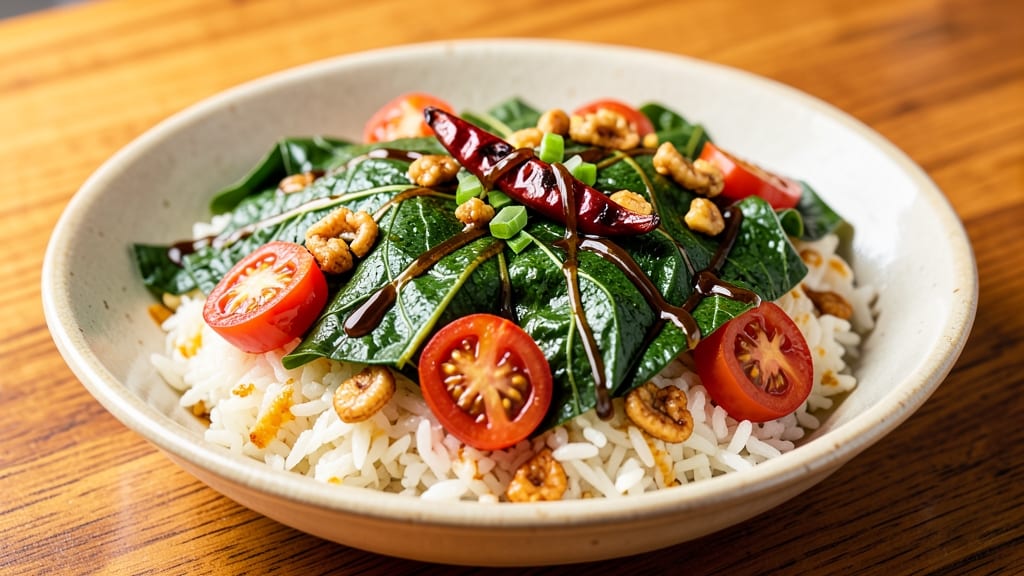
This West African cassava leaf and rice recipe delivers bold, earthy flavors in a single aromatic pot. The cassava leaves—rich in nutrients and distinct taste—simmer with rice, tomatoes, and aromatic spices to create a hearty stew that’s both satisfying and deeply traditional.
Perfect for a weeknight dinner or special gathering, this one-pot dish captures the soul of West African cuisine without the fuss.
The secret lies in the slow cooking process, where the cassava leaves release their vibrant green essence into the rice, creating a thick, flavorful stew. Using palm oil or utazi leaves (if available) adds depth, while garlic, ginger, and peppers build layers of warmth.
Serve it with fried plantains, tofu, or beans for a complete, protein-rich meal that’s as nourishing as it is delicious.
Ingredients for cassava leaf and rice
Fresh cassava leaves and aromatic spices transform simple rice into a West African flavor masterpiece.
| Ingredient | Amount | Notes |
|---|---|---|
| Cassava Leaves 🌿 | 2 cups | Fresh, chopped, or frozen |
| Long-Grain White Rice 🍚 | 1 cup | Uncooked, rinsed well |
| Tomatoes 🍅 | 2 medium | OR 1 cup diced canned tomatoes |
| Palm Oil 🫒 | ¼ cup | OR substitute vegetable oil |
| Garlic Cloves 🧄 | 4 cloves | Minced for depth of flavor |
| Fresh Ginger 🌿 | 1 ½ inch | OR 0.5 tsp ground ginger |
| Red Bell Peppers 🌶️ | 1 whole | Diced, any color |
| Onions 🧅 | 1 medium | Chopped, yellow or red |
| Scotch Bonnet Peppers 🌶️ | 1 whole | OR habanero, adjust for heat |
| Vegetable Stock 💧 | 2 cups | Low-sodium preferred |
| Fresh Thyme Leaves 🌿 | ¼ cup | OR 1 tsp dried thyme |
| Salt 🧂 | 1 ½ tsp | Adjust to taste |
| Black Pepper 🌶️ | ½ tsp | Freshly ground |
| Utazi Leaves 🌿 | ¼ cup | Optional, dried or fresh |
The cassava leaves are the star here—fresh is best, but frozen works in a pinch. Look for vibrant green leaves at African markets or specialty stores like African & Caribbean Foods Market in major cities. If you can't find utazi leaves, don't stress—just skip them. For the rice, use long-grain white for the perfect texture, though jasmine rice works too. The palm oil gives that signature rich color and flavor, but if you're avoiding it, vegetable oil keeps the dish from falling apart. Just don't substitute with olive oil—it'll overpower the delicate flavors.
No fresh ginger? Ground ginger at half the amount works, though fresh has more punch. The scotch bonnet peppers are non-negotiable for authentic heat, but if you're sensitive, swap for a milder pepper and reduce the amount. Canned tomatoes are fine here—Muir Glen or Hunt's are reliable brands. For the tomatoes, if you're using fresh, chop them into small pieces so they cook down evenly. The vegetable stock should be low-sodium to let the spices shine, but if you're out, water with a pinch of salt works in a bind.
This dish tastes even better the next day as the flavors meld. Store in an airtight container in the fridge for up to 5 days. Freeze portions for 3 months if you're prepping ahead. The cassava leaves can be prepped in advance—chop and store in a sealed container in the freezer for up to 6 months. For serving, pair with fried plantains or a side of beans to round out the meal. The rice will firm up when reheated, so add a splash of water or stock when warming.
Why You'll Love This Recipe
- One-Pot Magic: I swear by this recipe when I’m too tired to wash extra bowls—the rice cooks right in the same pot as the leaves, so cleanup is just a quick wipe. That rich palm oil smell alone makes me forget how little effort it took.
- Umami Bomb: Between the garlic sizzling in palm oil and the cassava leaves wilting into a savory bite, this isn’t just "vegetable rice"—it’s ridiculously flavorful. The tomatoes add that bright pop, but the leaves? They’re the star, earthy and satisfying in every bite.
- Lunchbox Hero: Honestly, this is my go-to for meal prep—stays fresh for days, reheats perfectly, and my kids actually finish their portions. Pack it cold or warm, and it’s still the best rice dish they’ve ever brought home.
- Budget Win: A single bunch of cassava leaves stretches across three meals, and long-grain rice is cheap. Palm oil adds depth without breaking the bank, and garlic? Always a pantry staple. This feeds four for under $10—no guilt, just flavor.
Step-by-step instructions for West African cassava leaf and rice
This one-pot wonder delivers rich, aromatic flavors with minimal cleanup.
Sauté the Aromatics in Palm Oil
Heat the 0.25 cup palm oil in a large pot over medium heat until shimmering but not smoking. Add the 1 chopped medium onion and cook for 3-4 minutes until softened and translucent. The oil should sizzle gently without burning.
Add the 1 diced whole red bell pepper and cook for another 2 minutes until slightly tender. Stir in the 4 minced garlic cloves and 1.5 inch grated fresh ginger, cooking for 30 seconds until fragrant. This aromatic base forms the flavor foundation for the dish.
Incorporate the Spicy Components
Carefully add the 1 whole Scotch bonnet pepper, halved lengthwise and seeds removed if you prefer less heat. Cook for 1 minute to soften slightly. Add the 2 chopped medium tomatoes and cook for 3-4 minutes until they break down into a thick sauce.
Stir in the 0.25 cup fresh thyme leaves and 0.25 cup utazi leaves (if using). These herbs add depth and complexity to the dish. Cook for 1 minute to release their flavors before adding the remaining ingredients.
Add Rice and Vegetable Stock
Add the 1 cup rinsed long-grain white rice to the pot and stir to coat evenly with the oil and tomato mixture. Pour in the 2 cups vegetable stock and bring to a gentle boil. Reduce heat to low and let it simmer uncovered for 5 minutes.
This initial simmer allows the rice to absorb some liquid before adding the cassava leaves. The rice should be partially cooked but still firm to the touch. If it cooks too quickly, reduce heat slightly to maintain a gentle simmer.
Add Cassava Leaves and Season
Add the 2 cups chopped cassava leaves to the pot, stirring gently to distribute evenly. Sprinkle with 1.5 tsp salt and 0.5 tsp black pepper. The cassava leaves will wilt and blend with the rice as they cook.
Cover the pot with a tight-fitting lid and simmer over low heat for 20-25 minutes. Avoid peeking or stirring, as this can disrupt the cooking process. The rice should be tender and the cassava leaves fully incorporated into the dish.
Rest and Serve
Once the rice is tender and the liquid has been absorbed, remove the pot from heat. Let it rest, covered, for 5 minutes. This resting period allows the flavors to meld and the rice to finish cooking evenly.
Fluff the rice gently with a fork before serving. The dish should have a rich, earthy aroma with a balance of spicy, savory, and herbal notes. Serve immediately with a side of fried plantains or a simple green salad for a complete West African meal.
Pro Tips For Making Cassava Leaf And Rice
- Wilt Leaves Low and Slow: I learned this the hard way—dumping raw cassava leaves into boiling oil or water turns them bitter and mushy. Instead, simmer them on medium-low with just a splash of water (about ¼ cup) until they collapse like a sad salad. This keeps their earthy flavor intact and makes them tender without turning to sludge.
- Blanch Leaves First: Skip the raw chop-and-drop method. Blanch the leaves in salted boiling water for 30 seconds—just enough to soften the edges and remove grit. Drain and rinse under cold water before cooking. This cuts down on the bitter compounds that sneak into your stew and makes the leaves wilt faster later.
- Toast Garlic in Palm Oil: Don’t just mince garlic and toss it in. Heat the palm oil first, then add the garlic cloves whole and fry until they’re golden and fragrant—about 2 minutes. Crush them right in the pot. This deepens the flavor base and prevents that raw, medicinal garlic taste that ruins the dish.
- Use Two Tomato Batches: I was skeptical until I tried it: Cook the tomatoes in two stages. First, blend and fry a small handful (about ¼ cup) with the garlic to make a thick paste—this builds flavor. Then, add the rest of the chopped tomatoes later to keep the sauce from turning gluey. The paste gives body, the fresh tomatoes add brightness.
Essential equipment for cassava leaf and rice
Large Pot Essentials
You’ll need a heavy-bottomed Dutch oven or large stainless steel pot (at least 6-quart capacity) to handle the cassava leaves and rice without burning. I use my All-Clad 6-quart pot—it distributes heat evenly and prevents scorching.
Avoid nonstick pots, as the palm oil can degrade the coating over time. 🔥
Oil Choices Matter
While palm oil gives that signature West African color and flavor, it’s not always easy to find. Vegetable oil or coconut oil work well as substitutes, but avoid olive oil—it can overpower the delicate flavors.
For extra authenticity, look for African & Caribbean Foods Market brands or Goya palm oil in Latin markets.
Prep Tools for Leaves
Cassava leaves can be tough, so a sharp chef’s knife and cutting board are essential. I also recommend a mandoline for even slicing if you’re prepping large batches. For utazi leaves (if using), a mortar and pestle helps crush dried leaves into a fine powder for better flavor infusion.
Thermometer for Precision
A kitchen thermometer ensures your pot stays at a steady low heat (around 170-180°F) during simmering. This prevents burning the cassava leaves while allowing the rice to cook evenly. My Thermoworks Thermapen is a game-changer for monitoring temperature without guesswork. ⚡
Utensil Upgrades
Use a wooden spoon or silicon spatula to stir—metal utensils can scratch your pot. For serving, a fine-mesh strainer helps drain any excess liquid if you’re reheating leftovers. A tight-fitting lid is critical to trap steam and cook the rice perfectly. I love OXO Good Grips for their ergonomic handles.
Optional Extras
If you’re using fresh cassava leaves, a blender (like my Ninja 1100-watt) helps purée them into a smoother stew. For utazi leaves, a fine-mesh sieve strains out any unwanted bits. These tools aren’t mandatory, but they elevate the dish from good to restaurant-quality. 💫
Nutrition facts
Frequently asked questions
Can I substitute cassava leaves with another green leafy vegetable?
While cassava leaves are irreplaceable for authentic flavor, you can use spinach or collard greens in a pinch—but the taste won't be the same. For a closer match, try bitter melon leaves (if available) or purslane. The key is choosing greens with a slightly bitter, earthy profile. Just reduce cooking time by 5-7 minutes since they wilt faster.
Why does my cassava leaf rice turn out mushy?
Overcooking or using too much liquid causes mushiness. Always use low heat and simmer uncovered for the first 5 minutes—this lets excess moisture evaporate before adding the leaves. For 1 cup rice, stick to 2 cups stock (not water). If your rice still feels undercooked, it needs more time; if it's mushy, you likely added too much liquid.
How do I make this recipe vegetarian-friendly?
This dish is already vegetarian! For extra protein, stir in 1 cup cooked black-eyed peas or crumbled tofu during the final 5 minutes of cooking. Garnish with fried plantains or avocado slices for a complete, plant-based meal. The cassava leaves provide iron, while the rice adds carbs—perfect for a balanced vegetarian plate.
Can I make this recipe without palm oil?
Use vegetable oil or coconut oil instead—both work well. For extra depth, add 1 tsp smoked paprika or 1/4 tsp ground nutmeg to mimic palm oil's richness. Avoid olive oil, as its strong flavor can overpower the dish. The key is using enough oil (about 1/4 cup) to properly sauté the aromatics.
How long can I store leftovers, and how do I reheat?
Store leftovers in an airtight container for up to 5 days in the fridge. To reheat, add 2-3 tablespoons water or stock per cup of rice, cover, and simmer on low heat for 5-7 minutes. For microwave reheating, cover with a damp paper towel and heat in 30-second intervals until hot—this prevents drying out.