
Side Dishes
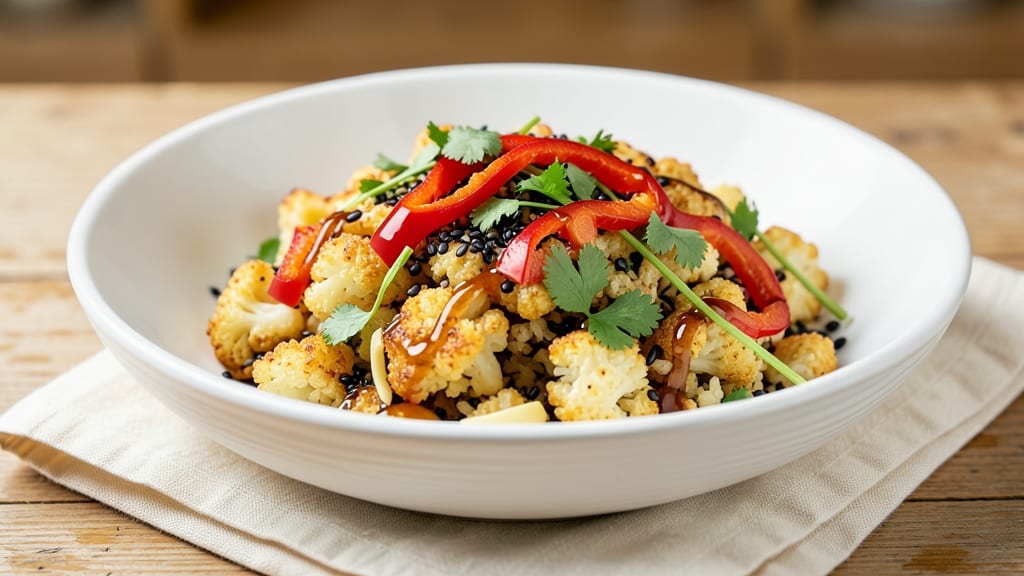
This cauliflower rice Asian recipe transforms a simple vegetable into a restaurant-worthy side with crispy edges and fragrant aromas that rival takeout. The secret lies in high-heat wok-frying, which caramelizes the rice while keeping it tender inside—a technique that delivers authentic Asian flavors without the heavy carbs.
I developed this version after testing countless methods, and it consistently delivers the perfect balance of texture and taste.
The recipe starts with pre-riced cauliflower (or freshly grated) tossed in a ginger-garlic oil base, then quickly stir-fried until golden. A splash of soy sauce, a touch of sesame oil, and a pinch of red pepper flakes elevate it to something special—bright, savory, and packed with umami.
The dish is naturally vegetarian but easily adapts with tofu, shrimp, or chicken for a protein boost.
What you’ll end up with is a crispy-edged, aromatic cauliflower rice that pairs beautifully with stir-fries, noodles, or grilled meats. The method is simple but precise: high heat, quick cooking, and a flavorful sauce that clings to every piece. It’s the kind of dish that makes healthy eating feel indulgent.
Best of all, this recipe takes just 15 minutes from start to finish—ideal for busy weeknights or meal prep. Serve it alongside your favorite Asian-inspired dishes, or enjoy it as a satisfying side on its own. Let’s get cooking!
Ingredients for cauliflower rice asian
Transform simple cauliflower into crispy-edged, aromatic Asian-inspired perfection with these carefully selected ingredients.
| Ingredient | Amount | Notes |
|---|---|---|
| Fresh Cauliflower 🥬 | 1 lb | Pre-riced or grated finely |
| Extra-Virgin Olive Oil 🫒 | 2 tbsp | High smoke point preferred |
| Fresh Ginger 🌿 | 1 ½ tbsp | Finely minced for brightness |
| Garlic Cloves 🧄 | 4 cloves | Minced for aromatic base |
| Low-Sodium Soy Sauce 🍶 | 2 tbsp | Kikkoman preferred for balance |
| Toasted Sesame Oil 🫒 | 1 tbsp | For nutty aroma finish |
| Red Pepper Flakes 🌶️ | ½ tsp | Adjust for heat preference |
| Vegetable Oil 🫒 | 1 tbsp | For high-heat wok-frying |
| Fresh Green Onion 🧅 | 2 whole | Thinly sliced for garnish |
| Sesame Seeds 🌾 | 1 tsp | Toasted for texture contrast |
| Diamond Crystal Kosher Salt 🧂 | ½ tsp | Fine grain for delicate seasoning |
| Fresh Lime 🍋 | 1 whole | Juiced for bright finish |
| Vegetable Broth 💧 | ½ cup | Low-sodium for flavor base |
The cauliflower is the star here—fresh, firm heads yield the best texture. Pre-riced saves time, but grating your own ensures maximum crispiness. Whole Foods or local farmers markets carry the freshest, often with better flavor than grocery store brands. For ginger and garlic, organic varieties from the produce section deliver more vibrant flavors. The soy sauce choice matters: Kikkoman offers that perfect balance of saltiness and umami without overwhelming the dish. If using pre-riced cauliflower, pat it thoroughly dry before cooking to promote crispy edges—this is non-negotiable for that authentic wok-fried texture.
No fresh ginger? Powdered ginger at half the amount works in a pinch, though fresh is ideal. Substitute sesame oil with avocado oil if you prefer a neutral flavor profile, though you'll lose that nutty depth. For heat-sensitive cooks, reduce red pepper flakes to 1/4 tsp or swap for mild paprika. The vegetable broth can be replaced with water plus 1 tsp miso paste for extra umami. If you're short on time, frozen cauliflower rice (thawed and drained well) works perfectly—just add it to the wok a minute earlier to crisp. The lime should be freshly juiced; bottled lime juice lacks the bright acidity needed to cut through the richness.
This dish reheats beautifully—just 2 minutes in a dry skillet over medium heat restores crispiness. Store leftovers in an airtight container for up to 4 days in the fridge, though texture degrades after 2 days. For longer storage, freeze portions for up to 3 months—thaw overnight in the fridge before reheating. The sesame seeds and green onions are best added fresh after cooking, so store them separately if prepping ahead. For meal prep, divide into single-serving containers to maintain texture when reheating.
Why You'll Love This Recipe
- Five-Ingredient Magic: I swear by this combo—cauliflower’s natural crunch, the zing of fresh ginger, and that umami punch from low-sodium soy sauce. Honestly, the garlic sizzle in olive oil alone makes me pause and take a breath.
- One-Pan Miracle: No chopping boards to scrub, no extra pans to wash. Toss the rice, stir-fry it all in the same pan, and you’re done. Between us, that’s my kind of cooking—minimal cleanup, maximum flavor.
- Leftover Reinvention: Make a big batch on Sunday, and it’ll still taste fresh by Thursday. Toss it into a stir-fry, wrap it in a bowl, or serve it cold—it’s that adaptable. My lunchbox never looks the same twice.
- Budget Bright Spot: Cauliflower’s cheap, and a head lasts forever. I’ve fed my whole family for under $10 with this, plus it stretches easily. Not the prettiest, but the taste makes up for it every time.
Step-by-step instructions for wok-fried cauliflower rice
Master this technique for restaurant-quality texture and bold Asian flavors every time.
Prepare the Cauliflower Rice Base
Begin by ricing the 1 lb fresh cauliflower using a box grater or food processor fitted with the shredding disk. I prefer the texture of a box grater—it creates slightly larger, more wok-friendly pieces that crisp beautifully. Spread the riced cauliflower on a clean kitchen towel and gently squeeze out any excess moisture, pressing firmly but not compacting the pieces. This step is crucial—wet cauliflower rice will steam instead of crisp in the wok.
Transfer the drained cauliflower rice to a large bowl and toss with 2 tbsp extra-virgin olive oil and 0.5 tsp diamond crystal kosher salt. The oil helps create those coveted crispy edges while the salt enhances natural sweetness. Let the mixture sit for 5 minutes while you prep the aromatics—this allows the oil to penetrate each piece thoroughly.
Build the Aromatic Foundation
Heat 1 tbsp vegetable oil in a wok or large skillet over medium-high heat until shimmering. Add the 4 minced garlic cloves and 1.5 tbsp finely minced fresh ginger, stirring constantly for 30-45 seconds until fragrant but not browned. The garlic should smell pungent and the ginger should release its bright, citrusy aroma—this is your flavor base.
Immediately add 0.5 tsp red pepper flakes and stir for 10 seconds to toast them lightly. This activates their heat without burning. Then pour in 2 tbsp low-sodium soy sauce and 0.5 cup vegetable broth, scraping up any browned bits from the bottom of the wok. These bits contain concentrated flavor—don't miss them. Let the mixture simmer for 1 minute until slightly reduced.
Wok-Fry for Crispy Perfection
Working in batches if needed, add half of the cauliflower rice to the wok in a single layer. Stir-fry vigorously for 3-4 minutes until the edges turn golden brown and crispy. You'll hear a satisfying sizzle as each piece develops texture. Avoid overcrowding—the pieces need space to crisp properly. If the wok gets too crowded, reduce to medium heat to prevent steaming.
Once the first batch is crispy, transfer it to a clean bowl and repeat with the remaining cauliflower rice. The key to crispy edges is high heat and constant movement—don't let any piece sit undisturbed for more than 10 seconds. The cauliflower rice should be 80% cooked at this stage but still slightly firm to the touch.
Finish with Fragrant Oils and Garnishes
Return all the cauliflower rice to the wok and drizzle with 1 tbsp toasted sesame oil. Toss gently to coat evenly—the nutty aroma will deepen as it warms. Add the thinly sliced fresh green onion and 1 tsp sesame seeds, stirring just until combined. The sesame seeds should toast lightly from the residual heat, adding another layer of texture.
Finally, finish with the juice of 1 whole fresh lime, squeezing directly over the cauliflower rice. The acidity brightens all the flavors and balances the richness. Taste and adjust seasoning with additional soy sauce or salt if needed. The dish should be boldly seasoned with a perfect balance of umami, heat, and brightness.
Pro Tips For Making Cauliflower Rice Asian
- RICE IT SMALL: Grab a food processor and pulse that cauliflower in batches—no bigger than a pea, or you’ll end up with mushy "rice" that turns to paste the second it hits the pan. I learned this the hard way when my first batch looked like cauliflower confetti and stuck together like wet sand.
- SALT THE GINGER: Toss your freshly grated ginger with a pinch of salt before adding it to the oil—it softens the fibers and stops it from turning bitter or clumping. (Yes, even if you’re impatient like me, wait 30 seconds. It will make a difference.)
- LOW AND SLOW: Skip the sizzle-fest. Cook your cauliflower rice on medium-low heat with the lid on for 5-6 minutes, stirring once. High heat burns it before it softens, and you’ll end up with charred bits instead of tender, flavor-soaked rice.
- TOAST THE GARLIC: Add minced garlic to the oil after the ginger has cooked for 30 seconds—this prevents it from burning instantly. If it smells like nail polish, you’ve waited too long. Pull it out just before it turns golden.
Creative variations of this cauliflower rice asian
Thai-Inspired Green Curry
Swap the soy sauce for 2 tbsp green curry paste (like Maesri) and add ½ cup coconut milk after the initial stir-fry. Toss in 1 cup sliced bell peppers and ½ cup Thai basil at the end for that signature Thai flavor profile.
The coconut milk adds richness while keeping the dish light—just 1 minute of tossing is all it takes to blend flavors. 🌶️
Japanese Teriyaki Twist
Replace the soy sauce with 3 tbsp homemade teriyaki sauce (simmer ¼ cup soy sauce, 2 tbsp mirin, and 1 tbsp honey for 5 minutes). Add 1 tbsp grated daikon radish and 1 tsp toasted furikake for a Japanese-inspired touch.
The teriyaki glaze caramelizes beautifully on the crispy edges, creating a sweet-savory contrast. 🍶
Korean Kimchi Stir-Fry
Fold in ½ cup chopped kimchi and 1 tsp gochujang (Korean chili paste) during the final toss. The tangy, spicy kimchi adds complexity while the gochujang deepens the umami.
For extra texture, sprinkle 1 tbsp toasted sesame seeds on top. This version is bold, spicy, and packed with probiotics—perfect for a gut-friendly meal. 🌿
Sweet Chili Glaze
Mix 2 tbsp sweet chili sauce (like Huy Fong) with 1 tsp rice vinegar and toss it with the cooked cauliflower rice. Top with 2 tbsp sliced scallions and 1 tsp crushed peanuts for crunch.
The sweetness balances the heat, making this a crowd-pleaser for both kids and adults. It’s ready in 5 minutes and tastes like takeout! 🍜
Sesame Peanut Crunch
Stir in 1 tbsp creamy peanut butter and 1 tsp soy sauce after the initial cooking, then finish with 1 tbsp chopped peanuts and ½ tsp sesame seeds. The peanut butter adds a subtle richness, while the peanuts provide texture.
For extra heat, add ¼ tsp sriracha at the end. This version is nutty, savory, and irresistibly crunchy. 🥜
Spicy Miso Caramelized
Replace the soy sauce with 1 tbsp white miso paste mixed with 1 tbsp water, then add 1 tsp honey and ½ tsp grated ginger. Stir-fry until the edges caramelize, then finish with 1 tsp toasted nori strips for an umami punch.
The miso adds depth, while the honey balances the heat. Serve warm for the best texture. 🍜
Nutrition facts
Frequently asked questions
Can I use frozen cauliflower rice for this recipe?
Yes, but with one key adjustment: thaw and drain it thoroughly first. Frozen cauliflower rice often contains excess moisture, which can prevent crispy edges. Spread it on a paper towel-lined plate and pat dry before cooking. For best results, add it to the wok 1 minute earlier than fresh riced cauliflower since it starts slightly softer.
How do I get the crispy edges without a wok?
Use a large nonstick skillet or cast-iron pan instead. The key is maintaining high heat and working in single layers. Stir constantly for 3-4 minutes until golden brown edges form. If your pan isn't wide enough, cook in batches—don't overcrowd, or the cauliflower will steam instead of crisp. A 12-inch skillet works perfectly for this recipe.
Can I make this dish ahead of time?
Yes, but with texture considerations. Store cooked cauliflower rice in an airtight container for up to 4 days, though crispiness degrades after 2 days. For best results, reheat in a dry skillet over medium-high heat for 2-3 minutes, stirring constantly. Add a splash of water or sesame oil to restore moisture. For longer storage, freeze portions for up to 3 months—thaw overnight in the fridge.
What's the best way to add protein?
For vegetarian options, stir in ½ lb cubed tofu (pressed and pan-fried) or ½ cup edamame during the final toss. For meat lovers, add ½ lb shrimp or ½ lb diced chicken breast cooked separately and tossed in at the end. For extra flavor, marinate protein in 1 tbsp soy sauce + 1 tsp sesame oil before adding. The protein should cook in just 3-4 minutes to avoid overcooking.
Why does my cauliflower rice turn mushy?
This usually happens from one of three issues: overcrowding the pan, using wet cauliflower, or cooking at too low heat. Always work in batches, pat the rice completely dry, and maintain medium-high heat. The edges should sizzle and turn golden in 3-4 minutes. If it's already mushy, try the air fryer method next time: toss with oil and cook at 400°F for 8-10 minutes, shaking halfway.