
Main Courses
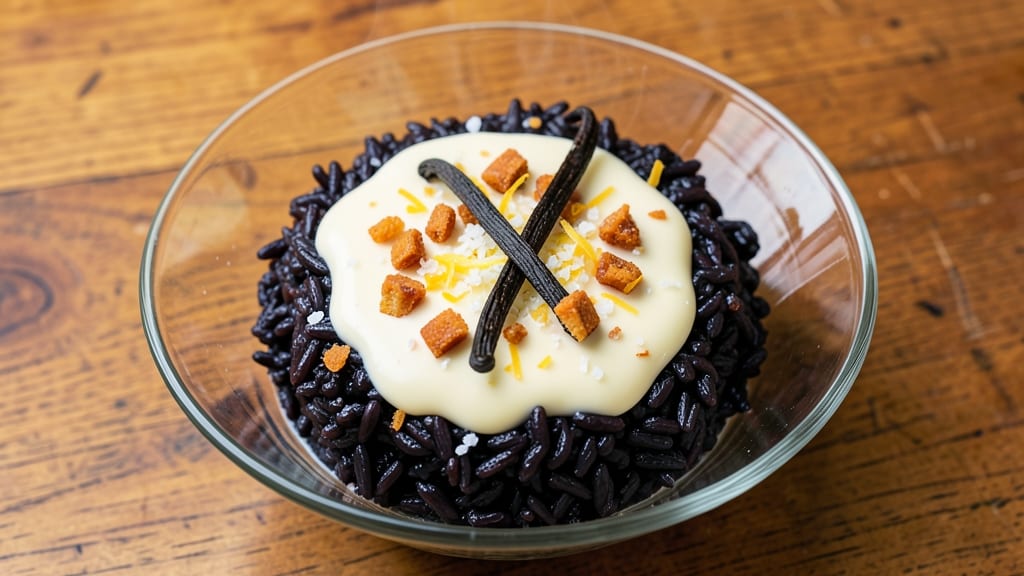
This black glutinous rice biko recipe delivers the perfect balance of chewy texture and coconut caramel sweetness—Filipino dessert at its finest. The secret lies in layering steamed black glutinous rice with coconut milk and sugar, then baking until golden and irresistible.
I've perfected this version to stay true to tradition while making it approachable for home cooks.
What makes this dish special is its rich cultural heritage and satisfying texture—each bite offers tender rice, creamy coconut, and a touch of caramelized sweetness. The recipe uses simple ingredients but requires patience for the best results.
Whether you're making it for a special occasion or a comforting treat, this biko will impress everyone at the table.
Ingredients for black glutinous rice biko
Nine simple ingredients transform into chewy, coconut-kissed Filipino dessert perfection.
| Ingredient | Amount | Notes |
|---|---|---|
| Black Glutinous Rice 🍚 | 2 cups | Uncooked, soaked overnight |
| Coconut Milk 🥥 | 1 ½ cups | Full-fat canned, well-shaken |
| Granulated Sugar 🍚 | 1 ½ cups | White or brown preferred |
| Salt 🧂 | ½ tsp | Fine sea salt preferred |
| Butter 🧈 | ½ cup | Unsalted, softened slightly |
| Vanilla Extract 🌿 | 1 tsp | Pure vanilla preferred |
| Water 💧 | 1 ½ cups | For soaking rice |
| Baking Powder 🍞 | ½ tsp | For fluffiness |
| Toasted Coconut Flakes 🥥 | ¼ cup | For topping, optional |
| Shredded Coconut 🥥 | ¼ cup | Sweetened, for garnish |
The black glutinous rice is the heart of this dish. Filipino markets or Asian grocery stores carry it in bulk—look for packages labeled 'galapong' or 'bobolink.' Soaking it overnight (8+ hours) is non-negotiable; this ensures the perfect chewy texture. If you can't find it, substitute with sweet rice, though the color will differ. For the coconut milk, full-fat canned versions (like Goya or Thai Kitchen) work best—avoid the light versions. The sugar should be fine white or light brown; dark brown can overpower the delicate flavors. I always double-check my sugar's color rating to avoid surprises.
No coconut milk? Coconut cream plus extra water works in a pinch (use 1 cup cream + 0.5 cup water). Running short on vanilla? Vanilla bean paste or even a scraped vanilla bean adds depth. The butter should be softened but not melted—this helps it blend smoothly with the rice. For the baking powder, aluminum-free is best to avoid metallic aftertaste. If you're feeling adventurous, add a pinch of salted egg yolk powder (common in Filipino desserts) for a traditional twist. The toasted coconut flakes should be lightly browned—just a few minutes in a dry pan until fragrant.
Prep ahead is key here. The soaked rice mixture keeps for 2 days in the fridge before baking, making it perfect for special occasions. Once baked, store leftovers covered at room temperature for 3 days or refrigerate for 5 days. For longer storage, freeze portions in airtight containers for up to 3 months. Reheat gently in the oven or microwave—just until warmed through. The texture changes slightly when reheated, but it's still delicious. I always make a double batch; it disappears quickly at gatherings.
Why You'll Love This Recipe
- One-Pot Magic: I swear, this recipe lives up to its name—just rice, coconut milk, sugar, and a pinch of salt. No fancy gadgets, no last-minute grocery runs. The rice soaks up the creamy coconut like a dream, and the butter at the end? That’s the secret to that melt-in-your-mouth texture.
- Velvet & Sweet: Between us, the first bite of this biko is ridiculously good—the deep, nutty flavor of black glutinous rice paired with coconut milk’s richness, then that caramelized sugar crust on top. It’s the kind of dessert that makes you pause mid-scoop and think, “Wait, I already had two helpings?”
- Party or Pajamas: Honestly, this works everywhere. Pack it for lunch, serve it warm at a potluck, or eat it straight from the pot with a spoon at midnight. The coconut milk keeps it creamy even when chilled, so it’s just as good for breakfast as it is for dessert.
- Budget Bingo: Black glutinous rice might sound fancy, but it’s actually cheaper than white rice in bulk. A single coconut can makes multiple servings, and sugar/butter stretch further than you’d think. Plus, leftovers? They taste even better reheated—proof that simplicity wins.
Step-by-step instructions for black glutinous rice biko
Here's the professional method for achieving that signature chewy texture and caramelized coconut flavor.
Soak the Black Glutinous Rice Overnight
Place the 2 cups of uncooked black glutinous rice in a large bowl and cover completely with the 1.5 cups of water. The rice should be fully submerged—this prevents uneven cooking and ensures that signature chewy texture. Let it soak at room temperature for at least 8 hours or overnight in the refrigerator. I find the longer soak (12-16 hours) yields the best results, as it allows the rice to fully hydrate and develop its characteristic stickiness.
After soaking, drain the rice thoroughly using a fine-mesh strainer. Give it a gentle shake to remove any excess water—you want the rice to be moist but not dripping. This step is critical because under-soaked rice will yield a grainy texture rather than the desired chewy consistency. The rice should feel soft to the touch but not mushy when squeezed between your fingers.
Prepare the Coconut-Caramel Mixture
In a heavy-bottomed saucepan, combine the 1.5 cups of coconut milk, 1.5 cups of granulated sugar, 0.5 cup of softened butter, 1 tsp of vanilla extract, and 0.5 tsp of salt. Place the saucepan over medium heat and bring the mixture to a gentle simmer, stirring constantly with a wooden spoon to prevent scorching. The mixture will bubble vigorously and thicken as it cooks—this is where the rich caramel flavor develops.
Simmer for 15-20 minutes, stirring frequently, until the mixture reaches a thick, syrupy consistency. You'll know it's ready when it coats the back of a spoon and leaves a glossy trail when you run your finger through it. This caramel base is the heart of biko—it's what gives the dessert its signature sweetness and moisture. If you notice any lumps forming, strain the mixture through a fine-mesh sieve for a perfectly smooth texture.
Cook the Rice in the Coconut Mixture
Add the drained black glutinous rice to the saucepan with the coconut mixture. Stir gently to combine, then sprinkle the 0.5 tsp of baking powder over the top. The baking powder helps create a light, airy texture as the rice cooks. Reduce the heat to low and let the mixture simmer gently for 45-60 minutes, stirring occasionally with a wooden spoon to prevent sticking.
During this time, the rice will absorb the coconut mixture and transform into a thick, pudding-like consistency. You'll know it's ready when the rice is tender and the mixture has thickened to a custard-like texture that clings to the spoon. The color should be a deep, rich brown from the caramelized coconut and sugar. If the mixture looks too thick before the rice is fully cooked, add 1-2 tablespoons of water to loosen it slightly—this helps the rice absorb the liquid evenly.
Finish and Garnish
Once the rice is fully cooked and the mixture has reached the desired consistency, remove the saucepan from heat. Stir in the 0.25 cup of toasted coconut flakes, reserving a small handful for garnish. The toasted coconut adds a delightful crunch that contrasts beautifully with the chewy rice. Transfer the mixture to a serving dish and spread it evenly, creating a smooth, glossy surface.
Sprinkle the reserved toasted coconut flakes and the 0.25 cup of shredded coconut evenly over the top. For an extra touch, you can drizzle a little extra coconut milk or caramelized sugar mixture over the surface to create a decorative pattern. Let the biko cool to room temperature before serving—this allows the flavors to meld and the texture to set slightly. Serve warm or at room temperature for the best experience.
Pro Tips For Making Black Glutinous Rice Biko
- Soak Rice Overnight: Black glutinous rice needs a good 8–12 hours in water—yes, even if you’re eager to start. I learned this the hard way when my first batch turned out gummy; the rice just can’t absorb enough liquid otherwise. Use room-temperature water, and give it a quick rinse before cooking to remove excess starch.
- Simmer Slow and Low: Once the coconut milk starts bubbling, drop the heat to a gentle simmer. I used to rush it, and the rice would either dry out or turn mushy. Aim for 15–20 minutes of steady, quiet bubbles—no splattering, no rushing. The butter will melt into the mix naturally, giving that rich, creamy finish.
- Salt Before Sweetening: Taste the coconut milk mixture before adding sugar—it’s easy to overdo it later. A pinch of salt (about ¼ teaspoon) first balances the coconut’s natural sweetness. I was skeptical until I tried it: the sugar then feels intentional, not overwhelming. Trust me, your palate will notice.
- Butter in Last: Fold in the butter at the very end, when the rice is just done. Cold butter clumps in hot liquid, so melt it first (even just 10 seconds in the microwave works). This keeps the texture smooth and adds that luxurious sheen—no one wants lumpy biko, especially when serving it warm.
Regional styles of these flavors
Filipino Biko Variations
In the Philippines, biko comes in many forms, each with regional twists. The classic biko sa inihaw (this recipe) uses black glutinous rice, but biko sa gata (coconut milk biko) often incorporates ube (purple yam) or chocolate for a richer flavor.
For a festive touch, some versions add latik (coconut curds) or salted egg yolk—a nod to traditional Filipino celebrations. 🌶️
The Visayan version often includes saba bananas or jackfruit for natural sweetness, while Tagalog-style biko sometimes features cheese or pandan leaves for aroma. If you love ube, try replacing ½ cup of rice with ube halaya for a vibrant purple hue and earthy sweetness.
The texture remains chewy, but the flavor profile shifts dramatically.
Indonesian & Malaysian Adaptations
Across Southeast Asia, biko evolves into klepon (sweet rice balls with palm sugar) or ketan hitam (black glutinous rice cakes). In Indonesia, klepon uses palm sugar and is often wrapped in pandan leaves for a fragrant twist.
For a fusion take, mix ½ cup of the coconut mixture with red bean paste before baking—this adds a creamy, nutty contrast to the chewy rice. 🥥
In Malaysia, ketan hitam is sometimes steamed in coconut leaves for aroma, then topped with grated coconut and palm sugar syrup. To mimic this, wrap your baked biko in banana leaves for 10 minutes before serving for an authentic touch.
The leaves infuse a subtle herbal note that pairs beautifully with the coconut.
Modern Twists
For a vegan version, swap butter for coconut oil and use agave syrup instead of sugar. Add vanilla bean seeds and toasted sesame seeds for depth.
If you love chocolate, fold in ½ cup melted dark chocolate at the end for a molten center—this creates a decadent dessert that still honors the chewy rice base. 🍫
For a spiced variation, infuse the coconut milk with cinnamon sticks and star anise while simmering. The warm spices cut through the sweetness beautifully. Serve with a side of mango sorbet to balance the richness. This twist works especially well for holiday gatherings where bold flavors shine.
Regional Serving Styles
In the Visayas, biko is often served with latik (toasted coconut) drizzled on top, while in Luzon, it’s paired with turon (banana lumpia) for a crunchy contrast.
For a modern plating, arrange the biko in a ring mold, then top with edible flowers and gold leaf for a restaurant-worthy presentation. 🌸
In Mindanao, biko is sometimes served with pineapple slices to cut through the coconut sweetness. For a festive touch, garnish with crushed macadamia nuts or toasted coconut flakes in a decorative pattern. The key is balancing textures—creamy, chewy, and crunchy all in one bite.
Nutrition facts
Frequently asked questions
What makes black glutinous rice different from regular rice?
Black glutinous rice has a naturally chewy, almost gelatinous texture when cooked properly, unlike regular rice which becomes firm and separate. The dark color comes from anthocyanins (same compounds found in blueberries), and it's naturally sweeter. This rice is a staple in Filipino desserts because it absorbs flavors beautifully while maintaining its signature bite.
Can I make this biko without a heavy-bottomed saucepan?
Yes, but you'll need to be extra vigilant. Use a medium saucepan and stir constantly to prevent scorching. For best results, consider using a double boiler setup with a heatproof bowl placed over a pot of simmering water. This gentler heat helps create the perfect caramelized coconut sauce without burning.
Why did my biko turn out too dry?
This usually happens when the rice absorbs too much liquid during cooking. The key is to maintain a thick, custard-like consistency throughout the process. If it looks dry, stir in 1-2 tablespoons of warm coconut milk or water while cooking. Always remember that the rice should feel moist but not watery when squeezed between your fingers before baking.
How can I make this recipe gluten-free?
This recipe is naturally gluten-free since it doesn't contain any wheat-based ingredients. Just ensure your baking powder is labeled gluten-free (most aluminum-free versions are). Always double-check that your coconut milk and other ingredients don't contain hidden gluten. The texture will remain perfectly chewy and delicious without any modifications.
What's the best way to reheat leftover biko?
For the best texture, reheat in the oven at 300°F (150°C) for 10-15 minutes covered with foil. Microwave reheating works in a pinch (use 20-second intervals on medium power), but it can make the coconut mixture slightly grainy. If reheating, add a splash of warm coconut milk to restore moisture.