
Main Courses
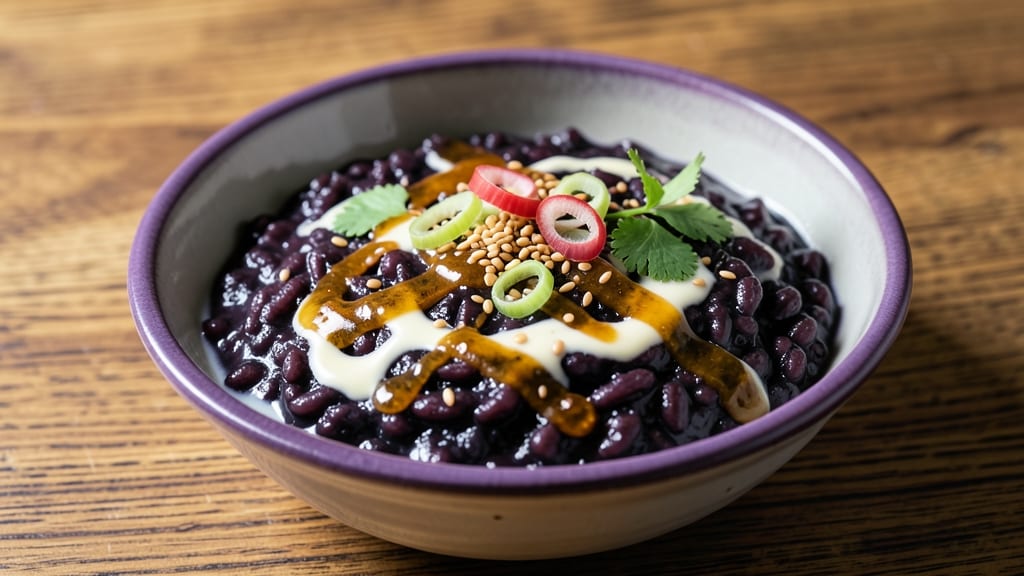
This black rice cooking recipe transforms humble grains into a nutrient-packed porridge with rich, earthy depth that rivals gourmet dishes. The secret lies in proper soaking and simmering techniques that unlock its natural sweetness and chewy texture—far beyond basic rice cooking.
What starts as simple grains becomes a versatile canvas for both savory and sweet applications, from traditional Chinese heibao rice to modern bowls and desserts.
The process is straightforward yet transformative: soak the rice overnight to soften its dense structure, then simmer gently until tender. This method preserves its deep purple hue and unlocks its nutritional powerhouse status—packed with antioxidants and fiber.
The result is a porridge with a satisfying, almost creamy consistency that pairs beautifully with coconut milk, honey, or savory toppings like sesame seeds and scallions.
Ingredients for black rice cooking
Transform simple grains into nutrient-dense porridge with these carefully selected ingredients.
| Ingredient | Amount | Notes |
|---|---|---|
| Black Rice 🌾 | 1 cup | Uncooked, rinsed thoroughly |
| Water 💧 | 3 cups | Filtered preferred for clarity |
| Coconut Milk 🥥 | 1 can (13.5 oz) | Full-fat for creaminess |
| Honey 🍯 | 2 tbsp | Raw preferred for richness |
| Sesame Seeds 🌰 | 1 tbsp | Toasted for aroma |
| Scallions 🧅 | 3 whole | Thinly sliced for garnish |
| Fresh Ginger Root | 1 inch | Peeled, thinly sliced |
| Fresh Ginger Root 🌿 | 1 tbsp | Grated for cooking |
| Sea Salt 🧂 | ½ tsp | Diamond Crystal preferred |
| White Peppercorns 🌶️ | ¼ tsp | Freshly cracked |
| Sesame Oil 🫒 | 1 tbsp | Toasted for depth |
| Lime Zest 🍋 | 1 tsp | Freshly grated |
| Lime Juice 🍋 | 1 tbsp | Freshly squeezed |
Black rice is the star here—look for whole grains at specialty stores like Whole Foods or Trader Joe's for the deepest purple hue. The uncooked grains need thorough rinsing to remove excess starch, which prevents grittiness in the final texture. For best results, source organic black rice—it retains more nutrients and has a cleaner, earthier flavor. Store uncooked rice in an airtight container away from light to preserve its vibrant color and nutritional integrity for up to 12 months. The coconut milk should be full-fat canned, not the carton variety, for optimal creaminess in the porridge.
No sesame seeds? Toasted sunflower seeds work as a neutral substitute, though they lack the nutty depth. Fresh ginger is ideal, but dried ginger at half the amount will suffice in a pinch—just ensure it's ground fresh for maximum flavor impact. The honey can be swapped for maple syrup if preferred, though it alters the subtle floral notes. For extra richness, add 1 tablespoon of coconut cream alongside the coconut milk. If you're using pre-minced ginger, measure carefully—it's more potent than fresh slices. The lime zest and juice should be freshly prepared to brighten the earthy rice without overpowering its natural sweetness.
This porridge reheats beautifully—simply add 2-3 tablespoons of water per serving and warm gently on low heat. It keeps in the fridge for 4-5 days in an airtight container, though the texture becomes slightly firmer. For longer storage, freeze portions in ice cube trays with a splash of coconut milk to preserve moisture. When reheating from frozen, thaw overnight in the fridge before gentle warming. The toasted sesame seeds and scallions should be added just before serving to maintain their crisp texture and vibrant color.
Why You'll Love This Recipe
- Five-Ingredient Magic: I swear, this recipe is one of those rare dishes where the ingredients list reads like a grocery store shortcut—yet the result feels like a labor of love. Black rice soaks up the coconut milk like a sponge, and that honey? It ties everything together without you even noticing it’s there.
- Nutty Creamy Bliss: Between us, the moment those sesame seeds toast and the coconut milk steams into the rice? That’s when the room gets quiet. The rice stays tender, the coconut adds this velvety richness, and the honey just… balances it all. It’s the kind of flavor that lingers—like a hug in bowl form.
- Lunchbox to Dinner: I make this for breakfast, pack it for lunch, and reheat it for dinner—no one bats an eye. The texture holds up surprisingly well, and the coconut milk keeps it from drying out. Plus, it’s one of those dishes that tastes even better the second day (yes, really).
- Budget-Friendly Luxury: Black rice might sound fancy, but it’s actually cheaper than white rice at my store. Coconut milk’s the splurge, but a can lasts forever, and honey? A little goes a long way. This is the kind of meal that makes you feel fancy without draining your wallet—especially when you’re feeding a crowd.
Step-by-step instructions for black rice porridge
Transform simple ingredients into a velvety, nutrient-rich porridge with this precise method.
Rinse and Parboil the Black Rice
Place the 1 cup black rice in a fine-mesh strainer and rinse under cold water until the water runs clear. This removes surface starch that can make the porridge gummy. Transfer the rinsed rice to a medium saucepan and add the 3 cups water. Bring to a boil over medium-high heat, then immediately reduce to medium-low heat and simmer uncovered for 20 minutes.
Stir occasionally to prevent sticking, but don't press down on the rice—this disrupts the even cooking process. The rice should soften significantly but not fully cook through. Here's the thing—black rice needs gentle handling; over-stirring releases starch prematurely. When you can see the grains have absorbed water but still retain some bite, it's ready for the next step.
Blend Until Silky Smooth
Transfer the partially cooked rice to a high-powered blender along with the 1 can (13.5 oz) coconut milk. Add the 1 tbsp grated fresh ginger root and 0.5 tsp sea salt to enhance flavor during blending. Secure the lid and blend on high speed for 2-3 minutes until completely smooth. The mixture should have a thick, pudding-like consistency with no visible rice particles.
If the blender struggles, add 1-2 tablespoons of the cooking liquid to help emulsify. This is where the magic happens—the blending transforms the rice into a velvety base. Taste at this stage; you should detect the earthy rice flavor with a hint of ginger's warmth. If needed, adjust the salt to your preference.
Simmer for Rich Depth of Flavor
Return the blended mixture to the saucepan and place over low heat. Stir in the 2 tbsp honey, 1 tbsp sesame oil, and 0.25 tsp freshly cracked white peppercorns. Bring to a gentle simmer and cook for 15-20 minutes, stirring occasionally with a silicone spatula. The porridge should thicken gradually while developing a subtle caramelized aroma from the honey.
Here's the critical checkpoint: the porridge is ready when it reaches a pudding-like consistency that coats the back of a spoon. You'll notice tiny bubbles forming at the edges—this indicates proper thickening. If it thickens too quickly, add 1-2 tablespoons of water to maintain the ideal texture. The sesame oil will infuse delicate nutty notes as it heats.
Finish with Aromatics and Garnish
Remove the porridge from heat and stir in the 1 tsp lime zest and 1 tbsp lime juice. The acidity brightens the dish's earthy flavors. Let it sit for 5 minutes to allow the lime to fully integrate. Thinly slice the 3 whole scallions and toast the 1 tbsp sesame seeds in a dry skillet over medium heat for 1-2 minutes until golden and fragrant.
To serve, ladle the porridge into bowls and drizzle with the toasted sesame seeds and scallion slices. The contrast of crisp seeds against the creamy porridge adds essential texture. Here's what you're aiming for: a dish where each spoonful delivers the rice's nutty depth, coconut's creaminess, ginger's warmth, and lime's refreshing tang—all balanced perfectly.
Pro Tips For Making Black Rice Cooking
- SOAK THE RICE FIRST: I learned this the hard way—skipping the soak means your black rice will turn to mush or stay rock-hard. Rinse it thoroughly, then let it sit in water for at least 4 hours (overnight is best). The starch loosens, soaking up coconut milk like a dream instead of fighting you.
- SIMMER, DON’T BOIL: Black rice needs gentle heat—cranking the stove to high turns it into glue. Once the water’s simmering, drop it to the lowest setting that keeps tiny bubbles dancing. Stir occasionally, and resist the urge to peek under the lid (yes, even if you’re impatient like me).
- TOAST SESAME SEEDS SEPARATELY: Tossing raw sesame seeds into the pot at the end? You’re missing out. Dry-toast them in a pan for 2-3 minutes until golden—just until they smell nutty. Sprinkle them over the finished dish for crunch, not a sad, soggy afterthought.
- SWEETEN WITH CAUTION: Honey thickens when heated, so don’t dump it all in at once. Stir in a tablespoon at a time while the rice cooks, tasting as you go. If it’s too cloying, balance it with a splash of coconut milk—it thins the sweetness without watering down the flavor.
Wine and beer pairings for black rice cooking
Earthy Red Wine
For this nutrient-rich porridge, I recommend a Pinot Noir from Oregon or California—its bright acidity and subtle earthy notes complement the black rice's natural depth. Look for wines with 12-14% ABV and flavors of cherry, plum, and vanilla to mirror the porridge's sweet-savory balance.
A 2018 La Crema Pinot Noir has just the right structure without overpowering the dish's delicate aromatics. 🍷
Creamy White Wine
A Viognier from California or Chenin Blanc from the Loire Valley works beautifully with the coconut milk's richness. I love a 2021 Domaine Zind-Humbrecht Gewürztraminer—its lychee and floral notes harmonize with the honey and lime zest.
Serve slightly chilled (45-50°F) to let its crisp acidity cut through the porridge's creaminess.
Light Beer Pairings
For beer lovers, a Japanese junmai sake (like Dassai 23) or a wheat beer with citrus notes pairs surprisingly well. The sake's delicate umami enhances the ginger and sesame, while a Blue Moon Belgian White with coriander and orange peel echoes the lime's brightness.
Keep the beer at 40-45°F to preserve its crispness.
Non-Alcoholic Options
For a refreshing non-alcoholic match, try sparkling hibiscus tea (chilled) or a ginger-lime soda made with San Pellegrino and a splash of lime juice. The effervescence cleanses the palate between bites, while the ginger complements the porridge's spiced profile.
For a richer option, coconut water from a young green coconut adds a subtle sweetness that mirrors the dish's natural flavors.
Nutrition facts
Frequently asked questions
Why does black rice turn purple when cooked?
Black rice contains high levels of anthocyanins, the same antioxidants that give blueberries their color. When cooked properly, these compounds react with heat and moisture, intensifying the deep purple hue. The longer you simmer it gently, the richer the color becomes—this also indicates the rice is fully absorbing nutrients and developing its characteristic earthy sweetness.
Can I make this porridge without a blender?
Yes! If you don't have a high-powered blender, cook the rice until very soft (30-40 minutes of simmering), then mash it with a potato masher or fork until smooth. For extra creaminess, stir in ½ cup coconut milk during the final 10 minutes of cooking. The texture will be slightly grainier but still delicious.
How can I make this porridge savory instead of sweet?
Swap the honey for 1 tbsp soy sauce and 1 tsp miso paste, then add 1 tsp grated garlic and ½ tsp chili flakes during the final simmer. Top with crispy fried shallots and a drizzle of sesame oil for an umami-packed bowl. The key is balancing the earthy rice with bold savory flavors—think of it as a cross between congee and risotto.
What's the best way to store leftover porridge?
Transfer to an airtight container and refrigerate for up to 5 days. To reheat, add 2-3 tbsp water per serving and warm on low heat while stirring constantly. For freezing, portion into ice cube trays with a splash of coconut milk, then transfer to a bag. Thaw overnight in the fridge before reheating—this preserves the silky texture.
Can I use brown rice instead of black rice?
While brown rice will work, it lacks the deep flavor and nutritional profile of black rice. The porridge will be lighter in color and less rich in antioxidants. For a similar texture, try forbidden black rice (the same as black rice) or a blend of ½ cup black rice + ½ cup brown rice**. The earthy notes will still shine through, but the purple hue will be more muted.