
Main Courses
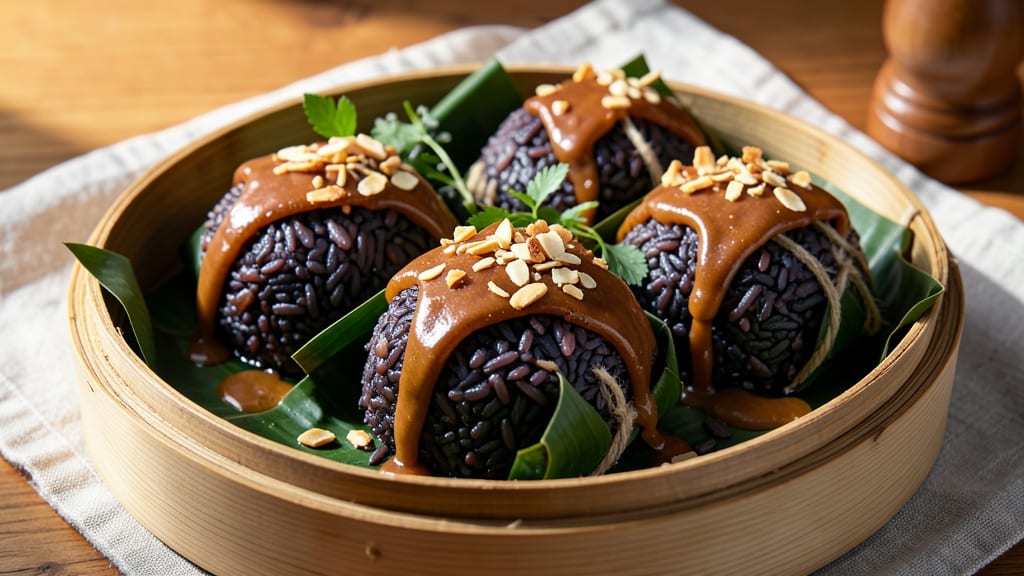
This Filipino bolay forbidden black rice recipe transforms simple ingredients into a dessert that looks like edible art—deep purple swirls with a nutty, earthy flavor that’s been a staple in Filipino celebrations for generations.
The key lies in cooking glutinous black rice until tender, then layering it with coconut milk or caramelized latik for that signature rich, creamy texture.
The result is a dish that’s both elegant and comforting, perfect for special occasions or when you want to impress with minimal effort. Wrapped in banana leaves and steamed, the rice absorbs the coconut’s sweetness while maintaining its striking color.
Serve it warm or chilled—either way, it’s a showstopper that tastes even better than it looks.
Ingredients for bolay forbidden black rice
Filipino forbidden black rice needs just 14 ingredients for its striking purple swirls and nutty depth.
| Ingredient | Amount | Notes |
|---|---|---|
| Glutinous Black Rice 🌾 | 2 cups | Uncooked, forbidden black rice variety |
| Coconut Milk 🥥 | 13 ½ oz | Full-fat canned, unsweetened |
| Latik (Coconut Caramel) 🍯 | 1 cup | Homemade or store-bought |
| Brown Sugar 🍚 | ½ cup | Lightly packed |
| Salt 🧂 | ½ tsp | Diamond Crystal preferred |
| Banana Leaves 🍃 | 2 whole | Fresh or frozen, thawed |
| Vanilla Extract 🌸 | 1 tsp | Pure alcohol-free preferred |
| Water 💧 | 3 cups | Filtered preferred |
| Toasted Coconut Flakes 🥥 | ¼ cup | For garnish |
| Unsalted Butter 🧈 | 2 tbsp | For wrapping |
| Cinnamon Sticks 🌿 | 2 whole | For aroma infusion |
| Pandan Leaves 🌿 | 4 pieces | Optional, for fragrance |
| Kaffir Lime Leaves 🍋 | 2 pieces | Optional, for aroma |
| Sugar 🍬 | 1 tbsp | For dusting |
The glutinous black rice is the heart of this dish—look for forbidden black rice at Asian markets or specialty stores like H Mart. If you can't find it, black jasmine rice works in a pinch, though the color won't be as dramatic. For coconut milk, Thai Kitchen brand is reliable, but full-fat canned coconut milk is non-negotiable—it gives that signature richness. Latik (coconut caramel) can be homemade by melting coconut oil and sugar, or found pre-made at Filipino grocery stores. Banana leaves are essential for that authentic presentation—frozen leaves at Asian markets work perfectly when thawed and softened over steam.
No forbidden black rice? Black jasmine rice is your best substitute, though expect a less intense purple hue. Latik missing? A mix of brown sugar and coconut oil caramelized together mimics its flavor. Pandan and kaffir lime leaves are optional but add layers of aroma—dried leaves work if fresh aren't available, though fresh is ideal. Diamond Crystal kosher salt is preferred here for its fine grain, but any sea salt will do. For vanilla extract, avoid imitation—alcohol-free vanilla ensures no off-flavors in the delicate coconut and rice pairing. Toasted coconut flakes should be lightly browned for crunch, not burnt.
Store banana leaves in a cool, dry place for up to 6 months—they won't spoil but lose flexibility. Coconut milk lasts 2 weeks unopened, 1 week once opened. Latik keeps for 3 months refrigerated. Assemble the bolay up to 2 days ahead—the flavors meld beautifully overnight. Serve warm or chilled, but reheat gently if chilled to preserve the rice's texture. The toasted coconut flakes add freshness, so toast them just before serving for maximum crunch.
Why You'll Love This Recipe
- One-Pot Magic: I swear by this recipe when I’m too tired to wash pots—just the rice, coconut milk, and a drizzle of latik simmer together until it’s sticky, rich, and ready. No straining, no fuss, just pure, hands-off comfort.
- Caramel-Kissed Depth: That latik (coconut caramel) is the star—it turns this from plain rice to something luxurious, with a slow, buttery sweetness that lingers. Honestly, I’ll take this over any store-bought dessert when I crave something indulgent.
- Leftovers That Shine: This rice keeps perfectly for days, and reheats like a dream—whether I’m packing lunches or serving it cold in bowls. (Yes, even on a Tuesday night, it still tastes like a special occasion.)
- Budget Luxury: Glutinous black rice might sound fancy, but it’s affordable, and coconut milk stretches far with brown sugar and salt. I’m feeding a family of four for under $10, and no one complains—because it’s that good.
Step-by-step instructions for forbidden black rice preparation
Transform simple ingredients into rich, aromatic forbidden black rice with deep purple swirls.
Prepare the Banana Leaf Wraps
Thaw the 2 whole banana leaves if using frozen, then soak them in hot water for 2 minutes until pliable. This softens the leaves enough to wrap without tearing. Pat them dry with paper towels and cut each into 6-inch squares—you'll need exactly 6 pieces total for your 6 servings.
Place 2 tablespoons unsalted butter on each banana leaf square and spread it evenly using the back of a spoon. The butter will help create a delicate barrier between the rice and leaf, preventing sticking while infusing subtle richness. Fold each square into a loose cone shape and set aside.
Layer and Steam the Rice Mixture
In a large mixing bowl, combine the 2 cups glutinous black rice with the 3 cups water, 1 cup latik (coconut caramel), 0.5 cup brown sugar, 0.5 teaspoon salt, 1 teaspoon vanilla extract, 2 whole cinnamon sticks, 4 pieces pandan leaves, and 2 pieces kaffir lime leaves. Mix gently but thoroughly until the rice is evenly coated with the coconut caramel.
Divide the mixture evenly among the prepared banana leaf cones, pressing down lightly to create compact layers. The rice should fill each cone about ¾ full—don't overpack or the steam won't penetrate properly. Place the filled cones in a steamer basket lined with a damp towel to prevent sticking.
Steam to Perfect Texture
Bring 2 inches of water to a rolling boil in a large pot, then reduce to a gentle simmer. Place the steamer basket with the rice cones over the boiling water, ensuring the bottoms of the cones don't touch the water. Cover tightly with a lid and steam for 45-50 minutes until the rice is tender and the liquid has been fully absorbed.
You'll know it's done when the rice releases easily from the banana leaf and has a slight give to the touch. The aroma should be intense—sweet coconut, warm vanilla, and subtle pandan fragrance filling your kitchen. Remove from heat and let steam for an additional 5 minutes before unwrapping.
Unwrap and Garnish
Carefully remove each rice cone from the steamer and let cool for 2 minutes before gently unwrapping the banana leaf. The rice should have beautiful deep purple swirls throughout, with a slightly sticky yet firm texture. Transfer to a serving platter and dust the top evenly with the 1 tablespoon sugar and 0.25 cup toasted coconut flakes.
Serve immediately while still warm. The contrast between the rich, earthy rice and the toasted coconut adds a delightful textural element. For optimal presentation, arrange the rice in a circular pattern on the platter, allowing the purple swirls to create a visually stunning centerpiece.
Pro Tips For Making Bolay Forbidden Black Rice
- SOAK THE RICE LONGER: I learned this the hard way—skipping the overnight soak leaves your black rice gummy and uneven. Glutinous rice needs at least 8 hours (12 is better) in water to break down properly. Drain right before cooking so it doesn’t turn mushy when you add the coconut milk.
- STIR THE LATIK LAST: Fold in the latik (coconut caramel) when the rice is just tender—about 5 minutes before it’s fully done. Stirring too early makes it clump into a sticky mess, and too late? You’ll have dry pockets of rice. A wooden spoon works best for gentle mixing.
- SALT THE COCONUT MILK: The coconut milk needs salt—don’t just season at the end. Mix in a pinch (about ¼ tsp per cup) while heating it, so the flavor infuses evenly. Skipping this step leaves the dish tasting flat, even if you add salt later.
- USE LESS BROWN SUGAR: The latik already packs sweetness, so cut the brown sugar by half (or skip it entirely if your latik is rich). Too much sugar makes the rice cloying and masks the nutty coconut flavor. Taste the latik first—adjust accordingly.
Essential equipment for bolay forbidden black rice
Steamer Essentials
For authentic bolay, a bamboo steamer is non-negotiable—it distributes heat evenly and creates that signature tender texture. I recommend a 6-inch round bamboo steamer with a tight weave (like those from Amazon or Filipino grocery stores).
If you don’t have bamboo, a stainless steel steamer with a tight-fitting lid works too, but bamboo infuses subtle earthy notes. 🌿
Banana Leaf Tools
Fresh or frozen banana leaves are available at most Asian markets (look for Thai or Filipino brands). If you can’t find them, plastic wrap in a pinch—but it won’t hold the shape or impart the same aroma. To prep leaves, use scissors (not knives) to cut clean squares.
A damp kitchen towel helps soften them before wrapping. For extra authenticity, store extra leaves in a paper bag in the freezer for up to 3 months.
Coconut Caramel Kit
Latik (coconut caramel) is the secret weapon—homemade is best, but store-bought (like Filipino brands from H Mart) saves time. If DIYing, melt ½ cup coconut oil with 1 cup brown sugar in a saucepan over low heat until golden. A heatproof silicone spatula helps scrape up every last bit. For extra richness, add 1 tsp vanilla extract while warm. 🥥
Rice Cooking Gear
A heavy-bottomed pot (like Le Creuset) prevents scorching when simmering the 3 cups water for steaming. A fine-mesh strainer helps rinse the rice if needed, though forbidden black rice usually doesn’t require soaking.
For mixing, a wooden spoon prevents scratching your bowl. And don’t forget a timer—steaming for 45-50 minutes is critical for perfect texture.
Garnish Must-Haves
Toast coconut flakes in a dry nonstick skillet over medium heat until golden (about 3-4 minutes). A sieve makes dusting 1 tbsp sugar evenly over the rice effortless. For presentation, a round ceramic platter (like Corelle) elevates the dish’s visual appeal.
Keep pandan leaves and kaffir lime leaves on hand—they’re optional but add layers of aroma. ✨
Nutrition facts
Frequently asked questions
Why is this dessert called "forbidden" black rice?
The name "forbidden" comes from Chinese history, where black rice was considered a royal delicacy reserved for emperors and nobility. In Filipino cuisine, it became associated with special occasions and celebrations due to its rich flavor and striking appearance.
Can I make this without banana leaves?
Yes, but the presentation won't be traditional. Use parchment paper or aluminum foil instead, though the aroma won't be as authentic. For a closer substitute, try damp paper towels wrapped around the rice while steaming. The texture will be similar, but the visual appeal will differ.
How do I store leftovers?
Transfer any leftovers to an airtight container and refrigerate for up to 3 days. Reheat gently in the microwave with a damp paper towel covering for 30-45 seconds to restore moisture. For longer storage, freeze for up to 2 months—thaw overnight in the fridge before reheating.
Can I substitute regular rice for forbidden black rice?
Not recommended—regular rice lacks the nutty, earthy flavor and deep purple color that make this dish special. If you must, try black jasmine rice for a similar color, though the texture and taste will differ. The forbidden black rice's unique properties are essential for the authentic experience.
What's the best way to serve bolay?
Serve warm as a centerpiece for special occasions, especially during Filipino holidays like Christmas or birthdays. Pair with latik ice cream or ube halaya for a traditional dessert spread. For modern twists, serve chilled with coconut whipped cream or alongside mango slices.