
Main Courses
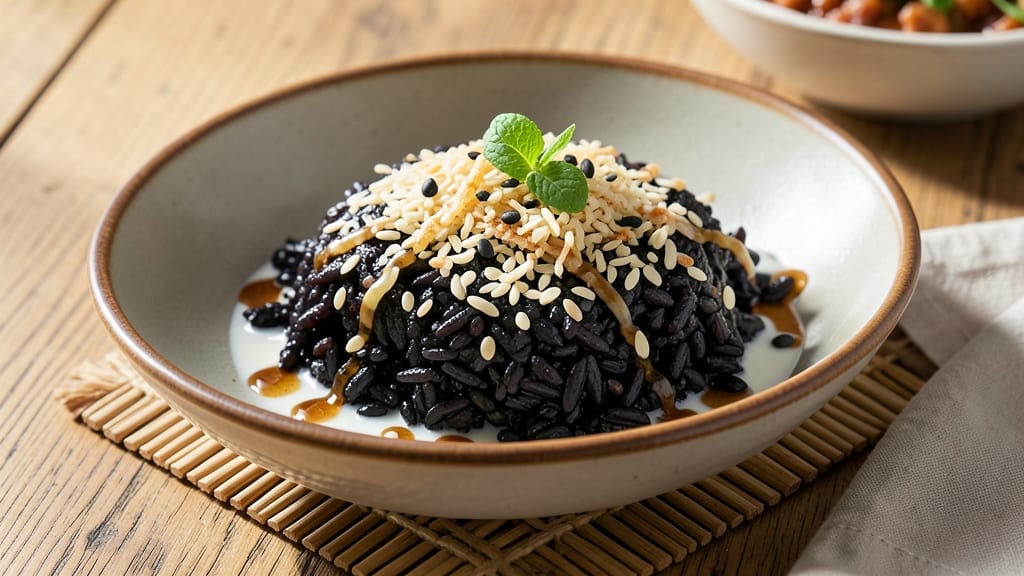
This black sesame rice recipe transforms simple jasmine rice into a nutty, toasted masterpiece with deep umami flavor and satisfying crunch. The secret lies in black sesame paste, which adds earthy richness while keeping the dish naturally vegan and gluten-free.
Perfect for both savory and sweet applications, this versatile side elevates any meal with its striking color and complex taste profile.
Using short-grain rice creates a slightly sticky texture that holds the sesame flavor beautifully, while a light toast during cooking enhances the nutty aroma. Garnish with toasted sesame seeds and scallions for fresh contrast, and adjust sweetener to balance the toasted richness.
Whether served warm as a side or chilled as a dessert base, this recipe delivers restaurant-quality results with minimal effort.
Ingredients for black sesame rice
Jasmine rice, black sesame paste, and toasted seeds create a nutty, umami-rich side dish.
| Ingredient | Amount | Notes |
|---|---|---|
| Jasmine Rice 🍚 | 1 ½ cups | Uncooked, short-grain preferred |
| Black Sesame Paste 🥜 | ¼ cup | High-quality, no additives |
| White Sesame Seeds 🥜 | ¼ cup | Toasted for garnish |
| Black Sesame Seeds 🥜 | ⅛ cup | Toasted for garnish |
| Coconut Milk 🥥 | ½ cup | Full-fat for creaminess |
| Maple Syrup 🍯 | 2 tbsp | Grade B for depth |
| White Miso Paste 🧈 | 1 tbsp | For umami depth |
| Green Onions 🧅 | ¼ cup | Sliced, for garnish |
| Vegetable Oil 🫒 | 1 tbsp | High smoke point |
| Salt 🧂 | ½ tsp | Kosher or sea salt |
| Sesame Oil 🫒 | 1 tsp | Toasted, for aroma |
| Water 💧 | 2 cups | Filtered preferred |
The black sesame paste is the heart of this recipe—look for 100% pure paste with no fillers at Asian markets or specialty stores like Whole Foods. The white miso adds umami depth, so grab a small tub of Miso Master brand if you can. For the rice, jasmine rice is key—it absorbs flavors beautifully. If you can't find it, sushi rice works in a pinch. Toasting the sesame seeds in a dry pan until fragrant (about 2 minutes) unlocks their nutty potential—don't skip this step. The coconut milk should be full-fat for creaminess, but light works if that's all you have.
No black sesame paste? Toast whole black sesame seeds and grind them into a paste with a pinch of oil—it won't be as smooth, but still delicious. Running short on miso? Soy sauce or tamari at half the amount adds saltiness, though you'll lose some depth. The maple syrup balances the toasted flavors, so don't skip it entirely—agave or date syrup work too. For the sesame oil, light toasted is ideal, but regular sesame oil in a pinch (reduce to 0.5 tsp). The green onions add freshness, but scallions or chives work just as well if that's what you've got.
Toast the sesame seeds first—they keep for up to 2 weeks in an airtight container. The cooked rice stays fresh for 4 days in the fridge, but the flavor peaks within the first 2 days. For longer storage, freeze portions for up to 3 months. Reheat gently in a steamer or microwave with a splash of water to restore moisture. Garnish with extra toasted seeds and a drizzle of sesame oil right before serving for maximum impact.
Why You'll Love This Recipe
- One-Pot Magic: I swear by this recipe because it’s actually one-pot—just rice, coconut milk, and a spoonful of black sesame paste. No fancy techniques, no extra bowls, just stir, simmer, and savor.
- Nutty Luxury: That first bite? Rich, toasty, and deeply satisfying. The black sesame paste gives it a caramelized depth, while the white sesame seeds add a crunch that’s weirdly addictive—like dessert for breakfast.
- Lunchbox Hero: Between us, this is my go-to for meal prep. The coconut milk keeps it creamy even after reheating, and I pack it in bento boxes with grilled chicken or tofu. (Yes, even on a Tuesday night.)
- Budget-Friendly Indulgence: Here’s what sold me—it costs next to nothing to make but tastes like I splurged. A little paste and seeds go a long way, and jasmine rice is always affordable. Fancy enough for company, cheap enough for daily.
Step-by-step instructions for black sesame rice
Here's how to create a rich, nutty rice dish with perfect texture and balanced flavors.
Toast the Sesame Seeds for Maximum Flavor
In a dry skillet over medium-low heat, toast the 0.25 cup white sesame seeds and 0.125 cup black sesame seeds together for 3-4 minutes, stirring constantly. You'll smell the aroma intensify as they begin to turn golden and fragrant. Remove immediately when they're just starting to brown—over-toasting will make them bitter. Transfer to a small bowl and set aside, reserving the skillet for the next step.
This toasting step is crucial. It deepens the nutty flavor and prevents the seeds from becoming mushy during cooking. The seeds should be warm to the touch but not dark brown. If they darken too quickly, reduce the heat next time.
Cook the Jasmine Rice with Umami Depth
In the same skillet, heat the 1 tablespoon vegetable oil over medium heat until shimmering. Add the 1.5 cups jasmine rice and stir for 1 minute until the grains are evenly coated and slightly translucent at the edges. This toasting step prevents the rice from becoming mushy.
Add the 2 cups water and 0.5 teaspoon salt, then bring to a boil. Once boiling, reduce heat to low, cover tightly with a lid, and simmer for 15 minutes. After 15 minutes, turn off the heat and let it steam undisturbed for another 10 minutes. The rice should be tender but still slightly firm in the center—this ensures perfect texture.
Infuse the Rice with Sesame and Miso
In a small bowl, whisk together the 0.5 cup coconut milk, 2 tablespoons maple syrup, 1 tablespoon white miso paste, and 1 teaspoon sesame oil until smooth. Stir in the 0.25 cup black sesame paste and mix until fully combined. This mixture should be thick but pourable.
Once the rice has finished steaming, gently fold in the coconut milk mixture using a rice paddle or spatula. Work quickly to distribute it evenly without breaking the rice grains. The rice should absorb the flavors while maintaining its integrity—don't overmix or it will become mushy.
Garnish and Serve for Perfect Presentation
Transfer the rice to a serving dish and drizzle with any remaining sesame mixture. Sprinkle the toasted white sesame seeds and black sesame seeds evenly over the top, then arrange the 0.25 cup sliced green onions in an attractive pattern. The seeds should be evenly distributed for both visual appeal and texture contrast.
Serve immediately while warm. The rice should have a glossy sheen from the coconut milk mixture, with visible specks of black sesame paste throughout. Each bite should deliver a balance of nutty sesame, creamy coconut, and subtle umami from the miso, with the toasted seeds adding crunch.
Pro Tips For Making Black Sesame Rice
- Toast the Seeds First: Black sesame seeds burn faster than you’d think—toss them in a dry pan over medium heat for 30 seconds until they smell nutty, not bitter. I learned this the hard way when my first batch turned acrid; now I keep a lid handy to catch any flying seeds (yes, they jump).
- Rinse Rice Twice: Jasmine rice sticks like glue if you skip this step. Rinse it in cold water until the water runs almost clear, then drain well. Trust me, the extra 30 seconds now means no gummy rice later—especially when you’re mixing in coconut milk.
- Mix Paste Last: Stir the black sesame paste in after the rice is off the heat. It thickens when hot, and you’ll end up with clumpy glops if you add it too early. A fork works better than a spoon—no one wants sesame paste chunks in their bite.
- Use Full-Fat Coconut Milk: Light coconut milk won’t cut it here. The fat makes the rice creamy and balances the nutty sesame. If you’re in a pinch, split the difference: use ¾ cup full-fat and ¼ cup light, but don’t skip the extra richness—your rice will taste flat otherwise.
Dietary considerations for this recipe
Naturally Vegan
This black sesame rice dish is completely plant-based, making it perfect for vegan diets. The main ingredients—jasmine rice, black sesame paste, coconut milk, and miso—are all vegan-friendly.
Even the optional maple syrup is plant-derived, so no animal products are involved. The nutty, toasted flavors satisfy cravings without relying on dairy or meat substitutes. 🌱
Gluten-Free Friendly
With careful ingredient selection, this recipe easily accommodates gluten-free diets. Use tamari instead of regular soy sauce if you're concerned about cross-contamination, and verify that your black sesame paste is processed in a gluten-free facility.
The miso paste should be white miso (not red), which is typically gluten-free. Always check labels, as some brands may vary in their processing standards.
Nut-Free Adaptation
While sesame is the star here, you can create a nut-free version by omitting the sesame seeds and paste. Replace the black sesame paste with 2 tablespoons tahini (sesame-free sunflower seed butter works too) and garnish with toasted pumpkin seeds or crushed poppy seeds for crunch.
The flavor profile will shift slightly but still deliver satisfying texture. Always check seed packages for nut-free processing facilities.
Low-Sugar Options
For a lower-sugar version, reduce the maple syrup to 1 tablespoon or substitute with 1 teaspoon agave nectar. You can also omit it entirely if you prefer a more savory profile.
The miso and coconut milk already provide natural sweetness, so the dish remains flavorful without added sugars. This makes it suitable for diabetic-friendly meals when paired with protein-rich main dishes.
Allergen Awareness
This recipe contains sesame, coconut, and soy (in miso)—common allergens. For those with severe allergies, prepare in a dedicated allergen-free kitchen using separate utensils and cookware. Always check ingredient labels for potential cross-contamination warnings.
The dish can be made nut-free as mentioned above, but sesame-free alternatives are limited due to the recipe's core flavors.
Nutrition facts
Frequently asked questions
Can I use regular white rice instead of jasmine rice?
You can try, but jasmine rice is ideal because its slightly sticky texture helps hold the sesame flavors better. If using white rice, add 1 tablespoon extra coconut milk to compensate for its drier finish. For the best results, stick with short-grain rice varieties like sushi rice if jasmine isn't available.
How do I store leftover black sesame rice?
Store in an airtight container in the refrigerator for up to 4 days. For longer storage, freeze portions for 3 months. To reheat, steam or microwave with a splash of water to restore moisture. The toasted sesame seeds may lose some crunch but the flavor remains delicious.
What if I can't find black sesame paste?
Toast 0.25 cup black sesame seeds until fragrant, then grind into a paste with 1 teaspoon sesame oil. It won't be as smooth but will work in a pinch. For extra richness, add 1 tablespoon tahini to the coconut milk mixture. This substitution works best in warm preparations.
Can I make this recipe without coconut milk?
Yes! Replace with 0.5 cup full-fat Greek yogurt (for tangy notes) or 0.5 cup unsweetened almond milk (for lighter texture). Reduce maple syrup to 1 tablespoon if using dairy-free alternatives. The dish will have a slightly different mouthfeel but maintain the nutty sesame profile.
Is this black sesame rice good cold?
The flavors actually develop more depth when chilled. Serve cold as a refreshing side or dessert base. For extra freshness, add 0.25 cup diced cucumber or 1 tablespoon lime juice before serving. The toasted sesame seeds provide satisfying crunch even when cold.