
Main Courses
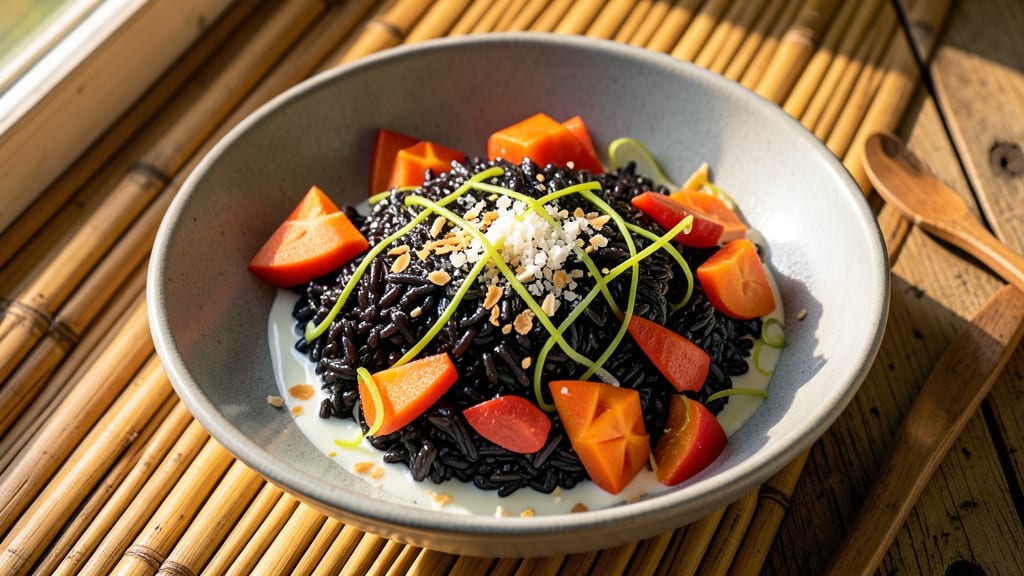
This black sticky rice with mango recipe transforms humble glutinous rice into a luxurious dessert or side dish with just two ingredients. The deep purple-black rice steams into silky, chewy perfection while fresh mango adds vibrant sweetness and tropical brightness—no refined sugar needed.
What makes this dish special is how the mango's natural juices caramelize slightly when steamed, creating pockets of sweetness that complement the earthy rice.
The technique is simple yet impressive: soaked rice steams until tender, then mango is layered in for the final 10 minutes, allowing its flavors to infuse without turning mushy. The result is a dish that's elegant enough for special occasions but quick enough for weeknight dinners.
Whether served chilled as dessert or warm as a side, this recipe delivers restaurant-quality texture and flavor with minimal effort.
Ingredients for black sticky rice with mango
Two core ingredients transform into a luxurious dessert with tropical elegance.
| Ingredient | Amount | Notes |
|---|---|---|
| Black Sticky Rice (Glutinous Rice) 🍚 | 1 ½ cups | Uncooked, soaked 4+ hours |
| Ripe Mangoes 🥭 | 2 whole | Pitted, peeled, cubed |
| Water 💧 | 2 ½ cups | Filtered preferred |
| Coconut Milk (Full-Fat) 🥥 | ½ cup | For richness (optional) |
| Lime Juice 🍋 | 1 tbsp | Freshly squeezed |
| Coconut Sugar 🍯 | 1 tbsp | Or maple syrup substitute |
| Sea Salt 🧂 | ¼ tsp | Fine grain preferred |
| Fresh Mint Leaves 🌿 | ¼ cup | Chopped, for garnish |
| Toasted Coconut Flakes 🥥 | ¼ cup | For topping (optional) |
The black sticky rice is the star—look for authentic glutinous rice (not regular rice) at Asian markets or specialty stores like H Mart. The deeper the purple-black color, the richer the flavor. If you can't find it, substitute purple sweet potatoes, though texture will differ. Soak the rice for at least 4 hours—this breaks down the starches for that signature chewy texture. Fresh mangoes are non-negotiable; ripe but firm varieties like Ataulfo or Tommy Atkins work best. Avoid overripe ones—they'll turn mushy during steaming.
No coconut milk? Skip it or use a splash of water—this isn't a dealbreaker, just adds creaminess. Fresh lime juice is ideal, but bottled works in a pinch (though it lacks brightness). For the coconut sugar, maple syrup or agave are perfect swaps—just reduce to 0.75 tbsp since they're more concentrated. Mint leaves can be dried if fresh aren't available, but use half the amount. The toasted coconut flakes add crunch; crushed pistachios make a great alternative for a nutty twist. If you're short on time, parboil the rice for 10 minutes before steaming to cut soak time in half.
Store leftover rice in an airtight container with a damp paper towel—keeps for 3 days in the fridge. The mango should be eaten fresh within 2 days to prevent browning. For make-ahead prep, steam the rice 1 day ahead, then reheat with a splash of water. Freezing isn't recommended as it alters the texture. Garnishes like mint and coconut flakes should be added fresh before serving—they're all about presentation. This dish reheats beautifully; microwave for 30 seconds with a damp towel to restore moisture.
Why You'll Love This Recipe
- Five-Ingredient Magic: I swear by this—just rice, mangoes, coconut milk, lime, and water. No fancy techniques, no hidden pantry raids. The rice soaks overnight (set it and forget it), then steams while you slice fruit. That’s it.
- Sweet-Savory Balance: The mango’s juicy burst cuts through the earthy, almost chocolatey depth of the black rice. A splash of lime ties it all together—bright, tangy, and just sweet enough. Honestly, it’s the kind of flavor combo that makes you pause mid-bite.
- Picnic or Potluck Ready: Pack it in a jar for a lunchbox or serve it in little bowls at a gathering. The sticky texture holds up, and the coconut milk keeps it creamy even after hours. My go-to for brunch, book club snacks, or when my teen’s friends show up unannounced.
- Leftovers? Better Than Fresh: Between us, this tastes better the next day. The rice softens just right, soaking up extra coconut milk, while the mango caramelizes slightly. I make a big batch on Sundays—breakfast, lunch, or a midnight craving fix. Zero waste, all win.
Step-by-step instructions for black sticky rice with mango
This method delivers perfectly tender black sticky rice with sweet, juicy mango cubes—just like Thai street vendors make.
Soak the Black Sticky Rice
Place the 1.5 cups black sticky rice in a large bowl and cover completely with cold water. Let it soak for at least 4 hours, or ideally overnight in the refrigerator. The rice should absorb water and become translucent—this step is crucial for achieving that signature silky texture. I like to check it after 3 hours; if it still feels firm, add a little more water and let it soak another hour.
After soaking, drain the rice thoroughly using a fine-mesh strainer, pressing gently to remove excess water. The rice should feel moist but not wet. This preparation prevents the rice from becoming gummy during cooking. Transfer the drained rice to a clean bowl and set aside.
Cook the Rice to Perfect Tenderness
In a medium saucepan, combine the drained 1.5 cups black sticky rice with the 2.5 cups water. Bring to a boil over medium-high heat, then immediately reduce heat to low. Cover tightly with a lid and simmer for 25-30 minutes, without stirring. The rice is done when it's tender and the liquid has been completely absorbed—you'll know because the rice will pull away slightly from the sides of the pan.
Once cooked, remove from heat and let it sit covered for 5 minutes. This resting period allows the rice to absorb any remaining moisture and develop that signature sticky texture. Fluff gently with a fork to separate the grains, but don't overmix—you want them to stay cohesive.
Prepare the Mango and Coconut Mixture
While the rice cooks, peel and cube the 2 whole ripe mangoes into ½-inch pieces. The mango should be soft when ripe—press gently with your thumb; it should yield slightly. Place the mango cubes in a small bowl and toss with the 1 tbsp lime juice, 1 tbsp coconut sugar, and 0.25 tsp sea salt. Let this mixture sit for 10 minutes to macerate; this draws out the mango's natural juices and enhances its sweetness.
In a separate small saucepan, gently warm the 0.5 cup coconut milk over low heat until just steaming (do not boil). This adds richness to the final dish without overpowering the delicate flavors. Keep it warm until ready to use.
Combine and Garnish
Transfer the cooked black sticky rice to a large serving bowl. Using a spatula, gently fold in the warm coconut milk until evenly distributed. The rice should become glossy and slightly sticky—this is the moment you've been working toward. Add the macerated mango cubes and their juices, mixing lightly to combine.
Sprinkle the 0.25 cup chopped fresh mint leaves and 0.25 cup toasted coconut flakes over the top. The mint adds a bright, refreshing contrast to the sweet mango and earthy rice, while the coconut flakes provide a satisfying crunch. Serve immediately while the rice is still warm and the mango is juicy.
Serve with Confidence
Divide the black sticky rice with mango into 4 serving bowls. The dish should have a beautiful contrast of deep black rice, vibrant orange mango, and green mint. Each bite should deliver the perfect balance of sweet, creamy, and slightly tangy flavors. The texture should be silky yet slightly chewy—this is the hallmark of properly prepared black sticky rice.
For the best experience, serve this dish immediately. The flavors meld beautifully when enjoyed warm, and the rice maintains its perfect texture. Pair with a refreshing coconut drink or a simple green salad to complete your tropical meal.
Pro Tips For Making Black Sticky Rice With Mango
- SOAK THE RICE LONGER: Black sticky rice needs at least 4 hours—or overnight if you’re not in a rush. I learned this the hard way when mine turned gummy instead of creamy. The longer it soaks, the better it absorbs water and releases its deep, earthy flavor.
- USE FULL-FAT COCONUT MILK: Skip the light version—full-fat coconut milk makes a real difference in this dish. The richness cuts through the sweetness of the mango and keeps the rice from drying out. If you’re short on time, warm the can directly in the microwave for 30 seconds before using.
- STEAM DON’T BOIL: After soaking, steam the rice in a bamboo basket or lined colander over boiling water. Boiling it directly turns it mushy. Keep the heat medium-high and cover with a towel to trap steam—about 20 minutes should do it.
- PEEL MANGOS LAST: Wait to peel the mangoes until right before serving. Their skin softens when exposed to air, and the flesh can turn mealy if sliced too early. If you’re using ripe ones, a quick rub with lime juice right after peeling keeps them bright and prevents browning.
Essential equipment for black sticky rice with mango
Steaming Setup
You’ll need a steamer basket that fits snugly inside a pot—10-inch diameter is ideal for even heat distribution. I recommend a stainless steel one from Le Creuset or OXO for durability. If you don’t own one, a colander or bamboo steamer works in a pinch.
The pot should hold at least 3 cups of water and have a tight-fitting lid to trap steam. 💧
Rice Soaking Tools
A fine-mesh strainer (like the OXO Good Grips) is essential for draining soaked rice without breaking the grains. For soaking, use a large glass or ceramic bowl—these materials don’t retain odors.
If you’re short on time, a slow cooker on the "keep warm" setting works for soaking overnight. Just add the rice and water, then let it sit for 4+ hours.
Mango Prep Essentials
For peeling mangoes efficiently, a Y-shaped mango cutter (available at Amazon or Asian grocery stores) is a game-changer. If you’re using fresh lime juice, a handheld citrus reamer (like OXO’s) makes squeezing easier.
A small mixing bowl (6-inch diameter) is perfect for macerating the mango cubes with lime and coconut sugar. 🥭
Heat Control Tools
Monitoring the rice’s cooking temperature is key—a digital thermometer (like Thermoworks Smoke) ensures the water stays between 190-200°F for even cooking. For warming coconut milk, a small saucepan with low-medium heat prevents scorching.
If you’re reheating leftovers, a microwave-safe bowl with a damp paper towel keeps the rice from drying out.
Garnish Presentation
Chop mint leaves with sharp kitchen shears for clean cuts, and toast coconut flakes in a dry skillet over medium-low heat for 2-3 minutes until golden. A small serving spoon helps layer the rice neatly in bowls.
For extra flair, use edible flowers or lime zest as garnishes—both add color and brightness. ✨
Nutrition facts
Frequently asked questions
Can I substitute regular rice for black sticky rice?
No, black sticky rice (glutinous rice) is essential for this recipe. Regular rice lacks the natural stickiness and chewy texture that makes this dish special. If you absolutely must substitute, try purple sweet potatoes—though the texture will be different. For the best results, stick with authentic black sticky rice from Asian markets or specialty stores.
How do I know when mangoes are perfectly ripe for this dish?
Press gently with your thumb—ripe mangoes should yield slightly but not be mushy. Look for vibrant color (deep yellow/orange) and a sweet fragrance near the stem. Tommy Atkins or Ataulfo varieties work best. Avoid overripe mangoes with brown spots, as they'll turn to mush during steaming.
Can I make this dessert version instead of a side dish?
For a dessert version, increase the coconut sugar to 2 tbsp and add ½ tsp vanilla extract to the coconut milk. Serve chilled with a drizzle of coconut cream and extra toasted coconut flakes. The natural sweetness of the mango makes it perfect as dessert—just adjust the sugar to your taste.
Why did my rice turn out gummy instead of sticky? Gummy rice usually means either over-soaking or insufficient draining.
What's the best way to store leftovers?
Store the rice portion in an airtight container with a damp paper towel to retain moisture. Keep it refrigerated for up to 3 days. The mango should be eaten fresh within 2 days to prevent browning. For reheating, microwave for 30 seconds with a damp towel—this restores the silky texture perfectly.