
Main Courses
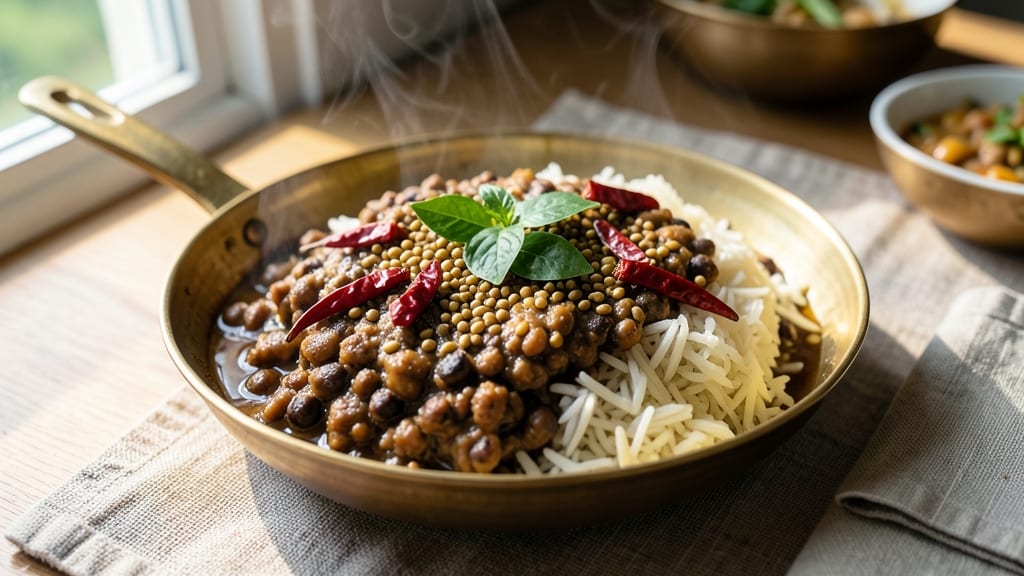
This Black Urad Dal Rice (Kara Urad Dal Sadam) brings the heart of Tamil cuisine to your kitchen with its rich, spiced flavors and comforting texture.
A staple in South Indian homes, this one-pot dish combines tender black lentils and fragrant basmati rice, simmered together with aromatic spices for a dish that’s both vegan and deeply satisfying.
The secret lies in the slow cooking process, where black urad dal softens into a creamy consistency while absorbing the warm flavors of cumin, mustard seeds, and curry leaves.
Perfect for a quick weeknight meal or a festive spread, this recipe delivers restaurant-quality results with minimal effort. Let’s create a dish that’s as nourishing as it is delicious.
Ingredients for black urad dal rice recipe in tamil
Spices, lentils, and rice—just these core ingredients transform into Tamil comfort food.
| Ingredient | Amount | Notes |
|---|---|---|
| Black Urad Dal (Whole Black Gram) 🌾 | 1 ½ cups | Whole, not split, for creamy texture |
| Basmati Rice (Long Grain) 🍚 | 1 cup | Uncooked, rinsed thoroughly |
| Water 💧 | 6 cups | For cooking dal and rice |
| Mustard Seeds 🌿 | 1 tbsp | Lightly toasted for aroma |
| Cumin Seeds 🌿 | ½ tsp | Toasted for nutty flavor |
| Dried Red Chilies 🌶️ | 3 whole | Adjust for spice preference |
| Curry Leaves 🌿 | 10 whole | Fresh, lightly crushed |
| Asafoetida (Hing) 🌿 | ⅛ tsp | Pinch for umami depth |
| Turmeric Powder 🧂 | ¼ tsp | Freshly ground preferred |
| Coconut Oil 🫒 | 3 tbsp | For tempering spices |
| Salt 🧂 | 1 tsp | Adjust to taste |
| Fresh Coriander Leaves 🌿 | ¼ cup | Chopped for garnish |
| Ghee (Vegan Alternative: Coconut Ghee) 🫒 | 1 tbsp | For final drizzle (optional) |
The black urad dal is the star here—whole, not split, for that signature creamy texture. Grab a 250g bag from Indian grocery stores like Patel Brothers or Apna Bazaar, where you'll find the best quality. If your local store only has split dal, skip this recipe—it won't give you that same velvety finish. For basmati rice, Tilda or India Gate brands are my go-to—they stay separate during cooking. Toast your mustard seeds and cumin in a dry pan until they sizzle—that aroma is non-negotiable for authentic flavor. Curry leaves? Fresh is a must—dried leaves just don't cut it.
No mustard seeds? Skip them entirely—this dish still shines. Running low on curry leaves? Fresh bay leaves work in a pinch, but reduce to half the amount. The dried red chilies can be swapped for Kashmiri red chili powder (1/4 tsp) if you prefer less texture. For extra richness, add 1 tbsp of coconut milk at the end—trust me, it elevates everything. The asafoetida (hing) is crucial—never skip it—it's what gives this dish that unmistakable South Indian depth. If you can't find it, garlic powder (1/4 tsp) is a weak substitute.
This dish tastes even better the next day as flavors meld. Store in an airtight container in the fridge for 4-5 days. For leftovers, reheat gently on low heat with a splash of water—microwaving makes the rice mushy. I always double the batch—freezes beautifully for 3 months—perfect for quick lunches. Garnish with fresh coriander right before serving (the good stuff, not the dried kind). The coconut ghee drizzle? Optional but worth it—adds a luxurious finish that feels like restaurant quality.
Why You'll Love This Recipe
- No-Soaking Needed: I’ll admit, I used to dread soaking dal—but black urad dal here? Just a quick rinse and you’re good. The dal softens perfectly alongside the rice, no extra steps, no waiting around. Honestly, that’s the kind of shortcut that makes me actually want to cook.
- Temple of Flavors: Mustard seeds sizzling in ghee, cumin popping like fireworks—this isn’t just rice, it’s a flavor explosion. The black urad dal adds this deep, earthy richness that balances the bright rice, and the tempering? That’s the magic. It’s the kind of dish where every bite tastes like you put in effort (even if you didn’t).
- Lunchbox Legend: Between us, this is my go-to for meal prep. The rice stays fluffy for days, and the dal keeps its texture—no mushy leftovers here. Pack it in containers, and it’s still hearty enough to satisfy a grown-up at 2 PM. (Yes, even on a Tuesday night when you’re running late.)
- Pocket-Friendly Power: A bag of black urad dal and a handful of rice feed my family for days without breaking the bank. No fancy ingredients, no markup—just real, filling food that tastes like a celebration but costs next to nothing. That’s the kind of recipe that makes me feel like I’m winning at life.
Step-by-step instructions for black urad dal rice
Here's how to make this comforting one-pot dish with perfectly spiced lentils and fluffy rice.
Rinse and Soak the Black Urad Dal
Start by rinsing the 1.5 cups black urad dal thoroughly under cold water to remove any impurities. Soaking isn't required for this recipe, but if you prefer, you can soak for 20 minutes to soften them slightly. The whole black gram should be used as-is—don't split them, as this helps create the signature creamy texture.
While rinsing, I like to give the dal a quick visual check for any small stones or debris. Once clean, drain well and set aside. The dal will absorb flavors beautifully during cooking, so this initial preparation is crucial for the final texture. Keep the drained dal in a separate bowl for now—we'll add it to the rice later.
Prepare the Spice Tempering
In a heavy-bottomed pot, heat 3 tablespoons coconut oil over medium heat until shimmering but not smoking. Add the 1 tablespoon mustard seeds and let them sizzle for 30 seconds until they pop and turn golden. This is the moment that matters—they should dance and crackle before you add the next spices.
Next, add the 0.5 teaspoon cumin seeds and let them toast for 20 seconds until fragrant. Toss in the 3 whole dried red chilies and 10 whole curry leaves, cooking for another 30 seconds until the chilies darken slightly. Immediately add the 0.125 teaspoon asafoetida (hing) and stir for 10 seconds—this releases its distinct umami aroma that's essential for authentic flavor.
Cook the Rice and Dal Together
Add the 1 cup basmati rice and stir to coat evenly with the tempered spices. Cook for 1 minute, stirring constantly, until the rice turns slightly translucent at the edges. Now add the 1.5 cups black urad dal, 1 teaspoon salt, and 0.25 teaspoon turmeric powder, mixing well to combine.
Pour in 6 cups water and bring to a rolling boil. Once boiling, reduce heat to low-medium and cover with a tight-fitting lid. Let it simmer for 15 minutes without disturbing. This gentle cooking allows the rice and dal to absorb flavors and cook evenly. You'll know it's ready when the water is completely absorbed and the rice is tender.
Final Tempering and Garnishing
After the initial cooking, uncover the pot and let it sit for 2 minutes to release any excess steam. Heat 1 tablespoon ghee (or coconut ghee for vegan option) in a small pan until it just melts. Pour this ghee over the cooked dal-rice mixture and gently fold to distribute evenly.
Finally, garnish with the 0.25 cup chopped fresh coriander leaves. The vibrant green color not only looks beautiful but also adds a fresh contrast to the rich, spiced lentils. Serve immediately while hot, with a side of yogurt or raita if desired. The dal should be creamy with just the right amount of spice, and the rice perfectly cooked without being mushy.
Pro Tips For Making Black Urad Dal Rice Recipe In Tamil
- SOAK DAL LONGER: The dal won’t soften properly if you rush this—give whole black urad dal at least 4 hours (overnight is best). I used to skip this and ended up with a mushy, uneven texture that tasted undercooked. Trust me, the extra time makes the dal creamy and tender every time.
- CRACK THE RICE: Don’t use whole basmati grains—they’ll stay rock-hard. Split them into 2-3 pieces before cooking, or at least press them lightly with a rolling pin. My first batch had rice that looked perfect but tasted like chewing on pearls. This step guarantees fluffy, melt-in-your-mouth grains.
- TEMPER THE OIL RIGHT: Mustard seeds and cumin need low-and-slow heat to pop evenly—don’t blast them on high or they’ll burn before they sizzle. Start on medium, then drop the flame as soon as they begin to crackle. I learned this after one disastrous batch where the seeds turned bitter and bitter.
- SALT THE WATER LATE: Add salt only after the dal starts boiling, not at the beginning. The high salt content early on makes the dal tough and prevents the rice from absorbing flavor properly. I was skeptical, but now I swear by this—it keeps the dal soft and lets the rice soak up the seasoning perfectly.
Troubleshooting perfect results
Dal Too Hard?
If your black urad dal is still firm after cooking, your water ratio might be off. The key is using 6 cups water for 1 cup rice + 1.5 cups dal—this ensures proper hydration.
I’ve found that whole black urad dal needs slightly more water than split varieties to soften completely. If it’s still tough, add ½ cup more water and simmer uncovered for 5 more minutes. Avoid peeling the dal skins before cooking—they’re what create that signature creamy texture! 💫
Rice Mushy?
Overcooking is the usual culprit here. Once the water’s absorbed and rice is tender, remove from heat immediately. I’ve ruined this dish by leaving it on low heat too long—the rice turns to mush.
For perfect texture, cook until the water’s just gone (about 15 minutes total), then uncover and let it steam for 2 minutes off the heat. If it’s still mushy, spread it on a tray and cool slightly before serving.
Spices Too Strong?
Adjust the spice level by controlling the red chilies and mustard seeds. For milder heat, reduce dried chilies to 1-2 whole or swap for ½ tsp Kashmiri red chili powder. If mustard seeds overwhelm, cut them to ½ tbsp or skip entirely.
The asafoetida (hing) is non-negotiable for flavor, but you can reduce it to ⅛ tsp if needed. Taste the tempering before adding rice—this is your chance to adjust! 🌶️
Dal Not Creamy?
Creaminess comes from cooking whole black urad dal with rice. If yours isn’t creamy, you might have used split dal or didn’t cook it long enough. For extra creaminess, mash ¼ of the dal lightly with a spoon after cooking—this releases starches that thicken the mixture.
Another trick? Add 1 tbsp coconut milk at the end. Never use split dal—it breaks down too quickly and loses texture.
Watery Texture?
This usually means you added too much water or didn’t cook long enough. The ideal ratio is 6 cups water for 2.5 cups total grains (rice + dal). If it’s still watery, simmer uncovered for 5-10 more minutes until water evaporates.
For next time, measure water precisely—1 cup rice + 1.5 cups dal = 6 cups water is the magic formula. A tight-fitting lid helps trap steam for even cooking.
Burnt Spices?
Watch your heat carefully when tempering. Mustard seeds and cumin should sizzle but not burn—remove from heat if they darken too quickly. I’ve seen this happen when using high heat or thin-bottomed pots. Use medium heat and a heavy pot (like a stainless steel or cast iron) for even distribution.
If spices burn, start fresh—they’ll make the dish bitter. Toast spices separately if needed, then add to the pot at the end.
Nutrition facts
Frequently asked questions
Can I substitute black urad dal with other lentils?
While black urad dal gives this dish its signature creamy texture, you can use whole moong dal or split masoor dal in a pinch. However, the flavor and consistency will differ—black urad dal's unique taste comes from its whole form and long cooking time. For best results, stick with black urad dal if possible. If unavailable, try toor dal (yellow split lentils) but expect a firmer texture.
How do I make this recipe vegan?
This recipe is already vegan! Simply replace the ghee with coconut ghee or vegan butter for the final drizzle. All other ingredients are naturally plant-based. For extra richness, add 1 tbsp coconut milk at the end—it enhances creaminess beautifully while keeping the dish vegan. Always check your spice blends for hidden animal products if you're strict about plant-based eating.
What sides pair well with black urad dal rice?
Traditional pairings include sambar (lentil stew), coconut chutney, or mango pickle. For a complete meal, serve with yogurt (raita) and a simple cucumber salad. The creamy dal balances well with tangy or spicy accompaniments. In Tamil homes, this dish is often served with papadums or appalam (rice crepes) for extra texture contrast.
Can I make this recipe in a pressure cooker?
Yes! For a pressure cooker, use 4 cups water instead of 6 and cook for 4-5 whistles on medium heat. After cooking, let the pressure release naturally for 10 minutes before opening. The high pressure reduces cooking time but requires careful monitoring to avoid mushy rice. For best texture, use a heavy-bottomed pressure cooker and don't overfill beyond ⅔ capacity.
Why does my dal turn yellowish?
This happens when the turmeric overpowers or when the dal cooks too long with alkaline water. Use fresh turmeric powder (not too much) and avoid using water with high mineral content. If it happens, add ½ tsp lemon juice at the end to neutralize the color. The yellowish tint won't affect taste but may change the dish's appearance. For authentic color, stick to the recommended ¼ tsp turmeric and cook on medium heat.