
Main Courses
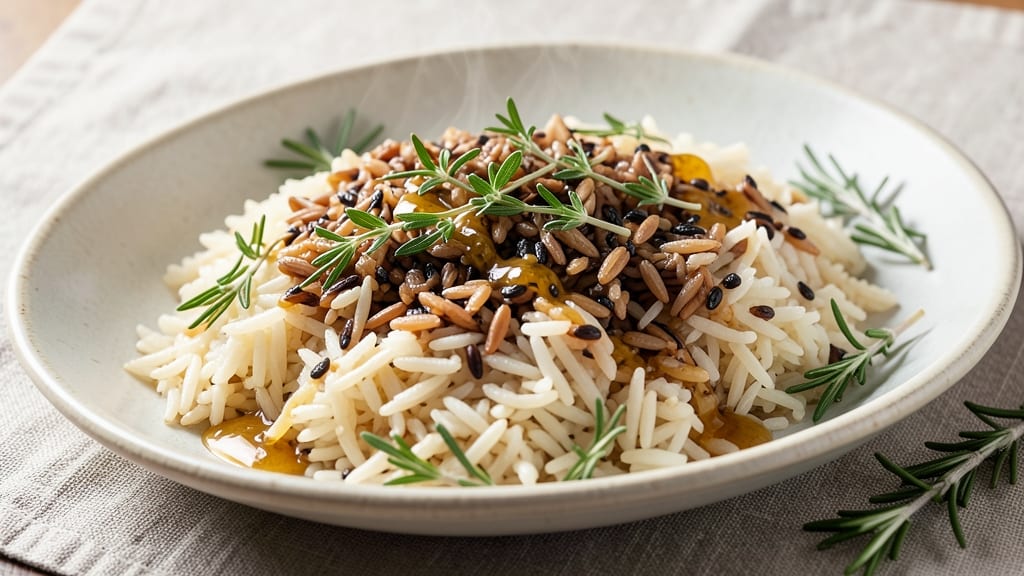
This one-pot BLW rice recipe transforms three distinct rice varieties into a fragrant, perfectly textured grain bowl base that elevates any meal. The secret lies in toasting the grains first—this unlocks nutty depth and prevents mushiness, while simmering in broth infuses every grain with rich, savory flavor.
No separate pots, no guesswork, just foolproof results that work as a side or main dish.
What makes this recipe stand out is the balance: basmati delivers light, fluffy grains; long-grain adds chewy texture; and wild rice contributes earthy nuttiness. Toss in herbs like thyme or rosemary during simmering, and you’ve got a restaurant-quality base that pairs effortlessly with proteins, roasted vegetables, or fresh salads.
Ready in just 30 minutes, this one-pot method saves time without sacrificing flavor.
Ingredients for blw rice
Three distinct rice varieties and herb-infused broth create a restaurant-quality grain bowl base.
| Ingredient | Amount | Notes |
|---|---|---|
| Basmati Rice 🌾 | 1 cup | Uncooked, rinsed thoroughly |
| Long-Grain White Rice 🌾 | 1 cup | Uncooked, rinsed thoroughly |
| Wild Rice Blend 🌾 | ½ cup | Uncooked, rinsed thoroughly |
| Vegetable Broth 💧 | 3 cups | Low-sodium preferred, homemade or store-bought |
| Fresh Thyme Leaves 🌿 | ¼ cup | Chopped, stems removed |
| Fresh Rosemary Sprigs 🌿 | 2 whole | Needles only, finely chopped |
| Garlic Cloves 🧄 | 3 cloves | Minced, for toasting |
| Extra-Virgin Olive Oil 🫒 | 2 tbsp | For toasting grains |
| Diamond Crystal Kosher Salt 🧂 | 1 ½ tsp | Adjust to taste |
| Ground Black Pepper 🌶️ | ½ tsp | Freshly ground preferred |
| Lemon Zest 🍋 | 1 tsp | From 1 organic lemon |
| Fresh Parsley Leaves 🌿 | ¼ cup | Chopped, for garnish |
The rice blend is where the magic happens—Basmati for fluffiness, long-grain for chew, and wild rice for earthy depth. Lundberg Family Farms or Trader Joe's carry excellent pre-rinsed blends, but rinsing your own ensures no excess starch. Toasting the grains in olive oil with garlic before adding broth develops nutty complexity—don't skip this step. For broth, Pacific Foods low-sodium vegetable broth adds rich flavor without salt overload, or make your own with carrot, celery, and onion base.
Fresh herbs elevate this dish—thyme and rosemary are non-negotiable, but dried works at half the amount if fresh isn't available. Whole Foods Market carries organic herb bundles perfect for this. Swap wild rice for barley or quinoa if needed, though texture will differ. The lemon zest brightens the final dish, so use organic if possible—non-organic zest can taste bitter. For a gluten-free version, ensure your broth is certified GF and check rice labels for cross-contamination warnings.
This rice keeps beautifully—4-5 days in the fridge sealed airtight, or 3 months frozen in portion-sized containers. Reheat gently with a splash of water or broth to restore moisture. I portion mine into mason jars for easy grab-and-go lunches—the grains stay separate and fresh-tasting. For meal prep, cook an extra batch and store components separately: rice, herbs, and lemon zest. Assemble just before serving to preserve freshness.
Why You'll Love This Recipe
- One-Pot Magic: I swear by this recipe when I’m too tired to deal with multiple pans. Toss all three rice types—basmati, long-grain, and wild—into one pot with broth and thyme, then let it simmer. No measuring cups, no straining, just hands-off perfection.
- Earthy, Nutty Crunch: Between us, the wild rice blend adds a satisfying bite that plain white rice just can’t match. The thyme infuses the broth with a bright, herby depth, while the basmati keeps it fluffy. It’s the kind of flavor that makes you pause mid-bite.
- Meal Prep MVP: This rice keeps for days in the fridge—seriously, I’ve had it for five—and reheats like a dream. Toss it with roasted veggies for lunch, stir-fry leftovers for dinner, or even pack it in bento boxes. Honestly, it’s my go-to for busy weeks.
- Budget-Friendly Flex: Wild rice might sound fancy, but a small bag stretches across multiple batches. The broth is cheap, the rice is affordable, and you’re not sacrificing taste. Plus, it’s the kind of dish that feels special without breaking the bank.
Step-by-step instructions for one-pot herb-infused grain bowl
Master this technique and you'll achieve perfectly balanced, aromatic rice every time—no separate pots needed.
Toast the Grains for Enhanced Flavor
Heat a large, heavy-bottomed pot over medium heat and add the 2 tablespoons extra-virgin olive oil. Once shimmering, add the 1 cup basmati rice, 1 cup long-grain white rice, and 0.5 cup wild rice blend. Stir constantly for 3-4 minutes until the grains are fragrant and begin to turn translucent at the edges.
This toasting step develops deep nutty flavors and prevents the rice from becoming mushy. I like to press the grains gently with a wooden spoon to ensure even contact with the oil. If the rice starts to brown too quickly, reduce the heat slightly—you want golden, not burnt. Remove the pot from heat temporarily while you prepare the aromatics.
Build the Herb and Garlic Base
In the same pot, add the 3 minced garlic cloves and cook for 30 seconds until fragrant. Immediately add the 0.25 cup chopped fresh thyme leaves and finely chopped rosemary needles from the 2 sprigs. Stir for 1 minute until the herbs release their essential oils and become aromatic.
The key here is timing—garlic burns in seconds, and herbs lose their potency if overcooked. You'll know it's perfect when the kitchen fills with that fresh, herbal aroma. Add the 1.5 teaspoons diamond crystal kosher salt and 0.5 teaspoon ground black pepper now to distribute evenly throughout the grains.
Simmer with Broth for Perfect Texture
Pour in the 3 cups vegetable broth and bring to a gentle boil. Once boiling, reduce heat to low and cover the pot with a tight-fitting lid. Simmer for 25 minutes without disturbing the pot—this allows the grains to absorb liquid evenly and develop their characteristic texture.
I set a timer but also watch for visual cues: the liquid should be completely absorbed by the grains, and the rice should look plump and tender when tested with a fork. If the top appears dry before the time is up, add 2-3 tablespoons hot water through the steam vent in the lid to prevent burning. The wild rice blend will take slightly longer to cook than the other grains.
Finish with Bright Herbal Accents
Remove the pot from heat and let it sit covered for 5 minutes. This resting period allows the grains to finish absorbing any remaining moisture and develop their final texture. Stir in the 1 teaspoon lemon zest and 0.25 cup chopped fresh parsley leaves—this adds a bright, fresh finish that cuts through the richness of the grains.
For best results, I like to fluff the rice gently with a fork before serving. The lemon zest will infuse the grains with a subtle citrus note, while the parsley adds both color and freshness. The one-pot method ensures all the aromatic flavors are evenly distributed throughout the dish, creating a cohesive, flavorful base for your grain bowls.
Pro Tips For Making Blw Rice
- Rinse the Wild Rice: That wild rice blend in your mix absorbs like a sponge—skip rinsing it and you’ll end up with a gluey mess. Give it a quick cold water soak for 10 minutes first, then drain. I learned this the hard way after serving a bowl that looked like oatmeal.
- Toast the Basmati First: Dry-toast your basmati rice in the pot for 2 minutes before adding liquid—just until it smells nutty. This prevents the grains from turning mushy later. (Yes, even if you’re impatient like me, resist the urge to rush this.)
- Don’t Crowd the Pot: The wild rice blend expands a lot—use a heavy pot and keep the liquid ratio tight (about 1.5 cups broth per 1 cup total rice). Packing it in too tight steams the bottom instead of toasting it, and you’ll end up with uneven texture.
- Salt the Broth Last: Add thyme and broth first, then sprinkle salt after everything’s simmering. Wild rice blend has a weird way of sucking up flavor unevenly, and salting early can leave some grains bland. (Your future self will notice the difference.)
Common mistakes when making great blw rice
Skipping the Toast
One of the biggest mistakes is skipping the toast step—this is where the magic happens! Without toasting, your grains will lack that nutty depth and may turn out mushy. I’ve seen people rush this step, but taking 3-4 minutes to toast in oil makes all the difference.
Use a heavy-bottomed pot to prevent burning, and stir constantly to ensure even contact with the oil. 🔥
Using the Wrong Broth Ratio
Too much broth leads to soggy rice, while too little causes dry, uneven grains. The 3 cups of broth for this blend is ideal—it accounts for the different absorption rates of basmati, long-grain, and wild rice.
If you’re unsure, start with 2.75 cups and add 2-3 tablespoons hot water later if needed. Always use low-sodium broth to control seasoning.
Disturbing the Pot While Cooking
Peeking or stirring the rice mid-cook releases steam and disrupts the even cooking process, leading to uneven texture. Once the broth boils, cover the pot tightly and let it simmer undisturbed for the full 25 minutes.
I promise, the 5-minute rest afterward is worth the patience—it lets flavors meld perfectly. ⏰
Overcooking the Wild Rice
Wild rice has a longer cooking time and can easily become mushy or bitter if overcooked. Test it after 20 minutes—it should be tender but still hold its shape. If your blend includes barley or quinoa, reduce simmering time to 20 minutes total.
Never let it boil vigorously after adding broth; low heat is key for even cooking.
Ignoring the Resting Period
Skipping the 5-minute rest after cooking means uneven texture and lost moisture. This step lets the grains absorb residual liquid and develop their final structure.
I’ve made this mistake—don’t be like me! Cover the pot and let it sit; the rice will thank you with plump, separate grains instead of a sticky clump. 💫
Using Stale or Improperly Rinsed Rice
Unrinsed rice releases excess starch, making it gummy and clumpy. Rinse each type thoroughly under cold water until the water runs clear. For storage, keep rice in an airtight container for up to 3 months—but fresh is always better!
If using pre-packaged blends, check the label for rinsing instructions, as some brands pre-rinse their grains.
Nutrition facts
Frequently asked questions
Can I substitute any of the rice types in this recipe?
Yes, but adjust cooking times accordingly. For example, swap wild rice for quinoa (cooks in 15 minutes) or barley (simmer 30 minutes). Keep the total volume the same—1 cup basmati + 1 cup long-grain + 0.5 cup substitute. Brown rice works too but needs 45 minutes of simmering.
How do I make this recipe gluten-free?
Use a certified gluten-free vegetable broth and check your rice labels for cross-contamination warnings. Most basmati and long-grain rice are naturally gluten-free, but wild rice blends sometimes contain barley. Look for blends labeled "gluten-free" or make your own with quinoa and brown rice instead.
Can I cook this rice in an Instant Pot?
Toast the grains in 2 tbsp oil for 3-4 minutes first, then add broth, garlic, and herbs. Cook on high pressure for 8 minutes, followed by a 10-minute natural release. The texture will be slightly firmer than stovetop, so add 2 tbsp water before serving if needed.
What are the best protein pairings for this grain bowl?
This herb-infused rice pairs beautifully with grilled chicken thighs, seared salmon fillets, or crispy tofu. For vegetarian options, try roasted chickpeas or a lentil salad. The nutty flavors complement earthy mushrooms and roasted root vegetables perfectly—think carrots, sweet potatoes, and Brussels sprouts.
How do I store and reheat leftovers?
Store in an airtight container in the fridge for 4-5 days or freeze for 3 months. To reheat, add 1-2 tablespoons broth or water per cup of rice and warm on low heat for 3-5 minutes. Avoid microwaving—it makes the grains rubbery. For best texture, reheat only what you need.