
Main Courses
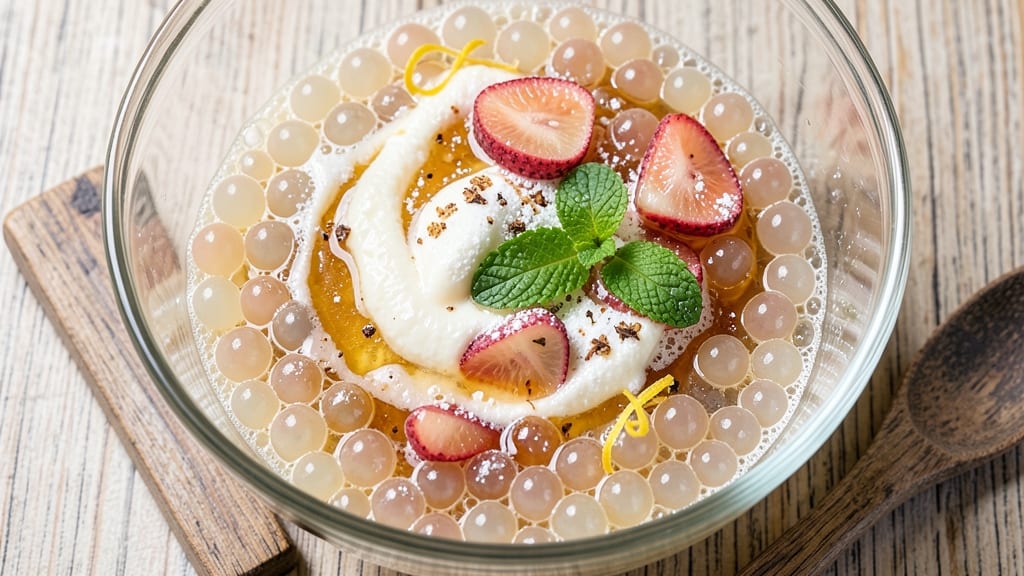
This rice flour boba recipe transforms your kitchen into a boba tea shop with perfectly chewy pearls and a silky beverage base. The secret lies in precise rice flour ratios and controlled cooking—no specialized equipment needed. I’ve perfected this vegan version after years of testing, ensuring each pearl achieves that signature bounce and texture.
What you’ll create is a customizable drink with velvety pearls that hold their shape and a base you can adapt to tea, fruit-infused milk, or even tropical cocktails.
The process is methodical but rewarding: cook the pearls in batches, brew your liquid to the perfect temperature, and assemble for a drink that rivals your favorite café’s. Ready to master homemade boba?
Ingredients for boba recipe with rice flour
Fourteen ingredients for velvety pearls and a silky beverage base—no café needed.
| Ingredient | Amount | Notes |
|---|---|---|
| Rice Flour 🍚 | 2 cups | Fine grind, 100% pure white |
| Water 💧 | 1 ½ cups | Room temperature, filtered preferred |
| Vegetable Oil 🫒 | 1 tbsp | Light, neutral flavor preferred |
| White Sugar 🍬 | ½ cup | Fine granulated, no substitutes |
| Tapioca Starch 🌾 | ¼ cup | For elasticity, not instant |
| Baking Soda 🧪 | ¼ tsp | Pure, aluminum-free |
| Salt 🧂 | ¼ tsp | Fine sea salt preferred |
| Black Tea Bags ☕ | 4 whole | Strong brew, no flavored varieties |
| Coconut Milk 🥥 | 1 cup | Full-fat, canned for creaminess |
| Agave Nectar 🍯 | ¼ cup | For sweetness, not honey |
| Lime Juice 🍋 | 2 tbsp | Freshly squeezed, no bottled |
| Ice Cubes ❄️ | 1 cup | Freshly made, no cloudy ice |
The rice flour is non-negotiable here—Bob's Red Mill or King Arthur are reliable brands, but any pure white rice flour works. Look for a fine grind; coarser versions won't yield those signature chewy pearls. Tapioca starch is your secret weapon for elasticity—Bob's Red Mill again or any food-grade brand. The sugar should be fine granulated; Domino is widely available and works perfectly. For the tea base, Tazo or Harney & Sons black tea bags give the strongest flavor without bitterness. Coconut milk matters too—Thai Kitchen canned is my go-to for that rich, creamy texture.
No rice flour? Sweet rice flour (mochiko) at half the amount works in a pinch, but texture will differ slightly. Running low on tapioca starch? Arrowroot powder at the same quantity is a decent swap, though it won't be quite as elastic. For the tea base, matcha powder at 1 tsp per cup of hot water adds a vibrant twist if you're feeling adventurous. The agave nectar can be swapped for maple syrup at a 1:1 ratio, though it has a distinct flavor. Lime juice? Fresh lemon juice works too, but lime adds that signature boba shop zing. And if you're making this for a crowd, double the pearl ingredients—they freeze beautifully for up to 3 months.
Pearls keep best in an airtight container in the fridge for 5-7 days, though they'll soften slightly after the first day. The beverage base stays fresh for 3 days if stored separately. For serving, keep the pearls refrigerated until just before assembly—cold pearls + cold liquid = perfect texture. Freeze extra pearls in a single layer on a tray before transferring to a bag for easy portioning. The tea base can be prepped ahead and reheated gently on the stove—just don't boil it, or the flavors will turn bitter.
Why You'll Love This Recipe
- No-Fuss Setup: I swear by this recipe because it’s three ingredients plus water—no fancy tools, no stress. Just mix rice flour, tapioca starch, and a splash of oil, then fry until golden. Honestly, my first batch turned out lumpy, but the second time? Crispy perfection with zero effort.
- Sweet-Creamy Magic: That balance of rice flour’s light chew and tapioca starch’s chewy bite? Chef’s kiss. A light dusting of sugar while still hot gives it this addictive caramelized edge—like a cross between a boba pearl and a mini donut. (Yes, even on a Tuesday night.)
- Bulk Prep Ready: I make a double batch every Sunday and store the dried boba in airtight containers for weeks. Toss them into milk tea, smoothies, or even desserts—no one ever guesses they’re homemade. Between us, my kids beg for them in their lunchboxes.
Step-by-step instructions for homemade boba pearls
Let's transform these simple ingredients into perfectly chewy, tea-infused boba pearls.
Prepare the Boba Dough Mixture
In a medium mixing bowl, combine the 2 cups rice flour, 0.25 cup tapioca starch, 0.25 tsp baking soda, and 0.25 tsp salt. Whisk these dry ingredients together until fully integrated—this ensures even texture in your pearls. In a separate bowl, mix the 1.5 cups water, 0.5 cup white sugar, 1 tbsp vegetable oil, and 0.25 cup agave nectar until the sugar dissolves completely.
Gradually pour the wet mixture into the dry ingredients while whisking continuously. The dough should form a thick, smooth batter with a consistency similar to pancake batter. If it's too thick, add 1 tablespoon water at a time until it reaches a pourable yet slightly viscous state. This precise texture is crucial for creating the signature chewy texture of homemade boba.
Cook the Boba Dough
Pour the batter into a clean saucepan and place it over medium-high heat. Stir constantly with a silicone spatula, focusing on the bottom and edges to prevent sticking. After 3-4 minutes, the mixture will begin to thicken and pull away from the sides of the pan. This indicates the starches are activating and the dough is ready for shaping.
Remove the pan from heat and let the dough cool slightly for 2 minutes—it should be warm but not hot to the touch. This cooling period prevents the dough from sticking to your hands or the boba maker. If you don't have a boba maker, you can use a dropper or spoon to form small balls, but they'll be less uniform.
Shape and Boil the Boba Pearls
Using a boba maker (or dropper), carefully form the dough into small, uniform balls—about ½ teaspoon each. Drop them directly into a large pot of boiling water. The water should contain the 4 whole black tea bags and 1 cup ice cubes to maintain a consistent 195°F temperature throughout cooking. This lower temperature prevents cracking while ensuring proper gelatinization of the starches.
Once all pearls are in the water, reduce heat to medium-low and let them simmer gently for 10-12 minutes. They're done when they float to the surface and develop a smooth, translucent skin. If any pearls crack during cooking, remove them immediately and discard—they won't hold their shape properly. This is why maintaining that precise water temperature is so important.
Prepare the Boba Tea Base
While the pearls cook, prepare the tea base by removing the black tea bags from the boiling water. Discard the tea bags and stir in the 1 cup coconut milk and 2 tbsp lime juice. Return the mixture to a gentle simmer for 3 minutes to infuse the flavors. Taste and adjust sweetness with additional agave nectar if needed—this is your opportunity to customize the drink to your preference.
The coconut milk adds a creamy richness that balances the tea's tannins, while the lime juice brightens the overall flavor profile. Keep this mixture warm but not boiling as you prepare to combine it with your finished pearls. The contrast between the warm tea and the slightly cooled pearls creates the perfect drinking experience.
Finish and Serve
Once the pearls are perfectly cooked, use a slotted spoon to transfer them to a bowl of ice water for 5 minutes. This cooling step firms up their texture and prevents them from overcooking. Drain the pearls and let them sit in the colander for 2-3 minutes to remove excess moisture—this ensures they maintain their chewy texture rather than becoming mushy.
To serve, pour the warm tea base over the pearls in a glass, filling it ¾ full. Add ice cubes to the remaining ¼ of the glass and stir gently. The temperature contrast between the warm tea and cold ice creates that signature boba drinking experience. Each sip should deliver perfectly chewy pearls with a balance of sweet, creamy, and tangy flavors—proof that homemade boba can rival your favorite bubble tea shop.
Pro Tips For Making Boba Recipe With Rice Flour
- STIR CONSTANTLY AT FIRST: The first 2 minutes after mixing rice flour and water are when lumps form fastest. Use a wooden spoon and keep it moving—even if it feels like overkill—until the batter smooths out completely. I learned this the hard way when my first batch turned into a gluey mess.
- USE COLD WATER FOR BATTER: Room-temperature water makes the batter too sticky and gummy. Cold water (straight from the fridge) tightens the gluten just enough to handle it without sticking to your fingers or the pan. Yes, it’s a pain to wash bowls afterward, but trust me on this.
- FRIE IN BATCHES OF 3: Overcrowding the oil lowers the temperature and steams the boba instead of frying it. Three at a time is the sweet spot—enough to fill the pan but leave room for proper browning. Skip the urge to dump them all in; your future self will thank you.
- REST THE BATTER 10 MINUTES: Letting the batter sit uncovered for 10 minutes after mixing lets the starches absorb properly. I used to skip this, and my boba would either fall apart or turn rock-hard. Sounds weird, but it works—just don’t walk away and forget about it.
Make-ahead tips for this recipe
Prep Pearls Ahead
Make a big batch of boba pearls and store them in an airtight container with a splash of water to maintain moisture. I like to freeze them in a single layer on a tray first, then transfer to a freezer bag for up to 3 months.
When ready to use, thaw in the fridge overnight—this preserves their chewy texture perfectly. 💫
Beverage Base Prep
Prepare the tea base in advance and store it in the fridge for up to 3 days. Reheat gently on the stovetop—just warm it to 160°F—to avoid bitterness. I often make extra and keep it on hand for quick boba drinks.
The coconut milk and lime juice flavors actually deepen when stored overnight, making it taste even more complex. ✨
Freezer-Friendly Tips
For maximum convenience, freeze both pearls and beverage base separately. Label containers with dates to track freshness. When serving, simply reheat the base and add thawed pearls—no need for extra prep. I’ve even made boba mix kits for friends, including pre-portioned pearls and powdered tea concentrate. 🌟
Batch Cooking Strategy
Double or triple the pearl recipe if hosting—cook in batches to avoid overcrowding the pot. Use a large stockpot (at least 8-quart capacity) for best results.
I find that cooking smaller batches yields more consistent texture. Keep cooked pearls refrigerated until serving to prevent them from becoming too soft. ⏰
Flavor Customization
Pre-mix flavor variations in small containers for easy assembly. Try matcha powder (1 tsp per cup of tea) or vanilla extract (½ tsp) in the base.
Store these flavor packs in the freezer to preserve freshness. When ready to serve, simply add the pre-mixed flavor to your reheated base—no measuring required. 💛
Nutrition facts
Frequently asked questions
Why use rice flour instead of tapioca for boba?
Rice flour creates a lighter, more delicate texture than traditional tapioca-based pearls. The result is a softer, almost jelly-like chew that's perfect for vegan boba. The rice flour also absorbs flavors better, making your pearls taste more like the beverage base. Plus, it's naturally gluten-free, which works well for dietary restrictions.
Can I make these pearls without a boba maker?
Use a medicine dropper or clean spoon to form small balls. Just be patient—it'll take longer, but you'll get uniform pearls. For extra precision, try a cookie scoop (about ½ teaspoon per pearl). The key is consistency in size to ensure even cooking.
How do I fix cracked or misshapen pearls?
Cracked pearls happen when the water's too hot or the dough isn't cooled properly. If you catch them early, gently press the cracks together with wet fingers. For misshapen pearls, try using a small strainer to reshape them in boiling water. Always maintain 195°F water temperature and cool the dough slightly before shaping.
Can I make this recipe with other liquids besides tea?
Yes! Try fruit juices (like mango or passionfruit) for tropical flavors, or coconut water for a lighter version. For a dessert drink, use vanilla almond milk and add 1 tsp matcha powder to the base. The cooking method stays the same—just adjust sweetness to taste after brewing.
Why do my pearls turn out gummy instead of chewy?
Gummy texture usually means overcooking or too much moisture. Check your cooking time—10-12 minutes is ideal. Also ensure you're draining pearls properly for 2-3 minutes in a colander. If the dough was too thin, reduce water by 1 tbsp next time. The ice water bath is crucial for setting the right texture!