
Main Courses
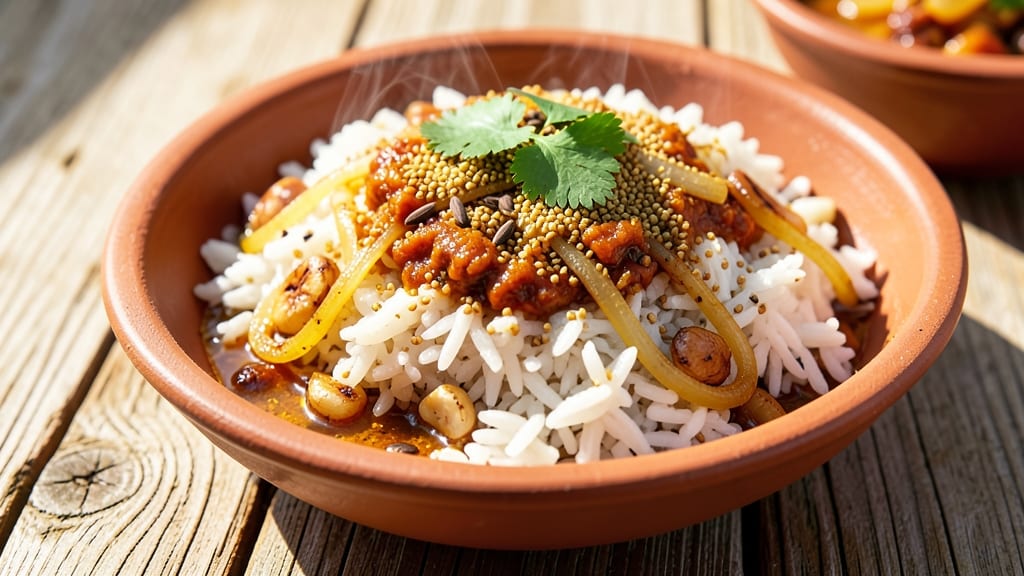
This Bolivian rice recipe transforms simple grains into a vibrant, aromatic dish where aji amarillo and toasted cumin create layers of warmth and depth.
The secret lies in soaking the rice first—it absorbs the bold flavors of sautéed onions, garlic, and peppers, while the slow-cooked broth infuses every grain with smoky richness. Unlike ordinary rice dishes, this one builds complexity through time and technique, resulting in a dish that's both rustic and refined.
The dish pairs beautifully with grilled meats or sopa de maní, and the achiote seeds add a subtle golden hue that makes it visually striking.
What sets this recipe apart is the balance of earthy cumin, tangy aji amarillo, and fresh herbs like huacatay—creating a flavor profile that's distinctly Bolivian yet approachable for home cooks. Ready in about 40 minutes, it delivers restaurant-quality results with minimal effort.
Ingredients for bolivian rice
Transform simple rice into a vibrant Bolivian masterpiece with these aromatic ingredients.
| Ingredient | Amount | Notes |
|---|---|---|
| Long-Grain White Rice 🍚 | 1 ½ cups | Uncooked, rinsed thoroughly first |
| Aji Amarillo Paste 🌶️ | ½ cup | High-quality, fresh or well-preserved |
| Ground Cumin 🌿 | 2 tbsp | Toasted for deeper aroma |
| Achiote Seeds 🌻 | 1 tsp | Ground into fine powder |
| Yellow Onions 🧅 | 1 ½ cups | Finely diced, about 2 medium |
| Garlic Cloves 🧄 | 6 cloves | Minced finely for infusion |
| Red Bell Pepper 🍅 | 1 whole | Deseeded, chopped into strips |
| Fresh Huacatay Leaves 🌿 | ¼ cup | Chopped finely, or substitute mint |
| Chicken Broth 💧 | 2 ½ cups | Low-sodium preferred |
| Extra-Virgin Olive Oil 🫒 | ¼ cup | For sautéing and finishing |
| Salt 🧂 | 1 ½ tsp | Diamond Crystal kosher salt |
| Black Pepper 🌶️ | ½ tsp | Freshly ground |
| Fresh Cilantro 🌿 | ¼ cup | Chopped, for garnish |
| Lime 🍋 | 1 whole | Juiced, for finishing |
The heart of this dish lies in the aji amarillo and achiote. For the best results, source aji amarillo paste from Latin markets—it should be smooth and vibrant yellow, not grainy or dull. Whole achiote seeds can be found in bulk bins at specialty stores like La Tienda or Despaña, where you'll also find the freshest huacatay. If you can't find huacatay, mint or cilantro work in a pinch, though the flavor profile shifts slightly. The cumin should be toasted in a dry pan for 30 seconds before grinding to release its full aroma—this step makes all the difference. For the rice, Carolina or Mahatma brands work best due to their consistent grain structure.
No aji amarillo? Mix 1 tbsp tomato paste with 1 tsp smoked paprika and 1 tsp lime juice for a reasonable substitute. Fresh huacatay unavailable? Dried mint leaves at half the amount provide a similar brightness. The red bell pepper can be swapped for jalapeño or serrano for added heat, though the sweetness of bell pepper balances the dish better. For the broth, homemade chicken stock elevates the flavor, but low-sodium store-bought works in a pinch. The lime juice should be freshly squeezed—bottled juice lacks the bright acidity needed to cut through the richness of the dish. If you're short on time, pre-minced garlic from a jar is acceptable, though fresh always tastes superior.
This rice keeps beautifully in the fridge for 4-5 days in an airtight container, with flavors deepening overnight. For longer storage, freeze portions for up to 3 months—the texture holds up well when reheated gently with a splash of water. To reheat, cover with a damp paper towel and microwave for 2-3 minutes, stirring halfway. The dish pairs perfectly with grilled meats or sopa de maní, so consider making extra for leftovers. Garnish with fresh cilantro and a squeeze of lime just before serving to maintain vibrant color and brightness.
Why You'll Love This Recipe
- One-Pot Magic: I swear by this—just rice, oil, and a few pantry staples tossed in one pot. No measuring cups, no extra bowls, no stress. The aji amarillo paste does all the heavy lifting while I stir for five minutes.
- Sunshine in a Bowl: That golden hue? Pure achiote seeds and cumin working their magic. It’s not just flavor—it’s color, like a little burst of Bolivia on your plate. Honestly, I’ll take this over plain rice any day.
- Lunchbox Hero: Make a big batch on Sunday, and you’ve got breakfast, lunch, or a quick dinner covered. My kids grab it cold in their lunches, and I reheat leftovers with a splash of water—still tastes like I slaved over it.
- Budget Bright Spot: Aji amarillo paste might sound fancy, but it’s cheaper than takeout and lasts for months. Plus, white rice and onions? You’re already stocked. This is the kind of recipe that makes grocery day feel like a win.
Step-by-step instructions for Bolivian rice with aji amarillo
Master this aromatic Bolivian technique for rice infused with smoky cumin and vibrant aji amarillo.
Toast the Spices for Maximum Flavor
Heat the 0.25 cup extra-virgin olive oil in a medium saucepan over medium heat until shimmering but not smoking. Add the 2 tablespoons ground cumin and 1 teaspoon ground achiote seeds, stirring constantly for 1-2 minutes until the spices release their deep, earthy aroma and begin to darken slightly.
This toasting step is crucial—it deepens the cumin's warmth and activates the achiote's natural pigments. Watch closely; if the spices darken too quickly, reduce heat to medium-low to prevent burning. Remove from heat immediately once fragrant, then set aside.
Sauté the Aromatic Vegetables
In the same saucepan (no need to clean it—the fond adds flavor), add the 1.5 cups finely diced yellow onions and cook over medium heat for 5-6 minutes until softened and golden. Stir in the 6 cloves minced garlic and 1 whole red bell pepper (strips); cook for another 3-4 minutes until the garlic is fragrant and the peppers begin to soften.
Here's where the color transformation happens: the achiote-infused oil will give your vegetables a subtle golden hue. If the mixture sticks, add 1-2 tablespoons chicken broth to deglaze. Remove from heat once the vegetables are tender but not browned.
Build the Aji Amarillo Base
Return the saucepan to medium heat and stir in the 0.5 cup aji amarillo paste, cooking for 2-3 minutes until the paste dissolves completely and the mixture becomes smooth. Add the 2.5 cups chicken broth, 1.5 teaspoons salt, and 0.5 teaspoon black pepper, bringing the mixture to a gentle simmer.
The aji amarillo will mellow its heat as it cooks, developing a complex, slightly sweet flavor. Taste and adjust seasoning—Bolivian rice should balance heat, salt, and earthiness. If the sauce is too thick, add 1-2 tablespoons water to achieve a pourable consistency.
Cook the Rice to Perfect Texture
Add the 1.5 cups rinsed long-grain white rice, stirring gently to coat each grain with the aji amarillo mixture. Increase heat to medium-high and bring to a boil, then immediately reduce to low heat, cover tightly with a lid, and simmer for 15 minutes without stirring.
This low-and-slow method prevents mushiness and allows the rice to absorb flavors evenly. After 15 minutes, fluff the rice gently with a fork, then stir in the 0.25 cup chopped fresh huacatay leaves (or mint). Return to low heat for another 5 minutes, covered, to let the huacatay infuse.
Finish and Garnish Professionally
Remove from heat and let the rice sit covered for 5 minutes. Stir in the 0.25 cup chopped fresh cilantro and juice of the 1 whole lime, then transfer to a serving dish. Garnish with an additional sprinkle of cilantro and a drizzle of the reserved olive oil from the initial toasting.
The lime brightens the dish's depth, while the cilantro adds freshness. Serve immediately with grilled meats or as a standalone side—each grain should be distinct yet infused with the smoky, citrusy aji amarillo essence. The rice should be tender with a slight bite, not mushy, and carry that signature Bolivian warmth.
Pro Tips For Making Bolivian Rice
- TOAST THE ACHIOTE FIRST: I learned this the hard way—grinding achiote seeds dry just makes your rice taste like dust. Instead, lightly toast them in a dry pan for 30 seconds until fragrant, then grind with a pinch of salt. That smoky depth is what separates good Bolivian rice from "meh" rice.
- SWEAT THE ONIONS LOW: High heat turns yellow onions bitter fast, and bitter onions ruin the balance of this dish. Cook them over medium-low for at least 8 minutes until translucent and glossy—no browning, just soft. Patience here means your rice won’t taste like a sad, charred afterthought.
- STIR THE AJI AMARILLO: The paste has a habit of clumping and burning if you just dump it in. Whisk it with a splash of hot broth or water first, then stir it into the oil in slow circles. This keeps the color vibrant and the heat even—no scorched patches, no wasted flavor.
- USE LESS RICE, MORE LIQUID: Bolivian rice isn’t about fluffiness; it’s about texture. For every cup of rice, use 1½ cups broth (not water) and let it simmer uncovered until the liquid’s almost gone. The grains should be firm but tender—like al dente pasta, not mush. (Yes, even if it looks undercooked at first.)
Troubleshooting this dish
Rice Too Dry?
If your rice ends up dry or undercooked, it’s usually from overcooking or insufficient liquid. First, make sure your rice is thoroughly rinsed before cooking—this removes excess starch that can cause stickiness.
For the next batch, add 2-3 tablespoons extra broth (up to 2¾ cups total) and reduce the heat to lowest setting after the initial boil. Cover tightly with a lid and check for doneness at 12 minutes—it should be tender but still slightly firm.
If using an older pot, ensure it’s heavy enough to maintain even heat distribution. 💧
Mushy or Gummy Texture
Mushy rice happens when you stir too often or don’t maintain consistent heat. After adding the rice, bring to a boil only once, then immediately reduce to low heat and avoid peeking under the lid for the first 10 minutes. If your rice turns out gummy, it’s likely overcooked.
Next time, reduce the heat to lowest setting and cook for 12-13 minutes instead of 15. For extra insurance, use a heavy-bottomed pot like a Lodge Dutch oven to prevent hot spots. 🍚
Flavor Too Mild
The aji amarillo and cumin are the stars, so if your dish lacks depth, it’s likely under-seasoned or used low-quality ingredients. Always toast your cumin until fragrant—this releases its full aroma.
For the aji amarillo, use fresh paste (not powder) and cook it for 3-4 minutes to mellow its heat while intensifying its flavor. If using a substitute, add ½ teaspoon smoked paprika and 1 tsp lime juice to mimic the tang.
Taste as you go—Bolivian rice should have a balanced heat, not be bland. 🌶️
Burnt Spices or Oil
Burnt spices ruin the dish’s delicate balance. When toasting the cumin and achiote, keep the heat at medium-low and watch closely—it should take 1-2 minutes max. If the oil starts to smoke, remove the pan immediately. For the onions and garlic, cook them until soft but not browned.
If you notice any burnt bits, strain the mixture through a fine-mesh sieve to remove them before adding the rice. A stainless steel saucepan distributes heat more evenly than nonstick, reducing the risk of burning. 🔥
Uneven Cooking
Uneven cooking often stems from inconsistent heat or stirring too much. Always use a heavy-bottomed pot to prevent hot spots, and avoid stirring the rice after the initial boil.
If your rice cooks unevenly, try spreading it out in a single layer before adding the broth, then letting it simmer undisturbed. For extra insurance, place a damp paper towel under the lid to create a seal and trap steam.
If using a gas stove, ensure the flame is evenly distributed under the pot. ✨
Nutrition facts
Frequently asked questions
What makes Bolivian rice different from regular rice dishes?
Bolivian rice stands out because of its bold flavor profile—it's infused with aji amarillo, toasted cumin, and achiote, creating a vibrant yellow hue and complex smoky-sweet taste. The rice is also cooked in a rich broth with fresh herbs like huacatay (black mint), which gives it a distinct herbal brightness that sets it apart from plain white rice or even Latin American-style rice dishes.
Can I substitute aji amarillo if I can't find it?
Yes! Mix 1 tablespoon tomato paste with 1 teaspoon smoked paprika and 1 teaspoon lime juice for a reasonable substitute. For extra depth, add a pinch of ground annatto (achiote) to mimic the color. The combination won't be identical, but it will capture the tangy, slightly sweet character of aji amarillo while adding warmth.
How do I store leftovers to keep them fresh?
Store cooked Bolivian rice in an airtight container in the fridge for up to 4-5 days. For longer storage, freeze portions for up to 3 months. To reheat, cover with a damp paper towel and microwave for 2-3 minutes, stirring halfway. The rice reheats best with a splash of water or broth to restore moisture.
What's the best way to serve this rice?
This Bolivian rice pairs beautifully with grilled meats like chicken or beef, or as a standalone dish with a side of sopa de maní (peanut soup). Garnish with fresh cilantro and a squeeze of lime just before serving to enhance the vibrant flavors. It also works well as a filling for tacos or burritos when slightly cooled.
Why does the recipe call for soaking the rice?
Soaking the rice for 30 minutes before cooking removes excess starch, preventing gummy texture and helping the grains absorb the bold flavors of the aji amarillo and spices more evenly. This step is especially important for Bolivian rice, where the complex seasonings need time to penetrate each grain. If short on time, at least rinse the rice thoroughly before cooking.