
Side Dishes
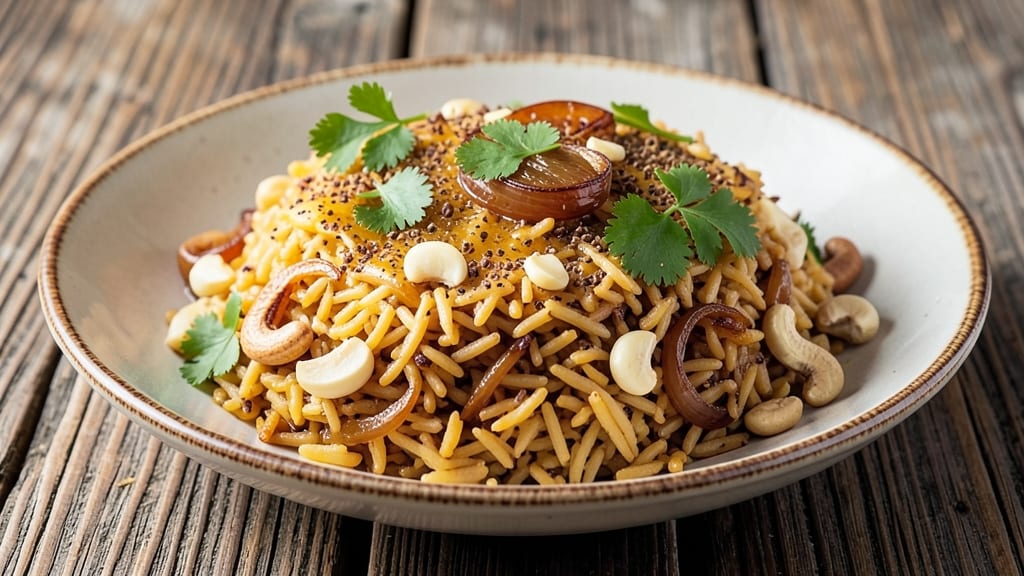
This brown basmati rice pilaf delivers nutty, golden grains with a toasted spice crunch that elevates any meal. The key lies in slow-cooking brown rice until tender yet firm, then building layers of flavor with sautéed onions, garlic, and warm spices like cumin and coriander.
Unlike white rice pilafs, this version keeps its chewy texture while absorbing rich broth for depth.
What sets this recipe apart is the two-step cooking method—first toasting whole spices in ghee for aroma, then simmering the rice in broth until perfectly tender. Adding toasted nuts or dried fruit at the end creates that signature crunchy contrast that makes every bite satisfying.
Whether served alongside roasted chicken or as a vegetarian centerpiece, this pilaf brings restaurant-quality texture and flavor to your table.
Ingredients for brown basmati rice pilaf
Golden brown basmati rice meets aromatic spices and toasted crunch for a restaurant-worthy pilaf.
| Ingredient | Amount | Notes |
|---|---|---|
| Brown Basmati Rice 🌾 | 1 ½ cups | Uncooked, rinsed thoroughly |
| Ghee 🧈 | ¼ cup | For toasting spices and rice |
| Yellow Onions 🧅 | 1 whole | Medium, finely diced |
| Garlic Cloves 🧄 | 4 cloves | Peeled, minced finely |
| Ground Cumin 🌿 | 1 tbsp | Freshly toasted for aroma |
| Ground Coriander 🌿 | 1 tbsp | Freshly toasted with cumin |
| Vegetable Broth 💧 | 2 ½ cups | Low-sodium, homemade preferred |
| Dried Apricots 🍑 | ¼ cup | Chopped, for sweet crunch |
| Slivered Almonds 🥜 | ¼ cup | Toasted, for texture |
| Fresh Parsley 🌿 | ¼ cup | Chopped, for garnish |
| Salt 🧂 | 1 tsp | Diamond Crystal preferred |
| Black Pepper 🌶️ | ½ tsp | Freshly cracked |
| Lemon Zest 🍋 | 1 tsp | Bright, for acid balance |
The brown basmati rice is the foundation—look for long-grain varieties with a nutty aroma. Lundberg Farms or Tilda brands deliver consistent texture. Toasting the whole spices in ghee before adding rice unlocks their essential oils, creating that signature aroma. For the broth, homemade vegetable stock elevates flavor, but low-sodium store-bought works in a pinch. The dried apricots should be plump and moist; if they feel dry, soak in warm water for 10 minutes before chopping. Slivered almonds toast best in a dry skillet over medium heat until golden—about 3-4 minutes.
No ghee? Unsalted butter or olive oil works, though ghee's higher smoke point prevents burning during spice toasting. Substitute dried apricots with raisins or chopped dates for a different sweet note. If you prefer nuts, toasted pistachios or pecans add depth. For extra richness, stir in 1 tbsp tahini at the end. Fresh parsley can be swapped for cilantro or mint if you prefer a different herbal finish. The lemon zest is crucial—use a fine grater for maximum brightness without bitterness.
This pilaf reheats beautifully—simmer with a splash of broth for 2-3 minutes to restore moisture. Store in an airtight container for 4-5 days in the fridge, or freeze for up to 3 months. For meal prep, portion into individual containers with a sprinkle of toasted nuts on top. The flavors deepen overnight, so make extra—it disappears fast. To serve, fluff gently with a fork to maintain that signature chewy texture.
Why You'll Love This Recipe
- One-Pot Magic: I swear by this—just brown the onions in ghee, add garlic and cumin, toss in the rice, cover, and walk away. No extra pans, no stress. That nutty basmati aroma fills the kitchen while you do actual chores.
- Nutty-Garlicky Bliss: The ghee-toasted onions caramelize into sweet, jammy pockets, then the garlic and cumin wake up the rice with a warm, earthy punch. Honestly, it’s the kind of flavor that makes you pause mid-bite—like a hug in grain form.
- Meal Prep MVP: Make a big batch on Sunday, and you’ve got lunch or dinner covered for days. It reheats beautifully (just add a splash of water), and the texture stays perfect—no mushy leftovers here. My lunchbox’s new best friend.
- Budget Bright Spot: Brown basmati stays affordable, and ghee stretches farther than you’d think. A single batch feeds four for under $5, and the cumin’s warmth makes it feel fancy without the price tag. My wallet and taste buds thank me.
Step-by-step instructions for brown basmati rice pilaf
Here's how to craft nutty, golden grains with toasted spice crunch—every bite delivers aromatic depth.
Toast the Spices in Ghee Until Fragrant
Heat the 0.25 cup ghee in a heavy-bottomed pot over medium heat until it melts and begins to shimmer. Add the 1 whole yellow onion, cut into even dice, and cook for 5-6 minutes until the onions soften and their edges turn translucent. This slow cooking prevents burning while building sweetness.
Add the 4 cloves garlic, minced finely, along with the 1 tablespoon ground cumin and 1 tablespoon ground coriander. Stir constantly for 1-2 minutes until the spices release their aroma—you'll notice the kitchen fill with warm, earthy notes. This toasting step is critical; it develops the pilaf's signature nutty complexity. Remove from heat immediately to prevent the spices from burning.
Toast the Rice Until Golden and Nutty
Add the 1.5 cups brown basmati rice, rinsed thoroughly, to the pot and stir to coat each grain evenly in the spiced ghee. Increase heat to medium-high and toast the rice for 3-4 minutes, stirring frequently. You're looking for grains that develop a golden-brown hue—this indicates the rice's natural oils are caramelizing, creating that signature nutty flavor.
If the rice begins to stick, reduce heat to medium and continue stirring. The goal is to develop color without burning. Once the rice is evenly toasted, pour in the 2.5 cups vegetable broth and add the 1 teaspoon salt. Bring to a gentle boil, then immediately reduce heat to low and cover the pot tightly with a lid.
Simmer Until Rice Absorbs All Liquid
Simmer the rice for 35-40 minutes without lifting the lid. The brown basmati requires longer cooking than white rice, and this undisturbed simmer allows the grains to absorb liquid evenly. You'll know it's done when the rice is tender and the liquid has been completely absorbed—press a grain gently with your finger; it should yield slightly but still hold its shape.
If the rice seems underdone after 35 minutes, add 2-3 tablespoons of water, cover, and continue cooking for another 5 minutes. Overcooking turns rice mushy, so monitor carefully. Real talk: your oven might run hot, so start checking at the 30-minute mark if your stove is particularly powerful.
Fold in Textural Elements for Contrast
Once the rice is perfectly cooked, remove the pot from heat and let it sit covered for 5 minutes. This resting period allows any remaining steam to distribute evenly. Stir in the 0.25 cup chopped dried apricots and 0.25 cup toasted slivered almonds, folding them gently through the rice. The apricots add sweet-tart contrast while the almonds provide crunch.
Finish with the 0.5 teaspoon black pepper and 1 teaspoon lemon zest, tossing until evenly distributed. The lemon zest brightens the dish, cutting through the richness of the ghee and spices. Taste and adjust seasoning—you might need a pinch more salt to balance the sweetness of the apricots.
Garnish and Serve Immediately
Transfer the pilaf to a serving dish and garnish with 0.25 cup chopped fresh parsley. The parsley adds freshness and visual appeal, contrasting with the warm spices. Serve immediately while the rice is still steaming hot—this ensures each bite delivers that perfect balance of texture and temperature.
For best results, serve this pilaf as a centerpiece alongside grilled meats or roasted vegetables. The nutty, spiced grains pair beautifully with smoky flavors, making this dish versatile for weeknight dinners or special occasions. The key to success lies in the toasting steps—never rush them, and you'll reward yourself with restaurant-quality results.
Pro Tips For Making Brown Basmati Rice Pilaf
- TOAST THE RICE FIRST: Brown basmati needs a quick head start—dry-toast it in ghee for 2-3 minutes until the edges turn golden. I learned this the hard way after making mushy rice from skipping this step; the starch gets a chance to set before absorbing liquid, so you end up with fluffy grains instead of glue.
- SWEAT ONIONS LOW: Crank the heat for the ghee, but drop it to medium-low when adding onions. After burning three batches, I finally figured out that slow-cooking them until deep golden (about 8-10 minutes) builds real flavor—no one wants bitter, caramelized bits in their pilaf. (Yes, even if you’re impatient like me.)
- RICE TO WATER RATIO: Use 1.75 cups water per 1 cup brown basmati—this accounts for the extra moisture in whole grains. My grandmother swore by this, and she was right: the rice will finish perfectly without drying out or turning mushy. (Your future self will thank you.)
- CUMIN LAST MINUTE: Add the ground cumin only after the onions are fully cooked and you’ve added the garlic. I was skeptical until I tried it—it keeps the cumin’s bright, toasty aroma from burning off while building layers of flavor instead of just a one-note spice hit.
Creative variations of these flavors
Moroccan-Spiced Pilaf
Swap the cumin and coriander for 1 tsp ground cinnamon, 1 tsp ground ginger, and ½ tsp ground turmeric for a warm, aromatic twist. Add ½ cup golden raisins and 2 tbsp chopped preserved lemon peel along with the apricots.
Finish with a sprinkle of toasted sesame seeds instead of almonds. This variation pairs beautifully with grilled lamb or roasted eggplant. 🌶️
Lemon-Herb Pilaf
Brighten the dish with 1 tbsp fresh lemon thyme and 1 tbsp chopped fresh dill instead of parsley. Increase the lemon zest to 2 tsp and add 1 tbsp lemon juice at the end.
Swap the dried apricots for ½ cup chopped sun-dried tomatoes for a tangy contrast. This version works perfectly as a vegetarian main with a side of grilled halloumi. 🍋
Smoky Chipotle Pilaf
Infuse the pilaf with smoky depth by adding 1 tsp adobo sauce from canned chipotles to the ghee when toasting the spices. Add ½ tsp smoked paprika along with the cumin and coriander.
Replace the dried apricots with ½ cup chopped roasted red peppers for extra smokiness. Garnish with cilantro and a sprinkle of crumbled feta cheese for a Greek-Mexican fusion twist. 🔥
Coconut-Curry Pilaf
Create a tropical-inspired version by adding ½ cup light coconut milk to the broth. Stir in 1 tsp ground curry powder with the spices and add ½ cup chopped toasted cashews instead of almonds.
Finish with 1 tbsp chopped cilantro and a sprinkle of toasted coconut flakes. This pilaf pairs wonderfully with grilled shrimp or chicken satay. 🥥
Mediterranean Pilaf
Transform your pilaf into a Mediterranean feast by adding ½ cup chopped Kalamata olives and ½ cup crumbled feta cheese at the end. Swap the dried apricots for ½ cup chopped artichoke hearts and use 1 tsp dried oregano instead of coriander.
Garnish with fresh mint leaves for a refreshing finish. This version is perfect alongside grilled chicken or fish. 🌿
Spicy Harissa Pilaf
For a North African-inspired kick, add 1 tbsp harissa paste to the ghee when toasting the spices. Include ½ tsp cayenne pepper with the cumin and coriander. Swap the dried apricots for ½ cup chopped roasted eggplant and garnish with extra toasted almonds and a drizzle of harissa oil.
This bold version pairs wonderfully with grilled meats or as a vegetarian centerpiece. 🌶️
Nutrition facts
Frequently asked questions
Why does brown basmati rice take longer to cook than white?
Brown basmati rice has its outer bran layer intact, which requires more time to soften. The longer cooking process allows the grains to absorb liquid gradually while maintaining their chewy texture. Unlike white rice, it needs 35-40 minutes to reach perfect tenderness without turning mushy. The patience pays off with that signature nutty flavor!
Can I substitute white basmati rice in this recipe?
You can, but the texture will differ significantly. White basmati cooks in 15-20 minutes and becomes softer, losing that satisfying chew. For a similar result, use jasmine rice (cook for 25-30 minutes) or adjust the broth ratio—reduce by 1/3 cup since white rice absorbs less. The flavor won't be identical, but it'll still be delicious!
How do I prevent my pilaf from becoming mushy?
Three key steps: don't overcook, use the right broth ratio, and avoid lifting the lid while simmering. Brown basmati needs 35-40 minutes max—test at 30 minutes if your stove runs hot. If it seems dry, add 2 tbsp water instead of broth to avoid diluting flavors. Let it rest 5 minutes covered after cooking to redistribute moisture.
What's the best way to reheat leftovers?
Gently reheat in a pot with 1-2 tbsp broth over low heat for 3-4 minutes, stirring occasionally. Microwaving can make it rubbery—always use moisture to restore texture. For best results, store in an airtight container for 4-5 days. Freeze portions for up to 3 months by spreading on a tray first to prevent clumping. The flavors actually improve overnight!
Can I make this pilaf ahead for a dinner party?
This pilaf tastes even better the next day. Cook it 1 day ahead, store covered at room temperature, then reheat gently before serving. For parties, prepare 2 days ahead—the flavors meld beautifully. Keep the toasted nuts and parsley separate until serving to maintain crispness. Pro tip: Make a double batch—it disappears fast!