
Main Courses
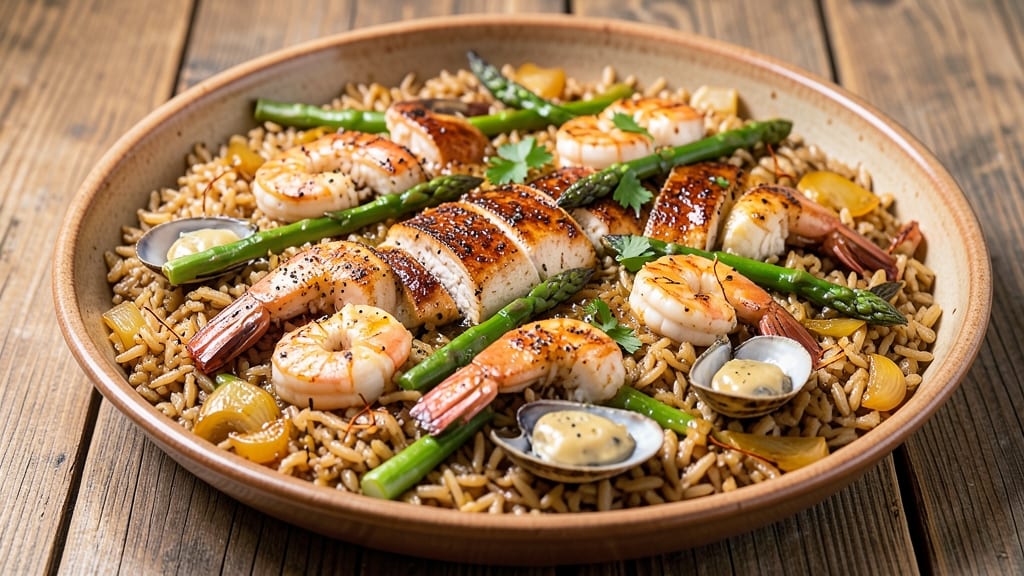
This brown rice paella recipe transforms a classic Spanish dish into a nutty, hearty one-pan feast with deeper flavor and satisfying texture. The longer cooking time of brown rice creates a richer, earthier base that absorbs the saffron-infused broth beautifully, while the crispy socarrat layer adds that signature crunch.
Unlike white rice paella, this version delivers a satisfying bite and complex flavor profile that keeps every spoonful interesting.
What sets this apart is the balance of traditional techniques—like toasting the rice and building layers of flavor—and modern twists, such as smoked paprika and bright citrus zest.
The result is a paella that’s both restaurant-worthy and deeply comforting, perfect for feeding a crowd or treating yourself to a special meal. With shrimp, chicken, and mussels simmering together, each bite delivers a symphony of textures and flavors, all achieved in one pan for easy cleanup.
Ingredients for brown rice paella
Sixteen ingredients transform brown rice into a saffron-infused Spanish masterpiece with depth and crunch.
| Ingredient | Amount | Notes |
|---|---|---|
| Brown Rice 🌾 | 2 cups | Uncooked, long-grain preferred |
| Saffron Threads 🌼 | ¼ tsp | High-quality, culinary grade |
| Chicken Breast 🍗 | 1 ½ lb | Boneless, skinless, cut into chunks |
| Shrimp 🦐 | 1 ½ lb | Peeled, deveined, headless |
| Mussels 🦪 | 2 cups | Fresh, scrubbed, debearded |
| Yellow Onion 🧅 | 1 whole | Diced, medium size |
| Red Bell Pepper 🌶️ | 1 whole | Diced, any color |
| Garlic Cloves 🧄 | 6 cloves | Minced, fresh preferred |
| Smoked Paprika 🌶️ | 1 tbsp | For depth of flavor |
| Ground Cumin 🌿 | ½ tsp | Toasted for warmth |
| Sea Salt 🧂 | 1 ½ tsp | Diamond Crystal preferred |
| Black Pepper 🌶️ | ½ tsp | Freshly ground |
| Lemon Zest 🍋 | 1 tbsp | Bright citrus finish |
| Chicken Broth 💧 | 4 cups | Low-sodium, homemade or store-bought |
| Extra-Virgin Olive Oil 🫒 | ½ cup | High-quality, fruity |
| Tomato Paste 🍅 | 2 tbsp | Smooth, no sugar added |
| Fresh Parsley 🌿 | ¼ cup | Chopped, for garnish |
The brown rice is the star here—long-grain varieties like Calrose or Jasmine hold up best to the long cooking time. Trader Joe's bulk section or Whole Foods carry excellent options, but any uncooked brown rice works. Look for whole grains with minimal processing for the best texture. Saffron is non-negotiable for authentic flavor; Penzeys sells high-quality threads, but even a small amount makes a difference. The mussels should be fresh and tightly closed—discard any that are open or cracked. For the chicken, pre-cut chunks save time, but if buying whole breasts, cut them into 1-inch pieces for even cooking.
No saffron? Turmeric at half the amount gives color but lacks the floral depth. Swap shrimp for scallops or calamari if preferred—just adjust cooking time slightly. The tomato paste can be substituted with fresh diced tomatoes (about 1 cup), but paste builds richer flavor. For the broth, homemade is ideal, but Swanson or Pacific Foods low-sodium options work fine. The smoked paprika adds that signature Spanish touch—Penzeys or La Boîte brands offer excellent quality. If you can't find fresh parsley, dried Italian seasoning at half the amount works in a pinch, though fresh garnish is ideal.
Store uncooked ingredients like rice, saffron, and spices in cool, dark places—they keep for months to years. Fresh seafood (shrimp, mussels) should be used within 2 days of purchase, while chicken stays fresh for 3-4 days. The cooked paella reheats beautifully—cover with foil and warm in the oven for 10-15 minutes at 350°F. Leftovers keep for 4-5 days in the fridge or 3 months frozen. For best texture, re-crisp the socarrat under the broiler for 2-3 minutes before serving.
Why You'll Love This Recipe
- One-Pan Magic: I swear by this recipe because it’s all about minimal cleanup. Brown rice, chicken, shrimp, and mussels all simmer together in one skillet—no extra pots, no fuss. Just stir, wait, and enjoy.
- Saffron Magic: That single pinch of saffron threads transforms everything. The rice gets this golden hue and a subtle, luxurious depth you won’t find in regular paella. It’s the secret weapon—honestly, it’s worth every penny.
- Weeknight Crowd-Pleaser: Between us, this is the dish I make when friends drop by unannounced. The shrimp and mussels feel fancy, but the brown rice keeps it hearty and filling. Everyone’s happy, and I’m not stressing.
- Leftovers That Don’t Suck: Most paella recipes leave you with sad, dry rice the next day. Not this one. The brown rice holds up perfectly, and the flavors only get better after resting. Pack it for lunch—you’ll be grateful.
Step-by-step instructions for brown rice paella
Here's how to create a flavorful Spanish-style paella using brown rice and fresh seafood.
🍳 Step 1: Bloom the Saffron and Sauté Aromatics
In a large, shallow paella pan or skillet, heat the 0.5 cup extra-virgin olive oil over medium heat. Add the 6 cloves minced garlic and cook for 1-2 minutes until fragrant but not browned. This is where the foundation of your paella's flavor begins.
Next, add the 1 whole diced yellow onion and 1 whole diced red bell pepper. Sauté for 5-6 minutes until the vegetables soften and begin to caramelize. Here's the thing—don't rush this step. The deeper the color of your vegetables, the richer your paella will taste. Stir occasionally to prevent sticking, but let them develop color.
Now, add the 2 tbsp tomato paste and cook for another 2 minutes, stirring constantly. This helps build a flavorful base that will carry through the entire dish. The mixture should look thick and slightly darkened from the caramelization.
🍳 Step 2: Season and Toast the Rice
Add the 2 cups brown rice to the pan and stir to coat it evenly with the aromatic vegetables and tomato paste. This step is critical for ensuring each grain of rice absorbs the full depth of flavor. Cook for 2-3 minutes, stirring constantly, until the rice begins to turn translucent at the edges.
Now, add the 1 tbsp smoked paprika, 0.5 tsp ground cumin, 1.5 tsp sea salt, and 0.5 tsp black pepper. Stir well to distribute the spices evenly throughout the rice. The spices should sizzle slightly, releasing their aromatic oils. This is when your paella starts to come together—those warm, earthy notes from the cumin and smoky paprika will infuse the rice.
In a small bowl, combine the 0.25 tsp saffron threads with 1 tablespoon hot chicken broth to dissolve the saffron completely. This ensures the vibrant color and delicate flavor of the saffron are fully incorporated. Pour the saffron mixture over the rice and stir gently to distribute it evenly.
🥘 Step 3: Layer and Cook the Protein
Pour in 2 cups of the chicken broth and stir once to distribute it evenly. Here's the key—don't stir the rice again after this point. Allowing the rice to develop its own crust at the bottom is what gives paella its signature texture. Place the pan over medium-low heat and let it simmer undisturbed for 10 minutes.
After 10 minutes, add the 1.5 lb chicken breast chunks to the pan. Spread them out evenly over the rice. Cook for another 5 minutes until the chicken is no longer pink in the center. The chicken should be tender but not falling apart. Remove the chicken from the pan and set it aside on a plate to rest.
Next, add the 1.5 lb shrimp and 2 cups mussels to the pan. Spread the shrimp evenly over the rice, and place the mussels on top, opening side down. Cook for 5-7 minutes until the shrimp turns pink and the mussels open completely. Discard any mussels that do not open during this time, as they may be bad.
🔥 Step 4: Finish with Broth and Lemon Zest
Carefully pour the remaining 2 cups chicken broth over the paella, taking care not to disturb the rice too much. The broth should cover the rice but not submerge it completely. Return the pan to medium-low heat and let it simmer for 15-20 minutes. The rice should absorb most of the broth and develop a crispy bottom layer, known as "socarrat."
While the rice finishes cooking, add the 1 tbsp lemon zest to the pan and stir gently. This bright citrus note cuts through the richness of the seafood and spices, adding a refreshing finish. The lemon zest should infuse the entire dish, leaving a subtle tangy aroma that signals the paella is nearly done.
🍽️ Step 5: Rest and Serve
Once the rice is tender and the liquid has mostly been absorbed, remove the pan from the heat. Let the paella rest for 5 minutes to allow the flavors to meld and the rice to finish cooking slightly from the residual heat. This resting period is crucial for achieving the perfect texture.
Gently fluff the rice with a wooden spoon, being careful not to break up the crispy bottom layer. Return the chicken to the pan and mix it back into the rice. Garnish with the 0.25 cup chopped fresh parsley and serve immediately, straight from the pan. Each bite should deliver a symphony of flavors—crispy rice, tender chicken, succulent shrimp, briny mussels, and the aromatic blend of saffron, paprika, and cumin. Enjoy your paella with a crisp green salad and a glass of Spanish white wine.
Pro Tips For Making Brown Rice Paella
- TOAST THE RICE FIRST: I learned this the hard way—skipping the initial toast leaves your brown rice mushy instead of chewy. Heat your paella pan dry over medium-high, add the rice, and stir for 2-3 minutes until it smells nutty and the grains look slightly translucent. This step locks in flavor and texture, especially with brown rice’s stubborn starch.
- SOAK SAFFRON IN WARM BROTH: Don’t just toss saffron threads into the pot like confetti. Crush them lightly (a mortar and pestle works) and steep in ½ cup warm broth for 10 minutes—this extracts the maximum color and aroma. Strain before adding to the paella; the broth will be vibrant, and your rice won’t turn muddy brown.
- DON’T OVERCROWD THE PAN: I used to pile all the chicken, shrimp, and mussels in at once, and they’d steam instead of sear. Work in batches: cook half the chicken first, remove it, then add shrimp and mussels in stages. This guarantees crispy edges on everything, not soggy protein swimming in sauce.
- USE COLD SHRIMP: Sounds weird, but it works: pat shrimp dry, then rinse them in ice water for 30 seconds before cooking. The cold shock tightens the flesh, so they stay plump and don’t turn rubbery. Add them in the last 4 minutes of cooking—any earlier, and they’ll overcook while the rice finishes.
Health benefits of these flavors
Whole Grain Power
Brown rice is the star here, packed with fiber and complex carbohydrates that provide sustained energy. A 1-cup serving delivers about 3.5 grams of fiber—more than white rice—and supports digestive health.
The longer cooking time actually enhances its nutritional profile by breaking down phytic acid, making nutrients like magnesium and zinc more bioavailable. 🌾
Lean Protein Boost
This paella packs a protein punch with chicken, shrimp, and mussels, offering a complete amino acid profile. The 1.5 lbs of chicken breast provides about 45 grams of protein while being low in saturated fat.
Mussels add 18 grams of protein per serving plus iron and vitamin B12, making this a well-rounded meal for muscle repair and energy.
Saffron's Antioxidants
The 0.25 tsp saffron isn't just for color—it's one of the world's most potent antioxidants. Studies show saffron contains crocetin and crocin, compounds that combat oxidative stress and may support brain health. Even this small amount provides significant benefits, especially when combined with the dish's other nutrient-dense ingredients.
Heart-Healthy Fats
Extra-virgin olive oil and seafood work together to create a heart-healthy fat profile. The 0.5 cup olive oil provides monounsaturated fats that support cholesterol balance, while the seafood contributes omega-3 fatty acids from shrimp and mussels.
This combination helps reduce inflammation and supports cardiovascular function—perfect for a satisfying yet nutritious meal.
Citrus Brightness
The 1 tbsp lemon zest adds more than just flavor—it boosts vitamin C content. While small, this amount provides about 10% of your daily needs, supporting immune function and collagen production.
The citrus also helps balance the richness of the seafood and spices, creating a harmonious flavor profile that's both delicious and nutritious.
Digestive Benefits
The combination of brown rice fiber and seafood creates a meal that's gentle yet satisfying for digestion. The fiber content helps regulate blood sugar levels, while the lean proteins and healthy fats keep you full longer.
For an extra digestive boost, I often serve this paella with a side of steamed green beans or roasted asparagus—both add fiber and nutrients without overpowering the main dish. 💪
Nutrition facts
Frequently asked questions
Why does brown rice take longer in paella than white rice?
Brown rice has its outer bran layer intact, which requires more time to soften properly. In paella, this means an extra 15-20 minutes of simmering compared to white rice. The longer cooking time actually enhances its nutty flavor and creates that satisfying chewy texture that pairs perfectly with the crispy socarrat. Don't rush it—patience is key for that restaurant-quality bite!
Can I substitute mussels with another seafood?
Swap mussels for clams, scallops, or calamari—just adjust cooking times. Clams need 5-7 minutes to open, while scallops cook in just 2-3 minutes per side. For a vegetarian version, use artichokes or roasted red peppers instead. The key is maintaining the same cooking sequence: start with harder proteins (chicken), then add delicate seafood at the end.
How do I know when the socarrat is ready?
The socarrat should be a deep golden-brown with crispy edges that resist gentle pressure from a wooden spoon. If it's too pale, increase heat slightly for the last 2-3 minutes—just watch closely to avoid burning. The rice should be tender but still slightly firm in the center when you cut into it. Pro tip: Let the paella rest 5 minutes off heat before serving to let the socarrat set properly.
What's the best way to reheat leftovers?
Reheat paella gently to preserve texture: Cover with foil and warm in the oven at 325°F for 15-20 minutes. For extra crispiness, broil for 2-3 minutes at the end. Microwaving works in a pinch, but it can make the rice mushy. Add a splash of broth or water if it's too dry—just enough to steam the rice slightly without making it soggy. Store leftovers in an airtight container for up to 4 days.
Can I make this paella in a regular skillet?
Yes! While a traditional paella pan gives the best socarrat, a 12-inch cast iron skillet works perfectly. For even cooking, use medium-low heat and stir the rice occasionally during the first 10 minutes to prevent burning. The key is maintaining a thin layer of rice (1/2-inch deep) so it can develop crispy edges. If your skillet is smaller, cook in batches or use a larger pan.