
Side Dishes
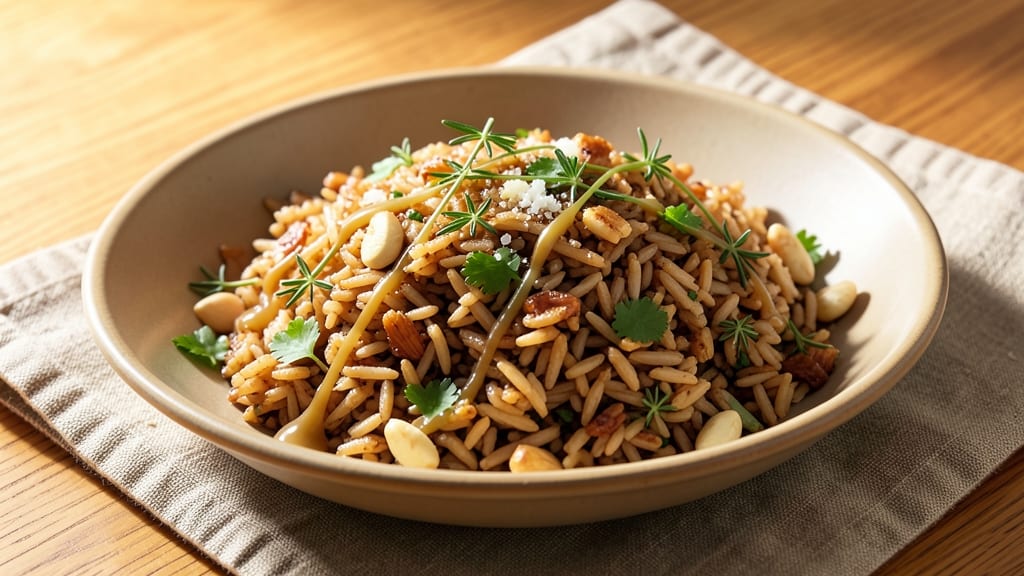
This brown rice pilaf with orzo transforms simple grains into a nutty, golden dish with irresistible toasted crunch. 💛 The secret lies in cooking both grains together in aromatic broth, where the earthy brown rice absorbs rich flavors while the orzo develops a satisfying crispness at the edges.
I developed this recipe to create a side dish that feels special without requiring hours of prep—just one pot, 30 minutes, and a few key ingredients.
The foundation is a simple but flavorful base: butter, onions, garlic, and herbs simmered until fragrant, then combined with brown rice and orzo in warm broth. As it cooks, the grains plump and develop a golden hue, while the orzo toasts slightly for added texture.
Optional additions like mushrooms, chicken, or tofu turn this into a hearty main dish, but even on its own, it's packed with satisfying nuttiness and herbal brightness.
What you end up with is a pilaf that’s golden, toasted, and full of layered flavors—nutty from the brown rice, slightly crisp from the orzo, and brightened by fresh herbs.
The grains stay tender while developing a subtle crunch, making every bite satisfying. Serve it alongside grilled meats, roasted vegetables, or even as a light vegetarian main.
This recipe is designed to be versatile and foolproof, adapting to whatever proteins or veggies you have on hand. The key is balancing the cooking time so both grains finish perfectly—no mushy rice or undercooked orzo.
Garnish with toasted nuts, lemon zest, or extra herbs for a restaurant-worthy touch. Let’s get cooking!
Ingredients for brown rice pilaf recipe with orzo
Simple grains, rich aromatics, and a golden toasted finish—this pilaf delivers restaurant-quality texture in one pot.
| Ingredient | Amount | Notes |
|---|---|---|
| Unsalted Butter 🧈 | ½ cup | Cold, cubed for toasting |
| Yellow Onion 🧅 | 1 whole | Diced into small pieces |
| Garlic Cloves 🧄 | 4 cloves | Minced for aromatic base |
| Fresh Thyme 🌿 | 1 tbsp | Leaves only, chopped fine |
| Fresh Parsley 🌿 | ¼ cup | Chopped, for finishing |
| Long-Grain Brown Rice 🌾 | 1 cup | Uncooked, medium grain |
| Orzo Pasta 🍝 | ½ cup | Uncooked, regular size |
| Chicken Broth 💧 | 2 cups | Low-sodium preferred |
| Vegetable Oil 🫒 | 1 tbsp | For extra crispiness |
| Salt 🧂 | 1 tsp | Diamond Crystal kosher |
| Black Pepper 🌶️ | ½ tsp | Freshly ground preferred |
| Lemon Zest 🍋 | 1 tsp | Optional garnish |
| Toasted Almonds 🥜 | ¼ cup | Sliced, for crunch |
The butter and onions form the aromatic base—don't rush this step. Whole Foods sells pre-sliced onions, but I prefer diced for even cooking. For thyme, fresh is best, but dried works at half the amount if you're in a pinch. The brown rice should be medium-grain for that perfect chewy bite; Lundberg Farms is my go-to brand. Orzo can be tricky—look for the regular size, not the 'small' version, for that satisfying crunch.
No chicken broth? Vegetable broth works equally well, or even water with a bouillon cube. Fresh herbs are ideal, but dried thyme at one-third the amount is a solid swap. The orzo toasts best when you add it to the dry grains at the end—don't pre-cook it separately. For extra richness, add a splash of white wine when sautéing the onions. If you're feeling adventurous, swap half the brown rice for farro or quinoa for a different texture profile.
This pilaf reheats beautifully—just add a splash of broth to prevent drying. Keeps for 4-5 days in the fridge, or 3 months frozen. I always make extra because it's perfect for meal prep. For serving, toast the almonds in a dry pan until golden—2-3 minutes on medium heat—then sprinkle over the top. The lemon zest adds a bright finish that cuts through the richness, but it's totally optional if you're not a fan.
Why You'll Love This Recipe
- One-Pot Magic: I swear by this—just brown the rice, toss in the orzo and broth, then let it simmer. No straining, no fuss, and honestly? The butter and thyme make it taste like you spent hours.
- Herb-Packed Punch: That fresh parsley and thyme at the end? It’s the secret weapon. The garlic and onion caramelize just enough to give it depth, but it’s bright and aromatic—like a hug in a bowl.
- Meal Prep MVP: This keeps for days in the fridge, reheats perfectly, and turns into something totally different with a sprinkle of feta or grilled chicken. I make it on Sundays and eat it all week—no takeout needed.
- Budget-Friendly Luxury: Brown rice and orzo are cheap staples, but the butter and fresh herbs make it feel special. Between us, it’s the kind of dish that makes you feel like you’re eating well without breaking the bank.
Step-by-step instructions for brown rice pilaf with orzo
Here's how to create a perfectly balanced pilaf with nutty brown rice and crispy orzo.
🍳 Step 1: Toast the Butter and Aromatics
Heat a large skillet over medium heat and add the 0.5 cup unsalted butter, cubed. Let it melt completely, then add the 1 whole yellow onion, diced, and the 4 cloves garlic cloves, minced. Cook for 5-7 minutes until the onion becomes translucent and the garlic releases its fragrant aroma.
Here's the thing—don't rush this step. You'll know it's ready when the garlic is golden around the edges and the butter has turned a rich golden color. This toasting builds deep flavor that carries through the entire dish. Once the aromatics are ready, stir in the 1 tablespoon fresh thyme and cook for another 30 seconds until fragrant.
👨🍳 Step 2: Add Rice and Orzo for Initial Toasting
Increase heat to medium-high and add the 1 cup long-grain brown rice and 0.5 cup orzo pasta to the skillet. Stir constantly for 2-3 minutes until the grains begin to turn opaque and slightly golden. This initial toasting prevents the rice from becoming mushy and adds extra texture to the finished pilaf.
I press down gently on the grains with a wooden spoon during the first minute—this prevents them from curling and ensures even contact with the pan. You'll see the edges start to crisp slightly—that's your signal to move to the next step. If the grains start to brown too quickly, reduce the heat slightly to prevent burning.
🥘 Step 3: Deglaze and Add Broth
Pour in the 2 cups chicken broth and scrape up all those flavorful browned bits from the bottom of the pan. Add the 1 tablespoon vegetable oil, 1 teaspoon salt, and 0.5 teaspoon black pepper. Bring to a gentle boil, then reduce heat to low and cover the skillet tightly with a lid.
Simmer for 35-40 minutes without lifting the lid. The brown rice needs this undisturbed time to absorb the liquid and develop its characteristic nutty flavor. Real talk: your oven might run hot, so start checking at the 30-minute mark—the rice is done when it's tender but still has a slight bite, and all the liquid has been absorbed.
⏰ Step 4: Rest and Finish with Fresh Herbs
Remove the skillet from heat and let it rest, covered, for 5 minutes. This resting period allows the grains to finish cooking evenly and redistribute any remaining moisture. Then, fluff the pilaf gently with a fork and stir in the 0.25 cup fresh parsley and 1 teaspoon lemon zest.
Here's where it gets fun—toss in the 0.25 cup toasted almonds and mix well. The almonds add a delightful crunch that contrasts beautifully with the tender rice and orzo. For extra crispiness, you can toast the almonds separately in a dry pan for 2-3 minutes until golden brown before adding them to the pilaf.
🍽️ Step 5: Serve Warm with Garnish
Transfer the pilaf to a serving dish and let it sit for 2-3 minutes before serving. The texture should be perfectly balanced—tender rice with crispy orzo and almonds throughout. Garnish with additional lemon zest if desired, and serve immediately while still warm.
Each bite should deliver that nutty brown rice flavor, the slight chew of almonds, and the satisfying crunch from the orzo. This pilaf pairs beautifully with grilled chicken, roasted vegetables, or as a standalone vegetarian dish. Don't skip the resting step—it makes all the difference in the final texture.
Pro Tips For Making Brown Rice Pilaf Recipe With Orzo
- TOAST THE ORZO FIRST: Skip the pre-cooking step—just dry-toast the orzo in the butter for 2-3 minutes until it’s golden and fragrant. I used to worry about overcooking, but this adds nutty depth and prevents mushiness later. (Yes, even if it smells like popcorn at first.)
- SWEAT THE ONIONS LOW: Cook the onions on medium-low heat until they’re translucent and just starting to caramelize—about 8-10 minutes. High heat burns them before the rice is ready, and you’ll end up with bitter, raw onion bits. Patience here makes the whole dish taste richer.
- STIR THE RICE GENTLY: Once the liquid hits, stir the rice once—just to distribute it—then stop. Agitating it constantly turns the grains into glue. After 5 minutes, give it a single flip to break up clumps, then let it steam undisturbed. (I learned this after making a single serving that looked like rice cement.)
- FINISH WITH HERBS RAW: Toss in the fresh thyme and parsley at the very end, off the heat. Cooking them wilts the parsley into oblivion and turns thyme bitter. A handful of bright green parsley and a sprinkle of thyme leaves make the dish look and taste like you put in effort. (Your guests won’t know the shortcut.)
Perfect pairings for this dish
Herbal Wine Pairings
This earthy pilaf pairs beautifully with crisp white wines that complement its nutty depth. I love a Sauvignon Blanc from New Zealand—its bright citrus notes cut through the richness while the herbal undertones mirror the thyme and parsley.
For something more robust, try a dry Riesling from Germany, which balances the dish's caramelized flavors with its own mineral finish. 🍷
Crisp Beer Complements
If you're serving this pilaf with grilled meats, a Belgian witbier like Hoegaarden works wonderfully. The coriander and citrus notes in the beer refresh your palate between bites of the nutty grains.
For a lighter option, a Pilsner provides a clean, crisp contrast that highlights the pilaf's toasted orzo and almond crunch.
Side Dish Harmony
This pilaf shines alongside roasted root vegetables like carrots, parsnips, and sweet potatoes—their natural sweetness complements the dish's earthy flavors. For a lighter option, steamed asparagus with lemon zest adds a fresh, bright contrast. I also love serving it with grilled lemon-herb chicken for a complete meal. 🥗
Unexpected Protein Pairings
For a vegetarian twist, serve with sautéed mushrooms and spinach—the umami from the mushrooms pairs perfectly with the nutty rice. If you're including protein, try pan-seared scallops or grilled salmon—both provide a delicate contrast to the hearty pilaf.
For a budget-friendly option, crispy chickpeas add a satisfying crunch and plant-based protein.
Dessert Contrast
Finish your meal with something light to balance the richness of the pilaf. A lemon sorbet or honey-drizzled ricotta with fresh berries provides a refreshing contrast. For a more indulgent option, dark chocolate-dipped strawberries add a touch of sweetness that complements the dish's herbal notes. 🍓
Seasonal Adaptations
In summer, add fresh corn kernels and cherry tomatoes to the pilaf for a bright, seasonal twist. In fall, swap the lemon zest for pomegranate seeds and toasted pecans—the tartness and crunch elevate the dish perfectly.
Winter calls for sautéed kale and crispy bacon bits for a heartier, more comforting version. 🍂
Nutrition facts
Frequently asked questions
Why does this recipe combine brown rice and orzo?
The combination creates a perfect balance of textures and flavors. Brown rice adds a nutty depth and satisfying chew, while orzo develops a delightful toasted crunch when cooked together. The orzo absorbs flavors beautifully while adding a satisfying bite, making each spoonful more interesting than plain rice alone.
Can I use white rice instead of brown rice?
You can try, but the flavor and texture will be different. White rice cooks faster and loses that nutty, earthy quality that makes brown rice special. For best results, stick with brown rice—but if you're in a hurry, use basmati rice which has a similar firm texture when cooked. The cooking time will need adjustment too.
How do I know when the brown rice is perfectly cooked?
Brown rice is done when it's tender but still has a slight bite—it should take about 35-40 minutes of simmering. Test by tasting a grain: it should be fully cooked through but not mushy. If it's still firm after 40 minutes, add another 2-3 tablespoons of broth and cook another 5 minutes. Never overcook it, or it'll turn gummy.
Can I make this pilaf ahead of time?
This pilaf actually tastes better the next day as the flavors meld together. Cook it as directed, then refrigerate in an airtight container for up to 4-5 days. When reheating, sprinkle with a little extra broth or water to restore moisture. For the best texture, warm it gently on the stove over low heat and fluff with a fork before serving.
What if my orzo gets mushy instead of crispy?
Mushy orzo usually happens when it's overcooked or when too much liquid is added. To prevent this, add the orzo to the dry grains at the very end of cooking (after 30 minutes of simmering), then cook just until the liquid is absorbed—about 5-7 minutes. Also, make sure your orzo is the regular size, not "small," which cooks faster and can turn mushy more easily.