
Main Courses
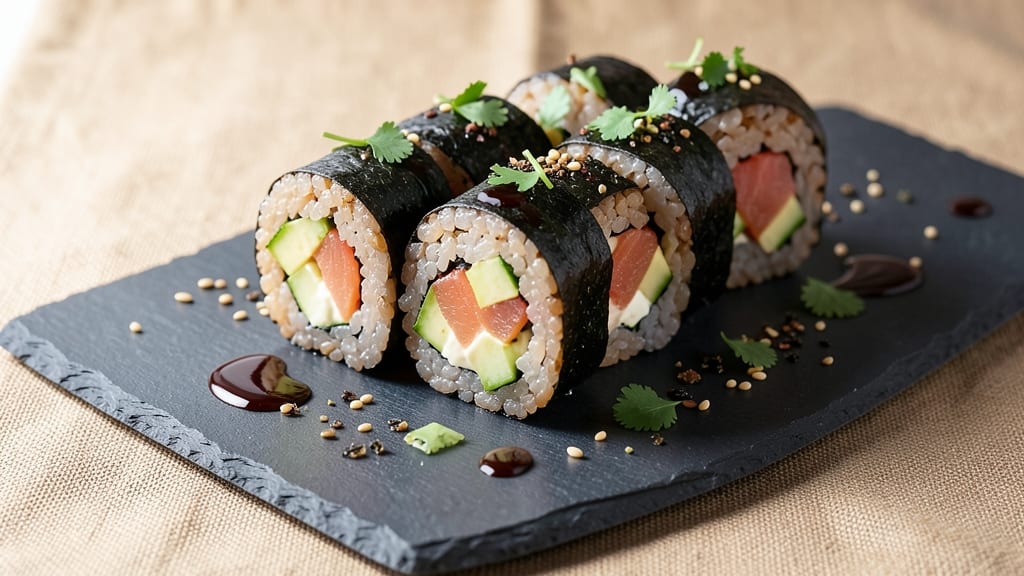
This brown rice sushi roll recipe delivers restaurant-quality texture and flavor with a nutty, perfectly cooked base. The secret lies in rinsing the rice thoroughly to remove excess starch, then simmering it with a precise ratio of water and seasoning for fluffy, individual grains that stay firm when rolled.
Unlike white rice, brown rice adds earthy depth while maintaining the structural integrity sushi requires.
What sets these rolls apart is the balance of technique and adaptability—whether you're using traditional fillings like raw fish or modern twists with avocado and cucumber. The rolling method ensures clean edges and even pressure, while the final slicing creates perfectly portioned pieces with crisp, glistening exteriors.
This approach transforms a weekday dinner into a presentation-worthy dish without compromising on ease or nutrition.
Ingredients for brown rice sushi roll
Earthy brown rice forms the heart of these restaurant-quality sushi rolls, paired with vibrant fillings and precise seasoning.
| Ingredient | Amount | Notes |
|---|---|---|
| Short-Grain Brown Rice 🌾 | 1 ½ cups | Uncooked, rinsed thoroughly |
| Water 💧 | 3 cups | Filtered preferred for clarity |
| Rice Vinegar 🍶 | 2 tbsp | Seasoned or white vinegar |
| Soy Sauce 🥢 | 1 ½ tbsp | Low-sodium preferred |
| Sesame Oil 🫒 | 1 tsp | Toasted for aroma |
| Nori Sheets 🍣 | 8 pieces | High-quality, toasted |
| Sushi Rice Vinegar 🍶 | 2 tbsp | Or sub 1 tbsp rice vinegar + 1 tsp sugar |
| Granulated Sugar 🍚 | 1 tbsp | For balancing acidity |
| Salt 🧂 | ½ tsp | Diamond Crystal preferred |
| Avocado 🥑 | 1 whole | Ripe, peeled and sliced |
| Cucumber 🥒 | ½ whole | English or Persian, seeded |
| Carrot 🥕 | 1 whole | Julienned or matchstick-cut |
| Sesame Seeds 🌰 | 1 tbsp | Toasted lightly for crunch |
| Mayonnaise 🥄 | ¼ cup | For optional creamy layer |
| Lime 🍋 | 1 whole | Juiced for brightness |
The brown rice is the foundation—short-grain varieties like Koshihikari provide the necessary stickiness for rolling without compromising texture. Rinse it three times to remove surface starch, which prevents gumminess. For the best results, use filtered water and a heavy-bottomed pot to maintain even heat. The rice vinegar and sugar mixture should be made fresh; Miyoko's or Annie Chun's brands offer pre-mixed options if time is limited, but homemade yields superior balance. Toast your sesame oil briefly in a dry pan to deepen its nutty aroma—this step elevates the entire dish.
Substitutions must preserve the rice's structural integrity. If you can't find short-grain brown rice, Calrose white rice works in a pinch, though the flavor will differ. For the fillings, smoked salmon or tempura flakes can replace avocado for a traditional touch, while mango or pickled ginger add contrasting textures. The nori sheets should be lightly toasted to crisp the edges—wrap them in a damp towel for 10 seconds before use. If your cucumber is overly watery, sprinkle with a pinch of salt and let sit for 5 minutes before slicing to draw out excess moisture, ensuring clean cuts when rolling.
Freshly cooked rice loses moisture quickly, so work with it immediately. Store prepped fillings in airtight containers lined with damp paper towels to maintain crispness. The assembled rolls keep for 2 days in the fridge, wrapped tightly in plastic wrap. For longer storage, freeze uncut rolls in a single layer before transferring to a sealed bag—thaw overnight in the fridge before slicing. Reheat gently in a steamer for 30 seconds to restore the nori's crispness without drying the rice. The lime juice should be added just before serving to preserve its bright acidity.
Why You'll Love This Recipe
- No Fuss Assembly: I swear, the trick is just rinsing the brown rice until the water runs clear—no fancy techniques. Spread it on nori, add a smear of sesame oil, and roll while the rice is still warm. That’s it. (Yes, even my toddler could help.)
- Nutty Crunch Magic: The brown rice adds this earthy, toasty depth that white rice never does—like a cozy blanket for your taste buds. Drizzle that soy sauce and sesame oil after rolling, and suddenly it’s ridiculously satisfying.
- Lunchbox Hero: Between us, these rolls keep perfectly for 3 days in the fridge. Toss one in a bento box for school, work, or a picnic—no reheating needed. The rice stays firm, the filling stays fresh, and you’ll be the office snack savior.
- Budget-Mindful Feast: Brown rice is cheaper than white, and you’re using basic pantry staples. Double the batch, freeze half, and suddenly you’ve got a month’s worth of easy, healthy meals. My wallet and my kids thank me every time.
Step-by-step instructions for brown rice sushi rolls
Transform nutty brown rice into the perfect sushi base with these precise techniques.
Rinse and Cook the Short-Grain Brown Rice
Place the 1.5 cups short-grain brown rice in a fine-mesh strainer and rinse under cold water until the water runs clear. This removes excess starch that would make your sushi gummy. I like to swirl the rice in the strainer with my fingers, breaking up any clumps as I go. Drain well and transfer to a rice cooker or pot.
Add the 3 cups water and bring to a boil over high heat. Once boiling, reduce to a simmer, cover, and cook for 35-40 minutes until all liquid is absorbed. The rice should be tender but still slightly firm—it will continue cooking from residual heat. Let it sit covered for 10 minutes before fluffing gently with a fork.
Prepare the Seasoned Rice Mixture
In a small bowl, combine the 2 tbsp rice vinegar, 1.5 tbsp soy sauce, 1 tbsp granulated sugar, and 0.5 tsp salt. Whisk until the sugar dissolves completely. This seasoning blend is crucial for balancing the earthy brown rice flavor with bright acidity and umami.
Transfer the cooked rice to a large wooden bowl or non-reactive mixing bowl. Drizzle the seasoning mixture evenly over the rice and fold gently with a rice paddle or wooden spoon. Be careful not to mash the grains—just combine until the liquid is absorbed and the rice glistens slightly. Let it cool to room temperature before assembling rolls.
Prepare the Fillings and Toppings
Peel and slice the whole avocado into thin strips, then sprinkle with a pinch of salt and the juice of the whole lime to prevent browning. Seed and julienne the 0.5 whole cucumber into thin matchsticks. Peel and cut the whole carrot into thin julienne strips as well. Toast the 1 tbsp sesame seeds in a dry skillet over medium heat for 1-2 minutes until fragrant and lightly golden.
For the optional creamy layer, mix the 0.25 cup mayonnaise with 1 tsp of the seasoned rice vinegar mixture to lighten the color. Spread this thinly on the nori sheets before adding fillings for a traditional inside-out roll variation.
Assemble the Sushi Rolls
Place a bamboo sushi mat on a clean work surface and cover it with plastic wrap for easy cleanup. Position a nori sheet shiny-side down on the mat. Spread about 1 cup of the seasoned rice evenly over the nori, leaving a 1-inch border at the top. Press down gently but firmly to create an even base.
Arrange the avocado, cucumber, and carrot strips horizontally in the center of the rice, about 1 inch from the bottom edge. For the inside-out variation, spread the mayonnaise mixture over the nori first, then add the rice on top of the fillings. Lift the edge of the mat closest to you and roll tightly over the fillings, using the mat to compress gently as you go.
Slice and Serve
Use a sharp, wet sushi knife to cut each roll into 6-8 equal pieces. Wipe the knife between cuts to ensure clean slices. For presentation, sprinkle the rolls with the toasted sesame seeds and serve immediately with soy sauce and additional pickled ginger on the side.
The key to perfect brown rice sushi lies in the balance of texture and flavor. The rice should be tender but not mushy, and each bite should harmonize the nutty brown rice with the fresh fillings. Practice makes perfect—your first few rolls might be uneven, but with each attempt, you'll develop the rhythm of proper sushi rolling.
Pro Tips For Making Brown Rice Sushi Roll
- SOAK THE RICE OVERNIGHT: I learned this the hard way—skipping the soak leaves your brown rice gummy no matter how long you cook it. Use a 1:1.25 rice-to-water ratio, cover, and let it sit for 12+ hours. The extra time breaks down the bran, making it tender and sticky enough to roll without falling apart.
- USE COOL RICE FOR ROLLS: Hot rice is a disaster for sushi—it’ll steam your filling and make the rolls soggy. Spread the cooked rice on a tray, fan it with a chopstick, and let it cool to room temp before assembling. Patience here means rolls that hold together and don’t turn into a rice soup.
- ACIDIFY THE RICE VINEGAR: Store-bought rice vinegar lacks the tang needed for real sushi flavor. Mix it 1:1 with a splash of lemon juice or apple cider vinegar—just enough to sharpen the taste. A little goes a long way, but this small tweak makes the difference between "meh" and "worth it."
- SKIP THE SESAME OIL ON TOASTED SESAME: Drizzling sesame oil over your roll is a rookie move—it’ll make everything taste like a fried snack. Instead, toast the sesame seeds dry in a pan until golden, then sprinkle them on top. The nutty crunch and aroma are what you want, not that overpowering oil flavor.
Perfect pairings for this dish
Sides That Shine
Pair your brown rice sushi rolls with miso soup—its creamy, fermented depth complements the nutty rice beautifully. Use Kikkoman miso paste and tofu cubes for a classic match. For something lighter, edamame with sea salt adds freshness and crunch. 🥗
Dipping Sauces
Skip the traditional soy sauce for a twist: mix 1 tbsp spicy mayo (mayo + ½ tsp sriracha) with 1 tsp lime juice for a zesty dip. Or try eel sauce (available at Asian markets) for a rich, umami boost that pairs perfectly with brown rice's earthiness.
Drink Pairings
A crisp Japanese sake like Kubota Junmai cuts through the richness of the rolls. For non-alcoholic options, sparkling yuzu soda (from San Pellegrino) adds citrus brightness. Avoid heavy beers—they overpower the delicate flavors. 🍶
Garnish Upgrades
Add pickled ginger (thinly sliced) for a tangy contrast or quick-pickled radishes (soaked in rice vinegar + sugar for 10 minutes). A sprinkle of toasted nori flakes adds texture and visual appeal without overwhelming the dish.
Modern Twists
Serve with truffle aioli (mix mayo with ½ tsp truffle oil) for a gourmet touch. Or pair with seared scallops (lightly dusted with smoked paprika) to elevate the meal into a fusion experience. The sweetness of the scallops balances the brown rice's earthiness. ✨
Nutrition facts
Frequently asked questions
Why does brown rice work better than white rice for sushi?
Brown rice adds a nutty, earthy depth that complements fresh fillings beautifully. Unlike white rice, it retains more fiber and nutrients while still providing the firm yet sticky texture needed to hold rolls together. The key is thorough rinsing and precise cooking to avoid gumminess—this recipe's 35-40 minute simmer achieves perfect texture.
Can I make these rolls ahead of time?
Assemble the rolls and slice them 1-2 hours before serving for best texture. For longer storage, wrap tightly in plastic and refrigerate for up to 2 days. To reheat, steam for 30 seconds to restore crispness to the nori without drying the rice. Never microwave—it makes the rice mushy!
What's the secret to clean sushi roll slices?
Use a sharp, wet sushi knife (wipe between cuts) and keep the roll tightly wrapped while slicing. The 1-inch border of uncovered nori helps guide clean cuts. For extra precision, mark your cutting lines lightly with a toothpick before slicing—this prevents uneven pieces.
How do I fix mushy brown rice in my sushi?
Overcooked rice is the #1 mistake! If yours is too soft, try this fix: Spread it thinly on a tray and bake at 300°F for 10 minutes to dry it out slightly. For prevention, use short-grain brown rice and cook it 5 minutes less than package instructions. The rice should be tender but still hold its shape when pressed.
What are good vegetarian fillings for brown rice sushi?
Try marinated tofu (with soy sauce + mirin), quick-pickled vegetables (radishes, carrots), or avocado + cucumber + cream cheese. For protein, add tempura flakes or edamame. The earthy brown rice pairs perfectly with these bright, fresh flavors—just balance textures (creamy avocado with crunchy veggies works beautifully).