
Main Courses
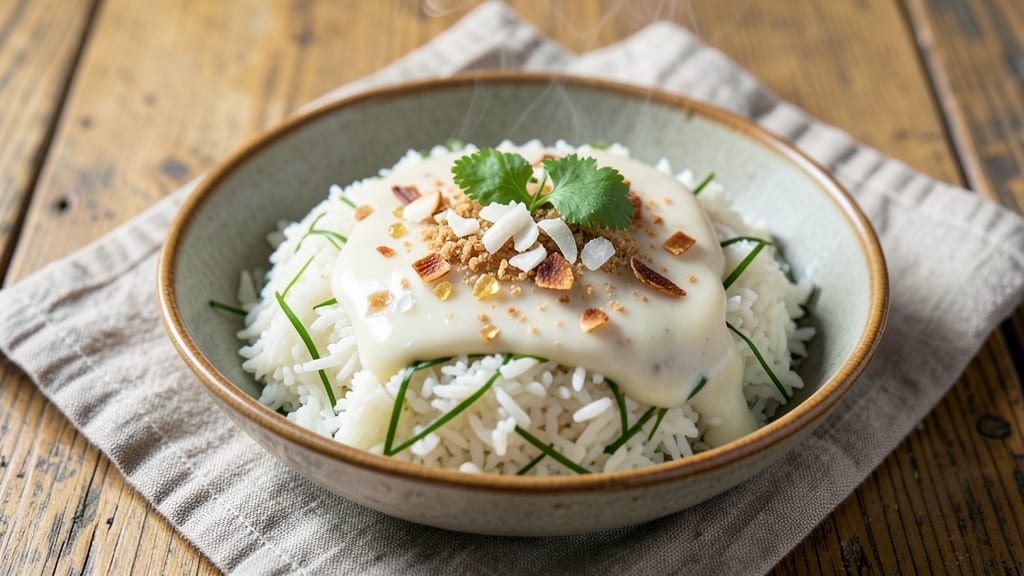
This Burmese coconut rice recipe transforms simple jasmine rice into a fragrant, golden masterpiece with layers of toasted coconut and aromatic pandan. The secret lies in slow-cooking the rice with coconut milk until each grain absorbs its creamy richness, creating a dish that's both comforting and elegant.
What makes this recipe special is the balance of textures—crispy toasted coconut atop tender, fluffy rice infused with subtle pandan notes.
The traditional method involves soaking the rice for at least 4 hours (or overnight for best results), which ensures perfectly tender grains that hold up to the coconut milk's richness. Toasting the coconut separately adds a delightful crunch that contrasts beautifully with the soft rice.
This dish isn't just about the rice—it's about creating a harmonious blend of flavors that makes every bite feel like a celebration.
When complete, you'll have golden rice with a delicate coconut aroma that fills your kitchen, topped with crispy toasted coconut that adds both visual appeal and texture. The pandan leaf imparts a subtle floral note that elevates the dish beyond ordinary coconut rice.
This recipe pairs beautifully with grilled fish, Burmese curries, or even as a standalone centerpiece for special occasions.
What sets this apart from other coconut rice recipes is the attention to detail in both preparation and presentation. The slow cooking process ensures the rice absorbs all the coconut milk's creaminess without becoming mushy, while the toasted coconut adds a sophisticated touch.
Whether you're serving it at a dinner party or simply treating yourself to a fragrant meal, this Burmese coconut rice delivers restaurant-quality results with minimal effort.
Ingredients for burmese coconut rice
Jasmine rice, coconut milk, and pandan leaf create this aromatic Burmese masterpiece.
| Ingredient | Amount | Notes |
|---|---|---|
| Jasmine Rice 🍚 | 1 ½ cups | Uncooked, long-grain preferred |
| Coconut Milk 🥥 | 2 cups | Full-fat, canned preferred |
| Pandan Leaf 🌿 | 1 whole | Fresh, tied in knot or torn |
| Unsweetened Coconut Flakes 🥥 | ½ cup | Toasted until golden brown |
| Light Brown Sugar 🍚 | ¼ cup | Packed, for subtle sweetness |
| Salt 🧂 | ½ tsp | Diamond Crystal preferred |
| Vegetable Oil 🫒 | 2 tbsp | For toasting coconut |
| Water 💧 | 1 ½ cups | For soaking rice |
| Lime Zest 🍋 | 1 tsp | Fresh, for brightness |
| Lime Juice 🍋 | 1 tbsp | Freshly squeezed |
| Ground Cinnamon 🌶️ | ¼ tsp | Optional, for warmth |
The jasmine rice is the foundation—Thai Kitchen brand or any long-grain variety works best. Soak it for at least 4 hours (overnight is ideal) to ensure tender grains that absorb the coconut milk perfectly. Costco or Asian markets often carry the best quality jasmine rice in bulk. The pandan leaf is non-negotiable for that signature floral aroma—look for fresh leaves at Asian grocery stores or online specialty shops. If you can't find fresh, dried pandan leaves work too, but infuse them in warm water for 10 minutes first. For the coconut milk, full-fat canned brands like Thai Kitchen give the richest flavor—avoid the carton versions, which are often watered down.
No fresh pandan? Vanilla extract at half the amount mimics the floral note, though it's not identical. Toasting the coconut flakes is crucial—they should be golden and crispy, not burnt. Vegetable oil works for toasting, but coconut oil adds extra flavor. If you're short on time, use pre-toasted coconut flakes from the baking aisle, though they lack the same depth. The brown sugar adds subtle sweetness, but if you prefer less, reduce to 2 tablespoons. Lime zest is key for brightness—use a microplane for fine zest—but if you only have juice, add an extra tablespoon. The cinnamon is optional but enhances the warm spice notes traditional to Burmese cuisine.
Toasted coconut flakes keep for 2 weeks in an airtight container at room temperature. The cooked rice holds in the fridge for 3-4 days, though it's best served fresh. For leftovers, store in a sealed container with a paper towel on top to prevent sogginess. This dish reheats beautifully—just add a splash of water or coconut milk and warm gently. The pandan leaf can be reused once if dried and stored in a cool, dark place for up to 6 months. Freeze any extra coconut milk in ice cube trays for future use.
Why You'll Love This Recipe
- No Chopping Needed: I swear by this—just rinse the jasmine rice, tie that pandan leaf in a little bundle, and let the coconut milk do the work. Honestly, the hardest part is remembering to stir it once.
- Fragrant Magic: That pandan leaf? It turns the rice into a creamy, vanilla-like dream—like a hug in every bite. The brown sugar caramelizes just enough to make it taste like dessert, even though it’s rice.
- Lunchbox Hero: Between us, this keeps perfectly for days. Pack it cold for work or reheat it gently—still soft, still fragrant, still the star of your meal. My kids actually ask for leftovers.
- Budget Luxury: Coconut milk and rice are my pantry’s secret weapons. A can of coconut milk and a few flakes stretch into multiple servings, and the pandan leaf? One bundle lasts forever. Fancy flavor for pennies.
Step-by-step instructions for Burmese coconut rice
Master this aromatic rice dish with fragrant coconut cream and toasted coconut flakes.
Toast the Coconut Flakes and Prepare the Pandan
Heat a small dry skillet over medium heat and add the 2 tablespoons vegetable oil. Once the oil shimmers, add the 0.5 cup unsweetened coconut flakes and toast for 3-4 minutes, stirring constantly, until they turn a rich golden brown and release their nutty aroma. Remove from heat immediately and set aside—they'll continue to crisp slightly as they cool.
While the coconut toasts, tie the whole pandan leaf into a loose knot or tear it into smaller pieces and place it in a small pot with the 1.5 cups water. Bring to a gentle simmer over medium-low heat for 5 minutes to infuse the water with the leaf's signature floral fragrance. Strain out the leaf and discard it—you'll use this fragrant water later.
Cook the Jasmine Rice in Coconut Milk
In a medium saucepan, combine the 1.5 cups jasmine rice, 2 cups coconut milk, and the strained pandan water. Stir gently to combine, then bring to a boil over medium-high heat. Once boiling, reduce heat to low and cover tightly with a lid. Let it simmer for 15 minutes without disturbing it—this allows the rice to absorb the coconut milk evenly and develop its signature fragrance.
After 15 minutes, check the rice. If the liquid has been fully absorbed and the rice is tender but still slightly firm to the bite (it will continue cooking off the heat), remove from the heat. If there's still liquid remaining, cover and let it steam for another 2-3 minutes. The rice should be moist but not mushy, with a delicate coconut aroma that fills your kitchen.
Infuse the Rice with Sweet and Tangy Flavors
In a small bowl, whisk together the 0.25 cup light brown sugar, 0.5 teaspoon salt, 0.25 teaspoon ground cinnamon, 1 teaspoon lime zest, and 1 tablespoon lime juice until the sugar dissolves completely. This mixture will brighten the coconut flavors and add a subtle warmth to the dish.
Once the rice has finished cooking, gently fold in the sugar mixture using a wooden spoon, being careful not to mash the grains. The rice should be evenly coated with the sweet-tangy glaze. If the mixture seems too thick, add 1-2 tablespoons of the reserved coconut milk to loosen it. The rice should be fragrant with notes of coconut, lime, and a hint of cinnamon.
Combine and Garnish for Serving
Transfer the flavored rice to a serving dish and gently fold in the toasted coconut flakes, distributing them evenly throughout. The contrast between the soft, fragrant rice and the crispy coconut flakes adds both texture and visual appeal. For an extra touch, sprinkle a few additional coconut flakes on top just before serving.
Let the rice rest for 5 minutes before serving to allow the flavors to meld completely. The final dish should have a golden hue from the toasted coconut, with a delicate balance of sweet, tangy, and aromatic notes. Serve warm as a side dish or as part of a larger Burmese meal, where its rich coconut flavor complements spicy curries and grilled proteins beautifully.
Pro Tips For Making Burmese Coconut Rice
- Split the Coconut Milk: Use only half the coconut milk for cooking the rice—save the rest for later. The rice absorbs liquid aggressively, and drowning it in too much liquid turns it mushy. I learned this after three soggy batches where I ignored the recipe’s ratio.
- Toast the Pandan: Lightly toast the pandan leaf in a dry pan for 30 seconds before adding it to the rice. This deepens its aroma and prevents it from turning the coconut milk bitter. Skip this, and your dish will taste like a mild herbal note instead of a bold, fragrant punch.
- Stir Once, Then Stop: After adding the rice to the coconut milk, stir just once to distribute it evenly, then walk away. Constant stirring releases starch and turns the rice gluey. I used to obsess over mixing—now I set a timer and let it do its thing.
- Toast the Coconut Flakes: Dry-toast the unsweetened coconut flakes in a separate pan until golden (about 3-4 minutes). Sprinkle them over the finished rice right before serving—they’ll stay crisp instead of turning into a sad, soggy garnish. Yes, it’s an extra step, but the texture makes all the difference.
Best sauces and condiments for this recipe
Sweet-Tangy Lime Glaze
This bright, citrusy glaze is the secret to elevating your Burmese coconut rice. Whisk together 0.25 cup light brown sugar, 1 tbsp lime juice, and 1 tsp lime zest until the sugar dissolves completely.
The acidity cuts through the coconut's richness while adding a refreshing contrast. For extra depth, add a pinch of ground cinnamon—it enhances the warm, spiced notes that define Burmese cuisine. 🍋
If you don’t have fresh lime zest, use 1.5 tsp bottled lime zest (like Bristol Bay brand), but it won’t be as vibrant. The glaze should coat the rice lightly—if it’s too thick, thin it with 1 tbsp coconut milk.
Fold it in gently to avoid breaking the grains. This step transforms ordinary rice into something truly special.
Spicy Burmese Chili Paste
For a bold kick, stir in 1 tbsp Burmese chili paste (like Mae Ploy or Bird’s Eye Chili Paste) when folding in the lime glaze. This adds layers of heat and umami that pair perfectly with the coconut’s creaminess.
Start with ½ tbsp if you’re sensitive to spice—you can always add more. The paste also introduces a smoky depth that’s characteristic of Burmese flavors. 🌶️
If you can’t find Burmese chili paste, substitute ½ tsp sriracha mixed with ½ tsp fish sauce for a similar effect. The fish sauce adds a salty, savory note that balances the sweetness. Just be sure to taste as you go—Burmese cuisine thrives on bold, complex flavors.
Coconut-Cardamom Sauce
For a richer, more aromatic sauce, blend ½ cup coconut milk, 2 cardamom pods (lightly toasted and crushed), and 1 tsp honey until smooth. Drizzle this over the finished rice just before serving.
The cardamom adds a floral, slightly sweet warmth that complements the coconut beautifully. This sauce is especially lovely when paired with grilled fish or Burmese laphet thoke (tea leaf salad). ✨
To make it ahead, prepare the sauce up to 3 days in advance and store it in an airtight container in the fridge. Reheat gently before drizzling—never boil, as it can curdle the coconut milk.
For a quicker version, use ½ tsp ground cardamom instead of whole pods, but toast it lightly in a dry pan first to deepen its flavor.
Sweet Chili Drizzle
For a sweeter, slightly tangy drizzle, mix 2 tbsp Burmese sweet chili sauce (like Tiparos) with 1 tsp coconut milk and a pinch of salt. This sauce is a staple in Burmese cuisine and adds a perfect balance of sweet, spicy, and umami.
Drizzle it lightly over the rice just before serving to keep the texture crisp. It’s especially delicious when paired with moe moe gyaw (Burmese fried noodles) or shan tofu. 🍜
If you can’t find Burmese sweet chili sauce, blend 1 tbsp honey, 1 tbsp rice vinegar, and ½ tsp red pepper flakes for a quick substitute.
The vinegar adds acidity, while the honey balances the heat. Adjust the ratios to taste—Burmese cuisine often relies on these simple yet powerful flavor combinations.
Nutrition facts
Frequently asked questions
Can I use regular white rice instead of jasmine rice?
While you can substitute white rice, jasmine rice is ideal because its long grains stay separate and absorb the coconut milk beautifully. For best results, use a long-grain white rice like Thai rice or basmati. If you must use short-grain rice, reduce the coconut milk by ¼ cup to prevent mushiness. The texture will be slightly different but still delicious!
What if I can't find fresh pandan leaves?
No problem! Use 1 teaspoon dried pandan leaves infused in 1.5 cups hot water for 10 minutes before straining. For a quick alternative, add ½ teaspoon vanilla extract or 1 teaspoon pandan extract (found in Asian markets) to the coconut milk. The flavor won't be identical but will still add a lovely floral note.
How do I prevent the rice from becoming mushy?
Mushy rice happens when too much liquid remains or the heat is too high. After the initial 15-minute simmer, always check for residual liquid—if any remains, let it steam covered off the heat for 2-3 minutes. Also, avoid stirring the rice while cooking, as this breaks the grains. For extra insurance, use 1.5 cups jasmine rice for 4 servings (not 6) to maintain proper ratios.
Can I make this recipe without coconut milk?
While coconut milk is traditional, you can substitute with 1 cup heavy cream + 1 cup water for a lighter version. For a dairy-free alternative, use 1.5 cups full-fat coconut yogurt mixed with ½ cup water. The flavor will be subtly different, but the creamy texture remains. Just reduce the sugar slightly (2 tablespoons) to balance the richness.
How long can I store leftovers, and how do I reheat?
Store cooked rice in an airtight container for up to 4 days in the fridge. To reheat, sprinkle 1 tablespoon water or coconut milk over the rice, cover, and microwave on medium heat for 1-2 minutes. For best texture, stir gently and let it sit for 1 minute before serving. Avoid reheating in the oven, as it can dry out the rice.