
Side Dishes
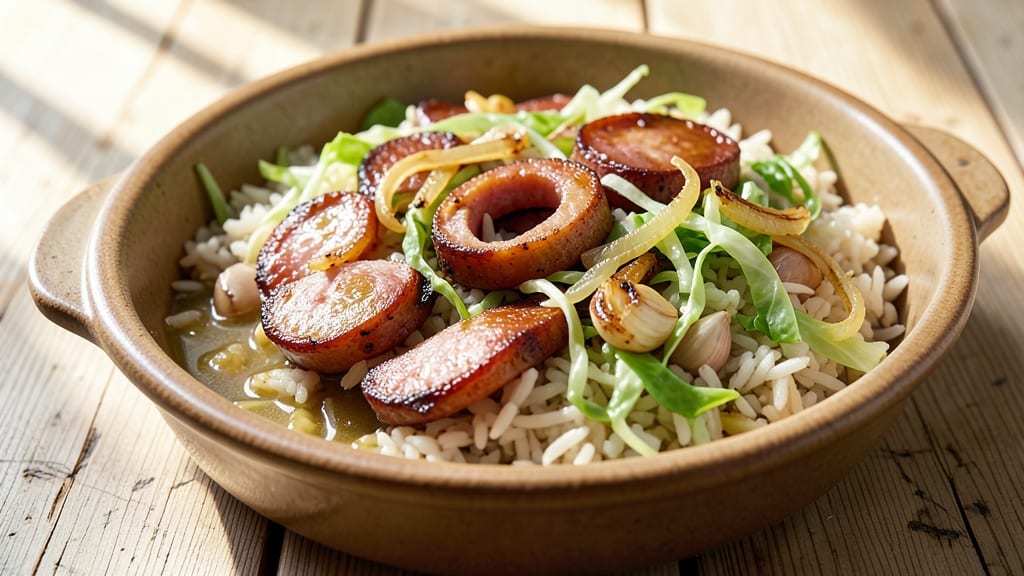
This cabbage, rice, and sausage recipe delivers hearty comfort in one pan with crispy sausage and tender cabbage—no fuss, just satisfying home cooking. The secret lies in browning the sausage first to render fat for flavor, then layering everything together for a hands-off finish. I developed this after years of testing one-pan meals that actually work for busy weeknights, where every bite feels indulgent without the cleanup.
Start with Italian sausage for its bold seasoning, but pork or chicken sausage works too. The cabbage gets caramelized with onions and garlic while the rice cooks in the same pot, absorbing all the savory juices.
By the time it's done, you'll have a dish that's crispy at the edges, tender in the center, and packed with layers of flavor—exactly what makes weeknight dinners feel special. The best part? It's ready in under 45 minutes with minimal effort.
Ingredients for cabbage rice and sausage
Pantry staples plus a few fresh ingredients for hearty one-pan comfort.
| Ingredient | Amount | Notes |
|---|---|---|
| Italian Sausage 🥓 | 1 lb | Kielbasa or pork sausage preferred |
| Green Cabbage 🥬 | 1 ½ lb | Shredded, outer leaves removed |
| Long-Grain White Rice 🍚 | 1 cup | Uncooked, any variety |
| Yellow Onion 🧅 | 1 whole | Medium size, sliced |
| Garlic Cloves 🧄 | 3 cloves | Minced or finely chopped |
| Chicken Broth 💧 | 2 cups | Low-sodium preferred |
| Olive Oil 🫒 | 2 tbsp | For browning sausage |
| Salt 🧂 | 1 tsp | Kosher or sea salt |
| Black Pepper 🌶️ | ½ tsp | Freshly ground preferred |
| Dried Thyme 🌿 | ½ tsp | Or 1 tsp fresh thyme |
| Bay Leaf 🍃 | 1 whole | Remove before serving |
| Fresh Parsley 🌿 | ¼ cup | Chopped, for garnish |
Italian sausage is the star here—look for high-quality links at the meat counter, not the pre-packaged kind. Costco or Whole Foods usually have the best selection, but any grocery store's butcher section works. If you can't find Italian, pork or chicken sausage holds up fine. The cabbage should be firm and heavy for its size—avoid wilted outer leaves. For the rice, I use long-grain white because it absorbs the broth perfectly, but jasmine or basmati work too. Onions and garlic? Grab whatever's on sale—they're just flavor boosters here.
No Italian sausage? Pork or chicken sausage is a solid swap, just adjust cooking time slightly. Fresh thyme is ideal, but dried works at half the amount. The chicken broth can be subbed with vegetable broth if you're avoiding meat entirely. For extra crispy edges, I like to pat the cabbage dry before shredding—it caramelizes better. The parsley is optional but adds a bright finish—dried works in a pinch, though fresh is prettier. If you're short on time, pre-shredded cabbage from the bag section saves chopping, but it's less crisp.
This dish tastes even better the next day—make extra and portion it out for easy lunches. Store leftovers in an airtight container for 4-5 days in the fridge or 3 months in the freezer. The rice gets firmer when reheated, so add a splash of broth when warming. For crispier edges next time, try toasting the rice in the pan for a minute before adding broth. The sausage stays juicy for days, so don't skip the browning step—that rendered fat is flavor gold.
Why You'll Love This Recipe
- One-Pan Magic: I swear by this—just brown the sausage, toss in the chopped cabbage and onions, let the garlic sizzle, then dump in the rice. No pots, no pans, no stress. The sausage renders its own fat, and suddenly you’ve got a fragrant, saucy base without a single extra dish.
- Savory Crunch Combo: That crisp-tender cabbage? It’s the star. The Italian sausage adds herby, spiced richness while the cabbage holds its bite—no mushy aftermath here. Honestly, the first time I made this, I ate it straight from the pot. No shame.
- Lunchbox Hero: Between us, this is my go-to for meal prep. Cook a big batch on Sunday, and you’ve got lunch covered for days. The rice stays fluffy, the cabbage keeps its crunch, and the sausage? It reheats like a dream—no soggy leftovers here.
- Budget Stretch: A single package of Italian sausage and a head of cabbage feed my family for days. I’ll be real: it’s not fancy, but it’s packed with flavor and stretches further than takeout. Plus, the rice? You can’t beat the price for filling, satisfying comfort.
Step-by-step instructions for cabbage, rice, and sausage one-pan meal
This hearty dish comes together in one pan with minimal effort and maximum flavor.
Brown the Sausage and Onion
Heat a large, deep skillet or Dutch oven over medium-high heat. Add the 2 tablespoons olive oil and let it get hot enough to shimmer. Cut the 1 pound Italian sausage into ½-inch slices and add them to the pan, spreading them out in a single layer. Cook undisturbed for 3-4 minutes until the sausage develops a deep golden brown crust.
While the sausage browns, slice the 1 whole yellow onion into thin half-moons. Once the sausage is browned on one side, add the onions and stir occasionally for 3-4 minutes until they begin to soften and turn translucent. This step builds the foundation of flavor—don't rush it. The onions should caramelize slightly, adding sweetness to balance the savory sausage.
Add Aromatics and Sauté the Cabbage
Push the sausage and onions to one side of the pan and add the 3 cloves garlic cloves, minced, to the empty space. Sauté for 30 seconds until fragrant—you should smell that rich garlic aroma. Stir everything together, then add the 1.5 pounds shredded green cabbage. Toss everything with tongs or a wooden spoon, breaking up any large cabbage chunks.
Cook for 5-6 minutes until the cabbage begins to soften and release its moisture. The cabbage should look vibrant and slightly wilted, not mushy. Here's the thing—don't overcrowd the pan. If your pan is too full, work in batches to ensure everything gets properly cooked. The goal is to develop that crisp-tender texture that makes this dish so satisfying.
Toast the Rice and Season the Dish
Add the 1 cup long-grain white rice to the pan and stir to coat it evenly in the sausage juices and oil. Toast the rice for 1-2 minutes until it becomes slightly translucent at the edges. This step is crucial—it prevents the rice from becoming mushy later.
Now it's time to season. Sprinkle the 1 teaspoon salt, ½ teaspoon black pepper, and ½ teaspoon dried thyme over everything. Stir well to distribute the seasoning evenly. Add the 1 whole bay leaf and pour in the 2 cups chicken broth. The liquid should just come up to the level of the rice—if it's too little, add a splash of water. Bring everything to a gentle simmer, then reduce the heat to low. Cover the pan with a tight-fitting lid.
Simmer Until Rice is Tender and Liquid is Absorbed
Let the dish cook undisturbed for 20 minutes. After that time, check the rice—it should be tender but still have a slight bite. If there's still liquid in the pan, cover and cook for another 5 minutes. You want the rice to be perfectly cooked with no crunch, but not so soft it falls apart.
Here's where the magic happens: the cabbage should be tender enough to eat with a fork but still hold its shape. If you peek and see the cabbage is still crisp, cover and cook for another 5 minutes. The sausage should be heated through and the flavors should be melding beautifully. Real talk: don't lift the lid too often. Every time you do, you release steam and potentially dry out the dish.
Rest, Garnish, and Serve
Once the rice is perfectly tender and all the liquid has been absorbed, remove the pan from heat. Let it rest, covered, for 5 minutes. This resting period allows the flavors to settle and the rice to finish steaming.
Before serving, remove the bay leaf and sprinkle the dish with the ¼ cup chopped fresh parsley. The parsley adds a fresh contrast to the rich, savory flavors. Serve immediately in deep bowls, letting everyone dig into this comforting one-pan meal. The crispy sausage, tender cabbage, and perfectly cooked rice make every bite worth it. This dish tastes even better the next day, so you'll want to make extra for leftovers!
Pro Tips For Making Cabbage Rice And Sausage
- CRACK THE SAUSAGE FIRST: Remove the casings from those Italian sausages before browning—it’s the only way to get that meat fully crisped and infused into the cabbage. I used to skip this, and the dish always tasted like it was missing something until I finally did the extra 2 minutes of prep.
- SAUTÉ THE CABBAGE DRY: Walk away from the pan for 3-4 minutes after adding chopped cabbage—let the onions and garlic caramelize first, or you’ll end up with a soggy mess. Sounds weird, but it works: the cabbage will wilt perfectly without turning to mush.
- DON’T OVERSTIR THE RICE: Once you add the rice, stir it once to distribute, then stop. Crowding the pot or stirring constantly turns your rice into glue. After burning three batches, I finally figured out: let it sit undisturbed for 2 minutes before adding liquid.
- USE COLD RICE WATER: Measure your water cold—room temp or hot water cooks the rice unevenly, and you’ll end up with a mix of mushy and underdone grains. I skip this when I’m lazy, but the dish is noticeably better when I don’t. (Yes, even if you’re impatient like me.)
Pro cooking tips for this dish
Sausage Browning Mastery
Never skip browning the sausage—this step creates 90% of the flavor through the Maillard reaction. Use a large, heavy skillet like a Lodge cast iron or All-Clad stainless steel to ensure even heat distribution.
Cut the sausage into ½-inch slices for uniform cooking. Let them brown undisturbed for 3-4 minutes to develop that deep, caramelized crust. 🔥
Cabbage Texture Secrets
For crisp-tender cabbage, pat it completely dry before shredding—this prevents sogginess. Work in two batches if needed to avoid overcrowding the pan. Sauté for 5-6 minutes until just wilted, then toss with the rice.
The goal is al dente cabbage that holds its shape but yields easily. Pro tip: Add a pinch of sugar (½ tsp) to the cabbage if you want extra caramelization.
Rice Toasting Technique
Toast the rice for 1-2 minutes in the sausage fat before adding liquid—this prevents mushy rice. Stir constantly to coat each grain evenly. The rice should be slightly translucent at the edges but not browned.
This step is often skipped but makes a huge difference in texture. I use long-grain white rice because it absorbs broth perfectly without turning gluey. 🌟
Broth Ratio Precision
The 2:1 broth-to-rice ratio is critical—too much liquid makes the rice watery, while too little dries it out. For 1 cup rice, use 2 cups broth (or water in a pinch). If your pan is deep, you might need slightly less broth.
Always bring to a gentle simmer—boiling can cause the rice to cook unevenly. A tight-fitting lid traps steam for even cooking.
Simmering Without Peeking
Resist the urge to lift the lid during the 20-minute simmer—each peek releases steam and disrupts the cooking process. If you must check, do it quickly and recover the pan immediately.
The rice is done when the liquid is fully absorbed and the grains are tender with a slight bite. For extra insurance, press a grain between your fingers—it should hold its shape but yield easily. ⏰
Resting for Flavor
Let the dish rest covered for 5 minutes after cooking. This allows the rice to finish steaming and the flavors to meld. During this time, the cabbage absorbs any remaining juices, becoming even more tender.
Skipping this step can leave the rice dry and the cabbage less flavorful. Serve with a sprinkle of fresh parsley for brightness and a squeeze of lemon if you like a touch of acidity. 💫
Nutrition facts
Frequently asked questions
Can I use pre-shredded cabbage for this recipe?
Yes, but it won't be as crispy! Pre-shredded cabbage often contains more moisture, which can make your dish soggier. If you use it, pat it very dry with paper towels first and consider adding it after the rice has absorbed most of the liquid. For best results, fresh-shredded cabbage gives that perfect crisp-tender texture.
What's the best sausage substitute if I don't have Italian?
Pork or chicken sausage works perfectly—just adjust cooking time slightly. For pork sausage, cook it 1-2 minutes longer than Italian to render more fat. Chicken sausage is leaner, so brown it 2-3 minutes per side to prevent dryness. Smoked sausage adds depth, while mild chicken sausage keeps it family-friendly.
Why did my rice turn out mushy?
Mushy rice usually means one of two things: either you didn't toast the rice in the pan first (critical for texture!) or you peeked too often while simmering. Always toast the rice for 1-2 minutes before adding broth, and resist opening the lid during the 20-minute cook time. If it's still mushy, try using jasmine rice next time—it holds up better to one-pan cooking.
Can I make this dish ahead of time?
This dish tastes even better the next day. Store leftovers in an airtight container in the fridge for 4-5 days. When reheating, add a splash of broth or water to restore moisture. For freezing, portion before combining all ingredients—freeze the sausage, cabbage, and rice separately, then reheat in the pan together. The flavors meld beautifully overnight!
How can I make this dish spicier?
Add heat by mixing ½-1 teaspoon cayenne pepper or 1 teaspoon smoked paprika into the sausage while browning. For extra kick, stir in 1-2 diced jalapeños with the cabbage, or sprinkle with ½ teaspoon red pepper flakes** at the end. If using mild sausage, add a pinch of cayenne to the broth for deeper flavor.