
Main Courses
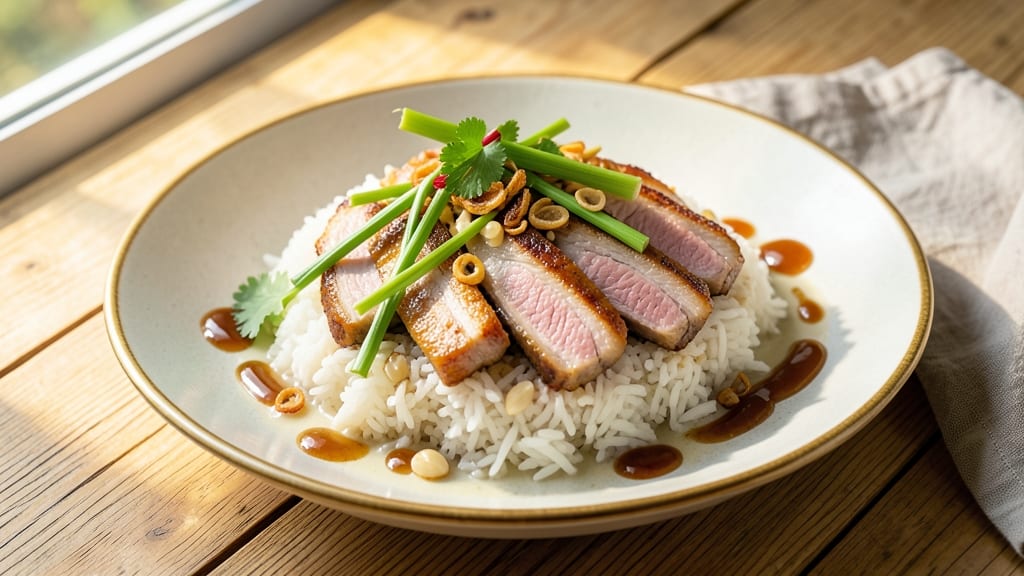
This Cambodian rice recipe brings the aromatic heart of Southeast Asia to your kitchen with a fragrant blend of jasmine, coconut, and lemongrass. 🌿 The dish centers on Bai Sach Chrouk, Cambodia's beloved breakfast staple—tender grilled pork, fluffy coconut rice, and crisp pickled vegetables that balance rich flavors.
I've perfected this version to capture the essence of Phnom Penh street food, where every bite tells a story of tradition and simplicity.
The secret lies in the rice itself—a delicate balance of jasmine grains, coconut milk, and lemongrass that infuses the dish with a subtle floral aroma and creamy texture. While the rice simmers gently, the pork is marinated in a tangy tamarind and garlic paste before grilling to perfect medium-rare tenderness.
This isn't just rice; it's a complete meal where every component plays a role in harmony.
What makes this recipe special is its authenticity without compromise. The coconut rice absorbs the lemongrass's citrusy notes while staying light, while the grilled pork delivers smoky, savory depth.
Served with quick-pickled cucumbers and a fried egg, it becomes a symphony of textures and flavors—crisp, creamy, tender, and tangy all at once.
Perfect for weekend brunches or weeknight dinners, this dish transports you to Cambodia's bustling markets with every bite. The method is straightforward, but the result is restaurant-quality. Let's bring this Cambodian classic to your table.
Ingredients for cambodian rice
Jasmine rice, coconut milk, and lemongrass create the fragrant base for Cambodia's iconic breakfast dish.
| Ingredient | Amount | Notes |
|---|---|---|
| Jasmine Rice 🍚 | 1 ½ cups | Uncooked, long-grain preferred |
| Coconut Milk 🥥 | 13 ½ oz | Full-fat canned, no additives |
| Fresh Lemongrass 🌿 | 1 whole | Stalks, bruised for flavor |
| Garlic Cloves 🧄 | 4 cloves | Peeled, minced for marinade |
| Tamarind Paste 🍯 | 2 tbsp | Unsweetened, for tangy depth |
| Boneless Pork Loin 🐖 | 1 lb | Thinly sliced for quick grilling |
| Fish Sauce 🍶 | 1 ½ tbsp | Red Boat brand preferred |
| Palm Sugar 🍯 | 2 tbsp | Or substitute brown sugar |
| Cucumber 🥒 | 1 whole | English, thinly sliced |
| Lime 🍋 | 1 whole | Juiced for brightness |
| Large Eggs 🥚 | 2 whole | Fresh, fried sunny-side up |
| Vegetable Oil 🫒 | 2 tbsp | For grilling pork |
| Salt 🧂 | 1 ½ tsp | Diamond Crystal preferred |
| Black Pepper 🌶️ | ½ tsp | Freshly ground |
The jasmine rice is the heart of this dish—look for Thai or Cambodian brands at Asian markets for that extra floral aroma. Costco or Trader Joe's usually carry good options if you're short on time. Coconut milk can be tricky; avoid the 'light' versions—full-fat is essential for that creamy texture. Fresh lemongrass is non-negotiable here. Most Asian grocery stores sell it pre-bruised, which saves you the hassle of pounding it yourself. If you can't find it, frozen works too—just thaw and pat dry before using. The pork loin should be thinly sliced against the grain—ask your butcher to do this if they won't slice it for you.
No tamarind paste? Lime juice plus a pinch of sugar gets you close, though it won't have that exact funky depth. Fish sauce is the umami bomb—Red Boat is the gold standard, but any reputable brand works. Running out of palm sugar? Brown sugar or honey (if not vegan) will work in a pinch, though the flavor will be slightly different. For the cucumbers, English cucumbers are ideal, but Persian or regular cucumbers sliced thinly will do. The eggs should be fresh from the fridge—room temperature eggs fry up nicer, but cold ones work fine if you're impatient. Want to skip the pork? Chicken thighs work beautifully here—they stay juicy during grilling.
The rice keeps for 3 days in the fridge, though it's best fresh. Store it in an airtight container with a damp paper towel to keep it from drying out. The pork marinade can be made a day ahead—it actually gets better as the flavors meld. For the cucumber pickles, they're ready in 30 minutes but taste even better if left to sit overnight. The fried eggs keep for 2 days in the fridge if you're making this ahead, but honestly, they're best served fresh alongside the hot rice. Freeze the rice in portions—it reheats beautifully with a splash of water.
Why You'll Love This Recipe
- One-Pot Magic: I swear by this recipe when I’m too tired to deal with multiple pans. The jasmine rice soaks up the coconut milk and lemongrass like a sponge—no stirring required after the initial simmer. (Yes, even on a Tuesday night when I’ve already microwaved my lunch.)
- Tamarind Tang: Here’s what sold me—the tamarind paste cuts through the richness of the coconut milk with this bright, almost citrusy bite. It’s the secret weapon that makes this dish taste alive, not just creamy. My husband still asks for seconds without realizing why.
- Meal Prep Hero: Between us, this rice keeps perfectly for four days in the fridge. I make a big batch on Sunday, and it’s my go-to for quick lunches or potlucks—just reheat with a splash of water, and it’s like it was just made. (No sad, dry rice here.)
- Budget-Friendly Luxury: Fresh lemongrass intimidates people, but you only need a few stalks for a whole pot. The rest of the ingredients—coconut milk, garlic, tamarind—are cheap staples that stretch into multiple meals. It’s fancy enough for company but won’t break the bank.
Step-by-step instructions for fragrant Cambodian coconut rice
Aromatic, creamy, and infused with lemongrass—this isn't your average rice dish.
🍳 Step 1: Infuse the Coconut Milk with Lemongrass and Garlic
In a medium saucepan, combine the 13.5 oz coconut milk, 1 whole bruised lemongrass stalk, and 4 cloves minced garlic. Bring to a gentle simmer over medium heat—you should see tiny bubbles forming at the edges but no vigorous boiling. Let it steep for 10 minutes, stirring occasionally, until the mixture smells intensely fragrant and the lemongrass releases its citrusy aroma.
This infusion is the soul of your rice—don't rush it. The lemongrass needs time to break down and impart its signature brightness. Strain out the lemongrass and garlic (save them for another dish if you're feeling fancy), then return the infused coconut milk to the pot and set aside. The milk should now have a pale golden hue and smell like a Cambodian market.
👨🍳 Step 2: Toast the Jasmine Rice for Nutty Depth
While the coconut milk infuses, rinse the 1.5 cups jasmine rice under cold water until the water runs clear—this removes excess starch that would make your rice gummy. Drain well in a fine-mesh strainer, then transfer to a dry skillet over medium heat. Toast the rice for 3-4 minutes, stirring constantly, until it's fragrant and just beginning to turn translucent at the edges. You're looking for nutty aroma, not browned bits.
This toasting step transforms bland rice into something complex. The heat activates the rice's natural oils, giving your dish that signature Cambodian aroma. As soon as you smell that toasty fragrance, immediately transfer the rice to a bowl and set aside.
🥘 Step 3: Cook the Rice in Coconut Milk Perfection
In the same skillet (no need to clean it—the toasted rice bits add flavor), pour in the infused coconut milk. Bring to a gentle simmer over medium-low heat, then add the toasted rice along with 1.5 tsp salt and 0.5 tsp black pepper. Stir once to distribute everything evenly, then cover tightly with a lid. Reduce heat to low and cook for 18-20 minutes, checking occasionally to ensure no water evaporates completely.
Here's the thing—this rice needs patience. The coconut milk should be fully absorbed, and the grains should be tender but still slightly firm to the tooth. If you peek and see dry spots, add 1-2 tablespoons hot water through the lid's crack. When the rice is done, turn off the heat and let it steam, covered, for 5 minutes—this resting period ensures even cooking and prevents mushy grains.
🔥 Step 4: Grill the Pork with Tangy Marinade
While the rice cooks, prepare the pork by combining 1 lb thinly sliced boneless pork loin, 2 tbsp tamarind paste, 1.5 tbsp fish sauce, and 2 tbsp palm sugar in a bowl. Mix well until the pork is evenly coated. Heat 2 tbsp vegetable oil in a clean skillet over high heat until shimmering. Add the pork in a single layer and sear for 2-3 minutes per side until deeply browned and cooked through.
Don't overcrowd the pan—the pork needs space to develop that beautiful caramelized crust. The tamarind adds a bright tang that cuts through the richness of the coconut milk, while the fish sauce and sugar create a perfect balance of salty and sweet. Remove the pork and let it rest on a plate while you finish the dish.
🍽️ Step 5: Assemble with Crispy Eggs and Refreshing Sides
In the same skillet (cleaned of pork bits), fry the 2 large eggs sunny-side up in 1 tbsp reserved vegetable oil over medium heat until the whites are set and yolks are still runny. While the eggs cook, slice the 1 whole cucumber into half-moons and juice the 1 whole lime. Fluff the coconut rice gently with a fork, then divide among plates.
Top each serving with a fried egg, several slices of grilled pork, cucumber slices, and a squeeze of lime juice. The contrast of creamy rice, crispy pork, runny yolks, and cool cucumber is pure Cambodian comfort food magic. Serve immediately while everything is at its peak—this dish tastes best fresh from the stove!
Pro Tips For Making Cambodian Rice
- SOFTEN THE LEMONGRASS FIRST: I used to just chop lemongrass and toss it in whole—big mistake. Bruise the stalks with the flat side of your knife first, then slice thinly. This releases the oils and aromatics so they actually flavor the coconut milk instead of just sitting there like decorative sticks.
- SIMMER COCONUT MILK LOW: After burning the bottom of my pot twice, I learned: coconut milk needs patience. Once it starts boiling, drop the heat to a bare simmer—no splattering, no scorching. Let it cook uncovered for 10-15 minutes to deepen the flavor without turning it into glue.
- RINSE THE RICE WELL: Skipping this step means gummy rice. Rinse jasmine rice in a fine-mesh strainer under cold water until the water runs nearly clear—about 3-4 minutes. Then let it sit in a bowl for 20 minutes before cooking. The extra step makes all the difference in that signature fluffy texture.
- STIR IN TAMARIND LAST: Adding tamarind paste too early makes the rice taste bitter. Wait until the coconut milk has reduced by half and the lemongrass is fragrant before dissolving the tamarind in a splash of water. Stir it in just before turning off the heat—this keeps the balance bright and tangy.
Regional styles of this recipe
Phnom Penh Street Style
This is the version you'll find at breakfast stalls across Cambodia's capital, where Bai Sach Chrouk reigns supreme. The key difference? Extra crispy pork achieved by grilling the slices twice—first over charcoal for smoky depth, then quickly seared in a hot pan.
Locals add 1 tsp grated kaffir lime zest to the rice for that extra zing, and serve it with pickled mustard greens instead of cucumbers. 🌿
Northern Kampong Cham
Up north, they take their rice even more seriously. The Kampong Cham style uses partially cooked rice (pre-soaked for 4 hours) to create a stickier texture that clings to the pork.
They also add 1 stalk of lemongrass and 1-inch galangal root to the coconut milk infusion, giving it a peppery complexity. The pork marinade includes 1 tsp ground white pepper for heat without color, and they finish with crushed roasted peanuts on top.
Southern Sihanoukville
By the coast, seafood takes center stage. Replace the pork with grilled red snapper marinated in fish sauce, lime juice, and 1 tbsp turmeric paste. The rice gets a splash of 1 tbsp shrimp paste during cooking for a briny kick.
Serve with spicy green papaya salad instead of cucumbers, and garnish with fresh cilantro and Thai basil for that coastal freshness.
Rural Farmhouse Version
In the countryside, they keep it simple with homemade coconut milk (blended fresh coconut meat with water) and wild herbs like Vietnamese coriander. The pork is often thicker cuts cooked low-and-slow in a clay pot with the rice, creating a single-pot meal.
They finish with sun-dried shrimp sprinkled on top for extra umami. This version tastes even more authentic because it's made with whatever's fresh from the garden.
Modern Fusion Twist
For a contemporary take, try swapping the pork for crispy duck confit and adding chili-crusted prawns on the side. The rice gets a boost of 1 tsp pandan leaf paste for floral depth, and the cucumbers are replaced with quick-pickled jicama and carrot.
Finish with a drizzle of chili-lime dressing for that modern Southeast Asian flair. 🔥
Vegetarian Adaptation
To make this fully plant-based, use shitake mushrooms marinated in tamarind and soy sauce instead of pork, and tofu fried in coconut oil for protein. The rice stays the same, but add 1 tbsp miso paste to the coconut milk infusion for umami.
Serve with quick-pickled vegetables and a soft-boiled tofu egg (made with silken tofu and turmeric) for the egg substitute. The flavors still sing with this creative swap!
Nutrition facts
Frequently asked questions
What makes this Cambodian coconut rice different from Thai coconut rice?
The key difference lies in the flavor profile and technique. Cambodian coconut rice uses lemongrass infusion and a toasting step for nutty depth, while Thai versions often incorporate pandan leaf and a more liquid coconut milk ratio. The Cambodian style also features grilled pork with tamarind rather than Thai curry pastes. The texture stays slightly firmer to complement the bold marinades.
Can I substitute regular rice for jasmine rice in this recipe?
While it will work, jasmine rice is essential for that signature floral aroma and delicate texture. If you must substitute, use long-grain white rice and reduce the coconut milk by 2 tbsp to prevent mushiness. For extra authenticity, look for Cambodian or Thai jasmine rice brands at Asian markets—they're specifically bred for this dish.
How do I achieve perfectly crispy pork like in Cambodian street food?
The secret is thin slicing against the grain and high-heat searing. Slice pork 1/4-inch thick and pat dry before marinating. Use a clean, hot skillet and cook in one layer for 2-3 minutes per side until caramelized. For extra crispiness, finish with 1 minute under a broiler while watching closely to prevent burning.
What if I can't find tamarind paste? What's the best substitute?
Mix 2 tbsp lime juice with 1 tsp brown sugar for a close approximation. For deeper flavor, add 1/2 tsp vinegar to the marinade. The tamarind's signature tang is crucial—without it, the pork will taste flatter. If you have tamarind pods, soak them in hot water for 10 minutes, then strain for a more authentic result.
Can I make this recipe ahead of time for a meal prep?
Yes! The rice keeps for 3 days in an airtight container with a damp paper towel. Reheat gently with 1 tbsp water per cup of rice. The pork marinade can be prepped 1 day ahead and refrigerated. For the eggs, fry them fresh or store cooked eggs in the fridge for 2 days. Assemble everything just before serving for the best texture contrast.