
Side Dishes
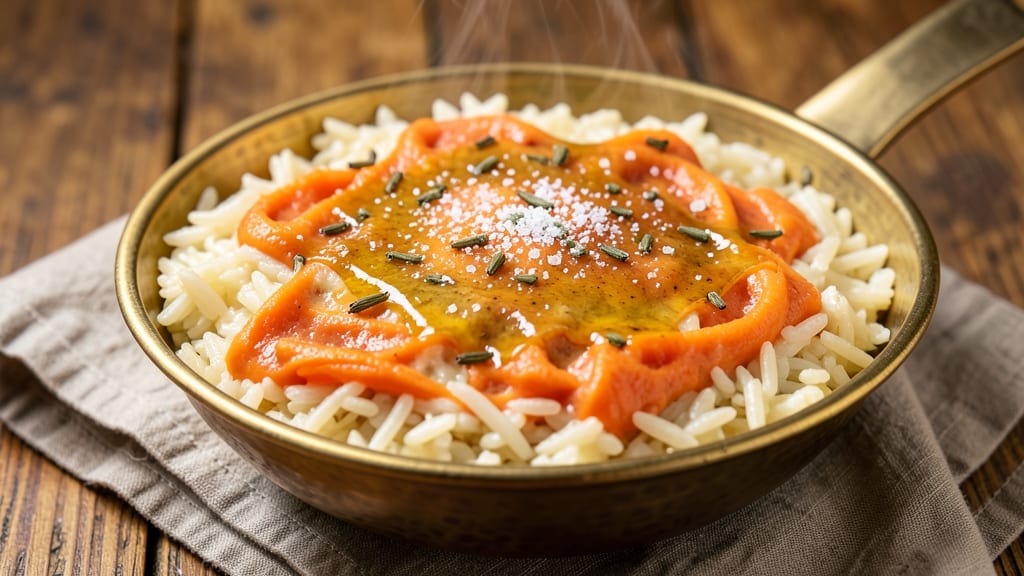
This carrot and rice kheer recipe transforms humble ingredients into a velvety dessert where sweet carrots and fragrant rice blend into silky perfection. The cardamom-spiced milk simmers until thick and aromatic, while ghee adds a rich, buttery depth that makes every spoonful irresistible.
What starts as simple grains and vegetables becomes a dessert so comforting, it feels like a warm embrace in a bowl.
The secret lies in slow cooking—letting the rice and carrots soften in milk until they dissolve into a luxurious texture, while saffron and cardamom infuse layers of warmth.
Topped with toasted nuts and a drizzle of honey, this kheer balances sweetness with earthy spice, creating a dessert that’s both traditional and modern. Ready in under an hour, it’s the ideal way to end a meal with elegance and simplicity.
Ingredients for carrot and rice kheer
Simple grains, vibrant carrots, and aromatic spices create this luxurious vegetarian dessert.
| Ingredient | Amount | Notes |
|---|---|---|
| Basmati Rice 🍚 | ½ cup | Uncooked, long-grain preferred |
| Carrots 🥕 | 1 cup | Medium, peeled and grated |
| Whole Milk 🥛 | 4 cups | Full-fat for creaminess |
| Ghee 🧈 | ¼ cup | Pure clarified butter |
| Granulated Sugar 🍚 | ¾ cup | Adjust to taste |
| Cardamom Pods 🌿 | 8 whole | Lightly crushed |
| Saffron Threads 🧡 | ⅛ tsp | High-quality strands |
| Pistachios 🥜 | ¼ cup | Toasted and chopped |
| Cashews 🥜 | ¼ cup | Toasted and chopped |
| Honey 🍯 | 2 tbsp | Raw for best flavor |
| Cinnamon Sticks 🌿 | 1 whole | For garnish |
| Rose Water 🌸 | 1 tsp | Pure, food-grade |
| Ground Cinnamon 🌿 | ½ tsp | For dusting |
| Salt 🧂 | ¼ tsp | Fine sea salt |
The basmati rice should be the long-grain variety—it stays fluffy and absorbs flavors beautifully. Costco or Indian grocery stores often carry the best quality in bulk. For the carrots, medium-sized ones work perfectly; avoid the baby carrots (they're too watery). Ghee is non-negotiable—it adds that rich, buttery depth that makes this dessert special. If you can't find ghee, clarified butter works in a pinch, but it won't have the same depth of flavor. Cardamom pods should be lightly crushed to release their aroma without turning bitter. For saffron, buy the highest quality you can find—it makes a difference in that floral note that elevates the dish.
No basmati rice? Jasmine rice is a good substitute, though it may be slightly stickier. Running out of ghee? Unsalted butter works, but the texture won't be quite as luxurious. For the nuts, any combination of toasted almonds, walnuts, or pecans will work—just keep the total to about a quarter cup. The honey can be swapped for maple syrup if you prefer, but raw honey has that unique depth of flavor. Rose water is key—if you can't find it, a few drops of orange blossom water will give a similar floral touch. And if you're out of cinnamon sticks, ground cinnamon works for garnish, though it won't look as elegant.
Store any leftovers in an airtight container in the fridge for up to 3 days, though it's best enjoyed fresh. The kheer thickens as it cools, so you can always stir in a splash of warm milk to loosen it up. Freezing isn't recommended—the texture changes dramatically. For extra flavor, infuse the milk with a cinnamon stick or cardamom pod while it heats up. And if you're feeling fancy, garnish with edible silver leaf for a restaurant-worthy presentation.
Why You'll Love This Recipe
- No Fuss Setup: I swear by this recipe because it’s the kind of thing you can start while chatting with someone—just soak the basmati rice overnight (or even 4 hours in a pinch), then simmer with grated carrots in whole milk. No fancy equipment, no stress.
- Sweet-Creamy Magic: The ghee blooms into this nutty aroma while the carrots soften just enough to melt into the rice, not turn to mush. That first spoonful? Warm, lightly spiced, and the sugar caramelizes at the edges—like dessert sneaking into breakfast.
- Leftover Hero: Between us, I make a big batch on Sundays and it lasts all week. Cold kheer tastes even better the next day, and the texture thickens into this perfect pudding consistency. Pack it for lunch or reheat with extra milk—it’s my go-to when I’m lazy.
- Budget Bright Spot: Basmati rice and carrots stretch forever in this dish, and whole milk feels indulgent without breaking the bank. Honestly, it’s the kind of recipe where you’re not sacrificing flavor for savings—just smart shopping with pantry staples.
Step-by-step instructions for carrot and rice kheer
Transform simple ingredients into a velvety dessert with aromatic spices and natural sweetness.
🍳 Step 1: Cook the Rice and Carrots
In a heavy-bottomed pot, combine the 0.5 cup basmati rice with 1 cup grated carrots and 3 cups whole milk. Add the 0.25 cup ghee, 0.5 tsp salt, and 0.5 tsp ground cinnamon. Bring to a gentle boil over medium-high heat.
Once boiling, reduce heat to low and let it simmer uncovered for 20-25 minutes until the rice is tender and the mixture has thickened into a porridge-like consistency. Stir occasionally to prevent sticking, and watch for the mixture to become smooth with no visible grains. The aroma will be rich and nutty from the ghee and spices.
🍳 Step 2: Sweeten and Infuse with Spices
After the rice and carrots are cooked, stir in the 0.75 cup granulated sugar and 2 tbsp honey while the mixture is still warm. Add the 8 lightly crushed cardamom pods and 1 whole cinnamon stick, then pour in the remaining 1 cup whole milk to adjust the consistency if needed.
Let the mixture simmer gently for another 5-7 minutes until the sugar dissolves completely. The kheer should be thick but still pourable, with a smooth texture. Remove from heat and let it cool slightly for 10 minutes—this prevents the milk from curdling when you add the saffron later.
🥘 Step 3: Infuse with Saffron and Rose Water
In a small bowl, soak the 0.125 tsp saffron threads in 2 tablespoons warm milk for 5 minutes to release their vibrant color and floral notes. Meanwhile, stir the 1 tsp rose water into the kheer mixture while it's still warm but not hot.
Once the saffron has infused, strain it through a fine sieve and add the strained liquid to the kheer. Stir gently to combine—this step is delicate, so avoid vigorous mixing to preserve the saffron's delicate flavor. The mixture should now have a beautiful golden hue and a fragrant aroma from the saffron and rose water.
🥘 Step 4: Finish with Toasted Nuts and Garnish
In a dry skillet, toast the 0.25 cup pistachios and 0.25 cup cashews over medium heat for 3-4 minutes until fragrant and lightly golden. Chop them coarsely and set aside. Transfer the kheer to a serving bowl or individual ramekins and let it cool to room temperature.
Once cooled, top each serving with the toasted nuts and an additional sprinkle of ground cinnamon. For presentation, float a few saffron threads on top or garnish with a cinnamon stick. The texture should be silky yet slightly rustic from the grated carrots, with a perfect balance of sweetness and spice.
Pro Tips For Making Carrot And Rice Kheer
- Soak Rice Separately: I used to toss the basmati rice in with the carrots to cook together—big mistake. Soak the rice alone for 20 minutes first, then drain well. This keeps the grains distinct and prevents them from turning mushy when they later simmer in milk. Trust me, your kheer will look (and taste) like it came from a restaurant.
- Grate, Don’t Dice: Carrots hold onto moisture like a stubborn guest. Instead of chopping them, grate them fine—almost like julienne strips. They’ll soften faster and blend into the kheer without leaving awkward chunks. (Yes, even if it looks like you’re making carrot cake.)
- Simmer Low and Slow: The milk will boil over if you rush it. After adding the rice and carrots, reduce heat to the lowest setting you can tolerate—just above a bare simmer. Let it cook for 45 minutes, stirring every 10 minutes. This builds flavor and avoids the sad, watery kheer that happens when you walk away.
- Sweeten Last: Sugar burns faster than you think in milk. Add half the sugar at the start, then stir in the rest only after the rice is tender. Taste as you go—you’ll likely need less than the recipe says. (I’ve ruined batches by dumping all the sugar in at once.)
Regional styles of this dish
North Indian Style
In North India, this kheer often incorporates doodhi (bottle gourd) along with carrots for a lighter texture. The recipe uses full-fat milk and khoya (mawa) for extra richness, creating a denser, creamier dessert.
I love adding 1 cup grated doodhi along with the carrots and simmering until soft. For garnish, silver foil (varak) is commonly used to elevate the presentation. 🌟
South Indian Twist
South Indian versions often replace basmati rice with idli rice or jeera rice, giving the kheer a slightly nutty flavor. Elachi (cardamom) and javittri (mace) are essential spices here, and coconut milk is sometimes added for a tropical touch.
I recommend substituting 1 cup coconut milk for half the regular milk and adding ½ tsp ground mace for depth. Garnish with grated coconut instead of nuts.
Bengali Kheer
Bengali kheer is lighter and often made with chiroti rice (a fragrant variety) and less sugar. Pista (shelled pistachios) and malai (thickened cream) are key ingredients, creating a luxurious, almost custard-like texture.
For this version, I use ½ cup shelled pistachios blended into the kheer at the end and top with a dollop of malai before serving. The sweetness is balanced with rose water and a pinch of nutmeg.
Gujarati Carrot Kheer
In Gujarat, this dessert is often spiced with kesar (saffron) and kewra water instead of rose water, giving it a distinct floral aroma. Ghee is used generously, and the kheer is sometimes served warm with a sprinkle of edible camphor for a unique, cooling finish.
I recommend adding ½ tsp kewra water and finishing with a pinch of camphor powder for an authentic touch. 💫
Modern Fusion Adaptation
For a contemporary twist, many chefs blend carrot kheer with mango purée or pistachio paste for a vibrant color and nutty depth. I’ve experimented with adding ¼ cup mango purée to the cooked mixture and swapping honey for date syrup to enhance natural sweetness.
Garnish with toasted coconut flakes and pistachio ribbons for a visually stunning dessert that still feels traditional at heart.
Nutrition facts
Frequently asked questions
Can I make carrot and rice kheer without ghee?
Yes, but the texture and flavor will differ. Use unsalted butter or coconut oil as substitutes, though ghee provides that signature rich, nutty depth. For a dairy-free option, try coconut milk—it adds a tropical twist while keeping the dessert creamy.
How do I adjust the sweetness level?
Start with the 0.75 cup sugar and 2 tbsp honey as written, then taste before serving. For less sweetness, reduce sugar by 2 tbsp and add 1 tbsp rose water to enhance floral notes. If you prefer it sweeter, increase sugar by 1-2 tbsp and simmer longer to dissolve completely.
Can I use pre-cooked rice for this recipe?
No, pre-cooked rice won't work—it needs to simmer directly in the milk to dissolve properly. The grated carrots and rice must cook together until they break down into a silky texture. If you're short on time, use instant rice (like minute rice) and reduce simmering time to 15 minutes.
Why did my kheer turn out grainy?
Graininess usually means the rice didn't cook long enough or wasn't stirred enough. Simmer uncovered for the full 20-25 minutes, stirring every 5 minutes to prevent sticking. If it's still grainy, blend briefly with an immersion blender (no need to over-blend—just smooth out the texture).
Can I make this kheer in a slow cooker?
Combine all ingredients except nuts and saffron in your slow cooker on low heat for 2-2.5 hours, stirring every 30 minutes to prevent sticking. Add saffron and rose water in the last 15 minutes. The slow cooker keeps the texture creamy without burning.