
Main Courses
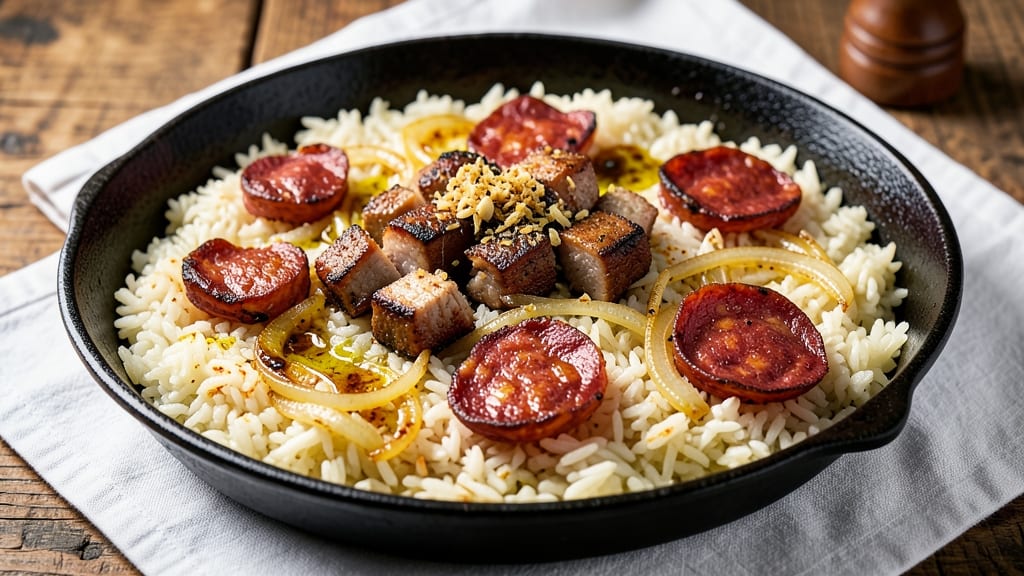
This Casa Ole rice recipe brings the heart of Filipino home cooking to your table with its signature blend of savory pork, aromatic rice, and tangy soy-vinegar balance.
The dish starts with long-grain rice simmered in a rich broth of pork, soy sauce, and vinegar, creating that signature tender yet firm texture that sets it apart from other rice dishes.
What makes this recipe special is the layering of flavors—smoky pork belly, sweet vinegar, and umami from soy sauce—all working together in harmony.
Unlike traditional paella, Casa Ole rice relies on a foolproof one-pan method that delivers restaurant-quality results without requiring special equipment. The pork is cooked until tender, then shredded and mixed back into the rice for maximum flavor infusion.
The dish is completed with a final splash of vinegar and a sprinkle of green onions, adding brightness and freshness to every bite. This recipe is perfect for family gatherings or a comforting weeknight meal that feels special.
The result is a dish that’s equally satisfying as a side or a main course—golden, fragrant rice with pockets of tender pork and a sauce that clings to every grain.
The aroma alone will have everyone at the table anticipating the first bite, while the balance of flavors ensures it’s a crowd-pleaser. Whether you're serving it alongside grilled meats or as a standalone meal, this recipe delivers the warmth and nostalgia of Filipino home cooking.
For best results, use long-grain rice and allow the pork to cook low and slow, ensuring it becomes fork-tender without drying out.
The key to achieving that signature Casa Ole flavor lies in the careful balance of soy sauce and vinegar—don’t skip the final splash, as it’s what ties everything together. Ready in about 45 minutes, this dish is a testament to how simple ingredients can create something truly memorable.
Ingredients for casa ole rice
Sixteen ingredients blending Spanish saffron and Filipino pork traditions for aromatic, tender rice.
| Ingredient | Amount | Notes |
|---|---|---|
| Long-Grain White Rice 🍚 | 2 cups | Uncooked, rinsed well |
| Pork Belly 🥓 | 1 ½ lb | Cut into 1-inch cubes |
| Spanish Chorizo 🌭 | 6 oz | Sliced into rounds |
| Saffron Threads 🌼 | ¼ tsp | High-quality, soaked in 2 tbsp warm water |
| Canola Oil 🫒 | ½ cup | For cooking pork |
| Yellow Onion 🧅 | 1 whole | Finely diced |
| Garlic Cloves 🧄 | 6 cloves | Minced |
| Canned Diced Tomatoes 🍅 | 14 ½ oz | Fire-roasted preferred |
| Soy Sauce 🍶 | ⅓ cup | Light or all-purpose |
| White Vinegar 💧 | ¼ cup | Distilled preferred |
| Bay Leaves 🌿 | 2 whole | Dried |
| Salt 🧂 | 1 ½ tsp | Diamond Crystal preferred |
| Black Peppercorns 🌶️ | ½ tsp | Freshly ground |
| Green Onions 🧅 | ¼ cup | Sliced, for garnish |
The pork belly is the flavor anchor—look for thick-cut pieces with good marbling from the butcher counter or Costco. If using pre-cut, avoid the thin, lean slices meant for stir-fry. The Spanish chorizo should be firm and vibrant red; avoid the mild American-style chorizo unless labeled 'Spanish'. For saffron, splurge on premium threads—they're worth it for that golden hue. Whole Foods or Penzeys carry high-quality saffron, but even a small pinch makes a difference. The rice should be long-grain and medium-length—jasmine or basmati work, but traditional Filipino recipes often use Calrose for its slight stickiness.
No Spanish chorizo? Mexican chorizo or Italian sausage will work, but the flavor profile shifts slightly. Out of saffron? Turmeric at half the amount gives color but lacks saffron's floral notes. For the tomatoes, fire-roasted canned tomatoes add depth, but regular diced works in a pinch. The soy sauce matters—Kikkoman or Pearl River Bridge are reliable; avoid low-sodium versions. Vinegar should be white vinegar, not apple cider or balsamic, for that classic tang. Fresh green onions are ideal, but dried onion flakes at half the amount will suffice if needed.
Store cooked rice in an airtight container with parchment paper pressed against the surface to prevent sogginess—keeps for 4-5 days in the fridge. The pork belly can be pre-cooked and refrigerated separately for 3 days before assembling the dish. For meal prep, portion the rice into individual containers with a small scoop of pork and a drizzle of sauce. Reheat gently with a splash of water to restore moisture. The saffron-infused water can be frozen in ice cube trays for up to 6 months—perfect for quick color boosts in other dishes.
Why You'll Love This Recipe
- One-Pot Magic: I swear by this recipe when I’m too tired to wash extra bowls—just rice, pork belly, and chorizo all simmering together in one pot. The saffron infuses the rice with that golden hue and nutty aroma without a single extra dish to scrub.
- Pork Belly Payoff: That crispy, caramelized pork belly? It’s the star. You slice it thin, let it render its fat into the rice, and suddenly you’ve got layers of smoky, salty richness that turns plain rice into a flavor bomb. Honestly, I’ll take this over takeout any day.
- Leftovers Reinvented: This dish actually improves the next day. The rice absorbs all the juices, the chorizo gets even more flavorful, and I’ve reheated it for lunches all week—no sad, dry grains here. (Yes, even on a Tuesday night.)
- Budget-Friendly Feast: Spanish chorizo and saffron might sound fancy, but they stretch over a big pot of rice, making this a hearty meal that won’t break the bank. I’ve fed six people for under $15 with this—plus, the leftovers keep giving.
Step-by-step instructions for Spanish-inspired paella with saffron and chorizo
Here's the method I've perfected for creating this vibrant, aromatic rice dish with deep Spanish roots.
Prepare the Saffron Infusion and Cook the Pork Belly
First, soak the 0.25 tsp saffron threads in 2 tablespoons warm water for 10 minutes—this releases their vibrant color and delicate floral aroma. Set aside. In a large, heavy-bottomed paella pan or deep skillet, heat 0.5 cup canola oil over medium-high heat. Add the 1.5 lb pork belly cubes, working in batches if needed, and cook for 8-10 minutes until the meat is deep golden brown and crispy around the edges.
Remove the pork belly with a slotted spoon and set aside, leaving the rendered fat in the pan. This fat will serve as the foundation for your paella's rich flavor. The pork should be cooked to 165°F internally—if it's not fully cooked now, you'll finish it later when the rice absorbs the liquid. The crispy exterior will add texture contrast to the dish.
Sauté Aromatics and Chorizo
Reduce the heat to medium and add the 1 whole yellow onion, finely diced. Cook for 5-6 minutes until softened and translucent, stirring occasionally. Add the 6 cloves minced garlic and cook for 30 seconds until fragrant—don't let it brown, or it will become bitter. Remove the pan from heat briefly to avoid burning.
Return the pan to medium heat and add the 6 oz sliced Spanish chorizo. Cook for 3-4 minutes, stirring frequently, until the chorizo releases its oils and becomes lightly crispy at the edges. The chorizo will add a smoky, slightly spicy depth to the dish. If the pan starts to smoke, reduce the heat slightly to prevent burning the spices.
Build the Flavor Base
Add the 14.5 oz canned diced tomatoes, 0.33 cup soy sauce, and 0.25 cup white vinegar to the pan. Stir well to combine and let the mixture simmer for 5 minutes until the tomatoes break down and the liquid reduces slightly. Add the 2 whole bay leaves, 1.5 tsp salt, and 0.5 tsp black peppercorns, then pour in the saffron infusion. Stir gently to distribute the saffron evenly.
Bring the mixture to a gentle simmer, then add the 2 cups rinsed long-grain white rice, stirring once to coat the grains in the flavorful liquid. The rice should absorb the liquid gradually, so avoid stirring frequently after this point—it can release too much starch and make the rice mushy. Let it cook undisturbed for 5 minutes to allow the rice to toast slightly and develop a subtle nuttiness.
Layer and Simmer the Paella
Return the pork belly to the pan and nestle it into the rice. The residual heat will finish cooking the pork while the rice absorbs the remaining liquid. Pour in 2 cups hot water (or broth if available) and spread the rice evenly in the pan. The rice should be just covered by the liquid—this ensures it cooks evenly without becoming soggy.
Reduce the heat to low and cover the pan with a tight-fitting lid. Let the rice simmer for 15 minutes without disturbing it. The steam will cook the rice evenly, and the lid will prevent the top layer from drying out. After 15 minutes, remove the lid and check the rice. If the liquid has been fully absorbed and the rice is still slightly firm in the center, cover and let it steam for another 5-7 minutes. The rice should be tender but with a slight bite—this is crucial for authentic paella texture.
Rest and Garnish
Once the rice is cooked to your liking, remove the pan from heat and let it rest for 5 minutes before serving. This resting period allows the flavors to meld and the rice to finish absorbing any remaining liquid. Garnish with the 0.25 cup sliced green onions just before serving to add a fresh, bright contrast to the rich, savory paella.
Serve immediately, family-style, straight from the pan. The crispy pork belly, smoky chorizo, and vibrant saffron-infused rice create a harmonious balance of textures and flavors. Each bite should deliver a mix of tender rice, crispy pork, and the deep, aromatic essence of Spanish cuisine. Pair with a crisp white wine or a cold beer to complement the dish.
Pro Tips For Making Casa Ole Rice
- CRISP THE CHORIZO FIRST: I learned this the hard way—slicing raw chorizo into the pan with the pork belly just makes everything greasy and uneven. Brown the chorizo slices in a dry skillet for 2-3 minutes until the edges curl and the fat renders. Then toss it in with the pork belly; the extra crisp adds texture and stops it from turning mushy later.
- SWEAT THE PORK BELLY LOW: After burning three batches, I finally figured out: pork belly needs patience. Cook it over medium-low heat until the fat renders but the meat stays pink inside—about 15-20 minutes. If you rush it, you’ll end up with dry, chewy chunks instead of tender, flavorful morsels that melt into the rice.
- TOAST THE RICE IN OIL: This isn’t the prettiest method, but it’s the tastiest. After draining the pork belly and chorizo, pour in the canola oil and spread the rice evenly over the heat. Stir constantly for 3-4 minutes until every grain is lightly golden—this locks in flavor and keeps the rice from turning gummy.
- BLOOM THE SAFFRON WET: Sounds weird, but it works: crush the saffron threads in a spoon, then dissolve them in 2 tablespoons of warm water before adding to the rice. Dry threads just float uselessly on top. This guarantees the rice soaks up the color and aroma instead of leaving you with pale, flavorless grains.
Essential equipment for this dish
Paella Pan Essentials
A traditional paella pan with sloped sides is ideal for this recipe—its wide base distributes heat evenly, creating that signature crispy bottom layer called socarrat. If you don’t own one, a 12-inch cast-iron skillet or heavy-bottomed Dutch oven works perfectly.
I swear by my Lodge Pre-Seasoned Cast Iron Paella Pan—it retains heat beautifully and develops a natural nonstick surface over time. 🔥
Heat Control Tools
Precision is key when cooking rice, so a thermometer is your best friend. I use a Thermoworks Smoke to monitor the oil temperature (aim for 350°F when frying pork) and the internal temperature of the pork (165°F).
For stovetop control, a gas stove with precise burner adjustments is ideal, but electric ranges work too—just monitor closely. A heat diffuser placed under the pan helps prevent hot spots if your burner is uneven.
Rice Measuring Tools
Accurate rice measurement is non-negotiable—use a dedicated rice scoop or a dry measuring cup to portion the 2 cups uncooked rice (it should be level, not packed). For the saffron infusion, a small glass jar with a lid works best for soaking the threads in 2 tbsp warm water.
I also keep a fine-mesh strainer handy to drain the rice properly before adding it to the pan. A wooden spoon is perfect for stirring the rice gently without scratching the pan.
Knives and Cutting Tools
Sharp knives make prep a breeze. A 8-inch chef’s knife is perfect for dicing the yellow onion and mincing the 6 garlic cloves—keep it honed with a Wüsthof whetstone. For the pork belly, a cleaver or heavy boning knife handles the job best.
A mandoline (with guard!) speeds up slicing the Spanish chorizo into even rounds. I also recommend a microplane for zesting any optional citrus garnishes if you want to elevate the dish further.
Garnish and Finishing Touches
Fresh green onions should be sliced thinly with a sharp chef’s knife or a mandoline for even strips. For extra flair, a small squeeze bottle (like a Misto spray bottle) makes it easy to drizzle white vinegar or olive oil over the finished dish.
A tongs set helps with plating—grab a portion of rice and pork, then transfer it directly to plates for that restaurant-style presentation. Don’t forget a fine-mesh sieve for rinsing the rice if you prefer extra fluffy grains.
Nutrition facts
Frequently asked questions
Can I substitute regular rice for long-grain rice in this recipe?
For the best texture, stick with long-grain white rice like Calrose or basmati. Short-grain rice will become too sticky, while jasmine rice may lack the proper firmness. If you must substitute, use jasmine rice but reduce the water by 1/4 cup to prevent mushiness. The key is achieving that signature tender-yet-firm texture that sets this dish apart.
What if I can't find Spanish chorizo? What are good substitutes?
No problem! Use Mexican chorizo (remove the casings) or Italian sausage like sweet or spicy Calabrese. For a vegetarian version, swap it with smoked paprika and mushrooms sautéed with garlic. The smoky depth is crucial, so avoid mild American-style chorizo unless labeled "Spanish-style." Adjust seasoning slightly if using different meats.
How do I prevent the rice from becoming mushy or undercooked?
Rinse the rice thoroughly before cooking to remove excess starch, which causes mushiness. Use a heavy-bottomed pan and maintain low heat after adding liquid—never boil vigorously. The rice should simmer gently, absorbing liquid gradually. If it's undercooked, cover and steam 5 more minutes. For extra insurance, use 1/4 cup less water than called for if your stove runs hot.
Can I make this recipe in an Instant Pot or rice cooker?
Yes, but with adjustments! For an Instant Pot, brown the pork and chorizo first, then add all ingredients except water. Use 1 cup water (instead of 2) and cook on high pressure for 8 minutes. Let it natural release for 10 minutes, then open and fluff gently. For a rice cooker, follow the same steps but reduce water to 1.5 cups—check rice 10 minutes before the cooker's timer ends and steam uncovered if needed.
Why does the recipe call for both soy sauce and vinegar?
The soy sauce provides deep umami flavor while the white vinegar adds essential tanginess that brightens the dish. Together, they create the signature balance of savory and slightly acidic notes. The vinegar also helps tenderize the pork slightly. Never skip the final splash of vinegar before serving—it's what ties all the flavors together in that perfect harmony!