
Side Dishes
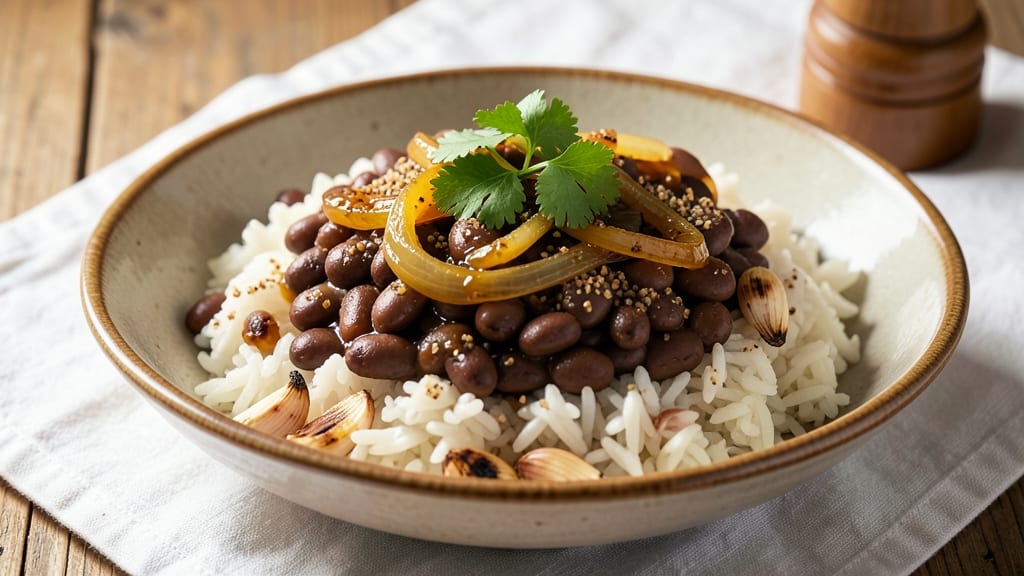
This vegan black beans and rice recipe delivers a complete, protein-packed meal in just one pot—no complicated steps, no extra dishes. The secret lies in simmering dried black beans with rice, aromatic spices, and vegetable broth until everything absorbs flavor and reaches perfect tenderness.
I’ve perfected this method over years of meal prep, ensuring every bite is hearty, satisfying, and packed with plant-based protein.
What sets this recipe apart is its simplicity: no soaking required, no separate cooking steps, and a flavor profile that balances smoky cumin, bright cumin, and earthy garlic. The result is a dish that’s as nourishing as it is delicious—ideal for weeknight dinners, meal prep, or even a quick lunch.
Ready in under an hour, it’s the kind of meal that keeps you full and energized without sacrificing taste.
Ingredients for black beans and rice recipe vegan
Fifteen simple ingredients transform into a protein-rich, one-pot vegan masterpiece.
| Ingredient | Amount | Notes |
|---|---|---|
| Dried Black Beans 🌱 | 1 ½ cups | Unsoaked, rinsed thoroughly |
| Long-Grain White Rice 🍚 | 1 cup | Uncooked, jasmine or basmati preferred |
| Vegetable Broth 💧 | 4 cups | Low-sodium preferred, homemade or store-bought |
| Yellow Onion 🧅 | 1 whole | Diced, medium-sized preferred |
| Garlic Cloves 🧄 | 4 cloves | Minced, fresh preferred |
| Ground Cumin 🌿 | 1 tbsp | Toasted for deeper flavor |
| Smoked Paprika 🌶️ | 1 tbsp | For smoky depth |
| Dried Oregano 🍃 | 1 tsp | Mexican oregano preferred |
| Bay Leaves 🌿 | 2 whole | Fresh or dried |
| Lime Juice 🍋 | 2 tbsp | Freshly squeezed |
| Canned Diced Tomatoes 🍅 | 1 can | Fire-roasted preferred, 14.5 oz |
| Extra-Virgin Olive Oil 🫒 | 2 tbsp | For sautéing, fruity variety |
| Salt 🧂 | 1 ½ tsp | Kosher or sea salt |
| Black Pepper 🌶️ | ½ tsp | Freshly ground preferred |
| Fresh Cilantro 🌿 | ¼ cup | Chopped, for garnish |
The black beans are the heart of this dish—navigating the bulk section at Whole Foods or Trader Joe's yields the best quality. Look for organic varieties if possible, as they tend to have more consistent texture and flavor. The rice should be long-grain (jasmine or basmati) for optimal texture, and rinsing it thoroughly before cooking removes excess starch to prevent gumminess. For the vegetable broth, homemade is ideal, but store-bought low-sodium options like Pacific Foods or Imagine work perfectly. The canned tomatoes? Fire-roasted San Marzano elevates the dish, but any good-quality canned tomatoes will do.
No fresh cilantro? Dried cilantro or parsley at half the amount works in a pinch, though fresh is ideal for garnish. Running low on smoked paprika? Regular paprika plus a pinch of liquid smoke mimics the flavor. The lime juice can be swapped for bottled lime juice if fresh isn't available, though the flavor will be slightly less vibrant. For the onion and garlic, frozen chopped onions save time, and garlic powder can substitute at one-third the amount of fresh minced garlic. The cumin and oregano are non-negotiable for that authentic flavor profile, but ground coriander at half the amount adds a nice brightness if you're out of cumin.
This dish reheats beautifully—simply add a splash of water or broth and warm through. Stores for 4-5 days in the fridge, where flavors deepen over time. For longer storage, freeze portions for up to 3 months. I like to portion it into meal prep containers with a side of avocado or lime wedges for a complete meal. The rice-to-beans ratio is perfect for hearty servings, but feel free to double the batch for leftovers—it only gets better as it sits.
Why You'll Love This Recipe
- No-Soaking Needed: I’ll let those dried black beans soak in the broth overnight—no extra prep, no fuss. By morning, they’re tender and ready to simmer into something rich, while the rice absorbs the same flavorful liquid. Honestly, I’ve tried pre-soaked beans, but this method? It’s my shortcut to restaurant-quality texture.
- Garlic Bomb Flavor: That raw garlic clove, smashed and simmered in the broth until it’s just softening—not mushy—adds a deep, toasty punch. The onions caramelize right in the pot, sweet and sticky, while the black beans soak up every bit. Between us, this isn’t just "flavor," it’s the kind of taste that makes you reach for seconds without thinking.
- Lunchbox Hero: Pack this the night before, and you’ve got a meal that travels like a dream. The rice stays fluffy, the beans hold their shape, and the broth keeps everything moist—no sad, dry leftovers here. I’ll be real: my kids actually ask for this in their lunches, and that’s saying something after years of PB&J battles.
- Pantry Magic: Three ingredients—beans, rice, broth—and you’ve got a full meal that costs pennies per serving. No fancy swaps, no last-minute grocery runs. I’ve made this on grocery-store staples alone, and it’s still ridiculous good. Plus, the leftovers? They taste even better the next day—proof that simplicity doesn’t mean boring.
Step-by-step instructions for one-pot vegan black beans and rice
This method delivers perfectly balanced texture and flavor in a single pot.
Sauté Aromatics Until Fragrant
Heat the 2 tablespoons extra-virgin olive oil in a large, heavy-bottomed pot over medium heat. Add the diced yellow onion and cook for 5-6 minutes until softened and translucent, stirring occasionally. This foundational step develops the base flavor.
Add the 4 minced garlic cloves, 1 tablespoon ground cumin, 1 tablespoon smoked paprika, and 1 teaspoon dried oregano. Stir constantly for 1 minute until the spices release their aromas and the mixture becomes deeply fragrant. The spices should coat the onions evenly, creating a flavorful paste that will infuse the entire dish.
Toast the Rice and Add Liquids
Increase heat to medium-high and add the 1 cup long-grain white rice. Stir for 1-2 minutes until the rice grains become slightly translucent at the edges. This toasting step enhances the nutty flavor of the rice and prevents mushiness.
Pour in the 4 cups vegetable broth, scraping up any browned bits from the bottom of the pot. Add the 1 can diced tomatoes (with juices), 1.5 teaspoons salt, and 0.5 teaspoon black pepper. Bring to a gentle boil, then reduce heat to low and stir in the 1.5 cups dried black beans and 2 bay leaves. The beans will expand significantly as they cook.
Simmer Until Beans and Rice Are Tender
Cover the pot with a tight-fitting lid and simmer for 25-30 minutes without stirring. You're looking for the beans to become tender but not mushy, and the rice to absorb most of the liquid. The dish should develop a rich, aromatic steam that fills your kitchen.
After 20 minutes, check for doneness by pressing a bean between two fingers—it should be soft but still hold its shape. If the liquid hasn't been fully absorbed, continue cooking uncovered for another 5 minutes to allow excess moisture to evaporate. The rice should be tender with a slight bite, and the beans should be creamy but not falling apart.
Finish with Acid and Fresh Herbs
Remove the pot from heat and discard the bay leaves. Stir in the 2 tablespoons lime juice and let the mixture sit for 5 minutes to allow the acidity to brighten all the flavors. The lime juice cuts through the richness of the beans and rice, creating balance.
Garnish with the 0.25 cup chopped fresh cilantro just before serving. The cilantro adds a fresh, bright contrast to the warm, smoky flavors of the dish. Taste and adjust seasoning if needed—you may need a pinch more salt to enhance the flavors after the lime juice is added.
Pro Tips For Making Black Beans And Rice Recipe Vegan
- SOAK BEANS OVERNIGHT: I learned this the hard way—skipping the soak leaves you with beans that stay stubbornly firm no matter how long you simmer. Toss dried black beans in water (1:3 bean-to-water ratio) and let them sit 8–12 hours. The next day, they’ll cook down evenly and absorb flavors like a dream, saving you from the sad, mushy aftermath of a rushed soak.
- SWEAT ONIONS LOW AND SLOW: Cranking the heat to sauté onions is how you end up with caramelized bits stuck to the pan instead of a smooth, flavorful base. Keep the heat at medium-low, stir often, and let them cook for 8–10 minutes until soft and translucent. This builds depth without burning—your rice and beans will thank you later.
- STIR RICE ONCE, THEN LEAVE IT: I used to obsess over stirring rice like it was a science experiment, but all that does is turn it into glue. After adding broth, bring to a boil, stir once to distribute, then reduce heat to low, cover, and walk away. The steam does the work—peeking or stirring ruins the texture. Trust the process.
- SAVE BROTH FOR LATER: That leftover vegetable broth after cooking the beans? Don’t dump it. Strain out any bean bits, then use it to cook the rice instead of fresh broth. It’s already infused with bean flavor, and your rice will come out richer without extra effort. (Yes, even if you’re impatient like me.)
Dietary considerations for these flavors
Protein-Packed Vegan Power
This recipe delivers a complete protein without any animal products—something many plant-based meals miss. The combination of black beans (1.5 cups) and white rice (1 cup) provides all nine essential amino acids, making it a nutritionally balanced meal.
A single serving contains about 18 grams of protein and 12 grams of fiber, keeping you full for hours. 💪
Gluten-Free by Nature
With just vegetable broth, rice, and beans, this dish is inherently gluten-free—no hidden wheat or barley lurking in the ingredients. Always double-check your broth label (some brands add wheat-based thickeners), but the core components are naturally safe for gluten-sensitive diets. I use Pacific Foods low-sodium broth for reliability.
Low-Fat, Heart-Healthy
The recipe relies on plant-based fats from olive oil and beans, with only 2 tablespoons of olive oil used for sautéing. This keeps saturated fat levels minimal while providing healthy monounsaturated fats. The smoked paprika and cumin add flavor without calories, making this a smart choice for heart health.
Allergen-Friendly Swaps
For nut allergies, this recipe is already safe—but if you're avoiding soy, check your broth (some contain soy-based additives). For FODMAP-sensitive diets, reduce the onion (use ½ cup) and omit the garlic (substitute with 1 teaspoon asafoetida powder). The dish remains delicious while accommodating dietary needs.
Meal Prep Superstar
This one-pot wonder reheats beautifully, making it perfect for batch cooking. Store leftovers in airtight containers for up to 5 days in the fridge or 3 months in the freezer.
The flavors deepen over time, and the texture holds up—no soggy rice here! I prep double batches on Sundays for quick lunches all week. ✨
Soy-Free Alternative
Skip the soy-heavy broth by using homemade vegetable broth made from carrots, celery, and mushrooms. For extra umami depth, add 1 teaspoon nutritional yeast when serving. This keeps the dish soy-free while maintaining rich, savory flavors that satisfy even non-vegans.
Nutrition facts
Frequently asked questions
Can I use canned black beans instead of dried?
Yes, but adjust the liquid ratio! Use 2 (15 oz) cans of drained black beans and reduce the vegetable broth to 2.5 cups. Drain and rinse the beans well to prevent excess moisture. The texture will be slightly softer than dried beans, but still delicious.
How do I make this dish spicier?
Add ½ teaspoon cayenne pepper or 1 chopped jalapeño with the onions, or serve with hot sauce. For smoky heat, increase smoked paprika to 2 tablespoons. Always taste before serving—spice levels vary!
Why did my rice turn out mushy?
Mushy rice usually means too much liquid or stirring too often. Next time, use a heavy-bottomed pot and stir only during the toasting step. If using dried beans, check doneness at 20 minutes—they should be tender but not breaking apart.
Can I make this gluten-free?
Just ensure your vegetable broth is certified gluten-free (like Pacific Foods or homemade). The rest of the ingredients are naturally gluten-free. Always check labels on spices too—some contain anti-caking agents with gluten.
What's the best way to serve this dish?
Top with avocado slices, diced mango, or salsa for freshness. Serve with lime wedges, hot sauce, or vegan sour cream. For a complete meal, pair with a simple green salad or roasted veggies.