
Main Courses
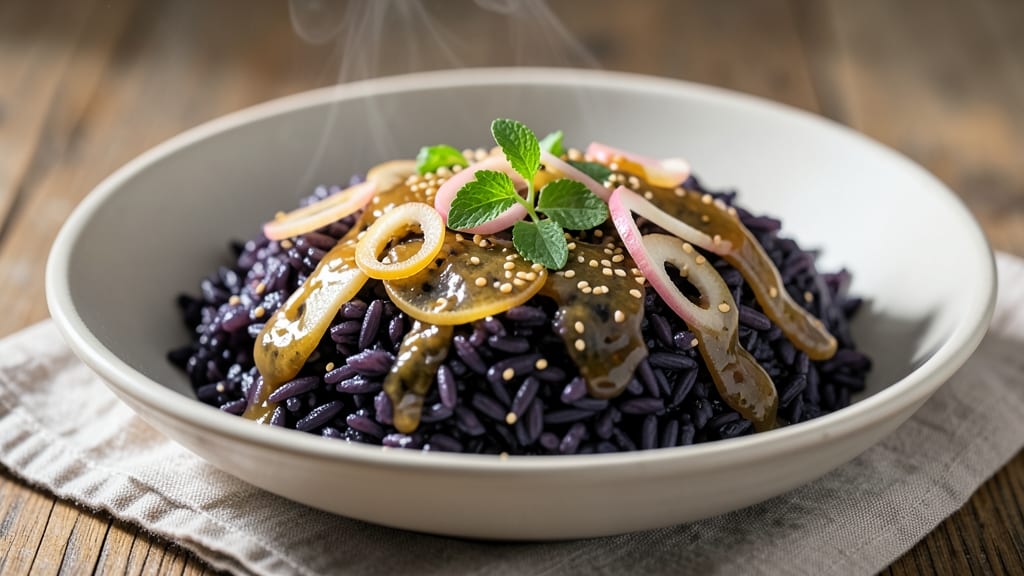
This black rice recipe vegetarian transforms simple ingredients into a nutrient-packed bowl bursting with earthy flavor and vibrant color. The key lies in perfectly balanced textures—chewy black rice, crispy toppings, and tender vegetables—all coming together in a single, satisfying dish.
What makes this recipe special is its ability to deliver restaurant-quality results with minimal effort, while keeping it completely plant-based and packed with antioxidants.
The dish starts with crispy fried shallots and toasted sesame seeds that add crunch and depth, while the black rice absorbs a fragrant ginger-sesame dressing for maximum flavor. Each bite delivers a harmonious blend of textures and nutrients, making this more than just a meal—it’s a healthful experience.
Ready in about 30 minutes, this recipe proves that vegetarian dishes can be both nourishing and indulgent.
Ingredients for black rice recipe vegetarian
Earthy black rice meets crispy toppings and vibrant vegetables for a nutrient-rich vegetarian bowl.
| Ingredient | Amount | Notes |
|---|---|---|
| Black Forbidden Rice 🍚 | 1 ½ cups | Uncooked, rinsed thoroughly |
| Vegetable Broth 💧 | 2 cups | Low-sodium preferred |
| Shallots 🧅 | 4 whole | Thinly sliced for frying |
| Sesame Oil 🫒 | 1 tbsp | Toasted sesame oil preferred |
| Sesame Seeds 🌾 | 2 tbsp | Toasted until golden |
| Fresh Ginger 🌿 | 1 tbsp | Finely grated, aromatic |
| Rice Vinegar 🍶 | 2 tbsp | Seasoned preferred |
| Soy Sauce 🍶 | 1 ½ tbsp | Tamari for gluten-free |
| Maple Syrup 🍯 | 1 tbsp | For subtle sweetness |
| Avocado Oil 🫒 | 2 tbsp | High smoke point for frying |
| Red Bell Pepper 🌶️ | 1 whole | Thinly sliced, fresh |
| Carrots 🥕 | 1 whole | Julienned for texture |
| Cucumber 🥒 | ½ whole | Seedless, thinly sliced |
| Fresh Cilantro 🌿 | ¼ cup | Chopped, for garnish |
| Lime 🍋 | 1 whole | Juiced, for brightness |
The black forbidden rice is the centerpiece—look for high-quality organic at specialty stores like Whole Foods or Sprouts for maximum antioxidant benefits. Rinsing it thoroughly removes excess starch to prevent mushiness. For the shallots, opt for fresh, firm bulbs—the crispier they fry, the better. Avocado oil is ideal for high-heat frying, but vegetable oil works in a pinch. Toasted sesame oil adds depth, so don’t skip it—Whole Foods or Asian markets carry excellent varieties. The ginger should be bright and fragrant, not woody or dried out.
No sesame oil? Toasted peanut oil works similarly, though the flavor differs slightly. Substitute tamari for soy sauce if gluten-free is a concern. Maple syrup can be swapped for agave nectar if preferred. For the vegetables, pre-cut mixes save time, but freshly sliced yields better texture. Cucumber should be crisp and firm, while carrots and bell pepper should be vibrant in color. Fresh cilantro is ideal, but dried at half the amount suffices if unavailable. Lime juice brightens the dish—Mexican grocery stores often carry fresh limes year-round.
Store uncooked black rice in an airtight container for up to 6 months in a cool, dark place. Prepped toppings like fried shallots keep for 3 days in the fridge, while vegetables stay fresh for 5 days if sealed properly. Toasted sesame seeds retain flavor for 2 weeks in a sealed jar. Cooked rice reheats beautifully—microwave with a splash of water to restore moisture. For meal prep, portion toppings separately to maintain crispness. Leftovers keep for 4 days refrigerated or 3 months frozen.
Why You'll Love This Recipe
- One-Pot Magic: I swear by this—just toss the rice, broth, and shallots in one pot, let it simmer, then finish with a drizzle of sesame oil. No fancy techniques, no burnt rice, no stress.
- Umami Bomb: That first bite? The black rice soaks up the vegetable broth until it’s tender and nutty, while the toasted shallots add a caramelized depth. Honestly, it’s the kind of flavor that makes you pause mid-bite.
- Weeknight Workhorse: Make a big batch on Sunday, and you’ve got lunch or dinner covered all week. It reheats beautifully—just add a splash of water and a pinch of salt, and it’s like it was just made.
- Budget Luxury: Black forbidden rice feels fancy, but here’s the secret: it’s cheaper than quinoa in bulk, and the broth stretches to feed four for under $10. Plus, the sesame oil adds that restaurant-worthy touch without breaking the bank.
Step-by-step instructions for vegetarian black rice power bowl
Transform nutrient-dense black forbidden rice into a vibrant, textured bowl with this precise method.
Prepare the Black Forbidden Rice Foundation
Rinse the 1.5 cups black forbidden rice thoroughly under cold water until the water runs clear—this removes excess starch that can make the rice gummy. Drain well and transfer to a medium saucepan. Add the 2 cups vegetable broth and bring to a boil over medium-high heat. Once boiling, immediately reduce heat to low, cover tightly with a lid, and simmer for 35-40 minutes until all liquid is absorbed and the rice is tender but still slightly firm to the tooth.
Here's the thing—black forbidden rice requires gentle handling. Avoid peeking during cooking as steam escape causes uneven texture. When done, fluff with a fork and let sit covered for 5 minutes before assembling bowls. The rice should be creamy yet distinct, holding its shape when pressed gently.
Create the Crispy Shallot Topping
Heat 2 tablespoons avocado oil in a nonstick skillet over medium heat until shimmering. Add the 4 whole shallots (sliced thinly as specified) in a single layer, ensuring they don't overlap. Cook undisturbed for 8-10 minutes until edges turn golden brown and crispy—this is your crispy topping's signature texture. Flip carefully with tongs and cook another 5-6 minutes until all sides are uniformly crisp.
Remove from heat and immediately sprinkle with 2 tablespoons sesame seeds. Let cool for 2 minutes—this prevents the seeds from burning while keeping them toasted and aromatic. The shallots should be golden with crisp edges that hold their shape when lifted with chopsticks. If any slices stick, gently nudge with a spatula to maintain crispness.
Build the Crunchy Vegetable Medley
In the same skillet (no need to clean), add 2 tablespoons avocado oil and heat over medium-high heat. Add the 1 whole red bell pepper (sliced) and 1 whole carrot (julienned) simultaneously. Stir-fry for 4-5 minutes until the bell pepper softens slightly and carrots develop a faint golden hue—you want them tender-crisp, not mushy.
Push vegetables to one side of the pan and add 1 tablespoon sesame oil and 1 tablespoon fresh ginger. Stir for 30 seconds until fragrant, then combine with the vegetables. Remove from heat and immediately toss with 2 tablespoons rice vinegar and 1.5 tablespoons soy sauce. The vegetables should be vibrant with a glossy sheen from the vinegar, and the ginger should infuse subtle warmth throughout.
Assemble the Power Bowl
Divide the cooked black forbidden rice evenly among 4 bowls. Top each portion with 1/4 of the crispy shallot mixture, spreading evenly for visual appeal. Add 1/4 of the vegetable medley to each bowl, arranging the julienned carrots and bell pepper slices in a fan shape.
Drizzle each bowl with 1 teaspoon maple syrup and 1 teaspoon lime juice (from the 1 whole lime). The syrup adds subtle sweetness that balances the umami from the soy sauce, while the lime brightens the earthy rice. Garnish with 1 tablespoon chopped fresh cilantro per bowl—this adds freshness and a pop of color that makes the dish visually striking.
Finish with Crispy Garnish
Return the skillet to medium heat and add 1 tablespoon avocado oil. Toast the 2 tablespoons sesame seeds for 1-2 minutes until golden and fragrant—watch closely to prevent burning. Immediately sprinkle over each bowl just before serving. The seeds should be aromatic with a toasty nuttiness that complements the rice's earthy depth.
Serve immediately while the shallots remain crisp and the vegetables are still vibrant. The contrast between the creamy rice, crispy shallots, and tender vegetables creates a satisfying textural experience with every bite. For best results, assemble bowls just before eating to maintain optimal texture.
Pro Tips For Making Black Rice Recipe Vegetarian
- Soak the Rice Overnight: I learned this the hard way—rushing the soak with black forbidden rice leaves it chewy and uneven. Cover it in cold water (at least 3:1 ratio) for 12+ hours. No, the extra time isn’t optional—this grain’s dense and stubborn when dry.
- Sauté Shallots Low and Slow: After burning three batches, I finally figured out: black rice absorbs flavors like a sponge, and raw shallot bits taste awful. Cook them in sesame oil over low heat until translucent (8-10 minutes), not golden. Patience here makes the dish sing.
- Simmer Broth Gently: Sounds weird, but it works: bring the broth to a bare simmer (tiny bubbles at the edges) once the rice is added. Boiling turns black rice mushy and gray—like overcooked lentils. Keep it at 190°F (88°C) max, and stir once halfway through.
- Toast Sesame Seeds Last: I skip this when I’m lazy, but the dish is noticeably better when I don’t. Dry-toast the sesame seeds in a separate pan over medium heat for 60 seconds until fragrant—then sprinkle them on top. Their crunch and aroma elevate the whole bowl, not just garnish it.
Dietary considerations for these flavors
Gluten-Free Adaptations
This recipe shines for gluten-free eaters since the core ingredients are naturally gluten-free. The soy sauce can be swapped for tamari (a gluten-free alternative) or coconut aminos for a neutral flavor. Rice vinegar is already gluten-free, but always check labels if using store-bought varieties.
The black forbidden rice itself is gluten-free, but verify packaging if you have severe sensitivities. 🌱
Nut-Free Considerations
While sesame seeds are a key flavor component, they’re technically a seed—not a nut. For nut-free diets, simply omit them entirely or substitute with toasted pumpkin seeds (pepitas) for a similar texture.
The dish remains nut-free while keeping the same toasty crunch. Always check labels on sesame oil to ensure no cross-contamination with nuts.
Protein Boost Options
To enhance protein content, add ½ cup edamame (shelled) to the vegetable medley or top with crumbled tofu (pan-fried with a pinch of salt). For a dairy option, sprinkle with crumbled feta cheese—its tangy flavor pairs beautifully with the earthy rice.
I often keep a small container of marinated tempeh nearby for quick protein additions without altering the vegetarian focus. 💪
Allergen-Friendly Swaps
For soy allergies, replace the soy sauce with coconut aminos (1:1 ratio) and ensure all ingredients are certified soy-free. Sesame allergies require omitting all sesame oil and seeds, substituting with toasted sunflower seeds instead.
When using avocado oil, confirm it’s processed in a nut-free facility. Always double-check ingredient labels, especially for pre-packaged items like rice vinegar or vegetable broth.
Vegan-Friendly Adjustments
This recipe is already vegan-friendly, but a few tweaks ensure maximum flavor. Use agave nectar instead of maple syrup if you prefer a strictly plant-based sweetener. For extra richness, stir 1 tablespoon vegan butter into the cooked rice.
The lime juice and ginger add brightness naturally, making this dish vibrant and satisfying without any animal products. 🌿
Low-Calorie Modifications
To reduce calories, use light coconut aminos instead of soy sauce and water-based broth instead of vegetable broth. Skip the avocado oil for frying and use nonstick spray instead. For the dressing, reduce maple syrup to ½ tablespoon and add an extra ½ tablespoon lime juice for freshness.
The dish remains flavorful while cutting calories by about 20%. I’ve found this version works perfectly for meal prep lunches. ✨
Nutrition facts
Frequently asked questions
Why does black rice look so dark when cooked?
The deep purple-black color comes from high levels of anthocyanins, powerful antioxidants that give it both its striking appearance and health benefits. The color darkens as it cooks because these pigments become more concentrated when heated. Don't worry—it's completely safe and delicious! The rice will have a rich, nutty flavor that's quite different from white rice.
Can I substitute white rice for black forbidden rice?
While you can technically use white rice, you'll lose the dish's nutritional benefits and unique earthy flavor. Black forbidden rice has a firmer texture and more complex taste that pairs perfectly with the crispy toppings. For a similar texture, try brown rice (though it won't have the same color or antioxidant properties). The dish relies on the contrast between the creamy rice and crispy toppings—black rice is essential for that perfect balance.
How do I prevent the shallots from burning when frying?
Use medium heat (not high) and make sure your skillet is large enough so the shallots don't overlap. Cook them in a single layer for 8-10 minutes without stirring until golden brown. If they start to brown too quickly, reduce the heat slightly. The key is patience—they'll crisp up perfectly when cooked undisturbed. A nonstick skillet helps prevent sticking while maintaining that beautiful crispy texture.
What's the best way to store leftovers?
Store the cooked black rice and vegetable medley separately in airtight containers for up to 4 days in the fridge. Keep the crispy shallot mixture in a separate container—it's best reheated briefly in a dry skillet to restore crispness. For freezing, only freeze the rice portion (without toppings) for up to 3 months
Can I make this dish ahead of time?
Prepare all components except the crispy toppings and fresh garnishes up to 2 days ahead. Cook the rice, fry the shallots, and make the vegetable medley separately. When ready to serve, simply assemble the bowls and add the crispy toppings and fresh garnishes. This makes it perfect for meal prep—just reheat the rice portion gently and keep the crispy elements separate until serving. The flavors actually improve when components are made ahead!