
Main Courses
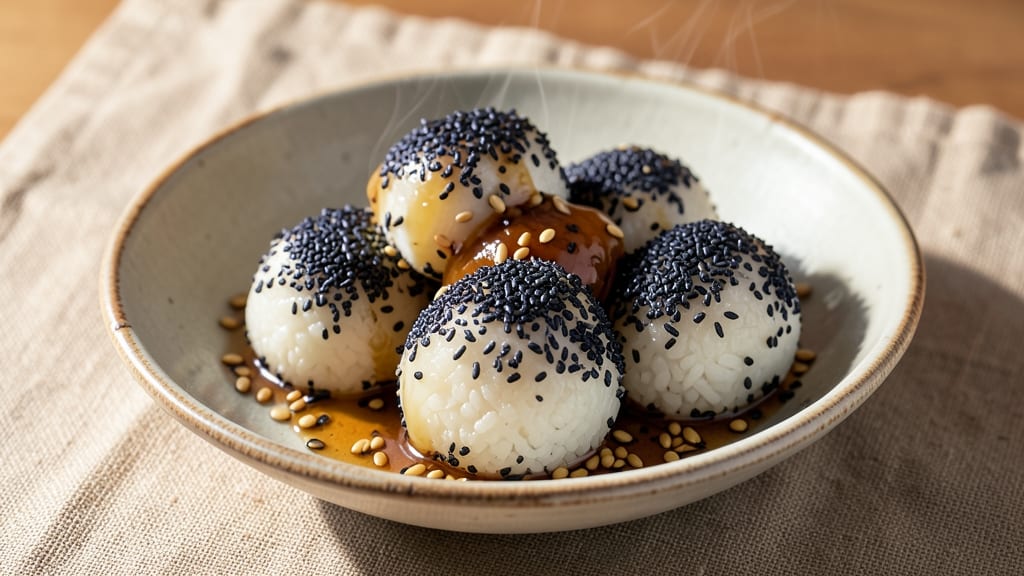
This black sesame glutinous rice balls recipe delivers nutty-sweet bites with a silky texture that melts in your mouth. 🌟 The secret lies in perfectly balanced glutinous rice and rich black sesame paste, creating a dessert that's both traditional and irresistibly modern.
Whether you're making them for a special occasion or a cozy treat, these rice balls combine simplicity with restaurant-quality results.
With just a few key ingredients—glutinous rice, black sesame paste, sugar, and coconut milk—you'll craft chewy, fragrant rice balls that can be steamed or pan-fried to golden perfection. The recipe is vegan-friendly and highlights traditional techniques while offering shortcuts like pre-made sesame paste for convenience.
Serve them warm with coconut milk or chilled as a refreshing dessert, and watch how they disappear faster than you can say "nutty flavor."
Ingredients for black sesame glutinous rice balls
Silky rice, nutty sesame, and coconut richness—just 11 ingredients for restaurant-quality bites.
| Ingredient | Amount | Notes |
|---|---|---|
| Glutinous Rice (Sweet Rice) 🍚 | 1 ½ cups | Uncooked, soaked 30 minutes |
| Black Sesame Paste 🥜 | ½ cup | Store-bought or homemade |
| Coconut Milk 🥥 | 13 ½ oz | Full-fat canned for richness |
| Granulated Sugar 🍯 | ½ cup | White or coconut sugar |
| Vegetable Oil 🫒 | 2 tbsp | For pan-frying |
| Water 💧 | ½ cup | For steaming |
| Sesame Seeds 🌾 | 2 tbsp | Toasted for garnish |
| Cornstarch 🌾 | 1 tbsp | For dusting |
| Salt 🧂 | ¼ tsp | Fine sea salt |
| Vanilla Extract 🌸 | ½ tsp | Pure vanilla for aroma |
| Lemon Zest 🍋 | 1 tsp | Brightens flavor |
The glutinous rice is non-negotiable here—Bob's Red Mill or Thai Kitchen brands are my go-tos. Soak it for 30 minutes before cooking, or it'll stay gummy. Black sesame paste? Asian markets have the best selection—look for smooth, not grainy. The coconut milk should be full-fat for that creamy texture; Thai Kitchen cans are my pantry staple. Sugar can be coconut if you want to keep it vegan-friendly, but white works perfectly fine too.
No black sesame paste? Toast 2 tbsp black sesame seeds and grind into a paste with a pinch of oil—takes 5 minutes in a food processor. Running short on coconut milk? Substitute with 1/2 cup cashew cream (soaked cashews blended with water), though the flavor won't be identical. The vanilla and lemon zest are optional but worth the extra minute—they balance the sweetness beautifully. For pan-frying, use a nonstick skillet; if you don't have one, lightly oil a regular pan and keep heat medium-low to avoid burning.
Store uncooked rice balls in an airtight container in the fridge for 3 days or freeze for 1 month. The steamed version reheats best—drop them in a steamer basket for 5 minutes. Pan-fried ones? Reheat in a dry pan for 2 minutes per side. Make a double batch—they disappear fast, especially when served warm with extra coconut milk drizzled on top. Leftovers? Toss them in a smoothie for a nutty boost!
Why You'll Love This Recipe
- No Fuss, One-Bowl Wonder: I swear by this recipe because it’s actually simple—just steam the rice, mix in the black sesame paste and coconut milk, then shape. No kneading, no fussing, and honestly, the sticky texture forgives even my wonky hands.
- Rich, Nutty Magic: That first bite of black sesame paste? It’s like a warm, toasty hug in your mouth. The coconut milk adds this creamy sweetness that balances the earthy nuttiness, and the sugar just ties it all together—no weird aftertaste, just pure satisfaction.
- Lunchbox Hero: Between us, these are my go-to for packed lunches or quick snacks. They hold up perfectly for 3-4 days in the fridge, and the kids (yes, even the picky ones) actually finish them. Roll them in extra sesame seeds, and suddenly you’ve got a snack that looks fancy but costs pennies.
- Budget Sweet Spot: Here’s what sold me—they’re ridiculously cheap to make. A bag of glutinous rice and a jar of black sesame paste last forever, and you’re using coconut milk, not heavy cream. Plus, the leftovers? I freeze them in batches and toss them into smoothies or oatmeal later. Zero waste, all flavor.
Step-by-step instructions for black sesame glutinous rice balls
Here's how to craft these nutty-sweet bites with a silky texture that melts in your mouth.
👨🍳 Step 1: Soak and Prepare the Glutinous Rice
Rinse the 1.5 cups of glutinous rice (sweet rice) under cold water until the water runs clear. This removes excess starch that would make your rice balls gummy. Transfer the rice to a bowl and cover with 0.5 cup of water. Let it soak for at least 30 minutes—I usually do this while I prep other ingredients. The rice should absorb the water and become translucent but still slightly firm to the touch.
After soaking, drain any excess water and transfer the rice to a food processor. Add the 0.5 cup of black sesame paste, 0.5 cup of granulated sugar, 0.5 tsp of vanilla extract, 1 tsp of lemon zest, and 0.25 tsp of salt. Pulse until the mixture becomes smooth and sticky, like thick dough. This is your filling—it should be rich, nutty, and fragrant from the sesame and vanilla. If it's too dry, add 1 tsp of water at a time until it holds together when pressed.
🍳 Step 2: Cook the Coconut Milk Filling
In a small saucepan, combine the 13.5 oz of coconut milk and 1 tbsp of cornstarch. Whisk vigorously to dissolve the cornstarch completely—this will help thicken the mixture as it cooks. Place the saucepan over medium heat and stir constantly for 5-7 minutes until the mixture thickens to a pudding-like consistency. You'll know it's ready when it coats the back of a spoon and leaves a slight sheen.
Remove the pan from heat and let it cool for 10 minutes. The filling should be warm but not hot to the touch—this prevents the rice balls from becoming too soft when shaped. Stir in 1 tbsp of the sesame seeds and mix well. The aroma should be intoxicatingly sweet with a deep, toasty sesame note. If the filling is too thick, thin it with 1 tsp of water to achieve a smooth, spreadable texture.
🥘 Step 3: Shape and Steam the Rice Balls
Line a steamer basket with parchment paper and fill a pot with 2 inches of water. Bring the water to a gentle simmer over medium heat—you want steam, not a rolling boil, which can make the rice balls tough. While the water heats, divide the rice dough into 8 equal portions (about 2 tbsp each). Flatten each portion into a 3-inch circle and place 1 tbsp of the coconut milk filling in the center. Gently fold the edges of the dough over the filling, sealing it completely to trap the flavors inside.
Roll each sealed dough ball between your palms to form a smooth, round shape. Place them in the steamer basket, leaving 1 inch of space between each ball. Cover the steamer and cook for 15-18 minutes until the rice balls are firm to the touch and the edges are slightly translucent. Avoid lifting the lid during steaming—this disrupts the moisture balance and can lead to uneven cooking.
🔥 Step 4: Pan-Fry for Crispy Texture
Heat 2 tbsp of vegetable oil in a non-stick skillet over medium heat until it shimmers but doesn't smoke. Carefully transfer the steamed rice balls to the skillet, spacing them 1 inch apart. Cook for 2-3 minutes per side until they develop a golden-brown crust—this is where the magic happens. The contrast between the crispy exterior and silky interior is what makes these rice balls irresistible.
While frying, sprinkle the remaining 1 tbsp of sesame seeds evenly over the rice balls. Press down gently with a spatula to help them adhere. Once golden and fragrant, transfer the rice balls to a wire rack to cool slightly. Serve warm or at room temperature—these taste best when the filling is still creamy but the exterior has crisped up just enough to add texture.
⏰ Step 5: Serve and Enjoy
Let the rice balls cool for 5 minutes before serving. This allows the filling to set slightly, making them easier to handle. Arrange them on a plate and garnish with an additional sprinkle of toasted sesame seeds if desired. The contrast of temperatures—warm filling, slightly crisp exterior—elevates every bite. Pair with a cup of jasmine tea or a scoop of mango sorbet to balance the richness.
These rice balls keep well in an airtight container in the refrigerator for up to 3 days. To reheat, steam for 5 minutes or pan-fry for 1 minute to restore the crispy texture. The longer they sit, the more the flavors meld together, making them even more addictive. Trust me, you'll want to make a double batch.
Pro Tips For Making Black Sesame Glutinous Rice Balls
- Soak Rice Overnight: I learned this the hard way—rushing the soak means gummy, uneven balls. Use twice the water by volume (e.g., 1 cup rice to 2 cups water) and let it sit at least 8 hours, ideally overnight. The rice should be plump but still firm—if it’s mushy, drain and pat dry before shaping.
- Fry in Batches: Cram too many balls in the pan, and they’ll steam instead of crisp. Use a nonstick skillet with just enough oil to coat the bottom (about 2 tablespoons), then fry 3-4 balls at a time over medium-high heat. Crowd the pan, and you’ll end up with soggy centers—no one wants that.
- Toast Sesame Paste: Black sesame paste straight from the jar tastes flat. Warm it in a small saucepan with 1 tablespoon coconut milk over low heat for 2-3 minutes—just until it smells nutty and fragrant. This step makes a real difference in depth of flavor, and it blends smoother into the rice.
- Test Sugar Balance: Skip tasting the filling before rolling, and you might end up with cloyingly sweet or bland balls. Mix 1 teaspoon sugar into a spoonful of the coconut-black sesame paste before adding the rest—if it’s too sweet, reduce the total sugar by 1-2 tablespoons. Trust your tongue, not the recipe.
Regional styles of these flavors
Taiwanese Street Style
In Taiwan, these rice balls are often sold as warm street snacks with a crispy, caramelized exterior. The key difference? Taiwanese versions use more sugar—up to ⅔ cup—for a sweeter profile, and they're pan-fried twice for extra crunch.
I like adding 1 tsp of maltose syrup (available at Asian markets) to the dough for that signature caramelized flavor. Serve them with a dusting of kinako (roasted soybean flour) for a nutty contrast. 🌟
Japanese Mochi Twist
Japanese chefs often make these as daifuku mochi, where the glutinous rice is pounded into a smoother, chewier texture. Replace the coconut milk filling with anko (sweet red bean paste) and roll the dough into smaller, 1.5-inch balls.
Steam them for 12-15 minutes instead of 18, as they cook faster. For extra authenticity, dust with matcha powder before serving. The result is a lighter, more delicate bite compared to the Taiwanese version.
Thai Tropical Variation
Thai home cooks often infuse these with pandan leaves for a fragrant twist. Add 1 strip of pandan leaf (or ½ tsp pandan extract) to the coconut milk while cooking.
For the filling, swap half the sugar for palm sugar and add ½ tsp of salted egg yolk powder (optional but traditional). Serve with a drizzle of coconut cream and crushed mung bean sticks for texture. The tropical notes make these perfect for summer gatherings. 🥥
Modern Fusion Adaptation
For a contemporary take, try a matcha-white chocolate filling: mix 2 tbsp white chocolate chips with 1 tsp matcha powder and 1 tbsp coconut milk, then microwave for 20 seconds to melt. Fold this into the coconut milk filling before shaping.
Use dark chocolate shavings for garnish. This fusion keeps the traditional texture while adding a luxurious, bittersweet contrast. Perfect for dessert menus or gifting! ✨
Korean Sweet Rice Balls
In Korea, these are called patbingsu-inspired rice balls, often served chilled with fruit. After steaming, let the rice balls cool completely, then chill in the fridge for 2 hours. Serve with a scoop of shaved ice, sliced strawberries, and a drizzle of honey.
For a savory-sweet twist, add ½ tsp of soy sauce to the dough and top with toasted sesame seeds. This version is lighter and refreshing—ideal for hot days.
Nutrition facts
Frequently asked questions
Can I make these black sesame rice balls without coconut milk?
Yes! For a dairy-free alternative, use cashew cream (blend soaked cashews with water) or almond milk pudding (combine almond milk with cornstarch and sugar). The texture will be slightly lighter, but the nutty flavor remains. For extra richness, add 1 tbsp of tahini to the filling mixture.
Why are my rice balls falling apart when shaping?
This usually happens if the dough is too dry or the rice wasn't soaked long enough. Increase the soaking time to 45 minutes and add 1 tsp of water at a time to the food processor until the dough holds together. For extra stickiness, rub a little oil on your hands while shaping to prevent sticking.
How do I store leftover rice balls?
Keep them in an airtight container in the fridge for 3 days or freeze for 1 month. To reheat steamed versions, steam for 5 minutes or pan-fry for 1 minute to restore crispiness. For pan-fried ones, warm in a dry pan over low heat until golden again.
Can I make these without a food processor?
Mash the soaked glutinous rice with a fork until sticky, then mix in the black sesame paste, sugar, and other wet ingredients by hand. Use your fingers to knead everything together until smooth. The texture will be slightly less refined but still delicious.
What's the best way to serve these rice balls?
Warm rice balls taste best with a drizzle of coconut milk or honey, while chilled versions pair perfectly with jasmine tea or mango sorbet. For a festive touch, arrange them on a platter with toasted sesame seeds and fresh fruit like lychee or dragon fruit.