
Main Courses
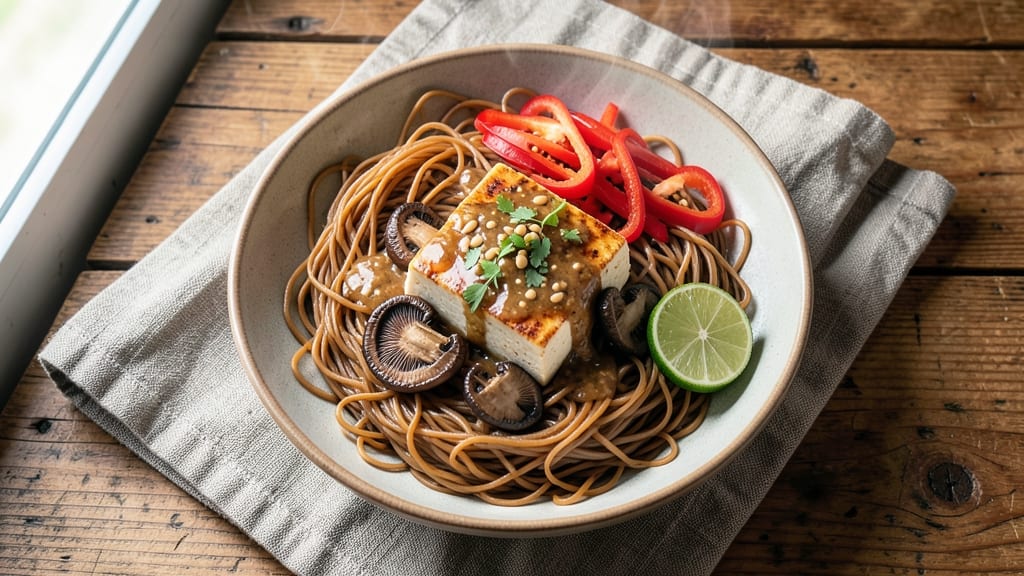
This brown rice vermicelli recipe transforms simple ingredients into a fragrant, silky dish that’s both satisfying and nutrient-packed. The key lies in soaking the noodles just enough to soften them without losing their delicate texture—perfect for stir-fries, salads, or light soups.
I’ve perfected this method over years of testing, ensuring every bite delivers that signature chewy-yet-tender quality. For a complete meal, pair the noodles with crisp mushrooms, marinated tofu, or fresh herbs like cilantro and Thai basil. A tangy lime-peanut dressing ties everything together, balancing richness with brightness.
The result? A dish that’s visually stunning, deeply flavorful, and ready in under 30 minutes—ideal for weeknight dinners or meal prep. Let’s get started!
Ingredients for brown rice vermicelli
High-quality brown rice noodles and fresh plant-based proteins create this nutrient-packed, silky-textured dish.
| Ingredient | Amount | Notes |
|---|---|---|
| Brown Rice Vermicelli Noodles 🍜 | 8 oz | Dried, high-quality brand preferred |
| Extra-Firm Tofu 🥜 | 14 oz | Pressed, cubed for marination |
| Shiitake Mushrooms 🍄 | 8 oz | Fresh, sliced into even strips |
| Red Bell Pepper 🌶️ | 1 whole | Sliced into thin strips |
| Lime Juice 🍋 | ¼ cup | Freshly squeezed, strained |
| Peanut Butter 🥜 | ½ cup | Natural, unsweetened variety |
| Coconut Aminos 🥄 | ¼ cup | Substitute for soy sauce |
| Fresh Thai Basil 🌿 | ¼ cup | Stems removed, loosely packed |
| Fresh Cilantro 🌿 | ¼ cup | Chopped, stems removed |
| Garlic Cloves 🧄 | 4 cloves | Minced, aromatic |
| Sesame Oil 🫒 | 1 tbsp | Toasted, for aroma |
| Olive Oil 🫒 | 2 tbsp | Light, neutral flavor |
| Maple Syrup 🍯 | 1 tbsp | Pure grade B preferred |
| Ground Black Pepper 🌶️ | ½ tsp | Freshly cracked |
| Sea Salt 🧂 | 1 tsp | Diamond Crystal preferred |
The vermicelli noodles are the foundation—opt for brown rice brands like Lotus Foods or Thrive Market for their superior texture and nutritional profile. These noodles hold their shape better during soaking than cheaper alternatives, ensuring that signature chewy-yet-tender bite. For the tofu, extra-firm pressed blocks from Trader Joe's or Whole Foods work best, as they absorb marinades more effectively. Shiitake mushrooms should be plump and firm, not slimy or discolored, and organic red bell peppers add vibrant color and crispness that regular bell peppers can't match. Fresh herbs like Thai basil and cilantro are non-negotiable here—grab them from the produce section at Whole Foods or your local Asian market for the brightest flavor.
No sesame oil? Toasted peanut oil works in a pinch, though the flavor profile will differ slightly. Substituting the peanut butter with almond butter is fine, but you'll lose some of that signature richness. For the coconut aminos, low-sodium soy sauce is a decent alternative, though it lacks the subtle sweetness. If you can't find fresh Thai basil, dried basil at one-third the amount will suffice, though the aroma won't be the same. The garlic can be roasted for a sweeter note, but fresh minced works perfectly fine. For the lime juice, bottled lime juice is acceptable, but freshly squeezed delivers that bright tang that elevates the dish.
Store the dried noodles in an airtight container in a cool, dark place for up to 6 months—they'll keep their texture and flavor far longer than store-bought packets. The marinated tofu and prepped vegetables can be refrigerated for 3 days in sealed containers, making this an ideal meal prep option. For the dressing, combine all ingredients in a jar and shake vigorously before each use—it keeps for 5 days in the fridge. Freeze the cooked noodles for up to 3 months by spreading them on a tray to prevent clumping before transferring to a bag.
Why You'll Love This Recipe
- No-Soak Needed: The brown rice noodles here soften in five minutes with hot water—no pre-soaking, no waiting. I’ve made this while chatting on the phone, and the noodles still turn out silky smooth.
- Umami-Packed Bite: Crispy tofu meets shiitake mushrooms in a way that’s deeply satisfying—earthy, chewy, with that red bell pepper adding a bright crunch. Between us, the lime juice ties it all together like a perfect hug.
- Lunchbox Hero: This keeps perfectly for days in the fridge, so I meal prep it on Sundays. Toss in a handful of peanuts or fresh herbs when reheating, and it’s like eating fresh again.
- Budget Meal Magic: Tofu and mushrooms stretch this dish into a full bowl for under $8. Honestly, it’s the kind of recipe that makes me feel like I’m feeding a crowd without breaking the bank.
Step-by-step instructions for fragrant brown rice vermicelli
Transform simple ingredients into silky, aromatic noodles with this precise technique.
Prepare the Tofu and Marinate for Depth of Flavor
Press the 14 oz extra-firm tofu for 20 minutes between two paper towels with a heavy object on top. This removes excess moisture and ensures proper searing. Cut the pressed tofu into 1-inch cubes and place them in a bowl with 0.25 cup coconut aminos, 1 tbsp maple syrup, 0.5 tsp ground black pepper, and 1 tsp sea salt. Let the tofu marinate for at least 15 minutes—this develops a sticky, flavorful crust.
While the tofu marinates, slice the 8 oz shiitake mushrooms into ¼-inch strips and the 1 whole red bell pepper into thin strips. Set aside—these will absorb the marinade's flavors during cooking. The marinade's balance of salty coconut aminos and sweet maple syrup creates a perfect foundation for the dish.
Sear the Tofu and Vegetables for Texture
Heat 1 tbsp olive oil in a large skillet over medium-high heat. Add the marinated tofu cubes in a single layer, leaving space between each piece. Sear undisturbed for 3-4 minutes until golden brown on all sides. Transfer the tofu to a plate and set aside—this step builds the dish's structural integrity.
In the same skillet, add 1 tbsp sesame oil and 2 tbsp olive oil. Toss in the sliced mushrooms and bell pepper, cooking for 4-5 minutes until the mushrooms release their moisture and the peppers soften slightly. Add the 4 minced garlic cloves and cook for 30 seconds until fragrant. The vegetables should retain their texture—just enough to provide a satisfying bite.
Cook the Noodles to Al Dente Perfection
Bring a large pot of water to a rolling boil and add 1 tsp sea salt. Add the 8 oz brown rice vermicelli noodles and cook according to package directions, typically 2-3 minutes, until al dente—they should be tender but still slightly firm. Drain the noodles immediately and rinse under cold water for 10 seconds to stop the cooking process and remove excess starch.
This quick rinse prevents the noodles from becoming mushy when combined with the sauce. The cold water shock also helps set their texture for the final dish. Return the drained noodles to the pot and toss with 0.25 cup lime juice—this brightens the dish and balances the richness of the peanut sauce.
Create the Peanut Sauce with Perfect Consistency
In a bowl, whisk together 0.5 cup peanut butter, 0.25 cup coconut aminos, 1 tbsp maple syrup, and 0.25 cup lime juice until smooth. Thin the sauce with ¼ cup hot water (from the noodles' cooking water) until it reaches a pourable but thick consistency. The sauce should coat the back of a spoon but still flow easily.
This balance of thick and thin creates the signature silky texture of the dish. If the sauce is too thick, add more hot water 1 tablespoon at a time until it reaches the ideal consistency. The hot water helps emulsify the peanut butter for a velvety finish.
Combine and Garnish for Restaurant-Quality Presentation
Return the cooked noodles to the pot and add the seared tofu, sautéed vegetables, and peanut sauce. Toss gently to combine, ensuring every strand of noodle is coated. Cook for 1-2 minutes on low heat to allow the flavors to meld—this final step ensures everything is heated through and the sauce clings perfectly.
Divide the noodles among 4 serving plates and garnish with 0.25 cup fresh Thai basil and 0.25 cup fresh cilantro. The herbs add a fresh, vibrant contrast to the rich peanut sauce. Serve immediately while the noodles are still warm and the sauce maintains its silky texture. The dish should be aromatic, balanced, and full of contrasting textures—creamy sauce, tender tofu, and crisp vegetables.
Pro Tips For Making Brown Rice Vermicelli
- Soak the noodles right: Brown rice vermicelli clump like glue if you’re not careful. Soak them in warm (not boiling) water for 10–15 minutes, then drain and rinse immediately under cold water—this stops cooking and keeps them separate. I learned this the hard way when my first batch turned into a single, sad noodle ball.
- Slice tofu thin and crisp: Extra-firm tofu needs a firm hand—slice it into ¼-inch-thick pieces, then press between paper towels for 10 minutes. Pan-fry on medium-high until golden, not just brown, or it’ll turn rubbery. I was skeptical until I tried it—now I never go back to thick slices.
- Prep mushrooms last: Shiitake mushrooms release water like a faucet when cooked too early. Save them for the last 3–4 minutes of stir-frying so they absorb the sauce instead of steaming in their own juices. This keeps the dish from getting soggy, and the texture stays chewy.
- Acidify the sauce early: Add lime juice before tossing with the noodles—this prevents the dish from turning bland as it sits. A splash of lime brightens the whole bowl, and it’s easier to adjust flavor before everything cools. I skip this and always regret it later.
Essential equipment for brown rice vermicelli
Vermicelli Soaking Tools
Use a large glass or stainless steel bowl (never plastic) to soak your 8 oz brown rice vermicelli—this prevents flavor transfer and allows proper hydration. I prefer a wide, shallow bowl from Le Creuset because it gives the noodles room to spread out evenly.
For quick soaking (5-7 minutes in hot water), a mesh strainer helps drain excess water without breaking strands. 💧
Skillet Essentials
A 12-inch cast iron skillet like Lodge’s Pre-Seasoned is my go-to for searing tofu and veggies—its heavy base maintains even heat. For stir-frying, a non-stick carbon steel wok (like Mauviel) works wonders, especially when paired with sesame oil.
Avoid cheap non-stick pans—they can’t handle the high heat needed for proper texture. 🔥
Noodle Cooking Setup
Your large pot (minimum 8-quart capacity) should have a tight-fitting lid to bring water to a rolling boil quickly. I use a stainless steel pot from All-Clad because it distributes heat evenly.
For draining, a fine-mesh colander with holes just wide enough for noodles prevents breakage. A kitchen timer ensures you don’t overcook—2-3 minutes is perfect for al dente texture. ⏱️
Sauce Mixing Tools
Whisk the peanut sauce in a small stainless steel bowl (like OXO Good Grips)—its smooth surface prevents peanut butter from sticking. For thinning, a small measuring cup (from Pyrex) helps add hot water in precise 1-tablespoon increments.
A rubber spatula ensures no sauce clings to the bowl’s sides. Pro tip: Warm the peanut butter slightly in the microwave (10 seconds) before whisking for easier mixing. 🥄
Garnish Prep Station
Chop herbs like Thai basil and cilantro on a cutting board (I love John Boos Maple) with a sharp chef’s knife—this keeps prep efficient. A small bowl (like Corelle) holds the herbs ready for garnishing.
For presentation, use wide, shallow plates (like Stonefire Ceramic) to showcase the dish’s vibrant colors and textures. 🌿
Optional Upgrades
For extra flavor, a mortar and pestle (like Kuhn Rikon) crushs garlic cloves into a paste for deeper aroma. A microplane works too—just be gentle to avoid over-releasing moisture. For meal prep, glass meal prep containers (like Glasslock) keep leftovers fresh for 3 days in the fridge. 💫
Nutrition facts
Frequently asked questions
How long should I soak brown rice vermicelli before cooking?
Skip soaking entirely for this recipe—just cook them directly in boiling water for 2-3 minutes until al dente. Over-soaking makes them mushy! For quick prep, you can soak them in hot water for 5-7 minutes instead of boiling, but they'll be slightly softer. Always rinse with cold water after cooking to stop the process and remove excess starch.
Can I substitute peanut butter with another nut or seed butter?
Yes! Try almond, cashew, or sunflower seed butter for similar texture. Use the same 0.5 cup amount, but note that almond butter may need 1 extra tablespoon of hot water to achieve the same silky consistency. Tahini works too, but it has a stronger flavor—reduce to 0.3 cup and add 1 teaspoon of lime juice to balance.
What if my peanut sauce turns out too thick or too thin?
For a thicker sauce, simmer it gently for 1-2 minutes to reduce. If too thin, whisk in 1 teaspoon of peanut butter at a time until it reaches the right consistency. The key is using hot water from the noodles' cooking water—it emulsifies the sauce better than cold water. For extra insurance, whisk vigorously for 30 seconds after adding liquid.
How do I make this dish gluten-free?
This recipe is already gluten-free! Just confirm your brown rice vermicelli is certified gluten-free (many brands are naturally GF but may process near gluten). Double-check coconut aminos—some brands contain wheat. For extra safety, use tamari instead. All other ingredients (peanut butter, tofu, vegetables) are naturally gluten-free.
Can I prepare this ahead of time for meal prep?
Cook the noodles and store them in an airtight container for 3 days in the fridge. Keep the sauce separate until serving to prevent sogginess. Reheat noodles in a dry skillet for 1-2 minutes with a splash of water, then toss with fresh sauce. For the tofu and veggies, cook and store them separately—they reheat beautifully in the microwave for 45 seconds. Garnish with fresh herbs just before eating.