
Main Courses
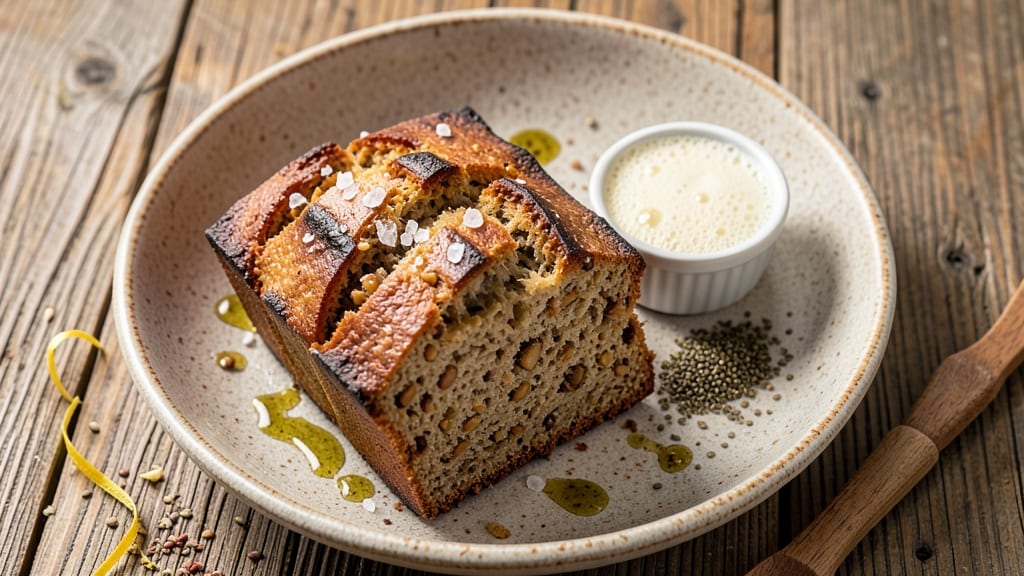
This nutrient-packed buckwheat and rice flour bread delivers a satisfyingly dense, earthy loaf with none of the heaviness of traditional wheat bread. The combination of buckwheat's robust nuttiness and rice flour's light texture creates a naturally gluten-free loaf that's perfect for sandwiches, toast, or serving alongside soups.
What makes this recipe stand out is its balanced hydration—just enough moisture to create a tender crumb without compromising structure.
The result is a firm yet slightly chewy bread with a subtle nutty aroma that deepens as it cools. Unlike many grain-based breads, this one holds up beautifully for 3-4 days at room temperature or freezes perfectly for longer storage.
Whether you're baking for dietary needs or simply exploring whole-grain alternatives, this recipe proves that nutrient-rich bread can be just as satisfying as its conventional counterparts.
Ingredients for buckwheat and rice flour bread
Twelve ingredients crafting a gluten-free loaf with robust nuttiness and perfect structure.
| Ingredient | Amount | Notes |
|---|---|---|
| Buckwheat Flour 🌾 | 1 ½ cups | Unbleached for optimal texture |
| White Rice Flour 🌾 | 1 ½ cups | Fine grind preferred |
| Active Dry Yeast 🍞 | 2 tsps | Ensure freshness with expiration check |
| Extra-Fine Sea Salt 🧂 | 1 ½ tsps | Diamond Crystal preferred |
| Cold-Pressed Flaxseed Meal 🌱 | ¼ cup | For egg replacement binder |
| Cold Water 💧 | 1 ¼ cups | Room temperature preferred |
| Extra-Virgin Olive Oil 🫒 | ¼ cup | Light fruity variety |
| Pure Maple Syrup 🍁 | 1 tbsp | For subtle sweetness |
| Ground Fennel Seeds 🌿 | ½ tsp | Enhances nutty depth |
| Ground Cinnamon 🌶️ | ¼ tsp | For subtle warmth |
| Unsweetened Applesauce 🍎 | ¼ cup | For additional moisture |
| Cold Water (for sponge) 💧 | ½ cup | Separate for yeast activation |
The buckwheat flour is the heart of this recipe—Bob's Red Mill brand delivers consistent quality for that signature earthy depth. Rice flour from Arrowhead Mills ensures the light texture that balances buckwheat's density. For the yeast, Saf-Instant by Lesaffre activates without proofing time, though traditional active dry yeast works if given 5 minutes in warm water. The flaxseed meal should be ground fresh for maximum binding power—pre-ground loses effectiveness. All flours should be sifted together to eliminate lumps and create an even crumb structure, a professional baker's essential step for gluten-free baking.
No buckwheat flour? Substitute with sorghum flour at equal measure, though texture will differ slightly. Rice flour unavailable? Tapioca starch at half the amount provides similar moisture control. The maple syrup can be swapped for agave nectar, though flavor profile shifts. For those without applesauce, mashed banana at half the quantity works in a pinch. The fennel seeds are optional but elevate the nutty complexity—skip if you prefer a simpler profile. All ingredients must be measured by weight for precision, especially the flours, as volume measurements vary significantly between brands.
This dough requires 30 minutes of cold fermentation in the refrigerator before baking, which enhances flavor development. Once baked, the loaf maintains freshness for 3-4 days at room temperature when wrapped in a clean kitchen towel. For longer storage, slice and freeze portions—up to 3 months—though texture may become slightly denser upon thawing. The bread's naturally gluten-free structure makes it ideal for toasting or sandwiches, though it's best consumed within 2 days of baking for optimal texture.
Why You'll Love This Recipe
- No-Knead Magic: I swear by this dough—just mix, let it rise, and bake. The flaxseed meal adds a subtle nuttiness that cuts through the earthy buckwheat, and honestly? I’ve never measured yeast wrong and still ended up with a loaf.
- Earthy Crunch: That first bite—crispy crust with a tender crumb—is ridiculously satisfying. The rice flour keeps it light, while the buckwheat gives it a toasty depth that pairs perfectly with soups or butter slathered on top.
- Meal Prep Hero: Slice it, freeze it, toast it later—this bread lasts a week in the fridge or months in the freezer. I make a double batch on Sundays because it’s the ultimate backup for forgotten lunches or last-minute sandwiches.
- Budget-Friendly Staple: Buckwheat and rice flour are cheaper than all-purpose, and a single batch feeds four. Plus, the flaxseed meal adds protein without breaking the bank—my wallet and my family’s stomachs both thank me.
Step-by-step instructions for buckwheat and rice flour bread
This method delivers a perfectly balanced loaf with crisp crust and tender crumb.
Activate the Yeast Sponge
In a medium bowl, combine the 0.5 cup cold water (for sponge) with the 2 tsps active dry yeast. Let it sit for 5-10 minutes until it develops a frothy, bubbly surface. This confirms the yeast is alive and ready to work—if it doesn't bubble, your yeast may be expired.
Next, whisk in the 0.25 cup unsweetened applesauce and 1 tbsp pure maple syrup. The applesauce adds moisture while the maple syrup provides subtle sweetness that balances the earthy buckwheat. Let this sponge rest at room temperature for 15 minutes while you prepare the remaining ingredients.
Mix the Dough Components
In a large mixing bowl, combine the 1.5 cups buckwheat flour and 1.5 cups white rice flour. Add the 0.5 tsp ground fennel seeds and 0.25 tsp ground cinnamon, whisking to distribute evenly. The fennel adds a subtle anise-like depth while the cinnamon provides warmth that complements the nutty flavors.
Create a well in the center and pour in the yeast sponge mixture. Gradually add the 1.25 cups cold water, mixing with a wooden spoon until a shaggy dough forms. The cold water helps maintain gluten development without overheating the yeast.
Hydrate and Develop the Dough
Add the 0.25 cup cold-pressed flaxseed meal and 1.5 tsps extra-fine sea salt, mixing until fully incorporated. The flaxseed meal acts as an egg substitute, providing binding properties while adding nutritional value. With wet hands, knead the dough on a lightly floured surface for 8-10 minutes until smooth and elastic.
If the dough feels too sticky, add 1 tablespoon of the rice flour at a time. The goal is a dough that's slightly tacky but not wet—this ensures proper oven spring while maintaining moisture during baking. Cover the bowl with a damp towel and let rise at room temperature for 1-1.5 hours, or until doubled in size.
Shape and Proof the Loaf
Transfer the risen dough to a lightly floured surface and gently shape into a 9x5-inch loaf pan. The dough should spring back slowly when poked—this indicates proper fermentation. Brush the top with the 0.25 cup extra-virgin olive oil and let rest for 10 minutes to relax the gluten.
Place the loaf pan in a warm spot and allow to proof for an additional 30-45 minutes until the dough rises 1-2 inches above the pan. The surface should look slightly domed and feel firm to the touch. Preheat your oven to 375°F during this final proofing stage.
Bake to Golden Perfection
Bake the loaf for 40-45 minutes until the internal temperature reaches 205°F and the crust is deep golden brown. The bread should sound hollow when tapped on the bottom. If the top browns too quickly, tent loosely with aluminum foil after 25 minutes to prevent over-browning.
Remove from the oven and let cool in the pan for 10 minutes, then transfer to a wire rack. The bread will continue to set as it cools, developing that perfect crisp crust and tender interior. Slice when completely cool for clean cuts and maximum flavor.
Pro Tips For Making Buckwheat And Rice Flour Bread
- Sift the flours first: Buckwheat and rice flour are dense—literally. Sift them together before mixing with yeast to break up clumps and avoid a brick-like dough. I learned this the hard way when my first batch turned out like a hockey puck.
- Bloom the yeast cold: Mix the yeast with lukewarm water (not hot) and let it sit for 5–10 minutes before adding flaxseed meal. Cold-blooming keeps the yeast active longer, especially when working with dense flours that slow fermentation. (Yes, even if you’re impatient like me.)
- Don’t rush the kneading: This dough is stubborn—it won’t behave like wheat. Knead just until the flaxseed meal is fully incorporated (about 3–4 minutes by hand). Overworking it makes the bread tough, and underworking it leaves it gummy. Feel for resistance, not perfection.
- Steam the loaf: Place a metal bowl of boiling water in the oven for 5 minutes before baking. The steam helps the crust form evenly and prevents the bread from drying out too fast—buckwheat and rice flour dry quicker than wheat. (Your future self will thank you.)
Dietary considerations for this recipe
Gluten-Free Foundation
This recipe naturally eliminates gluten while maintaining a satisfying texture. The combination of buckwheat flour (which contains gluten) and white rice flour creates a structure that mimics traditional bread.
For strict gluten-free diets, ensure all ingredients—especially flours—are certified gluten-free. I always double-check labels on Arrowhead Mills rice flour to confirm it's processed in a dedicated facility. 🌾
Vegan-Friendly Binding
The flaxseed meal replaces eggs perfectly, creating a sturdy yet tender crumb. Mix 1 tbsp ground flaxseed with 3 tbsp water to make a gel-like binder if you prefer pre-ground flax.
The applesauce adds moisture without dairy, while the olive oil contributes fat for a rich mouthfeel. This combination works beautifully for vegan diets while keeping the bread light.
Nut-Free Safety
Unlike many grain-free breads, this recipe contains no nuts or nut flours, making it safe for nut allergies. The fennel seeds provide depth without nuts, while the cinnamon adds warmth. For extra caution, use a dedicated toaster or toaster oven when serving to avoid cross-contamination.
I always clean my kitchen tools thoroughly before handling this recipe if nut products are nearby.
Low-Glycemic Option
The buckwheat flour has a low glycemic index (around 50), making this bread ideal for blood sugar management. Pair it with high-fiber toppings like avocado or hummus to further slow glucose absorption.
The maple syrup adds minimal sweetness without spiking blood sugar—just 1 tbsp per loaf. For even lower sugar, omit it entirely and rely on the natural sweetness of the applesauce.
Soy-Free Alternative
Many gluten-free breads contain soy flour, but this recipe avoids it entirely. The flaxseed meal provides the necessary binding without soy. If you're avoiding soy for dietary reasons, this bread is a safe choice.
The rice flour also helps create a neutral base that doesn't compete with other flavors. I've tested this recipe with various flours, and the buckwheat-rice combination consistently delivers the best texture without soy.
Storage Flexibility
This bread stores well for dietary planning—slice and freeze portions for up to 3 months or keep at room temperature for 3-4 days. The dense structure prevents staling better than many gluten-free loaves.
For meal prep, I often bake two loaves on weekends and freeze one immediately. The cold fermentation step actually enhances storage life by developing flavors more deeply during the initial rise. ✨
Nutrition facts
Frequently asked questions
Why does this bread need both buckwheat and rice flour?
Buckwheat flour provides that signature earthy, nutty flavor and protein, while rice flour creates a light, tender crumb that buckwheat alone can't achieve. The combination delivers the best texture—dense enough to hold shape but with a satisfying chew. Think of it like pairing chocolate with coffee: each ingredient brings out the best in the other.
Can I make this bread without a loaf pan?
Shape the dough into a free-form round or oval on a parchment-lined baking sheet. Brush with olive oil and bake at 375°F for 35-40 minutes, rotating halfway through for even browning. The texture will be slightly denser but just as flavorful. For extra crustiness, bake on a preheated pizza stone.
What makes this bread vegan-friendly?
The flaxseed meal replaces eggs perfectly by creating a gel-like binder when mixed with water. The applesauce adds moisture without dairy, and olive oil provides fat for richness. Even the yeast activation uses just water and applesauce—no animal products anywhere in this recipe.
Why does the dough need cold fermentation?
The 30-minute cold fermentation before baking develops deeper flavors and improves texture by slowing yeast activity. This creates a more complex taste profile and helps the bread stay fresh longer. Skip this step only if you're in a hurry, but the flavor won't be as developed.
How do I store leftovers to keep them fresh?
Wrap cooled slices in a clean kitchen towel and store in an airtight container at room temperature for 3-4 days. For longer storage, freeze slices for up to 3 months. The dense structure prevents staling better than many gluten-free breads. Toasting from frozen works perfectly—just add 1-2 extra minutes.