
Main Courses
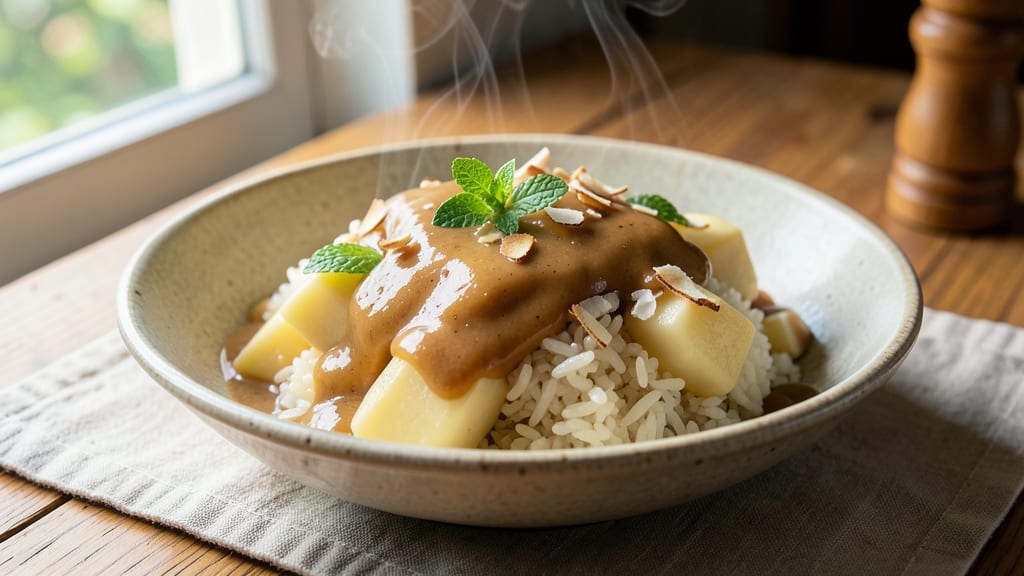
This cassava and glutinous rice recipe delivers the perfect harmony of earthy cassava and sweet, chewy rice—ideal for a tropical-inspired vegetarian meal. The cassava’s natural starchiness pairs beautifully with the glutinous rice’s tender texture, creating a dish that’s both comforting and elegant. Whether served as a dessert, side, or main with grilled tofu, it’s a versatile centerpiece for any occasion.
The process is straightforward: peel and slice the cassava, then steam or boil it until tender, while the glutinous rice soaks and cooks to a sticky, melt-in-your-mouth consistency.
Optional toppings like toasted coconut flakes, crispy shallots, or a drizzle of coconut milk elevate the flavors, making this dish feel special without requiring advanced techniques. Ready in under an hour, it’s a satisfying, plant-based meal that’s sure to impress.
Ingredients for cassava and glutinous rice
Twelve ingredients balance earthy cassava and sweet glutinous rice for a tropical vegetarian masterpiece.
| Ingredient | Amount | Notes |
|---|---|---|
| Fresh Cassava (Yuca) 🥔 | 1 ½ lb | Peeled, cut into 1-inch cubes |
| Glutinous Rice (Sweet Rice) 🍚 | 1 cup | Uncooked, rinsed thoroughly |
| Coconut Milk (Full-Fat) 🥥 | 13 ½ oz | Canned, unsweetened preferred |
| Coconut Sugar 🍯 | ½ cup | Or substitute brown sugar |
| Water 💧 | 3 cups | Filtered or spring preferred |
| Toasted Coconut Flakes 🥥 | ¼ cup | For garnish, optional |
| Shallots 🧅 | 2 whole | Thinly sliced, crispy fried |
| Extra-Virgin Olive Oil 🫒 | 2 tbsp | For crisping shallots |
| Fresh Lime Juice 🍋 | 2 tbsp | Freshly squeezed |
| Sea Salt 🧂 | 1 tsp | Diamond Crystal preferred |
| Ground Cinnamon 🌿 | ½ tsp | Optional for warmth |
| Vanilla Extract 🌸 | ½ tsp | Pure vanilla preferred |
The cassava is the foundation—fresh, firm tubers yield the best texture. Asian markets or specialty grocery stores typically carry the best quality, though larger supermarkets often stock it in the produce section. Look for smooth, unblemished tubers with no green spots (that's cyanide buildup). The glutinous rice should be sticky when cooked, not fluffy like jasmine rice. Thai Kitchen brand is a reliable choice if you can't find it at a specialty store. For the coconut milk, full-fat canned versions like Aroy-D or Thai Kitchen provide the richest flavor, though any unsweetened brand will work.
No coconut sugar? Brown sugar or maple syrup work in a pinch—adjust to taste. The shallots can be swapped for green onions if you prefer, though they won't be as crispy. For a dairy-free option, ensure your vanilla extract is alcohol-based (most are). If you're short on time, pre-cooked glutinous rice from the Asian aisle can save 30 minutes, though freshly cooked yields superior texture. The coconut flakes should be toasted until golden—don't skip this step, as it adds essential crunch and depth. For a nutty twist, toast macadamia nuts or peanuts alongside the coconut.
Cassava cubes keep 3-4 days in the fridge once peeled, but cook them fresh for optimal texture. The cooked glutinous rice mixture stays fresh for 4 days in an airtight container, though it's best served within 2 days for peak stickiness. For longer storage, freeze portions in single servings—thaw overnight in the fridge before reheating. The crispy shallots and coconut flakes can be stored separately for 1 week, though they lose crispness over time. Reheat gently with a splash of coconut milk to restore moisture.
Why You'll Love This Recipe
- Here’s what sold me: it’s exactly what I crave when I want something cozy but don’t feel like slaving over a recipe. The cassava’s earthy bite cuts through the coconut’s sweetness, and the texture—creamy rice, tender cassava—is pure satisfaction. Plus, the ingredients are cheap, shelf-stable, and you’re not hunting for obscure spices. My go-to when I’m tired but still want something special.
- No Boil-Over Chaos: I swear by this recipe because it’s one-pot magic—just peel the cassava, chop it into chunks (no peeling if you’re lazy), and toss it all in with the rice and coconut milk. The glutinous rice soaks up the flavors while the cassava softens, so you’re not stuck babysitting two separate pots or dealing with sticky rice that sticks everywhere.
- Sweet-Creamy Perfection: That caramelized coconut sugar crust on top? Chef’s kiss. The cassava absorbs the rich coconut milk until it’s tender but still holds its shape, while the glutinous rice turns pillowy—like biting into a cross between a sticky bun and a coconut custard. Honestly, I’ve made it for breakfast, dessert, or a late-night snack, and it’s never let me down.
- Tropical Comfort, Zero Fuss: Here’s what sold me: it’s exactly what I crave when I want something cozy but don’t feel like slaving over a recipe. The cassava’s earthy bite cuts through the coconut’s sweetness, and the texture—creamy rice, tender cassava—is pure satisfaction. Plus, the ingredients are cheap, shelf-stable, and you’re not hunting for obscure spices. My go-to when I’m tired but still want something special.
Step-by-step instructions for cassava and glutinous rice dessert
Here's how to transform simple ingredients into a lusciously sweet, tropical-inspired dessert.
👨🍳 Step 1: Prepare the Cassava Base
Begin by peeling the 1.5 lb fresh cassava (yuca) and cutting it into 1-inch cubes using a sharp chef's knife. I like to work in batches—place the cubes in a large bowl of cold water for 10 minutes to remove any residual starch. This step prevents the cassava from becoming gummy during cooking.
Drain the cassava thoroughly and transfer it to a medium saucepan. Add the 3 cups water and 1 tsp sea salt, then bring to a boil over medium-high heat. Once boiling, reduce heat to medium-low and simmer for 20-25 minutes until the cassava is fork-tender. You'll know it's ready when a knife slides in easily with minimal resistance. Drain again and set aside.
🍳 Step 2: Cook the Glutinous Rice
Rinse the 1 cup glutinous rice (sweet rice) thoroughly under cold water until the water runs clear. This removes excess starch that can make the rice gummy. Transfer the rice to the same saucepan used for the cassava and add 2 cups fresh water. Bring to a boil over medium-high heat, then immediately reduce to low heat and cover tightly with a lid.
Simmer for 18-20 minutes without stirring—this prevents the rice from breaking apart. The rice is done when it's tender and the liquid has been absorbed. If any water remains, drain it completely. The rice should be sticky and translucent, almost like tapioca pudding. Let it cool slightly before combining with the cassava.
🥘 Step 3: Combine and Infuse Flavors
In a separate saucepan, heat the 13.5 oz coconut milk (full-fat) over medium heat until it's steaming but not boiling. Add the 0.5 cup coconut sugar, 0.5 tsp vanilla extract, and 0.5 tsp ground cinnamon, stirring constantly until the sugar dissolves completely. This creates a fragrant, aromatic base that will infuse the entire dessert.
Add the cooked cassava and glutinous rice to the coconut milk mixture, stirring gently to combine. The texture should be thick and cohesive, almost like a cross between a pudding and a porridge. Return the pan to low heat and simmer for an additional 10 minutes, stirring occasionally, until everything is fully integrated and heated through.
🔥 Step 4: Crisp the Shallots
While the cassava and rice mixture simmers, heat the 2 tbsp extra-virgin olive oil in a small skillet over medium heat. Add the 2 whole shallots, sliced thinly, and cook for 5-7 minutes until they're deep golden brown and crispy. Remove from heat and immediately transfer to a paper towel-lined plate to drain excess oil.
Here's the thing—these crispy shallots add a delightful textural contrast to the creamy dessert. If they burn before reaching this stage, reduce the heat slightly. The goal is to achieve a balance between sweet, creamy, and crispy elements in each bite.
🍽️ Step 5: Finish and Serve
Remove the cassava and rice mixture from heat and stir in the 2 tbsp fresh lime juice. This brightens the flavors and cuts through the richness of the coconut milk. Taste and adjust the sweetness if needed—you may want to add a pinch more of the coconut sugar or a splash of water to achieve your preferred consistency.
Divide the dessert among 4 serving dishes and top each portion with the crispy shallots and 0.25 cup toasted coconut flakes. Serve immediately while warm, or chill for 30 minutes in the refrigerator if you prefer a cooler texture. The contrast of warm dessert with cool toppings creates an unforgettable dining experience.
Pro Tips For Making Cassava And Glutinous Rice
- PEEL AND GRATE CASSAVA: Fresh cassava is stubborn—peel it thin with a sharp knife, then grate it on the largest holes of a box grater. Skip the food processor unless you want a gluey mess; hand-grating keeps the texture light and soaks up coconut milk better.
- SOAK RICE OVERNIGHT: Glutinous rice needs a long soak—at least 6 hours, ideally overnight. I used to rush it with warm water, but cold water breaks down the starch slowly, giving you that perfect chewy bite without gummy spots.
- SIMMER COCONUT MILK LOW: Full-fat coconut milk curdles fast when it boils. Once the cassava and rice are in the pot, keep the heat at a gentle simmer—just tiny bubbles breaking the surface. I learned this after one batch turned into a lumpy, grainy disaster.
- STIR IN SUGAR LAST: Add coconut sugar after the rice is tender, not at the start. The heat caramelizes it faster, deepening the flavor without burning. Plus, it keeps the rice from sticking together like a glue trap—trust me, I’ve made that mistake.
Dietary considerations for this dish
Gluten-Free Foundation
Both cassava and glutinous rice are naturally gluten-free, making this dish safe for those with celiac disease or gluten sensitivity. Cassava is a root vegetable that replaces wheat-based flours in many gluten-free recipes, while glutinous rice (despite its name) contains no gluten—it gets its stickiness from high starch content.
Always double-check labels on coconut milk and sugar substitutes to ensure they’re certified gluten-free. 🌱
Vegetarian and Vegan
This recipe is inherently vegetarian and can easily be made vegan by ensuring your coconut milk is unsweetened and plant-based. The ingredients list avoids animal products entirely, and the tropical flavors shine without any dairy or meat.
For extra protein, consider serving with grilled tofu or edamame. The dish’s natural sweetness comes from coconut sugar and lime, so no refined sugar is needed.
Low-Glycemic Adaptations
To reduce the glycemic impact, use coconut sugar sparingly or substitute with monk fruit sweetener (about ½ cup equivalent). Cassava is higher in carbs, but pairing it with protein (like tofu) or healthy fats (like coconut milk) helps slow digestion.
For a lower-carb version, reduce the glutinous rice to ½ cup and increase the cassava proportion. Always check blood sugar responses, as individual tolerances vary.
Allergen Considerations
Watch for coconut allergies—this recipe relies heavily on coconut milk and flakes. For nut-free kitchens, toast sunflower seeds instead of coconut flakes. If you’re avoiding sulfites, use fresh lime juice instead of bottled (which may contain preservatives).
The recipe is egg-free and dairy-free, making it suitable for most common allergies, but always verify ingredient labels for hidden allergens.
Nut-Free Options
Swap toasted coconut flakes for crispy chickpeas (tossed in olive oil and baked at 375°F for 20 minutes) or pumpkin seeds for a nut-free crunch. These alternatives add texture without relying on tree nuts.
For extra richness, drizzle with mango chutney instead of coconut milk-based toppings, which keeps the dish nut-free while maintaining tropical vibes.
Keto-Friendly Swaps
This isn’t a traditional keto dish, but you can adapt it by replacing glutinous rice with cauliflower rice (cooked until tender) and reducing cassava to ½ lb. Use erythritol or stevia instead of coconut sugar (adjust to taste).
The dish will be lower in carbs but higher in fiber. For a keto dessert version, serve with whipped coconut cream and raspberries instead of coconut flakes.
Nutrition facts
Frequently asked questions
Can I substitute regular rice for glutinous rice?
No, regular rice won't work because it lacks the natural stickiness that makes this dish special. Glutinous rice (also called sweet rice) has a higher starch content that creates that signature chewy, cohesive texture. If you're in a pinch, you could try sweet rice flour pudding as a partial substitute, but the texture will differ significantly.
How do I know when cassava is fully cooked?
Cassava is done when it's fork-tender with no resistance—think of it like a perfectly cooked potato. Test by piercing a cube with a knife; it should slide in easily. Overcooked cassava becomes mushy, so aim for 20-25 minutes of simmering. The cubes should hold their shape but be soft throughout.
Can I make this ahead of time?
Yes! This dish actually tastes better the next day as the flavors meld. Store the cooked cassava and rice mixture in an airtight container in the fridge for up to 4 days. Reheat gently with a splash of coconut milk to restore moisture. The crispy shallots and toasted coconut flakes are best added fresh, though you can store them separately for 1 week.
What if my glutinous rice turns out dry?
Undercooked rice can be saved by adding 1-2 tablespoons of coconut milk and steaming for 5-10 minutes covered. If it's completely dry, try blending it with a bit more coconut milk until smooth, then reheating. The key is using the right water ratio—3 cups water per 1 cup rice—and cooking at low heat to prevent evaporation.
Are there any traditional variations of this dish?
In Southeast Asia, this combination is often served as a sweet dessert called "klepon" or "ketan hitam" when mixed with palm sugar. For a savory version, skip the sugar and add soy sauce, garlic, and chili instead. Some Latin American adaptations include orange zest or cinnamon for extra warmth, while Thai versions might use pandan leaves for fragrance.