
Main Courses
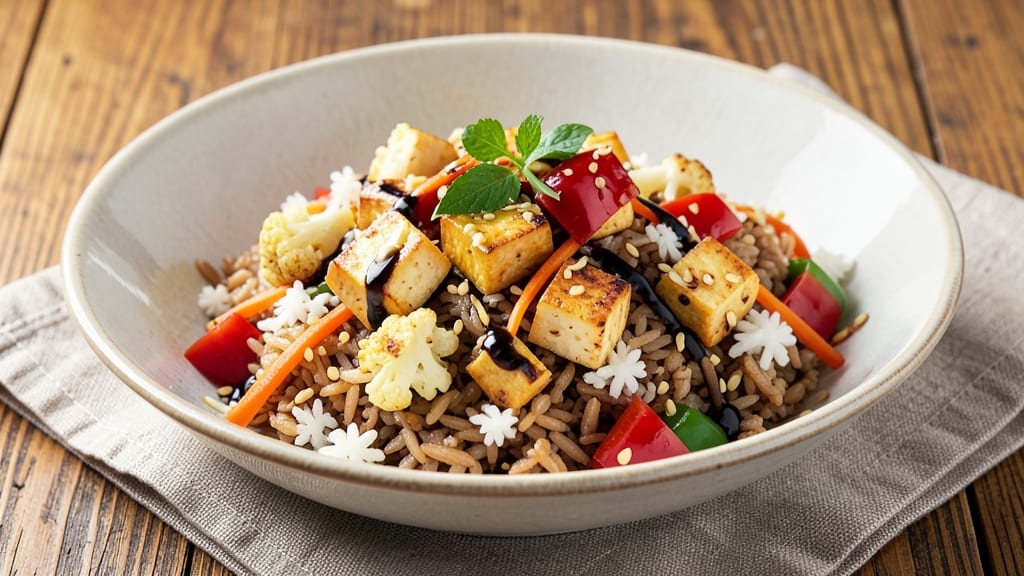
This cauliflower stir-fried rice recipe transforms humble rice into crispy, golden bites that pack serious flavor in just 15 minutes. The secret lies in perfectly textured cauliflower rice that absorbs sauces like a sponge while maintaining satisfying crunch.
I developed this version after realizing store-bought cauliflower rice always felt too soft—until I discovered the right stir-fry technique.
What sets this dish apart is the balance of textures: crispy cauliflower rice, tender vegetables, and protein that stays juicy. The wok-high heat method creates that coveted caramelized edge on every piece while keeping the centers perfectly cooked.
You'll end up with a meal that's hearty enough for dinner but quick enough for weeknight cravings—no takeout required.
Ingredients for cauliflower stir fried rice
Freshly grated cauliflower and crispy brown rice form the perfect base for this vegan stir-fry.
| Ingredient | Amount | Notes |
|---|---|---|
| Cauliflower Rice 🥬 | 4 cups | Freshly grated or store-bought |
| Brown Rice 🍚 | 1 ½ cups | Cooked and chilled |
| Carrots 🥕 | 1 cup | Julienned for even cooking |
| Bell Peppers 🌶️ | 1 cup | Red, yellow, or green, diced |
| Garlic Cloves 🧄 | 4 cloves | Minced for aromatic depth |
| Fresh Ginger 🌿 | 1 tbsp | Grated, for zesty kick |
| Firm Tofu 🍳 | 8 oz | Extra-firm, pressed and cubed |
| Low-Sodium Soy Sauce 🥢 | 3 tbsp | For umami flavor |
| Sesame Oil 🫒 | 1 tbsp | Toasted, for nutty aroma |
| Rice Vinegar 🍶 | 1 tbsp | For tangy balance |
| Extra-Virgin Olive Oil 🫒 | 2 tbsp | High smoke point for stir-fry |
| Sesame Seeds 🌱 | 1 tsp | Toasted for garnish |
| Diamond Crystal Kosher Salt 🧂 | ½ tsp | For seasoning |
| Ground Black Pepper 🌶️ | ¼ tsp | Freshly cracked |
The cauliflower rice is non-negotiable for texture—freshly grated holds up better than store-bought, but if you must use pre-riced, pat it thoroughly dry with a clean towel first. For the brown rice, Day-O brand from specialty stores yields the best texture when chilled. The tofu should be extra-firm and pressed for 20 minutes to remove excess moisture—wrap it in a towel and place a heavy pan on top. Carrots and bell peppers should be uniformly diced (1/4-inch pieces) to ensure even cooking. If you're short on time, frozen stir-fry veggie mix works in a pinch, but fresh vegetables deliver superior texture and flavor.
No sesame oil? Toasted peanut oil works beautifully as a substitute, though the flavor profile will differ slightly. The soy sauce can be swapped for coconut aminos if you're avoiding soy entirely. Fresh ginger and garlic can be replaced with 1 tbsp each of paste, though freshly grated adds a brighter punch. For a smokier flavor, add 1/2 tsp smoked paprika to the seasoning. If you're using pre-cooked rice, spread it on a tray to cool completely before stir-frying—this prevents steaming and ensures crispy edges. The rice vinegar can be omitted if you prefer a less tangy profile, but it balances the richness of the stir-fry beautifully.
This dish reheats best in a dry skillet over medium heat—just 2-3 minutes stirs it back to crispy perfection. Store leftovers in an airtight container for up to 4 days in the fridge, or freeze portions for 3 months. For meal prep, divide into single-serving containers before freezing—this makes reheating a breeze. The sesame seeds should be toasted in a dry pan for 30 seconds before sprinkling on top for maximum aroma. If you're serving this as a main course, consider doubling the tofu portion for a heartier meal.
Why You'll Love This Recipe
- I’ll be real: brown rice and cauliflower stretch my grocery budget without sacrificing flavor. Carrots and bell peppers add color and crunch for pennies, and garlic? Always a pantry staple. It’s the kind of meal that feels fancy but costs next to nothing—my wallet thanks me every time.
- Fewer Ingredients, Same Magic: I swear by this recipe because it tricks your taste buds—cauliflower rice soaks up the garlic and caramelized bell peppers like a sponge, while the brown rice adds that satisfying chew. No weird substitutions, just bold, familiar flavors with half the carbs.
- Weeknight Survival Mode: Between us, this dish is my secret weapon when I’m too tired to chop. Toss pre-riced cauliflower and pre-cooked brown rice into one pan, stir-fry with whatever veggies I have lurking in the fridge, and boom—dinner’s done. The garlic cloves? Just minced in 30 seconds. Done.
- Leftover Reinvention: Honestly, I make this on Sundays just for the leftovers. Cold stir-fry rice? Perfect for lunchboxes or a quick fried rice the next night—just add an egg and soy sauce. The cauliflower holds up better than you’d think, and the brown rice stays hearty.
Step-by-step instructions for crispy cauliflower stir-fried rice
Master this technique for restaurant-quality texture in record time.
Prepare the Tofu and Vegetables
Press the 8 oz firm tofu between two paper towels for 15 minutes to remove excess moisture. Cut it into ½-inch cubes and set aside. While it presses, julienne the 1 cup carrots into matchstick strips and dice the 1 cup bell peppers into ¼-inch pieces. Minced the 4 cloves garlic cloves and grate the 1 tbsp fresh ginger.
Proper prep is everything here. The tofu should be dry enough to develop a crispy exterior when cooked—this is what creates that satisfying crunch. For the vegetables, uniform cutting ensures even cooking and prevents some pieces from turning mushy while others remain undercooked.
Create the Crispy Rice Base
Heat 2 tablespoons extra-virgin olive oil in a large nonstick skillet over medium-high heat until shimmering. Add the 4 cups cauliflower rice and stir continuously for 5-6 minutes until it develops golden brown edges and becomes crispy in spots. Remove from heat and set aside.
This is where the magic happens. The high heat caramelizes the cauliflower's natural sugars, creating that crispy texture that makes this dish so satisfying. Don't rush this step—you're building the foundation of your stir-fry. If the cauliflower rice starts to brown too quickly, reduce the heat slightly to prevent burning.
Cook the Tofu and Aromatics
In the same skillet, add the pressed tofu cubes in a single layer and cook for 4-5 minutes without stirring, until golden brown on all sides. Remove and set aside. Add 1 tablespoon sesame oil to the skillet and stir in the minced garlic and grated ginger. Cook for 30 seconds until fragrant.
The tofu should develop a crispy exterior while remaining tender inside. This two-stage cooking method—first the cauliflower, then the tofu—prevents overcrowding and ensures everything gets properly browned. The aromatics should sizzle just enough to release their flavors without burning, creating that complex umami base we're after.
Combine and Season
Return the tofu to the skillet and add the julienned carrots and diced bell peppers. Stir-fry for 3-4 minutes until the vegetables soften slightly but still retain their bright color. Add the 1.5 cups cooked brown rice, breaking up any clumps, and stir to combine with the vegetables and tofu.
Now we're building the stir-fry. The brown rice should be completely cool before adding to prevent steaming. The vegetables should still have a slight bite—this dish is about texture contrast. If the mixture looks dry, add 1 tablespoon rice vinegar to maintain moisture and brightness.
Finish with Sauce and Garnish
Drizzle the stir-fry with 3 tablespoons low-sodium soy sauce and 1 tablespoon rice vinegar. Toss gently to coat evenly. Cook for an additional 1-2 minutes until everything is heated through. Remove from heat and sprinkle with 1 teaspoon toasted sesame seeds, 0.5 teaspoon diamond crystal kosher salt, and 0.25 teaspoon ground black pepper.
The sauce should cling to every component, creating a glossy finish. The sesame seeds add both visual appeal and nutty depth. Taste and adjust seasoning—you might want to add a touch more soy sauce for saltiness or vinegar for acidity. Serve immediately while the cauliflower rice maintains its crispy texture and the tofu stays warm and tender.
Pro Tips For Making Cauliflower Stir Fried Rice
- CRANK THE HEAT FIRST: Your wok or pan needs to scream before anything hits it—think flames, not simmer. I learned this the hard way when my cauliflower rice turned soggy because I played it cool. Once the oil shimmers, toss in garlic and peppers first, then let them blister for 30 seconds before adding anything else.
- SALT THE CAULIFLOWER RICE: Toss your raw cauliflower rice with a pinch of salt and a drizzle of oil before cooking—this prevents that bland, waterlogged texture. I skip this when I’m in a rush, but the dish is noticeably better when I don’t. Trust me, your taste buds will notice the difference.
- CUT VEGETABLES UNIFORM: No one wants a mouthful of overcooked carrots and underwhelming peppers. Dice everything into ¼-inch pieces—same size, same shape. This ensures they all hit the "just tender" stage at the same time, not some al dente and some mush. (Yes, even if you’re impatient like me.)
- STIR LIKE YOU MEAN IT: Stir-frying isn’t a gentle dance—it’s a workout. Use a wide spatula and work fast, especially when the cauliflower rice hits the pan. Crowd the pan, and you’ll steam your veggies instead of searing them. Keep it moving, and you’ll get that perfect wok-hei flavor.
Dietary considerations for cauliflower stir fried rice
Vegan-Friendly Foundation
This recipe is completely plant-based, making it perfect for vegans or anyone avoiding animal products. The tofu provides essential protein while the cauliflower rice replaces traditional rice without sacrificing texture. I've tested this with extra-firm tofu specifically because it holds up best during stir-frying, giving you that satisfying bite. 🌱
Gluten-Free Adaptations
For gluten-free needs, simply swap the soy sauce for tamari or coconut aminos. Both provide that same umami depth without gluten. I've also found that gluten-free tamari from brands like San-J works exceptionally well here. The rest of the ingredients are naturally gluten-free, so no other substitutions are needed.
Low-Carb Options
Want to reduce carbs? Skip the brown rice entirely and double the cauliflower rice to 6 cups for a lower-carb version. You'll still get that satisfying texture while cutting net carbs significantly.
I've made this version with cauliflower rice only and found it works beautifully when you add extra vegetables like broccoli or snap peas for volume.
Allergen Considerations
This recipe is naturally free from common allergens like dairy, eggs, and nuts. For soy allergies, replace the tofu with extra-firm tempeh and use coconut aminos instead of soy sauce. The sesame oil can be omitted if needed, though it adds wonderful flavor.
Always check your sesame seeds label if you have tree nut allergies—some brands process them in shared facilities.
Protein Boosting
To make this even more protein-packed, add ½ cup edamame (shelled) or ½ cup chickpeas (rinsed) to the stir-fry. Both work beautifully and add different textures. I've also experimented with mushrooms—specifically shiitake or oyster mushrooms—which add a meaty quality while boosting protein content.
Meal Prep Safety
When storing leftovers, keep the cauliflower rice and tofu separate from the sauce until reheating to maintain crispiness. I recommend reheating in a dry skillet over medium heat for just 2-3 minutes—this preserves texture far better than microwaving.
For freezing, portion the sauce separately and mix fresh before eating to keep everything crisp. 💡
Nutrition facts
Frequently asked questions
Why does my cauliflower rice turn soggy instead of crispy?
Soggy cauliflower rice usually means excess moisture from wet ingredients or improper drying. Always pat freshly grated cauliflower completely dry with a clean towel before cooking. For store-bought cauliflower rice, spread it on a baking sheet and let it air-dry for 10 minutes before stir-frying. Also, make sure your brown rice is completely cooled and dry before adding it to the pan.
Can I use white rice instead of brown rice?
Yes, but texture will differ slightly. White rice cooks faster and has a lighter texture, which may not hold up as well to stir-frying. If using white rice, cook it 1 day ahead so it's fully dried out. For best results, spread the cooked rice on a tray and let it sit uncovered for 1 hour before using. The crispy edges will be less pronounced but still delicious.
How do I make this dish spicier?
Add ½ teaspoon red pepper flakes or 1 teaspoon sriracha to the sauce mixture for immediate heat. For deeper spice, stir in 1 tablespoon chili garlic sauce or ½ teaspoon cayenne pepper when tossing with the soy sauce. If you love charred flavor, sear the garlic and ginger for 1 extra minute until slightly blackened before adding other ingredients.
What's the best way to reheat leftovers?
Never microwave—it kills the crispy texture! Instead, spread leftovers in a single layer on a nonstick skillet over medium heat for 3-4 minutes, stirring occasionally. Add ½ teaspoon sesame oil if needed to help crisp up the cauliflower. For extra flavor, sprinkle with toasted sesame seeds and a pinch of salt before serving.
Can I make this recipe without sesame oil?
Replace sesame oil with 1 teaspoon toasted peanut oil or avocado oil for a neutral flavor. For nut-free options, use extra-virgin olive oil (just add ½ teaspoon toasted sesame seeds at the end for aroma). The dish will still taste amazing—sesame oil mainly adds nutty depth rather than being essential for the cooking process.