
Salads
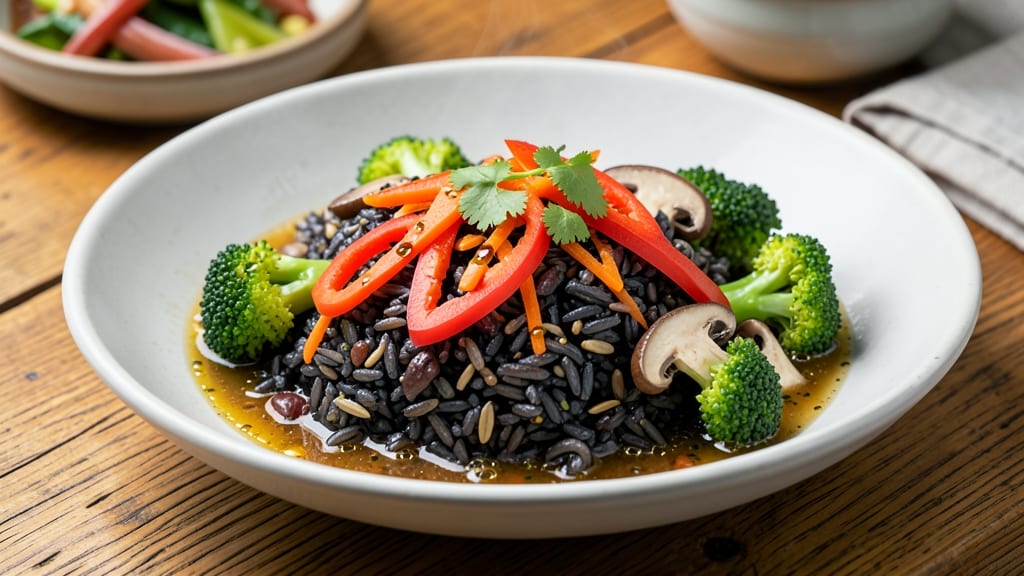
This black rice and vegetables recipe delivers a vibrant, nutrient-packed bowl that balances earthy grains with crisp, colorful vegetables. The deep purple-black rice isn’t just visually striking—it’s packed with antioxidants, while the vegetables add crunch and freshness.
Perfect for a balanced vegetarian meal, this dish comes together with simple techniques that yield restaurant-quality results.
Start with properly soaked and rinsed black rice for optimal texture, then pair it with roasted or steamed vegetables that stay vibrant and crisp. A light sesame-ginger dressing ties everything together, enhancing the natural flavors without overpowering them.
Whether you're meal prepping for the week or serving a fresh lunch, this bowl is both satisfying and packed with nutrients.
Ingredients for black rice and vegetables
Balanced nutrition meets vibrant flavors in this antioxidant-rich black rice bowl featuring crisp vegetables and earthy spices.
| Ingredient | Amount | Notes |
|---|---|---|
| Black Rice (Forbidden Rice) 🌾 | 1 cup | Uncooked, rinsed thoroughly |
| Vegetable Broth 💧 | 2 cups | Low-sodium preferred |
| Red Bell Pepper 🍅 | 1 whole | Cut into bite-sized pieces |
| Carrots 🥕 | 1 ½ cups | Julienned or thinly sliced |
| Broccoli Florets 🥦 | 2 cups | Fresh or frozen preferred |
| Shiitake Mushrooms 🍄 | 1 cup | Sliced, stems removed |
| Sesame Oil 🫒 | 1 tbsp | Toasted sesame preferred |
| Fresh Ginger 🌿 | 1 tbsp | Grated, peeled |
| Low-Sodium Soy Sauce 🥢 | 1 ½ tbsp | Tamari for gluten-free |
| Lime Juice 🍋 | 1 tbsp | Freshly squeezed |
| Toasted Sesame Seeds 🌰 | 1 tbsp | For garnish |
| Avocado Oil 🫒 | 1 tbsp | For roasting vegetables |
| Diamond Crystal Kosher Salt 🧂 | ½ tsp | For seasoning |
| Fresh Cilantro 🌿 | ¼ cup | Chopped, for garnish |
The black rice is the nutritional star here—look for whole-grain forbidden rice at specialty stores or well-stocked supermarkets like Whole Foods or Trader Joe's. It should be plump and deep purple, not dull or discolored. For the vegetables, freshness is key: broccoli should be bright green with tightly packed florets, and shiitake mushrooms should have firm caps. If using frozen vegetables, opt for no-added-salt varieties to maintain flavor balance. The sesame oil should be toasted—this adds depth that regular sesame oil can't match.
No fresh ginger? Powdered ginger at half the amount works in a pinch, though fresh is ideal for that bright zing. Swap soy sauce for coconut aminos if gluten is a concern. For the avocado oil, any neutral high-heat oil (like grapeseed or light olive oil) will do, but avocado oil has a cleaner finish. The carrots can be baby carrots if that's what's available, but julienned or thinly sliced carrots add that satisfying crunch. If you're prepping ahead, store the cooked rice and vegetables separately—they'll stay fresher longer, and you can assemble the bowl when ready to eat.
This dish reheats beautifully—just warm the rice and vegetables separately to maintain texture. Store cooked rice in an airtight container for up to 5 days in the fridge, and roasted vegetables keep for 4 days. For meal prep, portion the dressing separately and add just before serving to prevent sogginess. The sesame seeds and cilantro should be added fresh when serving to preserve their vibrant flavors. Freezing isn't recommended for the vegetables, as they lose their crisp texture, but the cooked rice freezes well for up to 3 months.
Why You'll Love This Recipe
- One-Pot Magic: I swear by this—just toss everything into one pot, simmer, and walk away. No fancy techniques, no last-minute scrambling. The black rice soaks up the broth like a sponge, and the veggies soften just enough to stay vibrant.
- Earthy, Nutty Kick: That deep, almost chocolatey flavor from the forbidden rice? It’s addictive. Pair it with the sweet crunch of roasted red bell pepper and tender carrots, and you’ve got a dish that tastes like a hug from a gourmet chef.
- Lunchbox Champion: Here’s what sold me—this reheats beautifully for lunches, and the colors make it look way more exciting than sad desk salads. My kids actually finish their veggies now, and honestly? That’s half the battle.
- Budget Meal Hero: Black rice might sound fancy, but it’s cheaper than white rice in bulk, and frozen veggies cut costs without sacrificing taste. A single pot feeds four for under $5, and leftovers keep for days—no sad, soggy takeout nights here.
Step-by-step instructions for antioxidant-rich black rice bowl
This method balances texture and nutrition, delivering vibrant vegetables and perfectly cooked forbidden rice.
Prepare the Black Rice for Optimal Texture
Rinse the 1 cup black rice (forbidden rice) thoroughly under cold water until the water runs clear. This removes excess starch that can make the rice gummy. Transfer the rinsed rice to a medium saucepan and add the 2 cups vegetable broth. Bring to a boil over medium-high heat, then immediately reduce to a simmer.
Cover with a tight-fitting lid and cook for 30-35 minutes without lifting it. The rice is done when the liquid is completely absorbed and the grains are tender but still hold their shape. Avoid stirring during cooking—this prevents the rice from becoming mushy. The deep purple hue will develop fully as it cooks, signaling its antioxidant richness.
Roast Vegetables for Crisp-Tender Perfection
Preheat your oven to 400°F. In a large bowl, combine the 1.5 cups julienned carrots, 2 cups broccoli florets, and 1 cup sliced shiitake mushrooms. Drizzle with 1 tablespoon avocado oil and sprinkle with 0.5 teaspoon diamond crystal kosher salt. Toss gently to coat evenly.
Spread the vegetables in a single layer on two parchment-lined baking sheets. Roast for 20-25 minutes, stirring halfway through, until the edges are deep golden brown and the mushrooms release their moisture. The carrots should be tender yet still hold their shape, while the broccoli should be slightly charred. Remove from the oven and set aside—these vegetables should retain their vibrant color and crisp texture.
Create the Flavorful Sauce Base
In a small saucepan, heat 1 tablespoon sesame oil over medium heat. Add the 1 tablespoon grated fresh ginger and sauté for 1 minute until fragrant. Pour in 1.5 tablespoons low-sodium soy sauce and 1 tablespoon lime juice, stirring constantly for 2 minutes until the mixture simmers and thickens slightly. Remove from heat and let cool for 5 minutes—this allows the flavors to meld without overpowering the vegetables.
The sauce should have a glossy sheen and carry a bright, tangy aroma. If it appears too thick, add 1 teaspoon water to loosen it. This balance of umami from the soy sauce and acidity from the lime juice will elevate the natural sweetness of the roasted vegetables and complement the earthy black rice.
Assemble the Power Bowl with Crunchy Contrast
Divide the cooked black rice evenly among four bowls. Arrange the roasted vegetables on top, creating a visually appealing contrast with their varying textures and colors. Drizzle each serving with 1 tablespoon of the prepared sauce, ensuring each bite captures the rice's chewiness, the vegetables' crispness, and the sauce's brightness.
Finish by sprinkling each bowl with 1 tablespoon toasted sesame seeds and 0.25 cup chopped fresh cilantro. The sesame seeds add a nutty crunch, while the cilantro introduces a fresh herbal note. Serve immediately while the vegetables are still warm and the rice maintains its ideal texture—each component should complement the others without overpowering the dish's natural flavors.
Pro Tips For Making Black Rice And Vegetables
- SOAK THE RICE FIRST: Black rice stays rock-hard if you skip this. Toss it in water for at least 4 hours—or overnight if you’re planning ahead—so it cooks evenly and doesn’t turn to mush later. (Yes, even if the package says "quick-cooking," ignore it.)
- CUT VEGGIES UNEVENLY: Broccoli florets and carrot chunks cook at different speeds. Slice carrots into ½-inch pieces and leave broccoli stems attached—this keeps them from turning to sludge while the florets stay crisp. The bell pepper can wait longer, so dice it smaller if you’re impatient.
- DON’T BOIL THE BROTH: Start the rice and veggies in simmering broth, not a rolling boil. Too much heat makes the black rice gummy and the broth cloudy. Keep it at a gentle bubble—just enough to see tiny ripples—and stir occasionally to prevent sticking. (I learned this after one disastrous batch where the rice tasted like glue.)
- SALT THE BROTH LATE: Add salt only after the rice and veggies have cooked for 5 minutes. Black rice absorbs flavor like a sponge, and early salting makes it bitter. Taste the broth at the end and adjust—it should be seasoned like a light soup, not a salt lick. (Your future self will notice the difference.)
Serving suggestions for this dish
Garnish Like a Pro
Toast your sesame seeds in a dry skillet over medium heat for 2-3 minutes until golden and fragrant. This adds depth that store-bought seeds can't match. For extra flair, add thinly sliced scallions or microgreens—both provide fresh contrast.
I like to sprinkle these garnishes right before serving so they stay crisp. 🌟
Sauce Variations
Swap the sesame-ginger sauce for peanut sauce by blending 2 tbsp creamy peanut butter, 1 tbsp soy sauce, 1 tsp lime juice, and 1 tsp honey.
For a nut-free option, try tahini dressing with 1 tbsp tahini, 1 tbsp maple syrup, and 1 tsp rice vinegar. Both add richness that complements the earthy rice.
Protein Additions
Make this bowl heartier with pan-seared tofu or grilled chicken. For tofu, press and cube ½ block firm tofu, then pan-fry in 1 tbsp avocado oil until golden.
Season with ½ tsp garlic powder and ½ tsp smoked paprika. Chicken works too—marinate in 1 tbsp soy sauce and 1 tsp ginger before grilling.
Beverage Pairings
Cool jasmine tea cuts through the richness beautifully. Brew 1 bag jasmine tea in 2 cups hot water for 5 minutes, then chill. For an alcoholic option, try dry Riesling—its crisp acidity balances the dish's umami flavors. Sparkling water with lime wedges is a refreshing non-alcoholic choice. 🍷
Meal Prep Tips
Store cooked rice and vegetables separately in airtight containers for up to 5 days. Keep the sauce on the side to prevent sogginess. When reheating, warm rice and veggies separately—microwave for 1-2 minutes with a damp paper towel.
Assemble bowls fresh to maintain texture. For freezing, only freeze the rice (not veggies) for up to 3 months.
Dietary Swaps
For gluten-free, use tamari instead of soy sauce and ensure all ingredients are certified. Vegan? Skip honey in sauces and opt for maple syrup. To reduce sodium, rinse canned veggies and use no-salt-added broth. The dish stays balanced while accommodating dietary needs. ✨
Nutrition facts
Frequently asked questions
Why does black rice turn so dark when cooked?
The deep purple-black color comes from anthocyanins, powerful antioxidants that intensify when heated. This natural pigment makes the rice visually stunning while adding nutritional benefits. The longer it cooks, the richer the color becomes—just like red cabbage turning blue when simmered!
Can I substitute white rice for black rice in this recipe?
While it will work, you'll lose the antioxidant benefits and visual appeal. Black rice has a nuttier texture and earthier flavor that pairs perfectly with roasted vegetables. If you must substitute, try brown rice for a similar chewiness, but increase cooking time by 5-10 minutes.
How do I prevent the vegetables from getting soggy?
Roast them at 400°F until tender-crisp (about 20-25 minutes) and store cooked rice and vegetables separately in airtight containers. Add sauce and garnishes fresh when serving. For extra crunch, toss roasted veggies with ½ teaspoon cornstarch before roasting.
What other vegetables pair well with black rice?
Try asparagus, zucchini, or snap peas for freshness, or eggplant and red onion for heartier texture. For Asian-inspired flavors, add bok choy or water chestnuts. Just ensure even cooking times—hard vegetables need longer roasting than delicate greens.
Can I make this dish ahead of time?
Cook the rice and roast vegetables 1 day ahead, then refrigerate separately. Reheat gently (microwave with damp towel for 1-2 minutes) and assemble fresh. The sauce should be made fresh to maintain brightness. For best texture, avoid freezing vegetables—they'll turn mushy.