
Main Courses
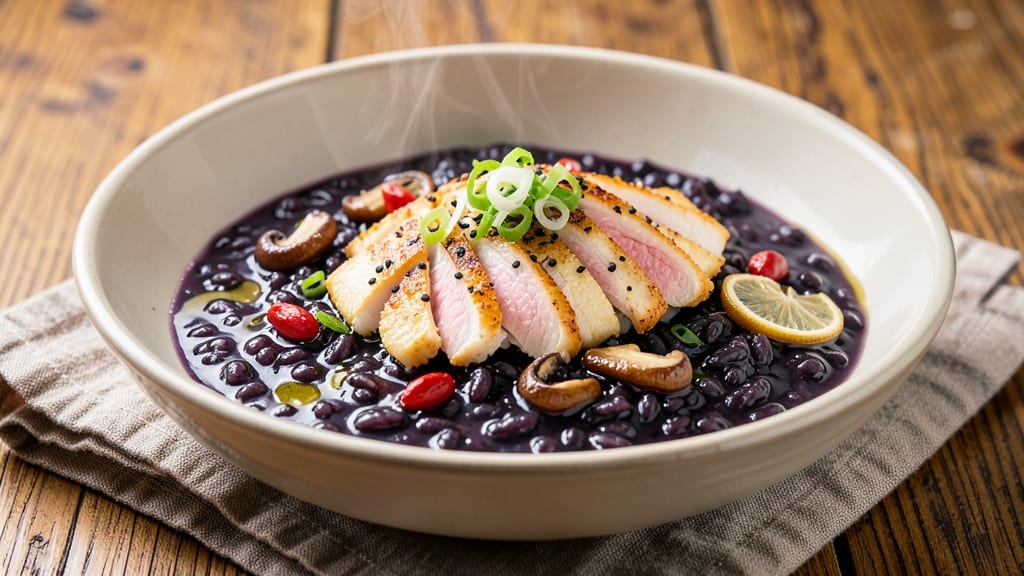
This black rice congee recipe transforms humble grains into a velvety porridge with deep umami richness and earthy depth. 💛 The secret lies in slow simmering black rice until it dissolves into a luxurious, comforting texture that's both nourishing and restaurant-worthy.
Unlike white rice congee, the dark grains infuse the broth with antioxidant power and a subtle, smoky complexity that makes every spoonful memorable.
What sets this version apart is its adaptability—start with a simple ginger-scallion base, then customize with protein like shredded chicken, crispy pork, or silken tofu. The porridge's natural sweetness balances perfectly against savory toppings, while the black rice's vibrant color makes it as visually striking as it is delicious.
Whether you're seeking a healing breakfast or a comforting dinner, this recipe delivers both nutrition and satisfaction in one bowl.
Ingredients for black rice congee
Earthy black rice meets umami depth—here's what transforms simple grains into restaurant-quality congee.
| Ingredient | Amount | Notes |
|---|---|---|
| Black Rice 🌾 | 1 cup | Uncooked, long-grain preferred |
| Chicken Breast 🍗 | 1 ½ lb | Boneless, skinless, shredded |
| Fresh Ginger 🧅 | 1 inch | Peeled, sliced thinly |
| Green Onions 🧅 | ½ cup | Sliced, white and green parts |
| Dried Shiitake Mushrooms 🍄 | 4 whole | Rehydrated, stems removed |
| Dried Goji Berries 🍇 | 1 tbsp | Rinsed, chopped |
| Dried Red Dates 🍯 | 4 whole | Pitted, chopped |
| Sesame Oil 🫒 | 1 tbsp | Toasted, for aroma |
| Light Soy Sauce 🥄 | 2 tbsp | Low-sodium preferred |
| Water 💧 | 8 cups | Filtered preferred |
| Lime Juice 🍋 | 1 tbsp | Freshly squeezed |
| Sesame Seeds 🌰 | 1 tsp | Toasted, for garnish |
| Cilantro Leaves 🌿 | ¼ cup | Chopped, for garnish |
| Lime Zest 🍋 | 1 tsp | Fresh, for brightness |
The black rice is non-negotiable here—look for whole-grain varieties at specialty Asian markets or bulk bins for maximum antioxidant power. Lundberg Organic or 365 by Whole Foods brands work well. Fresh shiitake mushrooms are ideal, but dried rehydrate beautifully—just soak them in hot water for 20 minutes. For the ginger, opt for fresh over powdered—it infuses the broth with a complexity dried can't match. The goji berries and red dates add natural sweetness and texture, so don't skip them unless you're strictly counting calories.
No fresh shiitake? Cremini mushrooms work in a pinch, though they lack the earthy depth. Substitute dried porcini if you can find them—they're even more intense. The chicken breast can be swapped for silken tofu (1 block) or shredded pork (1 lb) for a vegetarian or meatier version. For the lime, zest is key—it brightens the dish without overpowering. If you're using pre-shredded chicken, rinse it well to remove excess sodium. The sesame oil should be toasted—add a drop to a hot pan for 10 seconds before pouring into the congee for maximum aroma.
This congee tastes even better the next day as flavors meld. Store leftovers in the fridge for up to 5 days in an airtight container, with a thin layer of olive oil on top to preserve freshness. For freezing, portion into single-serving containers—reheat gently on low with a splash of water to restore creaminess. The cilantro and sesame seeds should be added fresh after reheating to maintain vibrant color and texture. Make a double batch—it's perfect for meal prep and reheats beautifully.
Why You'll Love This Recipe
- One-Pot Wonder: I swear by this recipe because it’s literally one pot—no chopping boards, no extra pans. Just toss in the black rice, chicken, and shiitake mushrooms, let it simmer, and boom. That deep, nutty aroma fills the kitchen while you’re still deciding whether to set the table.
- Earthy Depth: The black rice isn’t just a pretty color—it’s ridiculously flavorful. The dried shiitake mushrooms soak up water and turn into meaty, umami bombs, while the ginger and green onions add a bright kick. Honestly, the first bite makes me forget I was planning to order takeout.
- Meal Prep MVP: Between us, this congee is my lazy Sunday secret weapon. Make a big batch, and it’s breakfast, lunch, or dinner for days. The chicken stays tender, the rice softens perfectly, and I can even freeze portions—just reheat and add a splash of water. No sad leftovers here.
- Budget Booster: Black rice might sound fancy, but it’s way cheaper than white rice in bulk. Chicken breast stretches further than you’d think when shredded, and dried shiitake mushrooms last forever. I’ll be real: this recipe saved me $50 last month by cutting out half my grocery delivery orders.
Step-by-step instructions for black rice congee
Transform simple ingredients into a velvety, deeply flavorful porridge with this precise technique.
🍳 Step 1: Parboil the Black Rice for Maximum Flavor
Rinse the 1 cup black rice thoroughly under cold water until the water runs clear—this removes excess starch that can make the congee gummy. In a large pot, combine the black rice with 8 cups water and bring to a boil over high heat. Once boiling vigorously, reduce heat to medium-low and simmer uncovered for 30 minutes.
I stir occasionally during this time to prevent sticking, but don't press the rice against the pot bottom—this releases starch prematurely. The rice should soften noticeably but still retain some bite. This parboiling step is crucial: it extracts the deep umami compounds from the black rice that will infuse the entire congee with earthy richness.
🔥 Step 2: Blend the Rice into a Smooth Purée
Using an immersion blender, carefully purée the partially cooked rice directly in the pot until completely smooth. If you prefer not to use an immersion blender, transfer the rice to a countertop blender in batches, blending until silky. Return the purée to the pot and add 4 cups fresh water to restore the original volume.
Here's the thing—this blending step creates the signature texture of congee. The purée should be completely smooth with no visible rice particles. If you're concerned about blending hot liquid, let the mixture cool slightly first to prevent steam burns. The purée will thicken as it cools, so don't worry if it looks too thin immediately.
🍳 Step 3: Simmer the Congee to Perfect Consistency
Return the purée to medium-low heat and stir continuously for 45-60 minutes until the congee reaches your desired thickness. You're aiming for a texture between thick cream and thin pudding—it should coat the back of a spoon but still flow gently when stirred. The congee is ready when it reaches 185-190°F internally.
This long simmering process develops the congee's signature melt-in-your-mouth texture. I recommend checking the consistency at the 30-minute mark—if it's still too thick, add ½ cup water at a time until you reach the perfect balance. The congee will continue thickening slightly as it cools, so err on the thinner side if you prefer a more fluid texture.
👨🍳 Step 4: Prepare the Umami Toppings and Protein
While the congee simmers, prepare the toppings. Soak the 4 whole dried shiitake mushrooms and 4 whole dried red dates in hot water for 20 minutes until plump. Rehydrate the 1 tbsp dried goji berries separately for 10 minutes. Drain all ingredients and chop the mushrooms and dates finely, leaving the goji berries whole.
In a separate pan, heat 1 tbsp sesame oil over medium heat and sauté the 1.5 lb shredded chicken breast with 1 inch sliced fresh ginger for 5-6 minutes until the chicken is just cooked through. Season with 2 tbsp light soy sauce and remove from heat. The chicken should be tender but not dry—overcooking will make it tough in the congee.
🥘 Step 5: Assemble and Garnish for Maximum Flavor
Once the congee reaches perfect consistency, remove it from heat and stir in the prepared toppings: the chopped shiitake mushrooms, red dates, goji berries, and the ginger-chicken mixture. The congee will thicken slightly as it absorbs the liquid from the toppings—this is normal and desirable.
For the final touch, divide the congee among serving bowls and garnish each portion with 0.5 cup sliced green onions, 1 tsp toasted sesame seeds, 0.25 cup chopped cilantro leaves, and a sprinkle of 1 tsp lime zest. Finish with a drizzle of 1 tbsp lime juice—this bright citrus note cuts through the richness of the black rice and enhances all the umami flavors.
Pro Tips For Making Black Rice Congee
- SOAK THE BLACK RICE NIGHT BEFORE: I learned this the hard way—skipping the overnight soak means your congee will either turn to mush or stay stubbornly al dente. Use 1 part black rice to 3 parts water, cover, and let it sit. The longer it soaks, the richer the flavor and the silkier the texture when cooked.
- SIMMER LOW AND SLOW: Black rice congee isn’t a race. After the initial boil with chicken and shiitakes, drop the heat to the lowest setting you can tolerate—just above a bare simmer. Too much heat = gluey rice; too little = undercooked. A steady, gentle bubble is your goal.
- REHYDRATE SHIITAKES IN HOT WATER: Cold water soaks dried shiitakes, but hot water (just off the boil) extracts their umami faster. Toss them in for 10 minutes before adding to the congee—this cuts the soaking time in half and deepens the flavor.
- SAVE THE GREEN ONIONS FOR LAST: I used to toss them in early, and they’d turn bitter or wilt into a sad, limp mess. Instead, chop them roughly and stir them in during the final 2 minutes of cooking. Their bright crunch and aroma will make the whole dish sing.
Best sauces and condiments for this dish
Ginger-Soy Drizzle
This simple sauce elevates every bowl—mix 1 tbsp toasted sesame oil, 1 tbsp light soy sauce, 1 tsp grated fresh ginger, and ½ tsp lime juice. Drizzle over finished congee for instant umami brightness.
I double the batch and keep it in a small glass jar in my fridge for quick flavor boosts on other dishes like noodles or dumplings. 🌟
Spicy Chili Oil
For heat lovers, blend ¼ cup neutral oil (like avocado or grapeseed) with 1 tbsp chili crisp, 1 tsp Sichuan peppercorns, and ½ tsp gochujang. Heat gently for 2 minutes until fragrant, then strain.
The peppercorns add tingling warmth that pairs perfectly with black rice's earthiness. Store in a clean bottle for up to 2 weeks.
Sweet Plum Sauce
Simmer ½ cup plum sauce (like Mae Ploy** brand) with 1 tsp rice vinegar and ½ tsp sesame oil until reduced by half. The natural sweetness contrasts beautifully with the savory congee.
I use this as a finishing drizzle before adding lime zest—it creates a perfect balance of sweet, sour, and umami. 🍑
Creamy Coconut Milk
Warm ¼ cup coconut milk with ½ tsp turmeric and pinch of salt until steaming. The golden hue and subtle sweetness complement the black rice's deep color.
Pour a thin layer over the congee before serving—it adds luxurious creaminess without overpowering. For extra richness, add ½ tsp coconut cream at the end.
Pickled Vegetable Topping
Quick-pickle ½ cup thinly sliced daikon, 2 tbsp shiitake mushrooms, and 1 tbsp red onion in a mix of 2 tbsp rice vinegar, 1 tsp sugar, and ¼ tsp salt for 30 minutes.
The crisp, tangy crunch cuts through the porridge's creaminess. I make a big batch and use it on congee, rice bowls, and even sandwiches. 🥬
Sesame-Garlic Spread
Blend 2 tbsp tahini, 1 tbsp toasted sesame seeds, 1 clove garlic, 1 tsp lime juice, and ½ tsp salt until smooth. Spread a thin layer over the congee before adding toppings—it adds nutty depth and helps distribute flavors evenly.
This spread also works as a dip for spring rolls or fresh veggies.
Nutrition facts
Frequently asked questions
Why does black rice congee have a deeper flavor than white rice congee?
The black rice's high anthocyanin content—those powerful antioxidants that give it the dark color—infuses the broth with an earthy, slightly smoky depth that white rice can't match. The long simmering process extracts these compounds, creating a richer, more complex flavor profile that's both savory and subtly sweet. Plus, black rice has a nuttier taste to begin with!
Can I make black rice congee without a blender?
Yes! If you don't have an immersion blender, you can achieve a smooth texture by simmering the rice until it breaks down completely—this takes 2-3 hours of constant stirring over low heat. For faster results, mash the cooked rice with a potato masher until smooth, then add water gradually to reach your desired consistency. The texture won't be as silky, but it'll still be delicious!
What's the best way to store leftovers?
Store congee in an airtight container in the fridge for up to 5 days. To reheat, add 1-2 tablespoons of water per serving and warm gently on low heat, stirring frequently—this prevents it from becoming too thick. For freezing, portion into single servings and freeze for up to 3 months. Thaw overnight in the fridge before reheating.
How can I adjust the consistency if it's too thick or too thin?
For thicker congee, simmer uncovered for 10-15 extra minutes to evaporate excess liquid. If it's too thin, mix 1 tbsp cornstarch with 2 tbsp water, stir into the hot congee, and cook for 2 minutes until thickened. For a smoother texture, blend again briefly after adding water—this helps redistribute the starch evenly.
Can I substitute black rice with other varieties?
While black rice is ideal for its unique flavor and color, you can use brown rice or wild rice for a similar earthy taste. For a lighter color, jasmine rice works but lacks the antioxidant depth. The key is to soak the rice longer (overnight) and simmer it until completely tender. Expect the flavor profile to be more neutral compared to black rice's distinctive taste.