
Main Courses
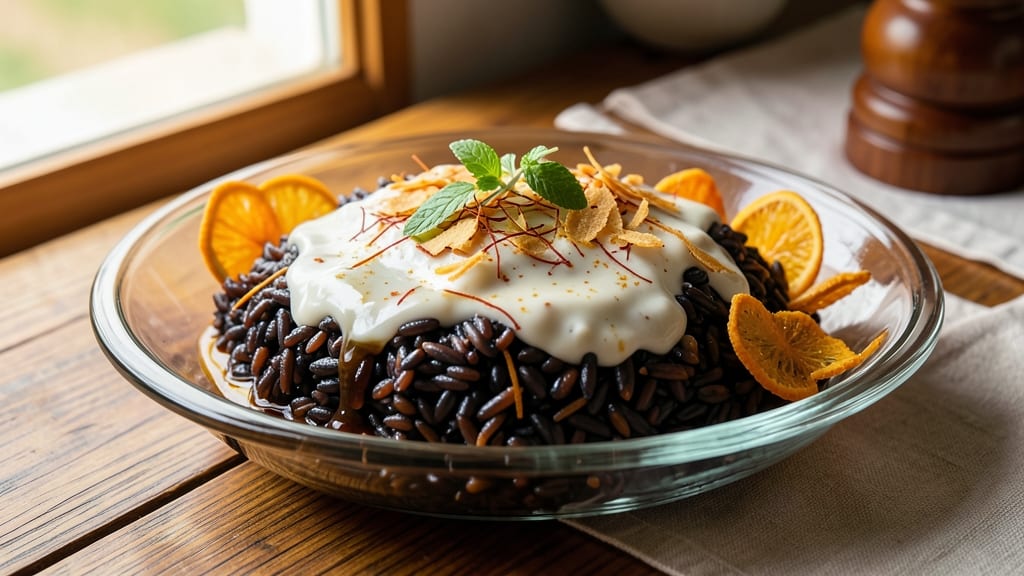
This Bolay black rice recipe transforms simple grains into a fragrant, coconut-infused masterpiece with saffron-infused depth—Filipino comfort food at its finest. The secret lies in slow-cooking the rice with coconut milk and sugar until caramelized edges meet tender centers, creating a dish that's both elegant and deeply satisfying.
Every bite delivers a perfect balance of creamy coconut, nutty rice, and subtle floral saffron notes.
The process begins with thorough soaking and rinsing to remove bitterness, followed by a gentle simmer that develops the rice's natural richness. Optional proteins like pork or chicken can be added for a heartier meal, while traditional techniques ensure authentic flavor.
This dish isn't just about the rice—it's about the layers of aroma and texture that make it unforgettable, perfect for special occasions or weeknight indulgence.
Ingredients for bolay black rice
Filipino-inspired rice dish requires these 12 essential ingredients for deep saffron-coconut flavor.
| Ingredient | Amount | Notes |
|---|---|---|
| Black Rice (Forbidden Rice) 🍚 | 1 ½ cups | Uncooked, rinsed thoroughly |
| Full-Fat Coconut Milk 🥥 | 13 ½ oz | Canned, no additives |
| Granulated Sugar 🍚 | ½ cup | White or brown preferred |
| Saffron Threads 🌼 | ¼ tsp | High-quality, organic |
| Salt 🧂 | 1 tsp | Fine sea salt preferred |
| Fresh Turmeric Root 🌿 | 1 inch | OR 1 tsp ground turmeric |
| Fresh Ginger Root 🌿 | 1 inch | Peeled, grated |
| Garlic Cloves 🧄 | 4 cloves | Minced for infusion |
| Bay Leaves 🌿 | 2 whole | Fresh preferred |
| Pork Belly (Optional) 🥩 | 8 oz | Diced, for protein |
| Olive Oil 🫒 | 2 tbsp | Extra-virgin for richness |
| Water 💧 | 3 cups | Filtered preferred |
The forbidden black rice is non-negotiable for that signature dark hue and nutty depth. Filipino markets or specialty Asian grocery stores carry it in bulk—look for packages labeled 'black rice' or 'forbidden rice'. The saffron threads should be vibrant orange-red, not dull or yellowed. For the coconut milk, Aroy-D or Thai Kitchen brands deliver consistent quality, but any full-fat canned variety works. Fresh turmeric root is ideal for its bright flavor, but ground turmeric at one-third the amount suffices if you're in a hurry. The ginger and garlic should be freshly grated and minced—pre-minced jars lack the aromatic punch.
No saffron? Turmeric at double the amount mimics the color but lacks floral notes. Substituting coconut milk with light coconut milk plus 2 tbsp cream adds richness. For the pork belly, chicken thighs work equally well, though they cook faster. The bay leaves can be omitted entirely if you dislike their herbal bite, but they add subtle complexity. The olive oil should be extra-virgin—regular olive oil lacks the fruity depth. If you're using ground turmeric, toast it lightly in a dry pan for 30 seconds to enhance its aroma. For the sugar, coconut sugar adds caramel notes that complement the coconut milk beautifully.
Store the cooked rice in an airtight container with a layer of plastic wrap pressed directly on the surface to prevent drying. It keeps for 4-5 days in the fridge, though the texture softens slightly after day two. For longer storage, freeze portions in single-serving containers for up to 3 months. The pork belly (or chicken) can be cooked separately and added just before serving to maintain tenderness. The rice reheats beautifully—simmer with a splash of water or coconut milk to restore moisture. For best results, bring it to room temperature before reheating to avoid a gummy texture.
Why You'll Love This Recipe
- Five-Ingredient Magic: This recipe’s simplicity is its superpower—just rice, coconut milk, sugar, saffron, and salt. No chopping, no fuss; the black rice soaks up the creamy coconut like a dream, and the saffron? That’s the secret weapon turning water into liquid gold.
- Velvet & Spice: The full-fat coconut milk makes this dish impossibly creamy, while the saffron threads bloom into a golden hue that tastes like sunshine. Honestly, the first bite feels like a hug—rich, slightly sweet, and with that earthy depth from the forbidden rice.
- Weeknight to Dinner Party: I’ve served this as a side for family dinners and as the star at gatherings—it’s that adaptable. The leftovers reheat beautifully, and the rich flavor actually improves the next day (yes, really). Plus, it’s the kind of dish that makes you sound fancy without trying.
- Budget Luxury: Black rice might sound fancy, but a bag lasts forever, and you’re using just a handful for this. The saffron is the priciest part, but a little goes a long way—think of it as the dish’s crown jewel. Between us, this tastes like a restaurant dessert for a fraction of the cost.
Step-by-step instructions for Bolay black rice
Transform simple grains into a luxurious, fragrant dish with this precise method.
🍳 Step 1: Infuse the Coconut Milk with Aromatics
In a medium saucepan, combine the 13.5 oz full-fat coconut milk, 1 inch fresh turmeric root (peeled and sliced), 1 inch fresh ginger root (peeled and sliced), 4 cloves garlic (minced), 2 whole bay leaves, and 2 tbsp olive oil. Place over medium-low heat and bring to a gentle simmer, being careful not to boil vigorously. The goal is to create an aromatic infusion without breaking down the delicate flavors.
Simmer for 15-20 minutes, stirring occasionally, until the coconut milk develops a rich golden hue and the aromatics release their essence. You'll notice the scent of turmeric and ginger permeating the kitchen—this is your indicator that the infusion is working. Once infused, remove from heat and let steep for 10 minutes while you prepare the rice. Strain through a fine-mesh sieve into a clean bowl, pressing gently on the solids to extract maximum flavor. Discard the solids.
👨🍳 Step 2: Prepare the Rice and Saffron
Rinse the 1.5 cups black rice (forbidden rice) thoroughly under cold water until the water runs clear. This removes excess starch and prevents the rice from becoming gummy. In a separate bowl, combine the rinsed rice with the 0.25 tsp saffron threads and 1 tsp salt. Gently mix to distribute the saffron evenly—this will impart its signature golden color and floral aroma. Let the rice soak in the saffron mixture for 10 minutes while you prepare the remaining ingredients.
Here's the thing—black rice benefits from this short soak because it helps the grains absorb the saffron's vibrant hue more deeply. The saffron will dissolve slightly in the liquid, creating a fragrant base that infuses the rice as it cooks. After soaking, drain any excess liquid and set the rice aside.
🔥 Step 3: Cook the Pork Belly (If Using)
If you're including the 8 oz pork belly, heat a separate skillet over medium heat and add the diced pork belly. Cook for 8-10 minutes until the pork releases its fat and begins to brown in spots. Remove the pork from the skillet and set aside, reserving the rendered fat in the pan. This step adds a rich, savory depth to the dish that complements the coconut's sweetness.
Alternatively, if you're skipping the pork belly, proceed directly to cooking the rice. The rendered fat from the pork belly will be used later to enrich the coconut milk base, so don't discard it. If you're not using pork belly, simply continue with the infused coconut milk.
🥘 Step 4: Combine and Simmer the Rice
In a heavy-bottomed pot with a tight-fitting lid, combine the infused coconut milk, 3 cups water, and the 0.5 cup granulated sugar. Bring to a gentle boil over medium heat, then reduce heat to low and add the drained black rice. Stir gently to distribute the rice evenly.
If you're using the pork belly, add it to the pot now along with any reserved rendered fat. The pork will cook slowly in the coconut milk, absorbing the flavors and becoming tender. Cover the pot and simmer for 30 minutes, stirring gently once halfway through to prevent sticking. The rice is done when the liquid has been fully absorbed and the grains are tender with a slight bite—black rice should never be mushy.
⏰ Step 5: Rest and Serve with Precision
Once the rice is fully cooked, remove from heat and let it rest, covered, for 10 minutes. This resting period allows the grains to absorb any remaining liquid and develop their full texture. The rice should be tender but still hold its shape, with a glossy sheen from the coconut milk. If the rice appears dry, gently fluff with a fork and add a splash of warm water if needed.
Serve immediately, garnished with additional saffron threads if desired. The finished dish should have a rich, creamy texture with a delicate balance of sweetness from the coconut and sugar, earthy notes from the turmeric and ginger, and a subtle floral aroma from the saffron. Each grain should be distinct yet cohesive, with the pork belly (if used) adding a luxurious, savory contrast. Enjoy while warm for the best experience.
Pro Tips For Making Bolay Black Rice
- SOAK THE RICE LONG: I learned this the hard way—skipping the soak makes the rice turn mushy instead of creamy. Soak forbidden rice for at least 4 hours (overnight is better) in cold water, changing the water once. The longer it soaks, the less likely it’ll turn into glue.
- STEAM FIRST, THEN SIMMER: Dumping soaked rice into coconut milk and boiling it straight up? That’s how you end up with a gritty, uneven texture. Steam the soaked rice for 10 minutes first—cover the pot with a tight lid, then reduce to a low simmer. This guarantees even cooking without burning the milk.
- CRUSH THE SAFFRON: Whole saffron threads? Toss them in. But if you want that deep, golden hue and flavor without fishing for strands later, crush them between your fingers or a mortar first. Just don’t overdo it—you’re not making saffron dust, just releasing the magic. (And yes, even if you’re impatient like me.)
- SWEAT THE SUGAR: Adding sugar all at once? That’s how you end up with a grainy, uneven texture. First, heat the coconut milk over medium-low and let the sugar dissolve completely—stir until it’s smooth, like a syrup. This makes the final texture velvety, not clumpy. (Your future self will thank you.)
Make-ahead tips for leftovers
Prep Ahead Strategy
Start by soaking the 1.5 cups black rice in 3 cups water overnight (or at least 6 hours) to reduce cooking time by 20-30 minutes.
Drain thoroughly before cooking—this step removes excess starch and prevents gummy texture. I always prep the rice first thing in the morning for dinner that night. 💫
Coconut Milk Infusion
Infuse the 13.5 oz coconut milk with aromatics up to 2 days ahead and store in an airtight container in the fridge. The flavors deepen over time, becoming more concentrated.
Simply reheat gently before combining with the rice—no straining needed if you're using it within 48 hours. This is my time-saving secret for busy weeknights.
Protein Prep
Cook the 8 oz pork belly (or chicken) completely ahead of time and store in the fridge. Reheat gently in the coconut milk sauce just before serving to maintain tenderness.
I often marinate the pork in a mix of 1 tbsp soy sauce and 1 tsp black pepper overnight for extra flavor depth. This keeps your meal prep on track without sacrificing quality.
Make-Ahead Cooking
For a fully assembled dish, cook the rice completely (including pork) and store in an airtight container with a layer of plastic wrap pressed directly on the surface. Reheat on the stovetop with 2 tbsp water or coconut milk over low heat for 10-15 minutes, stirring occasionally.
The texture remains creamy and flavorful—just as good as fresh!
Freezer-Friendly
Portion the cooked rice into single-serving containers and freeze for up to 3 months. Thaw overnight in the fridge before reheating. For the pork, freeze it separately and add it fresh when reheating to prevent drying.
This makes Bolay perfect for meal prep—just grab and reheat whenever you crave that Filipino comfort.
Saffron Boost
If you're short on time, steep the 0.25 tsp saffron in 2 tbsp warm water for 10 minutes ahead of time. Strain and add this saffron infusion directly to the rice during cooking.
The vibrant color and floral aroma will still shine through—this trick saves you from last-minute prep stress. ✨
Nutrition facts
Frequently asked questions
Why does Bolay black rice turn so dark when cooked?
The deep color comes from the black rice's natural anthocyanins, which intensify when cooked with coconut milk and saffron. The longer it simmers, the richer the hue becomes—this is why traditional recipes use low-and-slow cooking. For a lighter version, reduce simmering time to 25 minutes instead of 30 minutes.
Can I make Bolay without pork belly? What are good substitutes?
Skip the pork for a vegetarian version or use chicken thighs (cook for 15 minutes instead) or shrimp (add in the last 5 minutes). For extra richness, stir in 1 tbsp toasted coconut flakes during the final 10 minutes of cooking. The dish still shines without meat—it's all about the coconut-saffron balance.
What's the secret to getting perfectly tender black rice?
Rinse the rice 3-4 times until water runs clear, then soak for at least 30 minutes before cooking. Use a heavy-bottomed pot and maintain a gentle simmer—never boil vigorously. Stir once halfway through to prevent sticking. The key is patience: black rice needs 10-15 minutes longer than white rice to reach perfect tenderness.
How can I make Bolay less sweet?
Reduce the sugar to 1/4 cup or omit it entirely for a savory version. Balance flavors by adding 1 tsp soy sauce or 1/2 tsp fish sauce when simmering. For extra depth, stir in 1/4 cup chopped toasted peanuts at the end—they add crunch and nuttiness that cuts through sweetness.
Can I use regular rice instead of black rice?
Not recommended—black rice's unique texture and nutty flavor are essential to Bolay. However, if you must substitute, use jasmine rice and add 1 tsp activated charcoal powder (food-grade) to mimic the color. For authenticity, seek out Filipino black rice (also called "forbidden rice") at Asian markets. The difference in taste and presentation is worth the effort!