
Main Courses
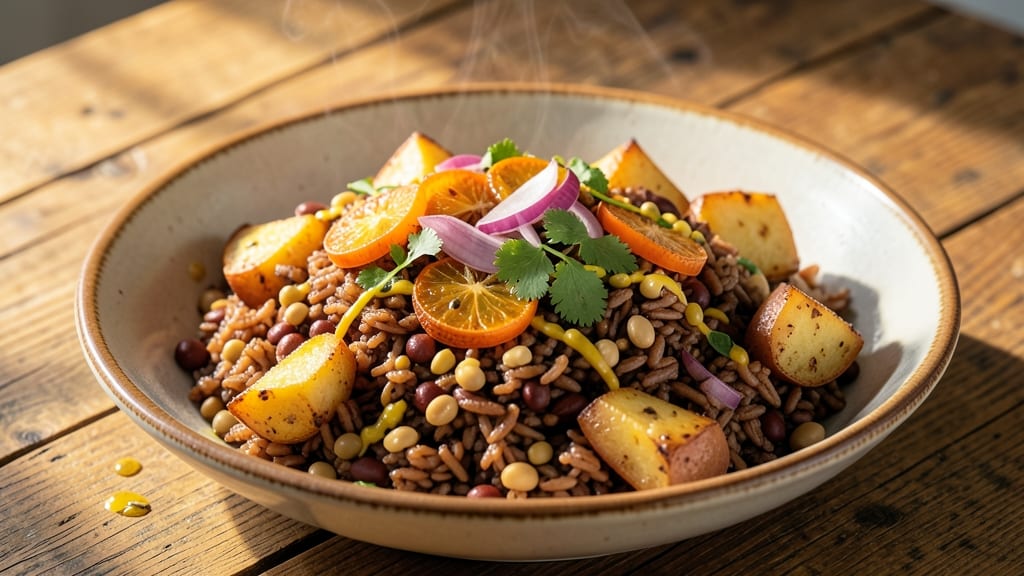
This brown rice adai recipe transforms humble lentils and vegetables into a fragrant, spiced mash that’s the heart of South Indian meals. The key lies in soaking and grinding the batter just right—creating a texture that’s neither too dry nor soupy, but perfectly cohesive.
I’ve perfected this version to deliver the authentic flavors you’d find in a Tamil Nadu home, with a balance of spices that’s both bold and comforting.
The magic happens in layers: first, the lentils and rice are soaked overnight for easy grinding, then tempered with mustard seeds and curry leaves for that signature aroma. Simmering the mixture gently ensures each ingredient—potatoes, carrots, and beans—retains its texture while absorbing the spices.
Serve it with coconut chutney or sambar for the full experience, and you’ll have a dish that’s as nourishing as it is delicious.
Ingredients for brown rice adai
Authentic South Indian flavors start with these simple, wholesome ingredients—soaked overnight for perfect texture.
| Ingredient | Amount | Notes |
|---|---|---|
| Brown Rice 🌾 | 1 cup | Uncooked, rinsed well |
| Toor Dal (Split Pigeon Peas) 🌱 | ½ cup | Rinsed, no need to soak |
| Chana Dal (Split Chickpeas) 🌱 | ¼ cup | Rinsed, no need to soak |
| Red Lentils 🌱 | ¼ cup | Rinsed, no need to soak |
| Russet Potatoes 🥔 | 2 medium | Peeled, cut into chunks |
| Carrots 🥕 | 1 medium | Peeled, chopped into chunks |
| Green Beans 🌿 | ½ lb | Trimmed, cut into bite-sized pieces |
| Mustard Seeds 🌶️ | 1 tbsp | Whole, for tempering |
| Curry Leaves 🌿 | ¼ cup | Fresh, lightly crushed |
| Dried Fenugreek Leaves 🌿 | 1 tbsp | Crushed lightly |
| Asafoetida (Hing) 🌶️ | ¼ tsp | Pinch for aroma |
| Ginger 🌿 | 1 inch | Fresh, grated |
| Green Chilies 🌶️ | 2 whole | Slit lengthwise |
| Coconut Oil 🫒 | ¼ cup | For cooking and tempering |
| Salt 🧂 | 1 ½ tsp | Adjust to taste |
| Water 💧 | 2 ½ cups | For grinding batter |
The lentils and rice are the backbone of this dish. Brown rice adds a nutty depth, while toor dal and chana dal bring creaminess when cooked. Soak them overnight in plenty of water—this ensures they grind smoothly into a batter with just the right consistency. For the vegetables, Russet potatoes hold their shape beautifully, while green beans add a satisfying crunch. I always grab fresh curry leaves at Indian grocery stores—they’re non-negotiable for that signature aroma. If you can’t find them, dried leaves work at half the amount, but fresh is worth seeking out.
No mustard seeds? Sesame seeds at double the amount will give a similar nuttiness, though the flavor won’t be identical. Short on fenugreek? Skip it entirely—it’s more for aroma than anything else. The green chilies can be swapped for red chilies if you prefer heat, but green chilies add a fresh, slightly bitter note that’s classic in adai. For the tempering, coconut oil is traditional, but any neutral oil like vegetable or peanut oil will work in a pinch. Just don’t use butter—it’ll burn before the spices sizzle properly.
This batter keeps in the fridge for 3-4 days if stored in an airtight container, but it’s best made fresh for optimal texture. For quick prep, soak the lentils and rice for at least 4 hours instead of overnight—they’ll still work, just not as smoothly. The cooked adai reheats beautifully—just add a splash of water and simmer gently. I like to portion mine into small steel bowls for serving, but any container works. Leftovers freeze well for up to 3 months—thaw overnight in the fridge before reheating.
Why You'll Love This Recipe
- No-Soaking Needed: I swear by this trick—just rinsing the brown rice and lentils cuts my prep time in half. No overnight soaking, no fuss, and the texture still comes out perfectly tender. (Yes, even when I forget to soak it the night before.)
- Crispy-Potato Magic: That golden, caramelized crust on the potatoes? It’s the star. The secret’s letting them sit in the batter just long enough—no flipping required—and the result is a satisfying crunch with every bite.
- Meal-Prep MVP: I make a double batch on Sundays and it lasts all week. The flavors deepen overnight, and reheating it in a skillet with a splash of water brings it back to life—better than takeout, honestly.
- Pantry Staple Power: Between us, this recipe uses ingredients I already have. Brown rice, lentils, and potatoes? Always in my cupboard. It’s my go-to when I’m broke or lazy (or both), and somehow it never feels like a compromise.
Step-by-step instructions for brown rice adai
This traditional South Indian dish transforms simple lentils and vegetables into a fragrant, spiced mash that's perfect with coconut chutney.
Pressure Cook the Lentils and Rice Together
In a pressure cooker, combine the 1 cup brown rice, 0.5 cup toor dal, 0.25 cup chana dal, and 0.25 cup red lentils. Add 2.5 cups water and the 1.5 tsp salt. Seal the lid and cook on high heat until the pressure builds, then reduce to medium and cook for 4 whistles or 20 minutes after the last whistle. The lentils should be completely soft and the rice tender - you'll see a thick, creamy mixture when you release the pressure naturally.
Here's the thing - don't open the cooker immediately. Let the pressure drop on its own for 5 minutes first to prevent steam burns. The natural release also helps the flavors meld better. Once opened, give everything a quick mash with a wooden spoon to break up any large clumps while keeping some texture.
Cook the Vegetable Medley
In a large pan, heat 2 tablespoons of the coconut oil over medium heat. Add the 2 medium russet potatoes (cut into chunks) and cook for 5 minutes until they begin to soften. Add the 1 medium carrot (chopped) and 0.5 lb green beans (trimmed and cut), then stir for another 4-5 minutes until the potatoes are fork-tender but still hold their shape.
I like to keep the vegetables slightly firm - they'll soften more during the final mixing. Season with a pinch of salt and set aside. The vegetables should be hot but not browned when you're ready to combine them with the lentils.
Prepare the Tempering
In the same pan, add the remaining 2 tablespoons coconut oil and heat until shimmering. Add the 1 tbsp mustard seeds and let them splutter for 10 seconds until they begin to pop. Add the 0.25 cup curry leaves and 1 tbsp dried fenugreek leaves, stirring constantly for 30 seconds until the curry leaves turn dark green and fragrant.
This is where the magic happens - the tempering transforms ordinary adai into something extraordinary. Next, add the 0.25 tsp asafoetida (hing), 1 inch grated ginger, and 2 slit green chilies. Stir for another 30 seconds until the chilies soften slightly. Pour this aromatic oil mixture over the cooked lentils and vegetables.
Combine and Adjust
Gently fold the tempering into the lentil-vegetable mixture using a wooden spoon. The heat from the tempering will help everything meld beautifully. Taste and adjust the seasoning with additional salt if needed - remember, the lentils already have some salt from cooking.
For the perfect adai consistency, you want it thick enough to hold its shape when spooned but still creamy. If it's too thick, add 1-2 tablespoons water and mix well. The final texture should be like a thick, flavorful mash that's easy to scoop with your hands. Serve warm with coconut chutney and crispy papadums for the complete South Indian experience.
Pro Tips For Making Brown Rice Adai
- SOAK THE RICE LONGER: I learned this the hard way—brown rice adai falls apart if the grains stay hard. Soak the brown rice for at least 4 hours (overnight is better) in twice the water by volume, then rinse it twice before cooking. The extra starch released makes the adai bind properly without turning mushy.
- COOK POTATOES UNTIL FORK-TENDER: Raw potato chunks in adai turn to glue. Boil the potatoes in salted water until they collapse under gentle pressure—about 12-15 minutes past "done." Drain and rough up the edges with your hands before adding them to the mix. This creates texture instead of a sad, gummy center.
- TEMPER THE OIL RIGHT: Skip the slow simmer—crank the heat to medium-high and let the mustard seeds pop audibly before adding curry leaves. Then lower to medium-low for the rest. Rushing this step burns the spices, while dragging it out makes them taste flat. Aim for 2-3 minutes total for the tempering.
- USE A MIXED-DAL RATIO: Equal parts toor dal, chana dal, and red lentils (1:1:1) gives the best texture. The lentils break down fast, the chana dal adds chew, and toor dal holds the structure. Soak them separately for 1 hour—this prevents the lentils from overcooking while the others catch up.
Essential equipment for perfect results
Pressure Cooker Essentials
Your pressure cooker is the workhorse for this recipe—I swear by my Presto 6-quart model for its even cooking and safety features. The key is using it for both the lentils and rice base. Make sure your pressure cooker has a weighted lid and a quick-release valve for safety.
If you don’t have one, a heavy-bottomed pot with a tight-fitting lid will work, but expect longer cooking times. 🌡️
Grinding Tools
A good wet grinder (like the Prestige wet grinder) is ideal for achieving that signature smooth batter, but a high-powered blender will do in a pinch. For best results, grind the soaked lentils and rice in batches, adding just enough water to create a thick, pourable consistency.
Avoid over-grinding—you want some texture in your adai. If your blender struggles, let the mixture sit for 10 minutes between batches to cool slightly. ⚡
Tempering Pan
Use a heavy-bottomed stainless steel pan (like All-Clad) for the tempering step—it distributes heat evenly and prevents burning. Medium heat is crucial here; too high, and your mustard seeds will burn before popping.
A small stainless steel ladle helps stir the tempering ingredients without splattering. If you’re short on time, a non-stick pan works, but watch it closely to avoid sticking. 💡
Wooden Spoons
Wooden spoons are a must for folding the tempering into the lentils—mango wood or teak spoons are traditional and gentle on your non-stick pans. Avoid metal utensils during this step, as they can scrape the bottom and cause burning.
A large, flat spoon (about 12 inches) helps distribute the tempering evenly. Store your wooden spoons in a dry place to prevent warping. 🌿
Steel Serving Bowls
Serve your adai in small steel bowls (like Indian thalis) for that authentic experience. These bowls keep the dish warm longer and are perfect for scooping with your hands.
If you don’t have them, any shallow, wide bowl works—just ensure it’s heat-resistant. For extra presentation, garnish with a sprinkle of fresh coriander or a drizzle of coconut oil. 💛
Nutrition facts
Frequently asked questions
Can I make brown rice adai without a pressure cooker?
Yes! Use a heavy-bottomed pot instead. Cook the lentils and rice together with 3 cups water over medium-high heat until the liquid reduces by half (20-25 minutes). Then simmer uncovered for 10-15 minutes until the rice is tender and the mixture is thick. Stir occasionally to prevent sticking.
What's the secret to getting the right adai texture?
The perfect adai should be thick enough to hold its shape when spooned but still creamy. After cooking, if it's too thick, add 1-2 tablespoons water and mix well. For a smoother texture, grind the soaked lentils and rice slightly longer, but don't overdo it—you want some bite from the vegetables. The batter should resemble thick pancake batter before cooking.
Can I substitute white rice for brown rice?
Technically yes, but it won't be authentic. White rice cooks faster and gives a lighter texture, but brown rice adds that nutty depth and fiber. If you must use white rice, reduce cooking time by 3-4 minutes and add 1 extra tablespoon water during grinding to compensate for its quicker absorption. The flavor will be milder but still delicious.
How do I make adai less spicy?
Reduce or omit the green chilies entirely, and use 1/2 teaspoon less mustard seeds (they carry some heat). For extra mildness, add 1/4 cup plain yogurt when combining the tempering with the lentils—it balances the spices beautifully. Always taste as you go! The tempering is where most of the heat comes from, so control there first.
Can I prepare adai ahead of time?
The uncooked batter keeps in the fridge for 2 days in an airtight container. For best results, cook it fresh, but you can reheat leftovers by adding 2 tablespoons water per serving and simmering for 5 minutes on low heat. For long-term storage, freeze the cooked adai in portions for up to 3 months—thaw overnight in the fridge before reheating.