
Main Courses
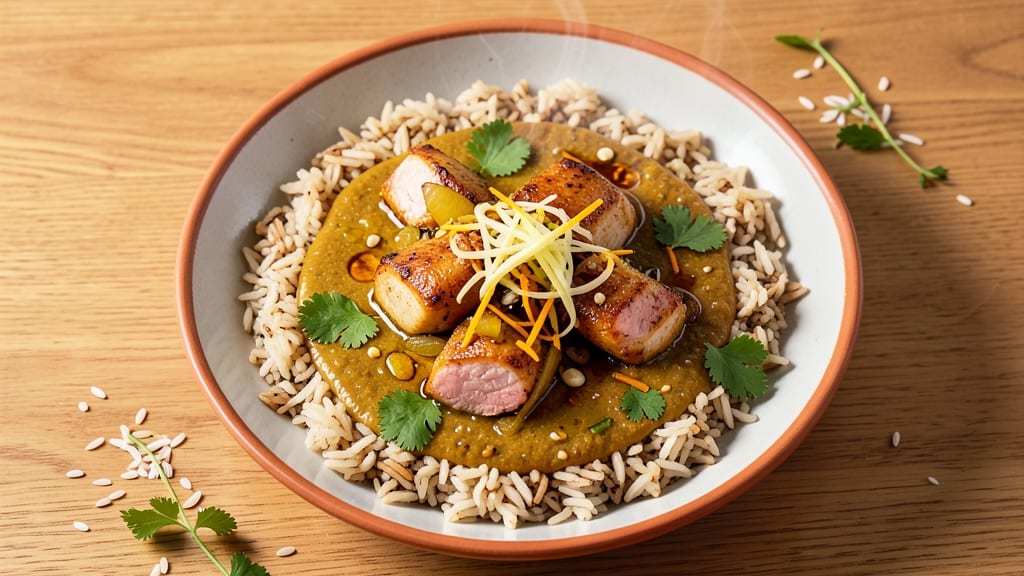
This brown rice curry recipe transforms simple ingredients into a fragrant, hearty dish where nutty brown rice absorbs rich coconut-turmeric flavors. The key lies in perfectly cooked rice—chewy yet distinct—and a sauce that begins with toasted spices, then simmers into a velvety balance of heat, sweetness, and earthy depth.
I developed this version after years of testing, ensuring every bite delivers both comfort and complexity without requiring advanced skills.
What sets this curry apart is its adaptability: tender chicken or tofu absorbs the aromatic sauce, while the rice stays separate yet infused with subtle coconut notes.
The sauce builds in layers—first the spices bloom in oil, then coconut milk reduces to a luscious consistency, and finally a touch of lime brightens the finish. No shortcuts here, but the process is straightforward enough for weeknight dinners that feel like a restaurant meal.
Ingredients for brown rice curry
Simple ingredients elevate to restaurant-quality harmony in this fragrant brown rice curry.
| Ingredient | Amount | Notes |
|---|---|---|
| Long-Grain Brown Rice 🌾 | 1 cup | Uncooked, rinsed thoroughly |
| Boneless Chicken Thighs 🍗 | 1 ½ lb | Cut into 1-inch pieces |
| Extra-Virgin Olive Oil 🫒 | ⅓ cup | High-quality, fruity variety |
| Fresh Turmeric Root 🌿 | 1 tbsp | Freshly grated or 1 tsp powdered |
| Fresh Ginger Root 🧄 | ½ cup | Finely grated, peeled |
| Yellow Onion 🧅 | 1 whole | Diced, medium size |
| Garlic Cloves 🧄 | 6 cloves | Minced, peeled |
| Full-Fat Coconut Milk 🥥 | 13 ½ oz | High-quality, canned |
| Fresh Lime Juice 🍋 | ¼ cup | Freshly squeezed |
| Ground Cumin 🌿 | 1 ½ tsp | Toasted for depth |
| Ground Coriander 🌿 | 1 ½ tsp | Freshly ground preferred |
| Garam Masala 🌶️ | 1 tsp | Store-bought or homemade blend |
| Salt 🧂 | 1 ½ tsp | Diamond Crystal kosher |
| Fresh Cilantro 🌿 | ¼ cup | Chopped, for garnish |
The foundation starts with long-grain brown rice—look for jasmine or basmati varieties at Whole Foods or Trader Joe's for optimal texture. Fresh turmeric root is superior to powder for vibrant color and depth, though Penzeys or spice markets carry high-quality powdered alternatives. Ginger should be organic when possible, with firm, smooth skin and no soft spots. For the coconut milk, full-fat is non-negotiable—Thai Kitchen or Aroy-D brands deliver the richest flavor. Chicken thighs hold moisture better than breasts, so Costco or local butchers often provide the best value in bulk.
No fresh turmeric? Powdered turmeric at half the amount works, but fresh yields superior color. Substitute tofu for chicken if vegetarian—press and marinate it first. Coconut milk can be reduced to a lighter version if preferred, though full-fat creates the signature richness. Lime juice should be freshly squeezed; bottled lacks brightness. For garam masala, Madhur or Patel brands offer authentic blends. Diamond Crystal kosher salt dissolves cleanly—Morton works but can be coarser. Cilantro is divisive; if you dislike it, fresh basil makes a fragrant garnish alternative.
Store uncooked rice in an airtight container for up to 6 months. Fresh ginger and turmeric last 2-3 weeks refrigerated, while coconut milk keeps unopened for 2 years and opened for 5 days. Cooked curry reheats beautifully—simmer gently to maintain texture. Portion into containers for meal prep; freezes for 3 months without texture loss. Fresh herbs like cilantro should be added post-reheating to preserve flavor.
Why You'll Love This Recipe
- One-Pot Magic: I swear by this recipe when I’m too tired to scrub pots—just brown the chicken, toss in the rice, and let it simmer. The rice soaks up all that golden turmeric and ginger broth like a sponge, so you end up with a single dish that’s actually done.
- Golden Spice Bomb: That fresh turmeric and ginger? Not the powdered stuff—real root, grated right into the oil. It infuses the curry with this warm, earthy punch that lingers, and the chicken stays juicy with just a hint of crispy edges. Honestly, the first bite makes me forget it’s "healthy."
- Lunchbox Hero: Between us, this is my go-to for meal prep because it reheats like a dream. Pack it in jars for work or school—rice stays fluffy, chicken stays tender, and the flavors only get better the next day. (Yes, even on a Tuesday night.)
- Budget Win: Brown rice and chicken thighs are the kind of ingredients that stretch without sacrificing taste. A single batch feeds four, and leftovers taste just as good cold in wraps or reheated with a splash of coconut milk. My wallet and my taste buds thank me.
Step-by-step instructions for brown rice curry with coconut and turmeric
This method delivers aromatic layers where each ingredient plays its part—starting with the rice and ending with vibrant garnishes.
Toast the Spices and Sauté the Aromatics
Heat the 0.33 cup extra-virgin olive oil in a large, heavy-bottomed pot over medium heat. Add the 1 whole yellow onion, 6 cloves garlic, and 0.5 cup fresh ginger root, sautéing for 5-6 minutes until the onion softens and becomes translucent. The garlic should just begin to turn golden—don't let it brown or it'll turn bitter.
Reduce heat to medium-low and add the 1 tbsp fresh turmeric root, 1.5 tsp ground cumin, 1.5 tsp ground coriander, and 1 tsp garam masala. Toast the spices for 30 seconds until fragrant—you'll smell the warm, earthy notes of cumin and the floral hints of coriander. This step develops the foundation of your curry's complex flavor profile.
Cook the Chicken and Build the Curry Base
Increase heat to medium-high and add the 1.5 lb boneless chicken thighs, cut into 1-inch pieces. Cook for 6-8 minutes, stirring occasionally, until the chicken is lightly browned on all sides and cooked through. The chicken should reach an internal temperature of 165°F—use an instant-read thermometer to check the thickest piece.
Pour in the 13.5 oz full-fat coconut milk and scrape up any browned bits from the bottom of the pot with a wooden spoon. These bits, called fond, are packed with flavor that will infuse your curry. Bring to a gentle simmer and let it cook uncovered for 10 minutes, allowing the coconut milk to reduce slightly and develop a richer, creamier texture.
Prepare the Brown Rice
While the curry simmers, rinse the 1 cup long-grain brown rice thoroughly under cold water until the water runs clear. This removes excess starch and prevents the rice from becoming gummy. In a separate pot, bring 2 cups water to a boil, add the rice, and reduce heat to low. Cover and simmer for 40-45 minutes or until the rice is tender and the liquid is absorbed. Avoid lifting the lid during cooking—steam is what cooks the rice evenly.
Fluff the rice gently with a fork and set aside. The rice should be moist but not mushy, with a slight chewiness that's characteristic of properly cooked brown rice. If it's still firm, add 2 tablespoons water and let it steam covered for another 5 minutes.
Finish the Curry and Combine
Return the pot with the curry to medium heat and stir in the 1.5 tsp salt and 0.25 cup fresh lime juice. Simmer for another 5 minutes, allowing the lime to brighten the coconut milk and cut through the richness. Taste and adjust the seasoning—you may need a pinch more salt or a splash more lime juice to balance the flavors.
Gently fold in the cooked brown rice, mixing until every grain is coated in the fragrant coconut curry. The rice should absorb the flavors without becoming soggy. If the curry seems too thick, add 2-3 tablespoons water to reach your desired consistency. Keep the heat at low to prevent the coconut milk from curdling.
Garnish and Serve
Transfer the curry to serving bowls and let it rest for 5 minutes to allow the flavors to meld. Garnish each serving with 0.25 cup fresh cilantro, chopped finely. The cilantro adds a fresh, bright contrast to the rich, spiced curry and a pop of color that makes the dish visually appealing.
Serve immediately with naan or basmati rice on the side if desired. Each bite should deliver a harmonious blend of earthy spices, tender chicken, and the creamy sweetness of coconut milk, with a final bright note from the lime and cilantro. The brown rice adds a satisfying chewiness that balances the curry's richness.
Pro Tips For Making Brown Rice Curry
- CRUSH THE GINGER-TURMERIC: Use a heavy-bottomed pan and pound the fresh ginger and turmeric with the flat side of your knife until they turn into a thick paste—no food processor needed. This releases more flavor and blends seamlessly into the oil, so you don’t end up with stubborn chunks lurking in your curry.
- SEAR CHICKEN IN BATCHES: Don’t crowd the pan when browning the chicken thighs—work in two batches if needed. A hot pan and uncrowded chicken create that golden crust we’re after, and skipping this step means you’ll end up with steamed (not seared) meat that tastes bland.
- SOAK THE BROWN RICE: Rinse the brown rice until the water runs clear, then soak it in warm water for at least 30 minutes before cooking. This cuts the cooking time by 20 minutes and guarantees fluffy, separate grains instead of a gluey mess—trust me, your future self will notice.
- FINISH WITH A SPLASH OF WATER: Right before serving, stir in 2-3 tablespoons of hot water to the curry. The rice soaks up the liquid, softening any edges and balancing the flavors—this is the trick my mom used to make restaurant-style curry taste homemade.
Regional styles of this recipe
Thai-Inspired Coconut Curry
In Thailand, curries often feature lemongrass and kaffir lime leaves for brightness. Swap the garam masala for 1 stalk lemongrass (bruised) and 3 kaffir lime leaves, then add 1 tbsp fish sauce for umami depth.
Use red curry paste (like Maesri) instead of ground spices for a sweeter, spicier base. Serve with jasmine rice and a side of Thai basil. 🌿
Indian-Style Turmeric Rice Curry
For an Indian twist, replace coconut milk with 1 cup tomato purée and add 1 tbsp tamarind paste for tang. Use mustard seeds, cumin, and asafoetida as your initial tempering spices.
Stir in 1 cup chopped spinach at the end for a palak-paneer variation. Garnish with toasted cumin seeds and lemon wedges. The rice should be basmati for a lighter texture.
Caribbean Jerk Brown Rice
Infuse the curry with Caribbean jerk flavors by adding 2 tbsp jerk seasoning (like Eat Smart) and 1 scotch bonnet pepper (seeds removed for less heat). Use orange juice instead of lime and finish with fresh thyme.
Serve with fried plantains and black beans. The brown rice absorbs the smoky, sweet jerk notes beautifully. 🔥
Japanese Curry Rice Fusion
For a Japanese-inspired version, replace garam masala with 1 tsp five-spice powder and add 1 tbsp soy sauce. Use shirataki noodles instead of rice for a lighter texture. Top with green onions and a drizzle of sesame oil.
The curry should be thicker to coat the noodles properly. Serve with pickled ginger on the side for contrast.
South African Bobotie Style
Transform this into a South African bobotie by adding ½ cup chopped apricots and 1 tbsp curry powder (like Cape Town Spice).
Use ground beef instead of chicken and top with a baked egg custard (mix 2 eggs, ¼ cup milk, and 1 tsp curry powder, then bake at 350°F for 15 minutes). The brown rice adds a hearty texture to this traditionally meat-centric dish.
Nutrition facts
Frequently asked questions
Can I make this curry vegetarian?
Replace the chicken with 14 oz firm tofu or 1.5 lb chickpeas (drained and rinsed). For tofu, press it for 30 minutes to remove excess water, then cut into cubes and pan-fry until golden before adding to the curry. The chickpeas will absorb the coconut flavors beautifully.
Why does my brown rice turn mushy?
Mushy rice usually happens from overcooking or improper rinsing. Always rinse rice until water runs clear to remove excess starch. Use a 1:2 rice-to-water ratio and cook at a low simmer—never boil vigorously. If it's still mushy, spread it on a tray to cool slightly before mixing with the curry.
How can I make this curry spicier?
Add 1-2 tbsp red chili flakes or 1-2 fresh green chilies (seeds in for heat) when toasting the spices. For extra depth, stir in ½ tsp cayenne pepper with the garam masala. Remember, you can always adjust heat at the end with more lime or chili.
Can I prepare this ahead of time?
Yes! Cook the curry sauce and chicken separately, then refrigerate for up to 3 days or freeze for 3 months. Cook the rice fresh and mix just before serving to maintain texture. Reheat gently on the stove with 1-2 tbsp water to prevent drying.
What's the best way to store leftovers?
Let the curry cool completely, then store in an airtight container in the fridge for 4-5 days. For freezing, portion into single servings and freeze for up to 3 months. Thaw overnight in the fridge—never microwave directly from frozen. The rice stays firm when reheated properly.