
Main Courses
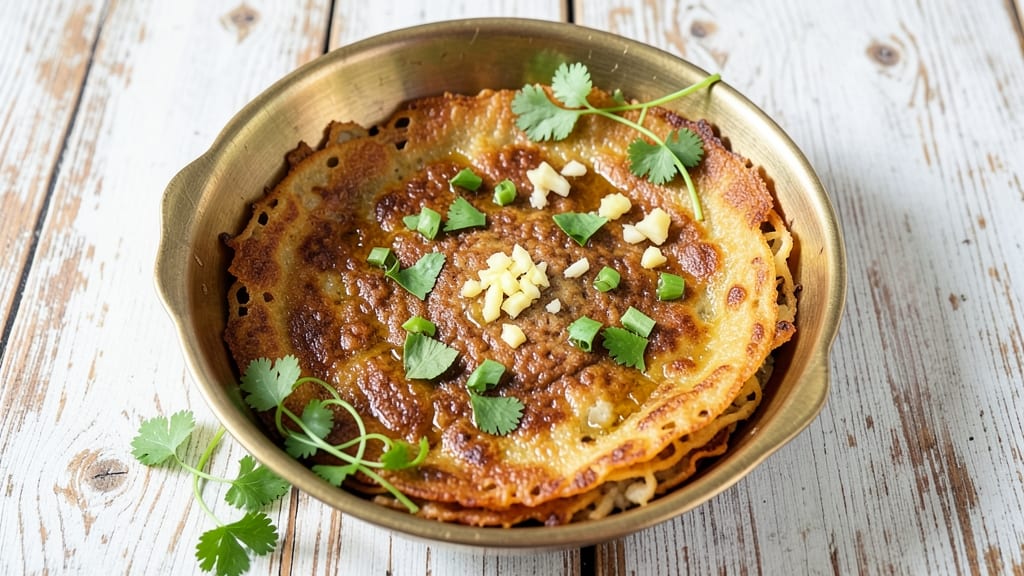
This brown rice dosa recipe transforms the classic South Indian crepe into a nutty, protein-rich powerhouse while keeping the signature crispy edges and fluffy centers. The secret lies in fermenting brown rice with urad dal, creating a tangy, airy batter that's packed with fiber and nutrients—no refined flour in sight.
What sets this apart is the deep, toasty flavor from brown rice, which develops during the 8-12 hour fermentation while maintaining the traditional dosa texture.
The crispy golden edges and soft interior come from perfecting the pan-fry technique, where hot oil and careful flipping ensure every bite delivers that satisfying contrast. Serve with coconut chutney or sambar for the full experience.
Ingredients for brown rice dosa
Fermented brown rice and urad dal create a nutty, protein-rich dosa batter with crispy edges and fluffy centers.
| Ingredient | Amount | Notes |
|---|---|---|
| Brown Rice 🌾 | 1 cup | Uncooked, long-grain preferred |
| Urad Dal 🌱 | ½ cup | Split, rinsed thoroughly |
| Rice Flour 🌾 | ¼ cup | For crispy edges |
| Fresh Fenugreek Leaves 🌿 | ¼ cup | Chopped, methi leaves |
| Fresh Curly Parsley 🌿 | ¼ cup | Chopped, for freshness |
| Fresh Ginger 🧄 | 1 tbsp | Grated, aromatic |
| Asafoetida Powder 🌶️ | ¼ tsp | Hing, essential for flavor |
| Salt 🧂 | 1 ½ tsp | Adjust to taste |
| Water 💧 | 1 ½ cups | Filtered or spring water |
| Vegetable Oil 🫒 | ½ cup | High smoke point |
| Lemon Juice 🍋 | 1 tbsp | Freshly squeezed |
| Coconut Chutney 🥥 | ½ cup | For serving, optional |
The brown rice should be organic, unpolished for optimal fermentation and nutty flavor. Navan or Kalyan brand from Indian specialty stores delivers consistent quality. Urad dal must be split, not whole—soaking for 4-6 hours before grinding ensures a smooth batter. Fresh fenugreek and parsley are non-negotiable for authentic flavor; Indian grocery stores carry these in frozen sections if fresh isn't available. The ginger should be organic, preferably from a local farmers market to maximize aromatic potency.
No urad dal? Chana dal or moong dal work in a pinch, but fermentation time increases. Substitute rice flour with oat flour at 1:1 ratio for gluten-free needs. The asafoetida (hing) is crucial—omit only if avoiding strong flavors. For extra crispiness, add 1 tsp cornstarch to the batter. The lemon juice acts as a natural preservative; bottled lemon juice lacks freshness—always use freshly squeezed. Fermentation time varies by climate: 8 hours minimum, 12 hours ideal for optimal texture.
Store unfermented batter in the fridge for up to 2 days before fermentation. Fermented batter keeps for 8 hours max—use within this window for best texture. Leftover dosas reheat beautifully in a skillet with 1 tsp oil for 2-3 minutes per side. The coconut chutney should be homemade or store-bought unsweetened—avoid versions with added sugar. Freeze dosas between parchment paper for up to 1 month—reheat from frozen with extra oil.
Why You'll Love This Recipe
- No-Soaking Needed: I’ll be real—soaking rice overnight is a hassle. With brown rice dosa, you just soak the urad dal (2-3 hours max) while the rice flour sits dry. That’s it. No waiting all night, no forgotten jars of rice.
- Earthy Crispy Magic: That fenugreek and parsley? They’re the secret weapon. The leaves add a fresh, slightly bitter punch that cuts through the rice’s nuttiness, while the urad dal gives it that signature dosa crisp—golden edges that shatter like a perfect crepe.
- Lunchbox Hero: Between us, this is my go-to for packed lunches. The dosas reheat beautifully (toast them in a dry pan, no sogginess), and the brown rice keeps you full longer than white flour ever could. My kids actually ask for seconds—no joke.
- Budget Nutrient Boost: Urad dal and brown rice are cheap staples, but they pack a protein punch. You’re feeding a family for less than takeout, and honestly? The parsley and fenugreek make it feel like a fancy brunch, not a budget meal. Win-win.
Step-by-step instructions for brown rice dosa
Transform simple ingredients into crispy, nutty dosas with this precise fermentation and cooking method.
Soak and Grind the Batter Base
Combine the 1 cup brown rice and 0.5 cup urad dal in a large bowl. Add 1.5 cups water and let soak for 6-8 hours or overnight at room temperature. This extended soaking ensures proper fermentation and prevents a bitter flavor from the brown rice.
After soaking, drain any excess water and transfer the mixture to a wet grinder or food processor. Add 1 tbsp grated fresh ginger, 0.25 cup chopped fresh fenugreek leaves, and 0.25 cup chopped fresh curly parsley. Grind into a smooth, slightly thick batter—it should resemble pancake batter consistency. The batter should be well aerated but not watery.
Ferment for Maximum Flavor
Transfer the ground batter to a clean, wide-mouthed bowl. Sprinkle 1.5 tsp salt and 0.25 tsp asafoetida powder evenly over the surface. Cover the bowl with a damp cloth and let ferment at room temperature for 8-10 hours. The ideal fermentation temperature is 80-85°F—if your kitchen is cooler, extend fermentation to 12 hours. You'll know it's ready when you see small bubbles forming on the surface and a slightly tangy aroma develops.
This fermentation step is critical—it develops the signature dosa flavor and creates the light, fluffy texture. Avoid over-fermenting, as the batter will develop a strong sour smell and the dosas may taste bitter.
Prepare the Batter for Cooking
After fermentation, the batter should be well-risen and slightly bubbly. Stir in 0.25 cup rice flour and mix thoroughly to prevent lumps. The rice flour helps create the signature crispy edges. Add 1 tbsp lemon juice and mix again—this brightens the flavor and balances the fermentation tang.
Let the batter rest for 30 minutes before cooking. This final rest allows the gluten to relax, ensuring smooth pouring and even cooking. The batter should now have a thick, spreadable consistency similar to heavy cream.
Cook the Dosas to Golden Perfection
Heat a non-stick skillet or dosa pan over medium-high heat. Add 1 tablespoon vegetable oil and swirl to coat the entire surface. Pour a ladleful of batter (about ¼ cup) into the center of the pan. Immediately tilt the pan in a circular motion to spread the batter thinly and evenly into a 6-inch circle. The edges should be slightly thicker than the center for crispiness.
Cook for 2-3 minutes until the edges turn golden brown and small bubbles form on the surface. Flip carefully using a dosa spatula and cook the other side for 1-2 minutes until lightly browned. The dosa should be crispy on the edges but still soft in the center. Repeat with remaining batter, adding oil as needed between batches.
Serve with Traditional Accompaniments
Transfer the cooked dosas to a wire rack to keep them warm and crispy. Serve immediately with 0.5 cup coconut chutney on the side. The contrast between the crispy dosa edges and the soft, nutty center creates the perfect texture balance. For an authentic experience, pair with sambar or a simple cucumber-onion salad to cut through the richness.
This method ensures dosas with perfect fermentation, crispy edges, and a satisfying nutty depth from the brown rice. The key lies in precise timing during fermentation and even heat distribution while cooking—both critical for achieving that restaurant-quality crunch and flavor.
Pro Tips For Making Brown Rice Dosa
- SOAK BROWN RICE LONGER: I learned this the hard way—brown rice needs 8-10 hours (not 6) to soften properly. The bran layer is stubborn, and skipping this step means your dosa will taste gritty instead of silky. Trust me, set it overnight and save yourself from chewing.
- GRIND URAD DAL COLD: Heat builds up fast when grinding lentils, and that’s exactly what you want to avoid. Stop the grinder every 2 minutes to let it cool—this prevents a gummy batter. My first batch turned into glue; now I treat it like a temperamental machine.
- CHOP FENUGREEK FINE: Those tough fenugreek stems don’t break down like parsley. Pulse them in a blender for 5 seconds before adding to the batter—this keeps the texture smooth, not fibrous. I used to chop by hand and ended up with mouthfuls of chewy bits. (Yes, even if you’re impatient like me.)
- REST BATTER 30 MINUTES: This isn’t optional. After mixing, let the batter sit covered—no stirring. The urad dal releases starch, and the rice absorbs it properly. I skipped this once and got dosas that split like brittle paper. Thirty minutes is all it takes; your future self will thank you.
Creative variations of brown rice dosa
Spicy Red Chili Dosa
Transform your dosas into a fiery delight by adding 1-2 tbsp red chili powder and 1 tsp cayenne pepper to the batter after fermentation. For extra heat, mix in 2 tbsp finely chopped green chilies with the fenugreek and parsley.
The brown rice base handles the heat beautifully, creating crispy dosas with a subtle kick that lingers. Serve with a cooling mint-coriander chutney to balance the spice. 🌶️
Sweet Potato Swap
Boost nutrition and natural sweetness by replacing ½ cup of the brown rice with ½ cup cooked mashed sweet potato. The sweet potato adds moisture and a subtle caramelized flavor when cooked, while keeping the dosas crispy.
For best results, mash the sweet potato and mix it into the batter after grinding. Pair with a tangy tomato-onion salad to complement the sweetness. 🍠
Protein-Packed Ragi Dosa
For a gluten-free, high-protein twist, substitute ½ cup of the brown rice with ½ cup ragi (finger millet) flour. Ragi adds a nutty depth and improves digestibility while maintaining the crispy texture.
Ferment the batter for 10-12 hours to enhance the millet’s natural tang. Top with a peanut chutney for a protein-rich finish. 💪
Herb-Infused Green Dosa
Create vibrant green dosas by blending ½ cup spinach or kale into the batter after grinding. The greens add a fresh, earthy flavor that pairs perfectly with the nutty brown rice.
For extra richness, stir in 1 tbsp grated coconut along with the lemon juice. Serve with a ginger-tamarind chutney to highlight the herbal notes. 🌿
Cheesy Masala Dosa
Add a fusion twist by folding in ½ cup shredded paneer or mozzarella into the batter before cooking. The cheese melts slightly during cooking, creating a creamy center with crispy edges.
Sprinkle ½ tsp garam masala and ½ tsp turmeric into the batter for extra flavor. Pair with a minty raita to balance the richness. 🧀
Coconut-Chia Crunch
For a crunchy texture, mix 2 tbsp chia seeds and 1 tbsp toasted coconut flakes into the batter after fermentation. The chia seeds add fiber and omega-3s, while the coconut enhances the nutty flavor.
Press the batter slightly thicker for extra crunch. Serve with a spicy tamarind dip for a tropical-inspired meal. 🥥
Nutrition facts
Frequently asked questions
Why does my brown rice dosa batter taste bitter?
Bitterness in brown rice dosas usually comes from under-soaking the rice or over-fermentation. Soak the brown rice for 6-8 hours minimum (overnight is ideal) and ferment for only 8-12 hours—never let it sit beyond that. The tangy aroma should be pleasant, not sour or pungent. For extra flavor balance, add 1 tbsp lemon juice after fermentation.
Can I make brown rice dosas without a wet grinder?
Use a high-powered blender or food processor, but you'll need to work in batches. For best results, soak the rice and dal longer (8-10 hours) to soften them before blending. Add 2-3 tbsp water while blending to help break down the grains. The texture will be slightly coarser but still delicious—just mix well after grinding.
How do I get crispy edges on my dosas?
The secret lies in heat control and batter thickness. Use a non-stick pan on medium-high heat and swirl the oil generously. Pour the batter when it's thicker than pancake batter (should hold its shape when spooned). Cook until edges are golden brown (2-3 minutes) before flipping—this creates the signature crunch while keeping the center soft.
What's the best way to store leftover brown rice dosa batter?
Store unfermented batter in an airtight container in the fridge for up to 2 days. If fermenting later, let it come to room temperature before proceeding. For already fermented batter, use within 8 hours—it won't rise properly after that. Freeze cooked dosas between parchment paper for up to 1 month, reheating in a skillet with 1 tsp oil for 2 minutes per side.
Can I make brown rice dosas gluten-free?
Yes! Replace the 0.25 cup rice flour with 0.25 cup gluten-free oat flour or 0.2 cup cornstarch for crispy edges. The batter will be slightly less crispy but still delicious. For extra nutrition, try ½ cup ragi flour instead of brown rice—it adds protein while keeping the dosas gluten-free. Ferment for 10-12 hours to enhance flavor development.