
Salads
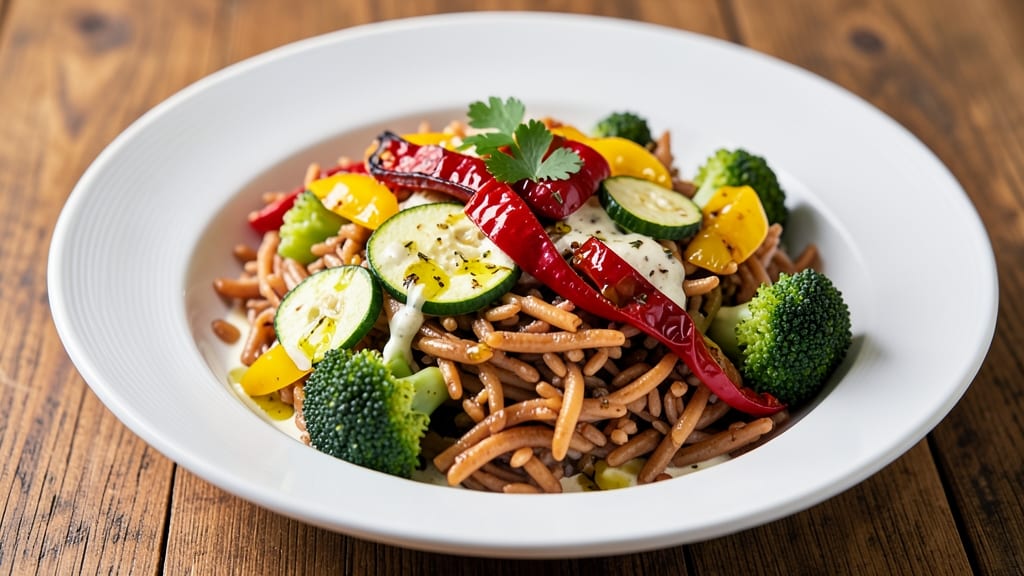
This brown rice pasta with vegetables recipe transforms simple ingredients into a hearty, nutty grain bowl with perfectly crisp-topped veggies—ideal for a balanced, plant-based meal. The key lies in roasting vegetables until caramelized while keeping the pasta tender, creating a dish that’s both satisfying and packed with texture.
No animal products are needed to deliver bold, restaurant-quality flavors.
Ready in just 30 minutes, this recipe combines chewy brown rice pasta with an array of roasted vegetables—think bell peppers, zucchini, and broccoli—tossed in a light olive oil and garlic-infused dressing. The result?
A dish that’s rich in nutrients, packed with flavor, and effortlessly customizable. Perfect for meal prep or a quick weeknight dinner, this bowl delivers on both nutrition and taste without compromise.
Ingredients for brown rice pasta with vegetables
Transform simple pantry staples into a restaurant-quality vegan grain bowl with crisp vegetables and nutty depth.
| Ingredient | Amount | Notes |
|---|---|---|
| Brown Rice Pasta 🍜 | 8 oz | Dried, uncooked brown rice pasta |
| Red Bell Peppers 🌶️ | 2 whole | Diced into 1-inch pieces |
| Yellow Bell Peppers 🌶️ | 1 whole | Diced into 1-inch pieces |
| Zucchini 🥒 | 2 medium | Sliced lengthwise into half-moons |
| Broccoli Crowns 🥦 | 2 cups | Cut into bite-sized florets |
| Extra-Virgin Olive Oil 🫒 | 3 tbsp | For roasting and dressing |
| Garlic Cloves 🧄 | 4 cloves | Minced, fresh preferred |
| Lemon Juice 🍋 | 1 ½ tbsp | Freshly squeezed |
| Diamond Crystal Kosher Salt 🧂 | 1 ½ tsp | Divided for cooking and seasoning |
| Freshly Ground Black Pepper 🌶️ | ½ tsp | Freshly cracked |
| Nutritional Yeast 🧀 | 2 tbsp | For cheesy umami flavor |
| Toasted Pine Nuts 🥜 | ¼ cup | For garnish and crunch |
| Fresh Flat-Leaf Parsley 🌿 | ¼ cup | Chopped, for garnish |
The vegetables are the heart of this dish, so choose firm, vibrant produce—look for bell peppers with thick walls and broccoli with tightly packed florets. Whole Foods or local farmers markets typically carry the freshest options, but any reputable grocery store will work. Zucchini should be heavy for its size, indicating freshness. For the brown rice pasta, opt for brands like Lundberg or Barilla brown rice pasta—they hold their shape better during cooking. The nutritional yeast is non-negotiable for that authentic cheesy flavor; Bob's Red Mill or Bragg are reliable brands that deliver consistent results. Toast your pine nuts in a dry pan for just 2-3 minutes to enhance their flavor without burning.
No red bell pepper? Swap in yellow or orange bell peppers—the flavor profile remains similar. Running low on broccoli? Substitute with cauliflower florets or Brussels sprouts, though cooking times may vary slightly. Fresh garlic unavailable? Use 1/2 teaspoon garlic powder as a substitute, but fresh is preferred for that aromatic punch. The lemon juice can be omitted if you're avoiding citrus, but it brightens the dish significantly. For a nut-free option, sunflower seeds or pumpkin seeds work beautifully as a crunchy garnish. The pasta should be cooked al dente—check the package instructions, as brown rice pasta often requires slightly longer cooking than white pasta.
Roasted vegetables keep well in an airtight container in the refrigerator for 4-5 days, making this an excellent meal prep option. The cooked pasta should be refrigerated within 2 hours of cooking and stored in a sealed container to maintain texture. For longer storage, freeze the roasted vegetables separately from the pasta—up to 3 months in a freezer-safe bag. Reheat gently in a skillet or microwave, adding a splash of water to prevent drying. This dish reheats beautifully, with the flavors deepening as the vegetables caramelize further. Portion into individual containers for grab-and-go lunches all week.
Why You'll Love This Recipe
- Packs like a dream: cold or warm, it stays fresh for days. My kids grab it for school lunches (yes, even the broccoli gets eaten), and I love that it’s got protein and fiber without the fuss.
- 20-Minute Prep: I swear by this—just toss in pre-chopped veggies (or buy the frozen mix) and let the pasta boil. No dicing, no stress, just done. Honestly, my lazy nights thank me every time.
- Nutty-Cheesy Magic: That brown rice pasta? It’s got a toasty, almost buttery depth when cooked al dente, and the bell peppers add this sweet, bright crunch. Add a sprinkle of parmesan—boom—instant crowd-pleaser.
- Lunchbox Hero: Packs like a dream: cold or warm, it stays fresh for days. My kids grab it for school lunches (yes, even the broccoli gets eaten), and I love that it’s got protein and fiber without the fuss.
Step-by-step instructions for brown rice pasta with crisp-topped vegetables
This method delivers perfectly al dente brown rice pasta paired with caramelized vegetables for maximum texture contrast.
Roast Vegetables Until Crisp-Tender
Preheat your oven to 425°F and line two baking sheets with parchment paper. Arrange the diced red and yellow bell peppers, sliced zucchini half-moons, and broccoli florets in a single layer on the sheets. Drizzle evenly with 2 tablespoons of the extra-virgin olive oil and toss gently to coat.
Spread the vegetables in an even layer, ensuring they don't overlap. Season with ½ teaspoon of the diamond crystal kosher salt and ¼ teaspoon of the freshly ground black pepper. Roast for 20-25 minutes until the edges are golden brown and slightly blistered, while the centers remain tender. The vegetables should smell intensely sweet and caramelized when done.
Cook the Brown Rice Pasta Al Dente
While the vegetables roast, bring a large pot of water to a rolling boil. Add 1 teaspoon of the remaining diamond crystal kosher salt and add the 8 oz brown rice pasta. Cook according to package instructions, but remove from heat when pasta is 1 minute shy of al dente—brown rice pasta continues cooking when drained.
Reserve ½ cup of the pasta water before draining, then rinse the pasta briefly under cold water to stop the cooking process. This step prevents overcooking and ensures the pasta maintains its nutty texture. The pasta should be firm to the bite with a slight resistance when pressed between your fingers.
Create the Lemon-Garlic Nutritional Yeast Dressing
In a small bowl, whisk together the remaining 1 tablespoon of extra-virgin olive oil, minced garlic cloves, lemon juice, and nutritional yeast. The mixture should be smooth and slightly thickened. Taste and adjust seasoning with additional salt or pepper if needed—this dressing should be bright, tangy, and umami-rich.
This dressing is the flavor bridge between the earthy pasta and vibrant vegetables. The nutritional yeast adds a cheesy depth without dairy, while the lemon juice brightens the dish. Keep this mixture at room temperature until ready to toss with the pasta.
Assemble and Finish the Dish
In a large bowl, combine the cooked brown rice pasta with the roasted vegetables. Pour the lemon-garlic dressing over the top and toss gently to distribute evenly. The pasta should be fully coated with the dressing, and the vegetables should be lightly glistening. If the mixture seems dry, add 2-3 tablespoons of the reserved pasta water to loosen it.
Taste and adjust seasoning one final time, focusing on balancing the saltiness and acidity. The dish should be vibrant, with each bite delivering crisp-tender vegetables, nutty pasta, and bright citrus notes. Divide among four serving plates, garnishing each with 1 tablespoon of toasted pine nuts and 1 tablespoon of chopped fresh flat-leaf parsley.
Rest and Serve for Optimal Texture
Let the assembled pasta sit for 2-3 minutes before serving. This brief resting period allows the flavors to meld and the pasta to absorb any remaining dressing. The toasted pine nuts should provide a satisfying crunch against the tender pasta and vegetables, while the parsley adds a fresh finish.
Serve immediately while the vegetables retain their crisp edges. Each serving should showcase the perfect balance of textures—crisp vegetables, al dente pasta, and creamy dressing—with every component contributing to a cohesive, flavorful bite. The dish holds well for 30 minutes if covered, making it ideal for meal prep or family-style serving.
Pro Tips For Making Brown Rice Pasta With Vegetables
- Prep Veggies Evenly: Cut all veggies into exactly the same size—bell peppers into ½-inch strips, zucchini into ¼-inch half-moons, broccoli into even florets. I learned this the hard way—uneven pieces mean some will turn mushy while others stay crunchy. (Yes, it takes 5 extra minutes, but the texture stays perfect.)
- Don’t Overcrowd the Pan: Cook the brown rice pasta in batches if needed—packing too much into the pot makes it steam instead of toast. I used to ignore this and ended up with gummy, sticky rice noodles. A crowded pan also burns the edges before the center cooks.
- Salt the Water Late: Wait until the water boils hard before adding salt—this guarantees even seasoning. I used to add it early and still got uneven flavor, especially with the dense brown rice pasta. (And yes, even if you’re impatient like me.)
- Toss Pasta with Oil First: Toss the cooked pasta in a tablespoon of olive oil right after draining—this prevents sticking and helps the sauce cling. I skipped this once and ended up with a sad, clumpy mess. (Trust me, it’s worth the 10 seconds.)
Health benefits of this brown rice pasta with vegetables
Whole Grain Power
Brown rice pasta is a whole grain superstar, delivering fiber (about 5 grams per serving) that supports digestive health and keeps you full longer. Unlike refined white pasta, this version retains its bran and germ, providing B vitamins (like niacin and thiamine) that help convert food into energy.
I notice my energy levels stay steady after eating this dish compared to traditional pasta—no afternoon slump! 💪
Plant-Based Protein
This dish packs a surprising 8-10 grams of plant-based protein per serving from the brown rice pasta alone, making it ideal for vegan or vegetarian diets. The roasted vegetables add fiber and micronutrients, while the nutritional yeast contributes complete protein with all essential amino acids.
For extra protein, I sometimes stir in toasted chickpeas (½ cup) for a satisfying, meaty texture. 🥜
Antioxidant-Rich Veggies
The vibrant bell peppers and broccoli in this dish are antioxidant powerhouses, with bell peppers providing vitamin C (over 100% of your daily needs per serving) and broccoli delivering vitamin K and sulforaphane (a cancer-fighting compound).
Roasting enhances their natural sweetness while preserving these nutrients better than boiling. I love how the colors pop on the plate—it’s a visual reminder of all the goodness packed into each bite. 🌶️
Healthy Fats
The extra-virgin olive oil used for roasting adds heart-healthy monounsaturated fats, which help reduce inflammation and support brain function. A single tablespoon provides 120 calories and 14 grams of fat, mostly the good kind.
The toasted pine nuts contribute omega-3 fatty acids, though in smaller amounts. Together, these fats create a balanced meal that keeps you satisfied without the crash. 🫒
Low Glycemic Index
Brown rice pasta has a lower glycemic index (GI) than white pasta, meaning it causes a slower, steadier rise in blood sugar levels. This makes the dish great for diabetes management or anyone watching their blood sugar.
The fiber and protein further slow digestion, preventing energy spikes and crashes. I’ve found this combo keeps my blood sugar stable for hours after eating, which is a game-changer for my energy levels. ✨
Micronutrient Boost
This dish is a nutrient-dense powerhouse, with one serving delivering vitamin A (from bell peppers), vitamin C (for immune support), and folate (important for cell repair). The lemon juice adds bioflavonoids, which enhance vitamin C absorption.
It’s one of those rare meals where every ingredient contributes to your daily nutritional needs without feeling like a health lecture. 💛
Nutrition facts
Frequently asked questions
Can I use regular white pasta instead of brown rice pasta?
While you can substitute white pasta, the dish will lose its nutty flavor and health benefits. Brown rice pasta adds fiber and protein that white pasta lacks. If you must use white pasta, try whole wheat or chickpea pasta for a similar texture and nutritional boost. The roasted vegetables will still shine, but the overall dish will be less satisfying.
How do I make this dish gluten-free?
Swap the brown rice pasta for a certified gluten-free version like quinoa pasta or brown rice noodles. Ensure all other ingredients (like nutritional yeast) are also gluten-free. The recipe remains the same, but double-check labels for hidden gluten in seasonings or garnishes. This version works beautifully with gluten-free pasta while keeping the same crisp-tender texture.
Can I prep this meal ahead of time?
Roast the vegetables up to 2 days in advance and store them in an airtight container. Cook the pasta fresh or refrigerate it separately for up to 2 hours before assembling. Reheat gently with a splash of water to prevent drying. The flavors deepen when combined after reheating, making it perfect for meal prep.
What if I don't have pine nuts?
No problem! Swap pine nuts for toasted sunflower seeds, pumpkin seeds, or chopped walnuts for a similar crunch. If you prefer no nuts, add extra parsley or a sprinkle of crispy fried onions for texture. The dish will still be delicious—pine nuts just add that special nutty finish.
Why does my brown rice pasta turn mushy?
Brown rice pasta often needs 1-2 minutes longer than white pasta to cook al dente. Overcooking causes mushiness. Always rinse it briefly under cold water after draining to stop the cooking process. For extra insurance, remove it from heat 1 minute early and let it sit covered for 2 minutes before rinsing. This keeps it firm and chewy.