
Main Courses
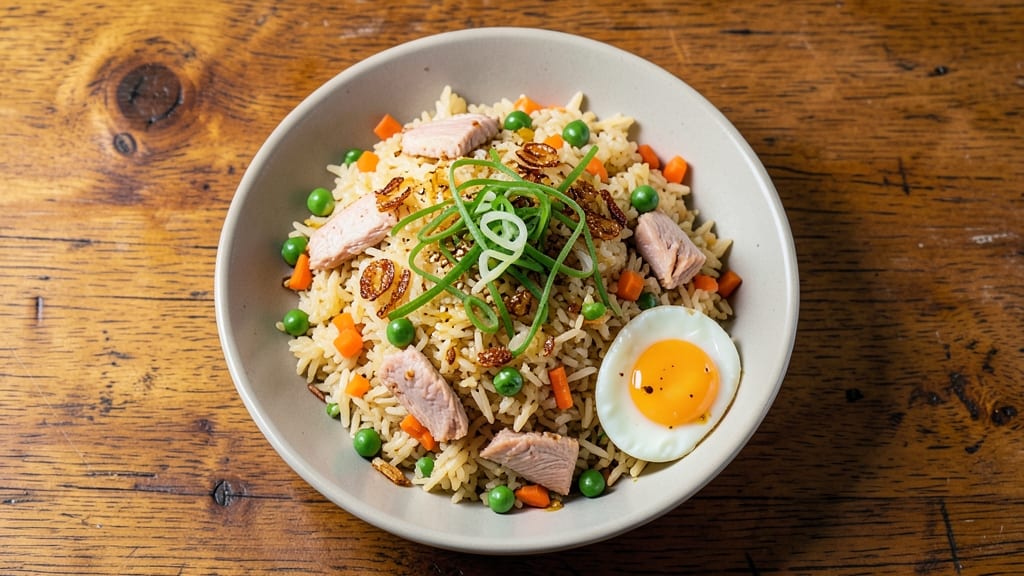
This canned tuna fried rice recipe transforms pantry staples into a restaurant-worthy meal with crispy fried egg and vibrant veggies in just 20 minutes. The secret lies in high-heat stir-frying that creates wok-like texture without specialized equipment—perfect for weeknight dinners when fresh ingredients are limited.
Every bite delivers protein-packed tuna, tender veggies, and that satisfying egg yolk release.
What makes this dish shine is the balance of textures: crispy egg whites, chewy rice, and tender vegetables all coated in a savory soy-ginger sauce. The recipe uses simple pantry ingredients while delivering restaurant-quality results, proving that canned tuna can be the star of a satisfying meal.
Ready to elevate your lunch rotation with this protein-packed one-pan solution?
Ingredients for canned tuna fried rice
Pantry staples meet restaurant-quality textures in this protein-packed fried rice.
| Ingredient | Amount | Notes |
|---|---|---|
| Canned Tuna in Water 🐟 | 2 cans | Drained, high-quality preferred |
| Cooked White Rice 🍚 | 3 cups | Day-old rice preferred, chilled |
| Large Eggs 🥚 | 2 whole | Room temperature for crispiness |
| Carrots 🥕 | ½ cup | Finely diced, small pieces |
| Frozen Peas 🌱 | ½ cup | Thawed, no need to drain |
| Green Onions 🧅 | 3 whole | Thinly sliced, white and green parts |
| Soy Sauce 🍶 | 3 tbsp | Low-sodium preferred for balance |
| Sesame Oil 🫒 | 1 tbsp | Toasted, for aroma |
| Vegetable Oil 🫒 | 2 tbsp | High smoke point for frying |
| Fresh Ginger 🌿 | 1 tbsp | Grated, finely minced |
| Garlic Cloves 🧄 | 2 cloves | Minced, aromatic base |
| Salt 🧂 | ½ tsp | Kosher or sea salt |
| Black Pepper 🌶️ | ¼ tsp | Freshly ground for flavor |
| Sesame Seeds 🌾 | 1 tbsp | Toasted, for garnish |
The tuna quality matters—Wild Planet or Starkist in water are my go-tos for that clean, rich flavor. Day-old rice is non-negotiable; fresh rice turns mushy under high heat. Trader Joe's sells pre-cooked rice in the freezer section if you're short on time. For the veggies, frozen peas work perfectly (no need to thaw), and fresh green onions add brightness—white parts for flavor, green for color. The ginger and garlic should be freshly grated and minced—jarred versions lack the punch this dish needs.
No fresh ginger? Ground ginger at half the amount works in a pinch, but you'll miss that fresh zing. Swap frozen peas for corn if you prefer, but peas hold their shape better. The soy sauce can be tamari for gluten-free, but low-sodium versions prevent over-salting. For extra protein, add 1/2 cup cooked shrimp with the tuna. The sesame oil is purely for aroma—use sparingly or skip if you dislike its flavor. The egg whites need high heat to crisp properly; medium or low will give you sad, rubbery results.
Rice reheats beautifully—just add a splash of water and microwave for 1 minute. Store leftovers in airtight containers for 3-4 days or freeze for 2 months. The fried egg stays crispy for about 20 minutes after cooking, so make it fresh when serving. Double the batch and freeze portions for quick lunches—just reheat with a splash of water to restore texture.
Why You'll Love This Recipe
- Pantry-to-Plate Magic: I swear by this one—open a can, dump the rice, crack an egg. That’s it. No fancy shopping lists, no last-minute grocery runs. The tuna’s already cooked, the rice is just reheating, and the veggies? Toss in whatever’s lurking in the freezer.
- Umami Bomb: The tuna brings this dish to life—salty, briny, with that melt-in-your-mouth texture. Scramble in a fresh egg, and suddenly you’ve got a protein punch that’s ridiculously satisfying. (Honestly, I’ll take this over takeout any day.)
- Lunchbox Hero: Pack it cold or reheat it—this rice plays nice either way. My kids grab it for school lunches, and my husband eats it straight from the fridge for work. Bonus: The peas stay bright, the carrots stay crisp, and the egg keeps it interesting.
- Budget Win: I feed four people for under $8 with this. Canned tuna? Cheap. Frozen peas? Always on sale. Leftover rice? Never wasted. It’s the kind of meal that makes me feel like I’m actually managing my grocery bill—without sacrificing flavor.
Step-by-step instructions for crispy egg and veggie fried rice
Here's how to transform simple pantry staples into restaurant-quality fried rice with perfectly crispy eggs and vibrant vegetables.
Prepare the Base Ingredients
Start by draining the 2 cans of canned tuna in water thoroughly, breaking up the flakes with a fork to distribute them evenly. In a medium bowl, combine the 3 cups of cooked white rice, the drained tuna, 0.5 cup of finely diced carrots, and 0.5 cup of thawed frozen peas. The rice should be day-old and chilled for best texture—this prevents mushiness when stir-fried.
Add the 3 whole green onions, sliced thinly, and the 1 tablespoon of finely minced fresh ginger to the bowl. Stir gently to distribute all ingredients evenly. I like to use a silicone spatula for this step to avoid breaking up the rice grains too much. Set the bowl aside while you prepare the aromatics and eggs.
Create the Aromatic Base
Heat a large, non-stick skillet or wok over medium-high heat. Add the 2 tablespoons of vegetable oil and allow it to heat until shimmering but not smoking. Add the 2 minced garlic cloves and stir for 30 seconds until fragrant—you'll smell that unmistakable garlic aroma that forms the foundation of the dish.
Immediately add the 3 tablespoons of soy sauce and 1 tablespoon of sesame oil, stirring constantly to combine. The soy sauce will begin to sizzle and caramelize slightly, deepening its flavor. This is where the umami magic happens, so don't rush this step. The mixture should look glossy and slightly reduced after about 1 minute of cooking.
Cook the Eggs to Crispy Perfection
Push the sauce mixture to one side of the pan, creating space to add the 2 room-temperature eggs. Let them sit undisturbed for 10-15 seconds until the edges begin to set. This creates the crispy edges we're after while keeping the centers runny.
Using a spatula, gently scramble the eggs until they're just set but still slightly moist—about 80% cooked. The eggs should form soft, slightly crispy curds with some liquid egg remaining. Remove the eggs from the pan and set them aside temporarily. You'll add them back at the end to maintain their texture.
Stir-Fry the Rice Mixture
Return the sauce mixture to even distribution across the pan. Add the rice and vegetable combination, spreading it out in an even layer. Stir-fry vigorously for 3-4 minutes over medium-high heat, breaking up any large clumps of rice with your spatula. You're looking for the rice to become slightly toasted at the edges while remaining tender in the center.
Season with the 0.5 teaspoon of salt and 0.25 teaspoon of freshly ground black pepper, stirring well to distribute evenly. The rice should be hot throughout and developing a light golden color from the caramelized soy sauce. This is where the flavors meld together—keep stirring to prevent burning at the bottom of the pan.
Combine and Finish
Return the scrambled eggs to the pan and gently fold them into the rice mixture using a spatula. Add the 1 tablespoon of toasted sesame seeds and toss everything together for another 30 seconds to distribute the seeds evenly. The eggs should reabsorb some of the rice's moisture, creating pockets of creamy yolk throughout.
Taste and adjust seasoning if needed—you might want to add a touch more soy sauce if the dish needs more umami depth. Serve immediately while still hot, garnished with additional green onion slices if desired. The perfect fried rice should have crispy edges on the rice, tender yet slightly crispy eggs, and a balance of savory, sweet, and umami flavors in every bite.
Pro Tips For Making Canned Tuna Fried Rice
- Drain and Press the Tuna: Open the can and drain the tuna thoroughly—then press it between paper towels to squeeze out every last drop of water. Wet tuna makes fried rice soggy, and this step guarantees your rice stays dry and crisp. I learned this after a batch turned into a sad, mushy mess.
- Scramble Eggs First, Then Rice: Cook the eggs in a separate pan until just set—soft curds, not rubbery—then set aside. When you stir-fry the rice, add the eggs back in at the end. This keeps them creamy and prevents them from breaking into tiny, dry bits in the hot wok. Sounds fussy, but it makes a real difference.
- Use Day-Old Rice: Cold, slightly dry rice fries up better than fresh. If your rice is still warm or sticky, spread it on a tray and refrigerate for 30 minutes before cooking. Fresh rice clumps and turns gummy—this trick guarantees separate, crisp grains every time.
- Skip the Peas Until the End: Add frozen peas only in the last 30 seconds of cooking. They’ll stay bright green and crisp instead of turning into mush. If you’re using fresh peas, blanch them first—just 1 minute in boiling water—to soften them slightly before adding. Overcooking them is the fastest way to ruin the texture.
Troubleshooting this dish
Mushy Rice Fix
If your fried rice turns out mushy, it’s almost always from using fresh rice. The starches in freshly cooked rice release too much moisture when heated again. Always use day-old rice—it’s the secret to perfect texture.
If you’re in a pinch, spread freshly cooked rice on a tray and refrigerate for 1 hour to mimic day-old texture. For extra insurance, pat the rice dry with a paper towel before stir-frying. 💡
Egg Texture Troubles
Rubbery or overcooked eggs happen when you scramble them too aggressively. Let the eggs sit undisturbed for 10-15 seconds after adding them to the pan to set the edges, then gently scramble until just set (about 80% cooked).
Remove them from the pan early and add them back at the end to keep them creamy. If your eggs are too dry, add a splash of water or soy sauce when reheating. 🥚
Sauce Too Salty
Over-salting is a common mistake, especially with low-sodium soy sauce. Taste your sauce before adding the rice—it should be flavorful but not briny. If it’s too salty, balance it with a pinch of sugar (¼ tsp) to cut the saltiness or add a splash of water to dilute.
For extra depth, stir in ½ tsp of rice vinegar to brighten the flavors without adding more salt. 🍶
Burnt Bottom Syndrome
Fried rice burns quickly because rice releases starches that stick to the pan. Always use a large, non-stick skillet or wok and keep the heat at medium-high. If your rice sticks, add 1-2 tbsp of water or broth to deglaze the pan before adding the rice mixture.
Stir constantly to prevent sticking—this is where most home cooks go wrong. A well-seasoned cast-iron skillet helps too! 🔥
Lacking Umami Depth
If your fried rice tastes flat, it’s probably missing umami. Boost flavor by adding 1 tsp of fish sauce or ½ tsp of MSG to the soy sauce mixture. For extra richness, stir in 1 tbsp of oyster sauce or a dash of Worcestershire sauce.
Even a splash of chicken or vegetable broth adds depth. The key is layering flavors—don’t be afraid to taste and adjust! 💛
Vegetables Too Soft
Overcooking veggies makes them mushy and unappetizing. Add harder veggies (like carrots) first and softer ones (like peas) later in the stir-fry process. Cook carrots for 1-2 minutes before adding the peas, which only need 30 seconds to warm through.
For extra crunch, reserve a handful of green onions to add at the very end. 🌱
Nutrition facts
Frequently asked questions
Can I use canned tuna in oil instead of water?
The recipe calls for water-packed tuna to keep the dish light and flavorful, but you can absolutely use oil-packed if that's what you have! Just drain it thoroughly and rinse with water to remove excess oil. For every can of oil-packed tuna, reduce the vegetable oil in the recipe by 1 teaspoon to balance the fat content. The texture will be slightly richer, which works well if you prefer a more decadent fried rice.
What's the best way to reheat leftover fried rice?
Reheat in a skillet over medium heat with a splash of water or broth (about 1-2 tablespoons) to restore moisture and prevent drying. Stir constantly for 2-3 minutes until piping hot. For microwave reheating, cover with a damp paper towel and heat in 30-second intervals, stirring between each. The key is gentle heat to avoid making the rice gummy. Add a fried egg on top when serving to keep it crispy!
Can I make this recipe without eggs?
Yes! If you're avoiding eggs, skip the egg step and stir in 1/2 cup cooked shrimp or 1/4 cup chopped hard-boiled egg substitute (like tofu or chickpeas) instead. For extra protein, add 1/2 cup shredded chicken or 1/4 cup chopped ham with the tuna. The dish will still be flavorful—just adjust the soy sauce to taste since eggs add natural umami.
How do I make this spicier?
Add heat by stirring in 1/2 teaspoon of chili flakes or 1 teaspoon of sriracha with the soy sauce. For extra kick, include 1/4 teaspoon of red pepper flakes or 1 thinly sliced jalapeño with the green onions. If you love spicy food, try 1 teaspoon of gochujang (Korean chili paste) mixed into the sauce for a sweet-spicy depth. Always taste before serving!
Can I use brown rice instead of white?
Brown rice works but requires adjustments—it's nuttier and absorbs more moisture, so use 2 cups uncooked brown rice (about 4 cups cooked) and increase the vegetable oil by 1 tablespoon. Cook the brown rice until fully tender (it takes longer), then spread it on a tray to cool completely before stir-frying. Brown rice holds up well but may need an extra 1-2 minutes of cooking time to crisp properly.