
Main Courses
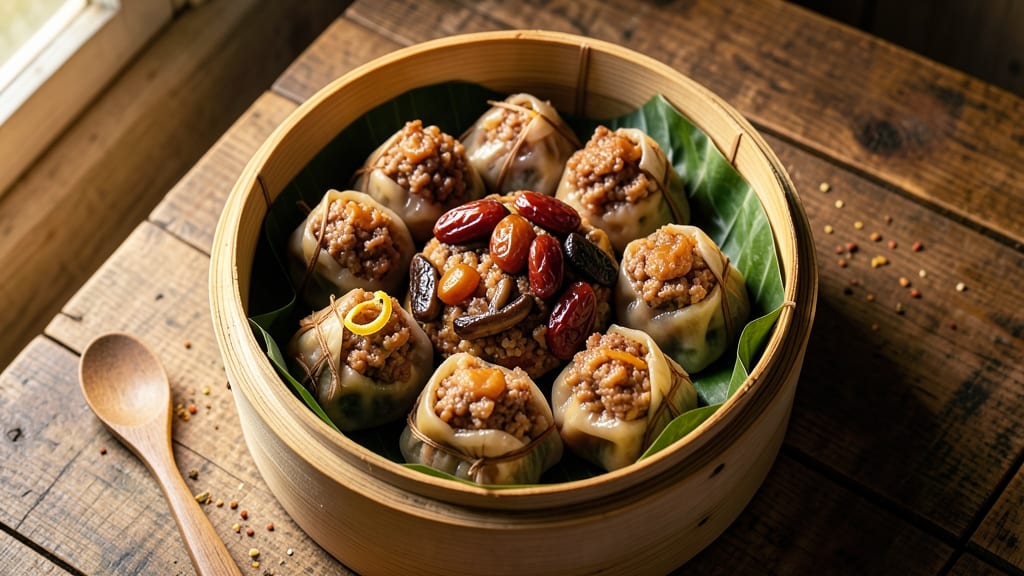
This Cantonese rice dumpling recipe transforms sticky glutinous rice into delicate, fragrant parcels wrapped in bamboo leaves—each bite delivers layers of savory pork, mushrooms, and aromatic five-spice powder.
The traditional technique of wrapping and steaming creates a silky texture that melts in your mouth, while the fragrant leaves infuse every dumpling with earthy depth. What makes these dumplings special is the balance of textures: tender rice, juicy filling, and crisp edges from perfect steaming.
The foundation begins with glutinous rice soaked overnight for maximum stickiness, ensuring each dumpling holds its shape while staying tender. Traditional Cantonese fillings like seasoned pork, shiitake mushrooms, and jujubes create a harmonious blend of flavors, while the five-spice powder adds warmth that lingers.
This recipe preserves authenticity while adapting to home kitchens, using simple tools like a steamer or pot for foolproof results.
By the time you unwrap your first steamed dumpling, you'll experience the perfect marriage of textures and aromas—silky rice giving way to juicy filling, all wrapped in the subtle bitterness of bamboo leaves.
The dumplings maintain their shape beautifully when served, making them ideal for gatherings or special occasions. Pair with a light ginger tea or soy-based dipping sauce to complement the rich flavors.
Whether you're celebrating Dragon Boat Festival or simply craving a taste of Cantonese tradition, these rice dumplings deliver restaurant-quality results at home. The process may seem intricate at first, but breaking it into manageable steps—soaking, wrapping, and steaming—makes it accessible for any home cook. Let's create these fragrant parcels together.
Ingredients for cantonese rice dumpling
Twelve ingredients, twelve dumplings of Cantonese tradition—each bite a symphony of five-spice and bamboo-infused rice.
| Ingredient | Amount | Notes |
|---|---|---|
| Glutinous Rice 🍚 | 2 cups | Uncooked, long-grain preferred |
| Ground Pork Shoulder 🐷 | 1 ½ lb | Lean but not too dry |
| Dried Shiitake Mushrooms 🍄 | ½ cup | Rehydrated, stems removed |
| Red Dried Dates 🍈 | ¼ cup | Chopped into small pieces |
| Bamboo Leaves 🌿 | 12 whole | Fresh or frozen, thawed |
| Five-Spice Powder 🌶️ | 1 ½ tbsp | Authentic Cantonese blend |
| Light Soy Sauce 🍶 | ½ cup | For marinating pork |
| Shaoxing Wine 🍷 | ¼ cup | For pork marinade |
| Sesame Oil 🌱 | 1 tbsp | For finishing touch |
| Salt 🧂 | ½ tsp | Kosher or sea salt |
| White Pepper 🌶️ | ¼ tsp | Freshly ground preferred |
| Neutral Oil 🫒 | 2 tbsp | For cooking filling |
| Water 💧 | 1 ½ cups | For soaking rice |
The glutinous rice is non-negotiable—Asian markets carry the best quality in bulk bins, and it needs to be soaked overnight (yes, overnight) for that perfect silky texture. If you're using dried shiitake mushrooms, soak them first—they should expand to about 2 cups when rehydrated. For bamboo leaves, frozen is fine if fresh isn't available, just thaw them completely before wrapping. The five-spice powder should be authentic Cantonese blend—Penzeys or Asian grocers stock the good stuff, and it's worth hunting down for that signature warmth. If you can't find it, a mix of cinnamon, fennel, star anise, clove, and Sichuan peppercorns works in a pinch.
No Shaoxing wine? Dry sherry is your best substitute—it carries that same umami depth. The ground pork should be lean but not dry; if it's too fatty, pat it dry with paper towels before cooking. For the dates, chop them finely—you want tiny pieces that blend into the filling without being noticeable. If you're short on bamboo leaves, banana leaves can work in a bind, though they won't give the same earthy aroma. The neutral oil is for cooking the filling—avocado or vegetable oil works best since they don't impart flavor. And for the love of dumplings, don't skip the sesame oil—just a drizzle at the end adds that final layer of complexity.
Soaked rice stays fresh in the fridge for up to 3 days if covered tightly with plastic wrap. The cooked filling can be refrigerated for 4 days or frozen for 3 months—just thaw overnight in the fridge before wrapping. Once wrapped, these dumplings keep for 2 days in the fridge, but they're best steamed fresh. If you're prepping ahead, wrap and freeze unsteamed—they'll steam beautifully straight from the freezer. And here's a pro tip: steam them in batches so they don't overcrowd, or they'll turn out soggy instead of silky.
Why You'll Love This Recipe
- No Fuss Wrapping: I swear, the filling comes together in one bowl—no fancy techniques. Just mix the ground pork with rehydrated shiitake, dates, and a pinch of salt, then spoon it into the glutinous rice. Wrap it in bamboo leaves like a burrito, and boom. Done.
- Umami Bomb Combo: Between the dried shiitake’s deep earthiness and the dates’ sticky sweetness, this filling is ridiculously flavorful. The pork stays juicy, and the bamboo leaves add this subtle, aromatic note—like a hug for your taste buds.
- Lunchbox Legend: These keep perfectly for days, whether steamed fresh or reheated in a pot. Pack them for work, freeze extras for lazy mornings, or serve them at potlucks—everyone will ask for the recipe.
- Budget-Friendly Feast: Ground pork shoulder stretches far, dried mushrooms add depth without cost, and glutinous rice is cheaper than jasmine. For under $10, you feed four people a dish that feels like a restaurant special. (Yes, even on a Tuesday night.)
Step-by-step instructions for Cantonese rice dumplings
Here's how to craft these fragrant dumplings with perfect texture and aroma.
Prepare the Glutinous Rice Filling
Rinse the 2 cups glutinous rice thoroughly under cold water until the water runs clear. This removes excess starch that could make the filling gummy. Drain well and transfer to a heatproof bowl. Add the 1.5 cups water and let it soak for 30 minutes at room temperature. The rice should absorb the water completely—press a grain between your fingers to check for slight resistance.
While the rice soaks, rehydrate the 0.5 cup dried shiitake mushrooms by soaking them in hot water for 20 minutes. Drain, remove stems, and finely chop the mushrooms. Chop the 0.25 cup red dried dates into small pieces as well. In a small bowl, combine the chopped mushrooms, dates, 1.5 tablespoons five-spice powder, 0.5 teaspoon salt, and 0.25 teaspoon white pepper. Set aside—this aromatic mixture will infuse the filling with depth.
Cook the Pork Filling
Heat 2 tablespoons neutral oil in a non-stick skillet over medium heat. Add the 1.5 lb ground pork shoulder and cook, breaking it apart with a wooden spoon, until it loses its raw color and becomes light brown—about 5-7 minutes. The pork should be fully cooked through but not crispy.
Increase heat to medium-high and add the 0.5 cup light soy sauce and 0.25 cup shaoxing wine. Stir vigorously to deglaze the pan, scraping up any browned bits that cling to the bottom. These bits are packed with flavor—don't miss them. Cook for another 2 minutes until the liquid reduces slightly and the pork mixture becomes sticky. Remove from heat and let cool completely before combining with the rice.
Combine and Shape the Dumplings
Drain the soaked glutinous rice thoroughly, then transfer it to a large mixing bowl. Add the cooled pork mixture and the reserved mushroom-date-spice blend. Gently fold everything together with your hands until fully combined—you should have a cohesive, slightly sticky mass. The texture should be firm but pliable, like wet sand.
Lay out the 12 bamboo leaves on a clean surface. Using your hands, take a small handful of the filling (about 2 tablespoons) and shape it into a 1-inch thick oval about 3 inches long. Place this oval in the center of a bamboo leaf, leaving a 1-inch border around the edges. Fold the sides of the leaf inward, then roll it tightly from the bottom up, sealing the edges as you go. The finished dumpling should be cylindrical and about 4 inches long.
Steam to Perfection
Arrange the wrapped dumplings upright in a steamer basket, leaving a ½-inch gap between each one. Bring 2 inches of water to a rolling boil in the pot below, then place the steamer basket on top. Cover with a lid and steam over medium-high heat for 20 minutes. The steam should be vigorous—if it slows down, add more boiling water to the pot.
After 20 minutes, carefully remove one dumpling to check for doneness. The bamboo leaf should feel firm when pressed gently, and the rice filling should be tender but still slightly chewy—not mushy. If needed, steam for another 2-3 minutes. Once done, remove the dumplings from the leaves and drizzle lightly with 1 tablespoon sesame oil before serving. The aroma should be intoxicating—warm, spiced, and deeply savory.
Pro Tips For Making Cantonese Rice Dumpling
- STEAM AT 90% POWER: I learned this the hard way—steaming at full blast dries out the dumplings faster than you can say "overcooked." Keep the heat at medium-high and let the water simmer hard enough to create a steady stream of steam, but not so violent it scalds the top layer. A good test: the water should bubble aggressively but not boil over like a volcano.
- SOAK DATES IN HOT WATER: Red dried dates are tough little devils when dry, and if you skip soaking them, they’ll turn your filling into a chewy mouthful instead of a meltingly sweet burst. Toss them in a bowl of hot water for 10 minutes first—just enough to soften them so they blend into the pork without fighting for texture.
- WRAP TIGHTER THAN YOUR LAST BILL: Loose wrappings are the fastest way to a sad, lumpy dumpling. Press the bamboo leaves firmly around the filling, overlapping the edges like a burrito, and tie them with kitchen twine twice—once at the top, once at the bottom. I used to skimp, and half my dumplings would unravel by the third bite.
- SALT THE PORK TWICE: Add a pinch of salt to the raw ground pork before cooking it, then another pinch after it’s browned and you’re mixing in the mushrooms and dates. The first round seasons the meat evenly, while the second balances the sweetness of the dates. Trust me, your taste buds will notice the difference—it’s not just about flavor, it’s about harmony.
Serving suggestions for leftovers
Garnish & Plating
Serve dumplings on a wooden platter or banana leaf for an authentic touch. Unwrap each dumpling carefully and arrange them upright in a fan shape—this showcases their cylindrical form beautifully.
Drizzle with extra sesame oil and sprinkle toasted sesame seeds for crunch. For presentation, add thinly sliced scallions or pickled red chilies on the side. 🌿
Dipping Sauces
A light soy-ginger sauce elevates these dumplings perfectly. Mix ¼ cup soy sauce, 1 tbsp rice vinegar, 1 tsp grated ginger, and ½ tsp sugar. For heat lovers, add 1 tsp chili crisp.
Serve in small ceramic bowls alongside the dumplings. Alternatively, a sweet plum sauce (mango or apricot-based) balances the savory filling beautifully.
Side Dish Pairings
Complement with steamed bok choy or stir-fried greens to cut through the richness. A cucumber salad with rice vinegar and sesame seeds adds freshness. For heartier meals, serve with congee or steamed jasmine rice to soak up any extra flavors. The contrast of textures makes every bite more satisfying. 🥗
Beverage Recommendations
Pair with jasmine tea or pu-erh tea to cleanse the palate between bites. For a festive touch, serve lychee or longan juice—its sweetness contrasts the savory dumplings. A light lager like Asahi also works well for casual gatherings. Avoid heavy wines that might overpower the delicate flavors.
Serving Warmth
Keep dumplings warm in a chafing dish or insulated container if serving a crowd. The steam should remain gentle—overheating can make the bamboo leaves crisp too quickly.
For a restaurant-style finish, sprinkle crushed roasted peanuts on top just before serving. This adds a satisfying crunch that balances the soft filling. 💫
Occasion Adaptations
For Dragon Boat Festival, serve with sticky rice cakes and mung bean soup for a traditional spread. During lunar new year, pair with mandarin oranges and red envelopes for festive symbolism.
For everyday meals, a simple green tea and fruit platter keeps it elegant yet approachable. The dumplings shine in any setting! ⚡
Nutrition facts
Frequently asked questions
Can I make these dumplings without bamboo leaves?
Yes, but the flavor will differ. Use banana leaves as a substitute—they're more widely available and still impart a pleasant aroma. If neither is available, wrap the filling in parchment paper or plastic wrap, though the texture won't be as authentic. The key is to keep the dumplings tightly sealed during steaming.
How do I prevent the glutinous rice from turning gummy?
Rinse the rice thoroughly until the water runs clear to remove excess starch. Soak it for only 30 minutes (not overnight) and drain it completely before mixing. The rice should be moist but not watery—press a grain between your fingers to test. Over-soaking is the #1 cause of gummy texture. Also, avoid oversteaming!
What's the best way to store leftover dumplings?
Unsteamed wrapped dumplings freeze beautifully for 3 months—store them in an airtight container with parchment between layers. For leftovers, keep steamed dumplings in the fridge for 2 days in a sealed container. Reheat by steaming for 5-7 minutes or microwaving for 30 seconds covered with a damp paper towel. Never reheat in the oven—it dries them out.
Can I use chicken or shrimp instead of pork?
For chicken, use 1.5 lbs ground chicken thigh (darker meat stays juicier) and reduce the soy sauce to 0.3 cups. For shrimp, use 1.5 lbs peeled shrimp—toss them with 1 tbsp cornstarch before cooking to prevent curling. Both work well, but pork's fat content gives the traditional richness. Adjust seasoning to taste—chicken needs slightly more salt, while shrimp benefits from a pinch of MSG for umami.
Why did my dumplings fall apart when steaming?
This usually happens from one of three issues: over-soaked rice (too sticky), poor wrapping (leaves not sealed tightly), or overcrowding in the steamer. Check your rice texture first—it should hold shape when pressed gently. For wrapping, practice makes perfect; use dental floss to tie the ends if needed. And always leave ½-inch gaps between dumplings for even steaming.