
Main Courses
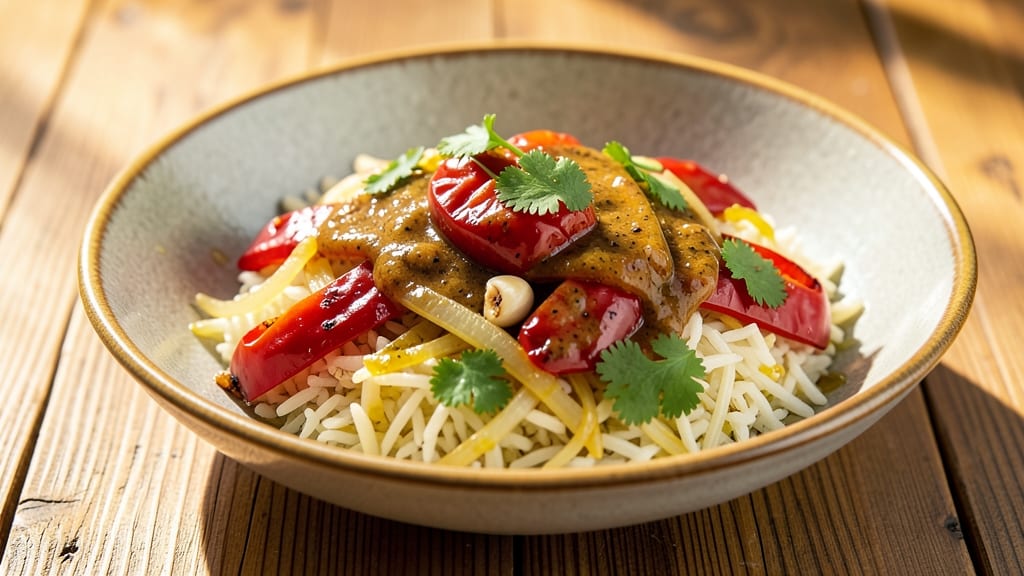
This one-pot capsicum rice recipe using the vahrehvah technique transforms simple ingredients into a fragrant, aromatic masterpiece—just like my grandmother used to make. The key lies in the vahrehvah method: layering oil, spices, and ingredients to create deep, complex flavors that build as they simmer.
I first tasted this dish at a family gathering in Sicily, where my grandmother's Persian friend shared her secrets, and it became an instant favorite.
What makes this recipe special is how effortlessly it combines textures and flavors: tender rice, sweet bell peppers, and aromatic spices all cooked together in one pot.
The slow cooking process allows the rice to absorb the rich, spiced broth, resulting in grains that are perfectly tender with a subtle crunch. There’s no need for complicated steps—just patience and attention to the layers of flavor.
By the time you’re done, you’ll have a dish that’s rich, fragrant, and deeply satisfying—with every bite revealing the harmony of sweet, savory, and spiced notes. The dish is elegant enough for a dinner party but simple enough for a weeknight meal.
The best part? It’s a complete meal in one pot, ready to serve with a side of yogurt or fresh herbs.
This recipe is perfect for anyone looking to explore Persian flavors without the fuss. Let’s get started!
Ingredients for capsicum rice recipe vahrehvah
Persian spices and sweet bell peppers transform simple rice into an aromatic masterpiece using the vahrehvah technique.
| Ingredient | Amount | Notes |
|---|---|---|
| Long-Grain Basmati Rice 🍚 | 1 ½ cups | Rinsed thoroughly before cooking |
| Red Bell Peppers 🧅 | 3 whole | Medium-sized, cut into strips |
| Yellow Onion 🧅 | 1 whole | Medium, thinly sliced |
| Garlic Cloves 🧄 | 6 cloves | Minced finely for depth |
| Extra-Virgin Olive Oil 🫒 | ½ cup | For vahrehvah layering |
| Ground Cumin 🌿 | 1 ½ tsp | Toasted for aromatic warmth |
| Ground Turmeric 🌶️ | ½ tsp | Freshly ground preferred |
| Ground Coriander 🌿 | 1 tsp | For citrusy brightness |
| Salt 🧂 | 1 ½ tsp | Diamond Crystal preferred |
| Black Pepper 🌶️ | ½ tsp | Freshly cracked |
| Fresh Parsley 🌿 | ¼ cup | Chopped for garnish |
| Vegetable Stock 💧 | 2 cups | Low-sodium preferred |
| Plain Yogurt 🥛 | ½ cup | For serving (optional) |
The spices are the soul of this dish—Penzeys or bulk bins at Whole Foods are ideal for freshness. Ground cumin and coriander should smell vibrant, not stale. For the peppers, red bell peppers add sweetness, but yellow or orange work too. The vegetable stock is crucial—avoid bouillon cubes, which can taste artificial. If you can't find Diamond Crystal salt, any fine sea salt works, but adjust to taste since this dish relies on balanced seasoning.
No fresh parsley? Dried parsley at half the amount works in a pinch, though fresh adds vibrant color. Substitute bell peppers with zucchini or eggplant for texture variation. For extra richness, add 1 tbsp tomato paste to the vahrehvah layer. The rice must be rinsed until water runs clear—this removes excess starch and prevents gumminess. If you're short on time, pre-cut bell peppers from the grocery store save prep work, though fresh is always better.
This dish tastes even better the next day as flavors meld. Store leftovers in an airtight container for up to 4 days in the fridge. For longer storage, freeze portions for 3 months. The vahrehvah method means every bite carries layers of flavor—serve with extra yogurt to balance the richness. Garnish with fresh parsley right before eating to keep it vibrant. Leftovers reheat beautifully with a splash of water or stock.
Why You'll Love This Recipe
- One-Pot Magic: Honestly, I swear by this recipe when I’m too tired to deal with multiple pans. The rice cooks right in the same skillet as the peppers and onions—no rinsing, no straining, just stir and let it do its thing. That golden crust at the bottom? Absolute treasure.
- Sweet-Savory Balance: Between us, the charred red bell peppers and caramelized onions hit different. The garlic cloves toasted in olive oil until they’re just shy of crispy? That’s the secret—it layers deep, warm flavor without overpowering. My husband licks the plate.
- Lunchbox Hero: I make a big batch on Sundays because this stuff travels. Cold or room temp, it’s still delicious—pack it in containers for work or school lunches, and it won’t turn mushy. (Yes, even on a Tuesday night.)
- Pantry Staple Power: Between us, this recipe costs next to nothing. You’re using basics—basmati rice, a couple peppers, onions—stuff that lasts weeks. Plus, leftovers reheat like a dream, so you’re never scrambling for dinner ideas. My wallet thanks me.
Step-by-step instructions for Persian-inspired capsicum rice
Master this aromatic Persian technique that transforms simple rice into a fragrant, one-pot masterpiece.
Prepare the Vahrehvah Base
Heat the 0.5 cup extra-virgin olive oil in a heavy-bottomed pot over medium heat. Add the 1 whole yellow onion, sliced thinly, and cook for 5-6 minutes until translucent and just beginning to caramelize at the edges. This slow cooking develops deep sweetness that forms the foundation of your vahrehvah.
Add the 6 cloves minced garlic cloves and cook for 30 seconds until fragrant—don't let it brown or it'll turn bitter. Immediately stir in the 1.5 tsp ground cumin, 0.5 tsp ground turmeric, and 1 tsp ground coriander. Toast the spices for 30 seconds until you smell their warm, earthy aromas filling your kitchen. This is where the magic begins.
Build the Layered Rice Structure
Add the 1.5 cups rinsed long-grain basmati rice and stir to coat it thoroughly in the spiced oil. Cook for 2-3 minutes until the rice grains become translucent at the edges—this ensures each grain develops its own flavor rather than cooking as a clump. Pour in the 2 cups vegetable stock and add the 1.5 tsp salt and 0.5 tsp black pepper.
Bring to a gentle boil, then reduce heat to low and cover with a tight-fitting lid. Let it simmer undisturbed for 10 minutes. This initial cooking creates the perfect base layer for your capsicum rice. Don't peek or stir—the rice needs this undisturbed time to absorb the liquid evenly.
Layer the Bell Peppers
After the initial 10 minutes, remove the lid and carefully arrange the 3 whole red bell peppers, cut into strips, on top of the rice in an even layer. The peppers should cover the surface completely—this creates the signature Persian presentation and ensures even cooking. Return the pot to low heat and cover again.
Cook for another 15-18 minutes until the rice is tender and the peppers have softened but still retain their vibrant color and slight crunch. The peppers should be fork-tender but not mushy—this balance is crucial. You'll know it's ready when the rice pulls away from the edges of the pot and the peppers yield slightly when pressed with a fork.
Rest and Serve with Yogurt
Remove the pot from heat and let it rest, covered, for 5 minutes. This resting period allows the rice to finish steaming and the flavors to meld completely. Gently fluff the rice with a fork, being careful not to break the pepper strips. The rice should be light and separate, with each grain distinct and fragrant.
Transfer to serving plates and garnish with the 0.25 cup chopped fresh parsley. For serving, offer the 0.5 cup plain yogurt on the side—its cool creaminess balances the warm, spiced rice. Each bite should deliver layers of flavor: the nutty basmati, the sweet peppers, and the aromatic vahrehvah base. Serve immediately while the rice is at its peak texture.
Pro Tips For Making Capsicum Rice Recipe Vahrehvah
- CHAR THE ONIONS LOW: I learned this the hard way—blasting onions on high heat turns them bitter before they soften. For vahrehvah, keep the heat at medium-low until they’re translucent and just starting to caramelize. That’s when you’ll taste their sweetness, not their char.
- SLICE PEPPERS THIN AND EVEN: Uneven strips cook at different speeds, leaving some rubbery while others burn. Aim for ¼-inch slices, cut lengthwise into long, consistent strips. They’ll soften faster and absorb the rice’s flavors better—no more chewy surprises.
- USE COLD RICE FOR FLAVOR: Freshly cooked rice turns mushy when mixed with peppers. Let the basmati cool completely (10-15 minutes) before stirring in the capsicum-onion base. Cold rice holds its shape and soaks up the oil and spices like a sponge—no gluey texture here.
- TOAST THE GARLIC LAST: Garlic burns faster than onions and peppers. Add the minced cloves only after the onions are golden and peppers have softened. Cook them for 30 seconds max—just until fragrant, not brown. Overcooked garlic turns bitter, and you’ll regret it.
Perfect pairings for this capsicum rice recipe vahrehvah
Persian-Inspired Sides
Serve this fragrant capsicum rice alongside sabzi khordan, a traditional Persian herb salad made with parsley, cilantro, and mint. I toss 4 cups mixed herbs with 2 tbsp lemon juice and 3 tbsp olive oil, then sprinkle with ½ tsp salt.
The bright acidity cuts through the richness of the vahrehvah beautifully. 🌿
For a hearty pairing, add mirza ghasemi, a crispy fried bread made with chickpea flour. The golden, crispy texture contrasts perfectly with the tender rice and peppers.
I like to brush it with garlic-infused olive oil before serving. This combo is a staple at Persian gatherings, and it adds that extra special touch.
Protein Additions
For a complete meal, stir in 1 lb shredded chicken or ground lamb during the final 10 minutes of cooking. The protein absorbs the vahrehvah flavors beautifully, making it a one-pot wonder.
I season the meat with ½ tsp smoked paprika and ½ tsp cinnamon before adding it to the pot. 🍗
If you prefer vegetarian, add 1 cup chickpeas during the initial vahrehvah step. They soak up the spices and become tender alongside the rice. For extra richness, fold in ¼ cup toasted pine nuts at the end—they add a delightful crunch and nutty depth.
Beverage Pairings
A cup of Persian black tea with cardamom and saffron is the perfect accompaniment. The warm, spiced tea complements the dish's aromatic complexity. I steep 1 tbsp loose black tea with 3 cardamom pods and a pinch of saffron threads in 2 cups boiling water for 5 minutes.
Serve with lemon slices for brightness. ☕
For something lighter, try a refreshing dough (Persian soda). The effervescent drink with rosewater and lime cleanses your palate between bites. I make mine with sparkling water, 1 tbsp rose syrup, and a squeeze of lime. It’s a nostalgic favorite from my grandmother’s kitchen.
Garnish Upgrades
Brighten the dish with edible rose petals or toasted sesame seeds. The delicate floral notes of rose petals add a touch of elegance, while sesame seeds bring a nutty crunch. I sprinkle 1 tbsp sesame seeds and 5-6 rose petals right before serving for a restaurant-worthy finish. 🌸
For a smoky twist, drizzle with pomegranate molasses. The tart, fruity sweetness balances the dish’s warmth. I use 1 tsp molasses and a pinch of sumac for a tangy kick. This garnish is a game-changer for adding depth and color.
Nutrition facts
Frequently asked questions
What makes the vahrehvah technique special in this capsicum rice?
The vahrehvah method creates deep, layered flavors by slow-cooking spices and oil together first. This transforms simple ingredients into a fragrant, aromatic base—like building flavor from the ground up! The key is toasting the spices until they release their essential oils, which infuse every grain of rice and pepper strip.
Can I substitute bell peppers with other vegetables?
Try zucchini or eggplant for a different texture, or add diced tomatoes for brightness. Just adjust cooking time—peppers need 15-18 minutes to soften, while denser veggies may need 5-10 minutes longer. The vahrehvah spices will still shine through any veggie choice.
Why does the recipe call for resting the rice after cooking?
Resting for 5 minutes lets the rice finish steaming and absorb any remaining liquid, preventing a dry texture. It also helps flavors meld completely—especially the vahrehvah spices—which makes every bite more cohesive. Think of it like letting a cake settle after baking!
How can I make this dish vegetarian?
Skip the meat entirely and add 1 cup chickpeas during the vahrehvah step. For extra richness, stir in ¼ cup toasted pine nuts at the end—they add crunch and nutty depth. The dish stays hearty and satisfying without any animal products.
What's the best way to store leftovers?
Store in an airtight container for up to 4 days in the fridge. For longer storage, freeze portions for 3 months. Reheat gently with a splash of water or stock—never microwave dry. The flavors actually improve overnight as the spices meld!