
Side Dishes
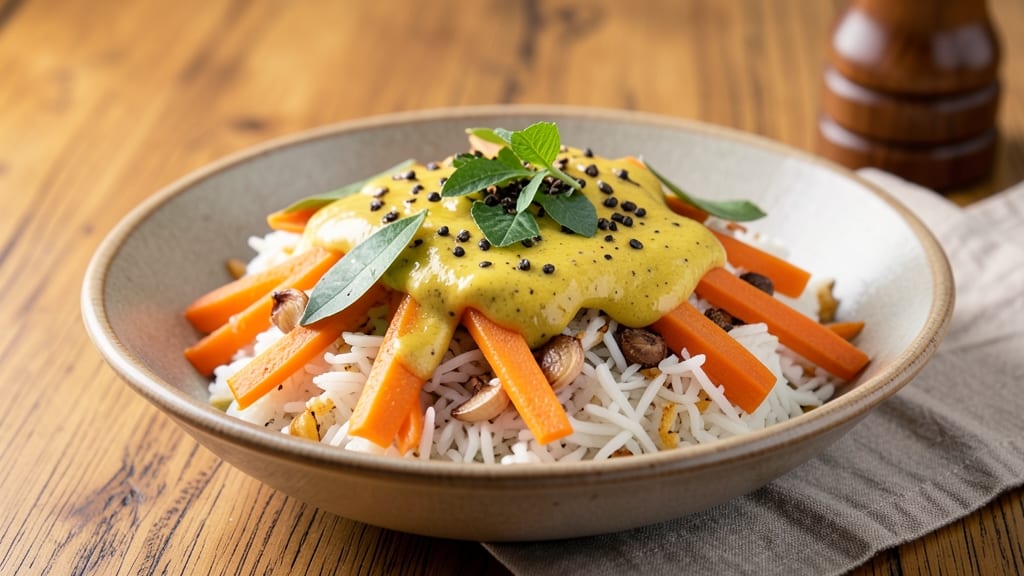
This Indian carrot rice recipe transforms simple ingredients into a fragrant, one-pot dish that captures the essence of South Indian home cooking. The golden turmeric rice and tender carrots create a balance of earthy and sweet flavors, perfect for any meal.
I first discovered this recipe during a visit to my friend's family in Kerala, where it's a staple alongside curries and dal.
The secret lies in the tempering spices—mustard seeds, curry leaves, and asafoetida—that infuse the rice with aromatic depth. Cooking the carrots in coconut milk adds a subtle sweetness that complements the turmeric-infused rice beautifully.
This dish is not only flavorful but also incredibly easy to prepare, making it ideal for weeknight dinners or meal prep.
What you'll end up with is a vibrant, golden dish that's fragrant enough to fill your kitchen with warmth. The carrots retain their texture while absorbing the rich flavors, and the rice becomes perfectly fluffy with just the right amount of stickiness.
Serve it with a side of raita or a simple dal for a complete, satisfying meal.
This recipe is versatile enough to pair with grilled meats, fish, or even as a standalone vegetarian dish. The one-pot method ensures minimal cleanup, making it a practical choice for busy cooks who still want restaurant-quality results. Let's get started on this fragrant journey!
Ingredients for carrot rice recipe indian
Simple ingredients that blend into fragrant golden carrot rice with South Indian soul.
| Ingredient | Amount | Notes |
|---|---|---|
| Long-Grain White Rice 🍚 | 1 cup | Uncooked, rinsed well |
| Carrots 🥕 | 2 cups | Baby or diced whole |
| Coconut Milk 🥥 | 1 can (13.5 oz) | Full-fat for creaminess |
| Turmeric Powder 🌿 | 1 tbsp | Freshly ground preferred |
| Mustard Seeds 🌶️ | 1 tsp | Whole, yellow variety |
| Curry Leaves 🌿 | ¼ cup | Fresh, dried at 1/4 amount |
| Asafoetida Powder 🌶️ | ¼ tsp | Hing, essential for aroma |
| Ginger 🧄 | 1 tbsp | Fresh, grated finely |
| Green Chilies 🌶️ | 2 whole | Slit lengthwise, adjust heat |
| Cumin Seeds 🌶️ | ½ tsp | Toasted lightly for depth |
| Salt 🧂 | 1 tsp | Adjust to taste |
| Ghee or Coconut Oil 🫒 | 2 tbsp | For tempering |
| Fresh Coriander Leaves 🌿 | ¼ cup | Chopped for garnish |
The curry leaves and asafoetida are non-negotiable for that authentic aroma. Whole Foods or Indian grocery stores carry fresh curry leaves—look for vibrant green, not wilted. Asafoetida (hing) comes in small bottles; MDH or Everest brands are reliable. For ginger, grab the freshest root you can find—it should be firm and smell zesty. The carrots can be baby or whole; I usually grab the pre-cut ones at Trader Joe's for convenience. If using whole, peel and dice into even pieces so they cook uniformly. The rice should be long-grain and uncooked—basmati or jasmine both work well.
No curry leaves? Dried curry powder at half the amount works in a pinch, but it won't have the same depth. Running out of asafoetida? Garlic powder at 1/4 tsp mimics some of the umami. Fresh ginger too spicy? Substitute with 1/2 tsp ground ginger, but it lacks the same brightness. For the green chilies, remove seeds for less heat or keep them for a kick. The coconut milk can be light or full-fat—full-fat gives richer flavor, but light works if you're watching calories. If you don't have ghee, coconut oil works perfectly for the tempering.
This dish reheats beautifully—just add a splash of water and cover until hot. Stores for 4-5 days in the fridge, though the texture gets slightly softer after day 2. For meal prep, I portion into containers with a layer of coconut milk on top to keep it moist. Freezes for 3 months if you want to make a big batch. The turmeric stains everything yellow, so use an old pot if you're worried about color transfer. Garnish with fresh coriander right before serving—it adds a bright pop of color and freshness.
Why You'll Love This Recipe
- I’ll be real: this recipe costs next to nothing. Carrots are cheap, rice is a staple, and coconut milk stretches far. Plus, the turmeric and mustard seeds add so much flavor for pennies. It’s the kind of dish that makes grocery day feel like a win—especially when you’re stretching a paycheck.
- One-Pot Magic: I swear by this recipe because it’s actually one-pot—no clunky rice cooker or separate pans. Just toss the rice, diced carrots, and spices into a pot with coconut milk, and let it simmer. The mustard seeds pop like fireworks while the turmeric stains everything golden—messy but so worth it.
- Creamy Without Guilt: That coconut milk transforms this into something dangerously addictive—rich, velvety, but not heavy. The carrots melt into sweet, tender threads, and the turmeric gives it that warm, earthy depth. Honestly, it’s the kind of dish that makes you pause mid-bite and think, “Wait, is this healthy?” (Yes. Yes, it is.)
- Lunchbox Hero: Between us, this is my go-to for meal prep. The rice stays fluffy for days, and the carrots keep their bite—no soggy disasters here. Pack it in jars or bento boxes, and it’s a hit with kids, office mates, or even my skeptical partner who “doesn’t like rice.” (He’s lying.)
Step-by-step instructions for carrot rice Indian: fragrant turmeric and coconut one-pot Magic
This one-pot wonder delivers perfectly balanced flavors with minimal cleanup.
🍳 Step 1: Sauté Aromatics and Spices
Heat the 2 tablespoons ghee or coconut oil in a heavy-bottomed pot over medium heat. Add the 0.5 teaspoon cumin seeds and let them sizzle for 30 seconds until they begin to pop and release their nutty aroma. This is your signal to add the 1 teaspoon mustard seeds—they'll dance and splutter before settling.
Next, add the 2 whole green chilies (slit lengthwise) and 1 tablespoon finely grated ginger. Sauté for 1 minute until the raw aroma gives way to a warm, earthy scent. The ginger should soften slightly but not brown. This step builds the flavor foundation—don't rush it. If the chilies burn, reduce heat slightly and stir constantly.
🍳 Step 2: Add Carrots and Turmeric
Toss in the 2 cups carrots (baby or diced) and stir to coat them evenly in the aromatic oil. Cook for 5 minutes over medium-high heat, stirring occasionally, until the carrots begin to soften at the edges. Their color will deepen from bright orange to a rich amber.
Sprinkle in the 1 tablespoon turmeric powder and 0.25 teaspoon asafoetida powder, stirring constantly for 30 seconds until the turmeric dissolves completely. The asafoetida will add that signature umami depth—it's subtle but essential. The mixture should smell vibrant and earthy, with hints of warmth from the spices.
🍳 Step 3: Cook the Rice to Perfection
Add the 1 cup long-grain white rice (previously rinsed well) and stir to combine with the carrots and spices. Pour in 1 cup water (measured separately) and bring to a gentle boil. Once boiling, reduce heat to low and let it simmer uncovered for 10 minutes, stirring once halfway through to prevent sticking.
After 10 minutes, add the 1 can (13.5 oz) coconut milk and 1 teaspoon salt. Stir gently to combine, then add the 0.25 cup curry leaves. The curry leaves will infuse their citrusy aroma into the dish. Cover the pot and simmer for another 10 minutes on low heat—this ensures even cooking without burning the coconut milk.
🔪 Step 4: Rest and Garnish
Remove the pot from heat and let it rest, covered, for 5 minutes. This resting period allows the rice to absorb any remaining moisture and develop a fluffy texture. The coconut milk should be fully incorporated, creating a creamy, golden hue throughout.
Fluff the rice gently with a fork, then stir in the 0.25 cup chopped fresh coriander leaves. The coriander adds a bright, fresh contrast to the rich coconut and spices. Taste and adjust salt if needed—this is your final opportunity to balance the flavors. Serve warm, straight from the pot, with a side of yogurt or raita for the perfect Indian meal.
Pro Tips For Making Carrot Rice Recipe Indian
- SOAK THE RICE: I learned this the hard way—skipping the soak means gummy rice no matter how much water you add. Rinse your long-grain rice twice in cold water, then let it sit in fresh water for 30 minutes before cooking. The starches soften, and the rice stays fluffy even with coconut milk’s extra moisture.
- JULIENNE THE CARROTS: Thin, even strips cook faster and blend better into the rice. Use a mandoline or sharp knife to cut carrots into ¼-inch matchsticks—no need for perfect uniformity, just consistent thickness. Toss them in a pinch of turmeric while prepping so they absorb color instead of turning bland.
- LOW-AND-SLOW COCONUT: Coconut milk curdles when it boils—just like milk in curry. Simmer it on low after adding rice, and stir gently every 5 minutes. If it splits, whisk in a splash of warm water and keep heat minimal. The creamy texture is worth the patience.
- TOAST THE MUSTARD SEEDS: Popping mustard seeds is non-negotiable for that nutty crunch. Heat them in oil on medium-low until they sizzle like tiny fireworks—about 30 seconds. Too hot? They burn; too cool? They’ll stay raw. This is the thing that matters most for flavor.
Essential equipment for perfect results
Heavy-Bottomed Pot
I can't stress enough how important this is—your heavy-bottomed pot (like a 5-6 quart stainless steel Dutch oven) is the secret to even cooking. The turmeric-infused rice and coconut milk need steady, gentle heat to meld properly without burning.
I swear by my All-Clad Dutch oven—it distributes heat perfectly and prevents scorching. If you're on a budget, a Calphalon stainless steel pot works beautifully too. 🔥
Fine-Mesh Strainer
Rinsing your rice thoroughly before cooking removes excess starch that can make your carrot rice gummy. A fine-mesh strainer (like the OXO Good Grips) is essential for this step—it catches even the smallest rice particles.
Trust me, skipping this step leads to mushy rice. I also use mine to drain the curry leaves after simmering, so it's a versatile tool in my kitchen. 💫
Spice Grinder
Freshly ground spices make all the difference in this dish. While turmeric powder is fine as-is, a spice grinder (like the KitchenAid Spice Grinder) lets you grind whole spices like cumin or coriander seeds on demand.
The aroma alone from freshly ground spices will elevate your carrot rice. If you don't have one, toast whole spices in a dry pan first—they'll still add depth. 🌿
Wooden Spoon
Stirring the rice gently is crucial, and a wooden spoon (I love my OXO Good Grips wooden spoon) won't scratch your pot like metal utensils.
Wood also helps distribute heat evenly, preventing hot spots that can burn the coconut milk. Plus, it's gentle on your rice grains—no broken edges here! 🥄
Measuring Cups
Precision matters with rice-to-water ratios and spice measurements. A set of nested stainless steel measuring cups (like OXO's) ensures accuracy—especially for the 1 cup rice and 1 cup water.
I also use them to measure the 1 can (13.5 oz) coconut milk for consistency. Trust me, eyeballing it leads to uneven textures. 📏
Curry Leaf Picker
Handling fresh curry leaves can be tricky—they're delicate and stick to your fingers. A curry leaf picker (or even a small pair of tongs) makes this step effortless. I keep mine handy when working with Indian recipes—it's a game-changer for adding those 0.25 cup curry leaves without bruising them.
If you don't have one, use a fork to gently lift them into the pot. 🌿
Nutrition facts
Frequently asked questions
Why does Indian carrot rice use coconut milk instead of regular milk?
Coconut milk adds a subtle sweetness and rich creaminess that complements the earthy turmeric and carrots beautifully. Unlike regular milk, it doesn't curdle when simmered for long periods, ensuring a smooth texture. Plus, it brings that authentic South Indian flavor profile that's hard to replicate with dairy.
Can I make this carrot rice without asafoetida (hing)?
Yes, but the dish will lose its signature umami depth. Substitute with 1/4 teaspoon garlic powder or 1/8 teaspoon onion powder for a similar savory note. The curry leaves and mustard seeds will still provide aromatic complexity, but the dish won't have that authentic Indian touch.
How do I prevent the rice from becoming mushy?
Rinse the rice thoroughly before cooking to remove excess starch, and use a 1:1 rice-to-water ratio (1 cup rice to 1 cup water). Stir gently once halfway through cooking, and never use a pressure cooker—this recipe relies on gentle simmering. Also, avoid lifting the lid while cooking to trap steam properly.
What's the best way to reheat leftover carrot rice?
Add 1-2 tablespoons water per cup of rice, cover, and heat on low-medium heat for 3-4 minutes. Stir gently to redistribute the coconut milk. Microwaving works too—just sprinkle a few drops of water and cover for 1 minute intervals. Avoid high heat to prevent drying out the rice.
Is this dish spicy? Can I make it milder?
The recipe includes 2 green chilies for mild heat, but you can remove the seeds and membranes for less spice. For a completely mild version, omit the chilies entirely and add 1/2 teaspoon mild paprika instead. The dish will still have great flavor without the heat.