
Main Courses
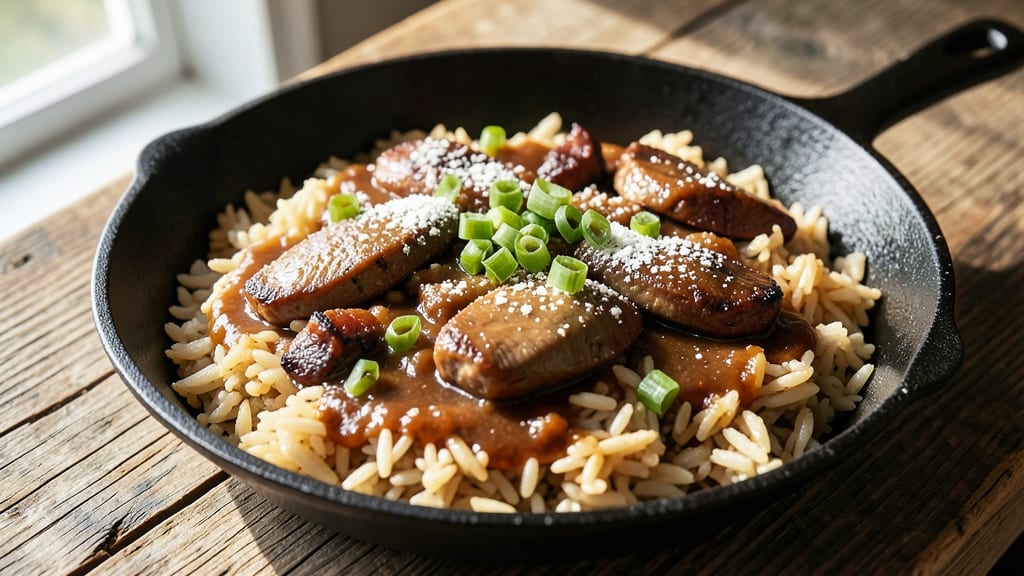
This dirty rice recipe with livers and gizzards delivers the bold, savory punch that defines Cajun cuisine—where deep-fried organ meat meets perfectly seasoned rice in a single, unforgettable dish. 💛 The key lies in properly preparing the offal (trust me, it’s worth the effort) and balancing its rich, iron-heavy flavor with the smoky, spicy notes of Cajun seasoning.
What sets this version apart is the crispy, golden-brown coating on the fried livers and gizzards, which contrasts beautifully with the tender, slightly chewy rice underneath.
Traditionally, dirty rice was born in Louisiana kitchens as a way to use every part of the animal, transforming what many considered scraps into a flavor powerhouse. The technique involves browning the offal thoroughly before adding it to the rice, ensuring maximum flavor infusion without overcooking.
This method also makes the dish feel deeply satisfying—each bite packs layers of texture and depth that store-bought versions simply can’t match.
By the time you serve this dish, your guests will experience the perfect harmony of crispy fried livers, tender gizzards, and rice infused with the smoky, spicy essence of Cajun seasoning.
The dish is hearty enough to stand alone but pairs beautifully with collard greens or cornbread for a full Louisiana-style meal. Whether you're a seasoned cook or new to working with offal, this recipe breaks down the process into manageable steps.
For those concerned about offal preparation, I’ve included detailed instructions on cleaning and trimming the livers and gizzards safely—no prior experience required. The result is a dish that’s both traditional and approachable, proving that dirty rice isn’t just a regional specialty but a versatile, flavorful main course worth mastering.
Let’s get started!
Ingredients for dirty rice recipe with livers and gizzards
Sixteen ingredients transform scraps into Louisiana's boldest, most satisfying dish—where crispy fried organ meat meets perfectly seasoned rice.
| Ingredient | Amount | Notes |
|---|---|---|
| Chicken Livers 🍗 | 1 ½ lb | Fresh, trimmed of connective tissue |
| Chicken Gizzards 🍗 | 1 ½ lb | Cleaned, membrane removed |
| Long-Grain White Rice 🍚 | 3 cups | Uncooked, medium grain preferred |
| Chicken Broth 💧 | 4 cups | Homemade or high-quality store-bought |
| Cajun Seasoning 🌶️ | ½ cup | Homemade or Tony Chachere's blend |
| All-Purpose Flour 🌾 | 1 ½ cups | For frying batter |
| Large Eggs 🥚 | 2 whole | Room temperature for even coating |
| Vegetable Oil 🫒 | 4 cups | For deep-frying (peanut oil preferred) |
| Yellow Onion 🧅 | 1 whole | Diced, medium size |
| Green Bell Pepper 🌶️ | 1 whole | Diced, medium size |
| Celery Stalks 🥬 | 3 whole | Diced, standard trinity |
| Garlic Cloves 🧄 | 6 cloves | Minced, fresh preferred |
| Salt 🧂 | 2 tsp | Diamond Crystal kosher salt |
| Black Pepper 🌶️ | 1 tsp | Freshly ground |
| Bay Leaves 🍃 | 2 whole | Dried, standard size |
The offal is non-negotiable for authentic flavor, so source from a trusted butcher—they'll clean and trim the livers and gizzards for you. Look for bright red, firm livers with no bruising and gizzards with intact membranes. Costco or local farms often carry these at reasonable prices, though you may need to ask. For the Cajun seasoning, Tony Chachere's is the gold standard, but a homemade blend of paprika, garlic powder, onion powder, thyme, oregano, cayenne, and black pepper works beautifully. The rice should be medium-grain—Uncle Ben's Converted or Lundberg Family Farms are reliable choices. Fresh herbs like thyme and oregano elevate the dish, but dried will suffice in a pinch.
No chicken livers? Beef livers or pork livers work, though the flavor profile shifts slightly. Substitute gizzards with chicken hearts if absolutely necessary, though texture will differ. For the Cajun seasoning, Emeril Lagasse's Essence is another excellent option. The trinity of onion, bell pepper, and celery can be swapped for frozen mixed vegetables if needed, though fresh yields superior flavor. If you're uncomfortable handling offal, pre-order cleaned and trimmed livers and gizzards from specialty meat suppliers—they're more common than you think. The flour for frying should be all-purpose, not cake flour, as it creates a lighter, crispier batter.
Store the cleaned offal in an airtight container with paper towels to absorb moisture, and use within 2 days for optimal texture. The Cajun seasoning keeps indefinitely in a sealed container, while fresh herbs should be refrigerated and used within 5 days. Once fried, the livers and gizzards can be stored in the refrigerator for 3 days or frozen for 3 months. The rice mixture reheats beautifully—simmer with a splash of broth to restore moisture. For a crowd, double the batch and fry in batches to maintain oil temperature, aiming for 350°F for perfect crispiness.
Why You'll Love This Recipe
- One-Pot Magic: I swear by this recipe when I’m too tired to wash dishes—just brown the livers and gizzards in a skillet, toss them with rice and broth, and let the oven do the work. The Cajun seasoning does all the heavy lifting while I sip my coffee.
- Umami Bomb: Those chicken livers and gizzards? They’re the secret weapon—rich, earthy, and packed with flavor that turns plain rice into something deeply satisfying. (Yes, even if my picky eaters pretend not to notice.)
- Tailgate Hero: This dish is my go-to for game days, potlucks, or whenever I need to feed a crowd without stressing. The rice soaks up all the savory juices, and the Cajun kick makes it feel like a restaurant meal—no one will guess it’s budget-friendly.
- Budget Feast: I stretch my grocery dollars further with this recipe—livers and gizzards are cheap protein, and a single batch stretches into leftovers for days. Reheat it with a splash of broth, and it’s just as good the next day. (My lunchbox’s favorite.)
Step-by-step instructions for deep-fried Cajun dirty rice with organ meat
Transform humble offal into a restaurant-worthy dish with this precise method.
🍳 Step 1: Prepare the Organ Meat Base
Rinse the 1.5 lb chicken livers and 1.5 lb chicken gizzards thoroughly under cold water, then pat completely dry with paper towels. This drying step is critical—excess moisture prevents proper browning later. Trim any remaining connective tissue from the gizzards and remove any dark spots from the livers using a sharp knife.
In a large skillet over medium-high heat, add the cleaned organs and cook undisturbed for 5-6 minutes until they develop a deep golden crust. You'll notice the livers release their blood into the pan—this is normal. Stir occasionally to prevent burning, then transfer the cooked organs to a cutting board. Chop them into ¼-inch pieces using a chef's knife, then set aside.
👨🍳 Step 2: Build the Cajun Rice Foundation
In the same skillet (no need to clean it—the browned bits add flavor), add 4 cups vegetable oil and heat to 350°F using a deep-fry thermometer. While the oil heats, whisk together 1.5 cups all-purpose flour, 2 whole large eggs, 0.5 cup Cajun seasoning, 2 tsp salt, and 1 tsp black pepper in a large bowl until smooth. This batter will create the signature crispy crust.
Working in batches, carefully add the chopped organ meat to the batter, coating each piece thoroughly. The batter should cling to the meat without dripping—if it's too thin, add 1 tablespoon more flour. Once coated, gently slide the pieces into the hot oil using a slotted spoon. Fry for 3-4 minutes until golden brown and crispy. Drain on paper towels and set aside.
🥘 Step 3: Sauté the Holy Trinity and Aromatics
In a Dutch oven or large pot with a tight-fitting lid, combine 1 whole yellow onion, 1 whole green bell pepper, and 3 whole celery stalks, all diced into ¼-inch pieces. Add 6 cloves minced garlic and 2 whole bay leaves. Cook over medium heat for 5 minutes, stirring occasionally, until the vegetables soften and release their juices.
Add the fried organ meat back to the pot along with 3 cups long-grain white rice. Stir to coat the rice evenly in the Cajun seasoning and any remaining oil from the fried pieces. This step ensures maximum flavor infusion—don't skip it. Pour in 4 cups chicken broth and bring to a boil.
⏰ Step 4: Parboil and Rest the Rice
Once boiling, reduce heat to low, cover tightly with the lid, and simmer for 15 minutes without stirring. This initial parboil allows the rice to absorb liquid evenly before the final crisping. After 15 minutes, remove from heat and let the rice rest for 5 minutes with the lid still on. This resting period prevents mushiness.
Real talk: Your rice might look undercooked at this stage—this is intentional. The final texture comes from the crisping step. Fluff the rice gently with a fork, then return it to the pot over medium heat. Let it dry out slightly for 2-3 minutes, stirring occasionally, until the edges begin to crisp and the rice releases steam.
🔥 Step 5: Crisp and Serve
Transfer the rice to a large serving platter. Using a spoon, gently press down to create a compact surface. Return the platter to the stovetop over medium heat and let it crisp for 3-4 minutes until the bottom develops a deep golden crust. This is the signature "dirty" texture that sets this dish apart.
Garnish with additional Cajun seasoning and serve immediately while the crust is still crisp. Each bite delivers a perfect balance of tender rice, crispy organ meat, and bold Cajun spice. The contrast between the creamy rice and crunchy crust makes this dish unforgettable—just don't blame me if you go back for seconds.
Pro Tips For Making Dirty Rice Recipe With Livers And Gizzards
- Sear Livers Fast: Hit the livers with a screaming-hot pan—just 2-3 minutes per side until deeply brown. I used to cook them low and slow, and they’d turn out greasy instead of crisp. High heat builds flavor, and you’ll need that crust to cut through the richness later.
- Trim Gizzards Aggressively: Scrape out every last bit of connective tissue and fat from the gizzards—this isn’t the time to be gentle. Leaving strings behind means a gummy texture, and no one wants that in their dirty rice. Rinse them well after trimming.
- Toast the Rice Dry: Cook the rice in the dry pan for 3-4 minutes before adding broth—this prevents mush. I skipped this once and ended up with a sad, gluey pile. The starch needs to break down just enough to handle the liquid later.
- Deglaze with Broth: After browning the livers and gizzards, immediately pour in half the broth to scrape up all the browned bits. That’s where the flavor hides, and skipping it means losing half the depth of the dish. Use a wooden spoon—it works better than a metal one.
Storing and reheating this dirty rice recipe with livers and gizzards
Refrigerator Storage
Store leftover fried livers and gizzards in an airtight container with a paper towel pressed on top to absorb excess oil. Keep them refrigerated for up to 3 days—the crispiness will soften slightly, but the flavor remains rich.
For the rice, transfer it to a sealed container and refrigerate within 2 hours of cooking to prevent bacterial growth. Reheat separately to maintain texture.
Freezer Prep Tips
For long-term storage, freeze the fried organ meat in single-serving portions on a parchment-lined tray before transferring to a ziplock bag (this prevents clumping). Label with the date—it stays good for 3 months.
The rice freezes well too, but add 1 tablespoon broth per cup before freezing to preserve moisture. Thaw overnight in the fridge before reheating.
Reheating Fried Meat
Revive the crispiness by reheating the fried livers and gizzards in a skillet over medium heat for 2-3 minutes until golden again. Avoid the microwave—it turns them soggy.
For extra crunch, dip them in a light egg wash and pan-fry briefly after reheating. Serve with fresh Cajun seasoning to restore that restaurant-quality bite. 🔥
Rice Reheating Tricks
Simmer rice in a pot with 2 tablespoons broth over low heat for 5-7 minutes, stirring occasionally. Cover for the last 2 minutes to trap steam. If it’s dry, add 1 teaspoon butter or oil to restore creaminess.
For a crispy bottom, spread the rice on a baking sheet and broil for 1-2 minutes—just watch it like a hawk to avoid burning.
Make-Ahead Strategy
Prep the rice mixture one day ahead—stop after the parboiling step and refrigerate. On serving day, finish by crisping the bottom as directed. The fried meat can be prepped 2 days ahead and stored separately.
This approach saves time while keeping flavors fresh. Just remember: crispiness is best when reheated from cold. ⏰
Serving Leftovers
Dirty rice reheats best as a one-pot meal—combine the rice and fried meat in a skillet with 1 tablespoon butter and 1 tablespoon chicken broth. Cover and warm through over low heat for 3-4 minutes.
Garnish with fresh parsley or extra Cajun seasoning to brighten the dish. Leftovers taste even better the next day—proof that good food gets better with time! 💫
Nutrition facts
Frequently asked questions
What's the best way to clean chicken livers and gizzards for this recipe?
Rinse them thoroughly under cold water, then pat completely dry with paper towels. For livers, remove any dark spots or connective tissue, while gizzards should have their membranes trimmed. Pro tip: Ask your butcher to clean them for you—they often do this as a service. Never rinse with hot water, as it causes the proteins to tighten and traps bacteria.
Can I substitute beef or pork livers instead of chicken?
Yes, but the flavor will differ slightly—beef livers are richer and pork livers are milder. Use the same quantity, but note that beef livers may require 1-2 extra minutes of browning due to their higher fat content. Pork livers work best for a more delicate taste, similar to chicken.
Why does the recipe call for frying the organ meat before adding it to the rice?
The frying step creates a crispy, flavorful crust that contrasts with the tender rice. This technique also removes excess fat and blood from the organs, resulting in a cleaner-tasting dish. Without frying, the rice would absorb these flavors, making it overly rich or metallic.
What if I don't have a deep-fry thermometer? How can I tell when the oil is ready?
Drop a small piece of bread into the oil—when it sizzles and turns golden in 30-45 seconds, it’s ready. Alternatively, use the "cold drop" test: if a single drop of water sizzles and evaporates instantly, the oil is at 350°F. Never exceed 375°F, or the batter will burn before cooking through.
How do I prevent the rice from becoming mushy after reheating?
Reheat gently with a splash of broth or water to restore moisture, but avoid microwaving uncovered. For extra crispiness, broil the rice for 1-2 minutes after reheating—just watch closely to avoid burning. The key is low-and-slow heat to revive texture without overcooking.