
Main Courses
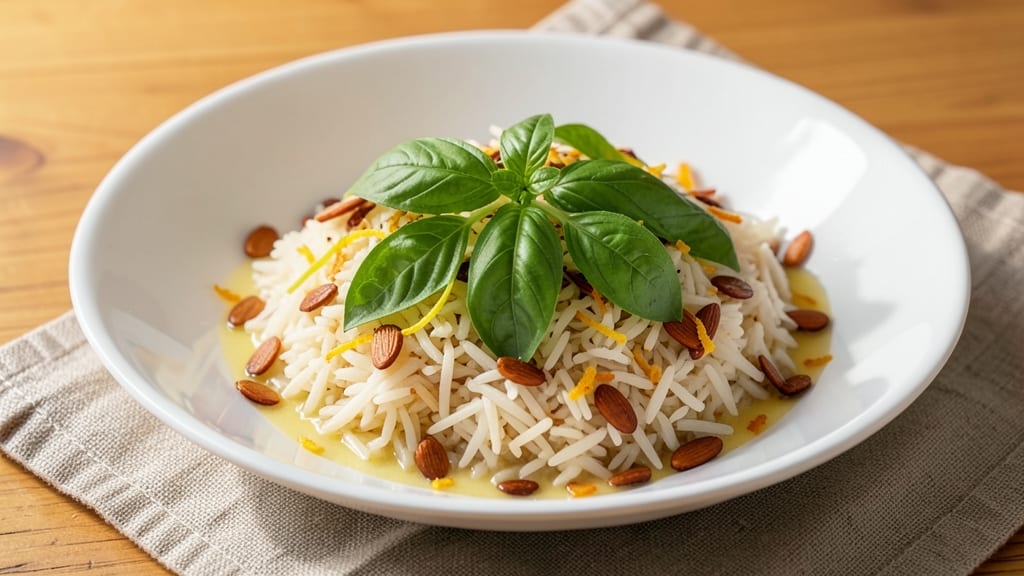
This herbal rice recipe transforms ordinary basmati into a fragrant, lemon-basil pilaf that elevates any meal. The aromatic blend of fresh basil and bright lemon zest creates layers of flavor that linger long after the first bite.
I developed this dish after years of experimenting with herb-infused rice, and the toasted almonds add a satisfying crunch that balances the dish perfectly.
The secret lies in simmering the rice with herbs and broth until the grains absorb the fragrant essence—no overcooking, just deep flavor infusion. This method works with white or brown rice, though basmati holds its shape best for pilaf texture.
The lemon zest brightens the herbs while keeping the dish light, and the toasted almonds provide both texture and a subtle sweetness that complements the herbal notes.
What you'll end up with is a dish that's vibrant, aromatic, and impossibly versatile—equally at home as a side for grilled chicken or fish, or as a standalone vegetarian meal.
The herbs release their oils during cooking, creating a dish that smells as good as it tastes, while the almonds add a sophisticated crunch that elevates every bite.
Ready in just 30 minutes, this recipe delivers restaurant-quality results with minimal effort. The key is patience—letting the rice rest after cooking ensures each grain stays separate and absorbs all that herbal goodness. Serve warm with a sprinkle of fresh herbs for an extra pop of color and flavor.
Ingredients for herbal rice
The perfect blend of fragrant herbs, bright citrus, and nutty crunch transforms simple rice into restaurant-quality pilaf.
| Ingredient | Amount | Notes |
|---|---|---|
| Long-Grain Basmati Rice 🍚 | 1 ½ cups | Uncooked, rinsed thoroughly |
| Fresh Basil Leaves 🌿 | 1 cup | Packed, stems removed |
| Lemon Zest 🍋 | 1 tbsp | From 1 large organic lemon |
| Unsalted Butter 🧈 | 2 tbsp | Cold, cubed for toasting |
| Chicken or Vegetable Broth 💧 | 2 cups | Low-sodium preferred |
| Slivered Almonds 🥜 | ½ cup | Unsalted, toasted until golden |
| Garlic Cloves 🧄 | 2 cloves | Minced, fresh preferred |
| Extra-Virgin Olive Oil 🫒 | 1 tbsp | For toasting almonds |
| Salt 🧂 | 1 tsp | Fine sea salt preferred |
| Black Pepper 🌶️ | ½ tsp | Freshly ground |
| Dried Oregano 🍃 | ½ tsp | For depth of flavor |
| Fresh Lemon Juice 🍋 | 1 tsp | For brightness |
The basil is the heart of this dish—farmers market varieties have the most vibrant flavor, but any fresh basil works if it's bright green and fragrant. Organic lemons from the grocery store's produce section yield more zest, but conventional lemons work too. For the rice, basmati is non-negotiable—its long grains stay separate and absorb the herbal broth beautifully. I always rinse it thoroughly to remove excess starch, which prevents clumping. The broth should be low-sodium to let the herbs shine, and chicken broth adds subtle depth while vegetable broth keeps it vegetarian-friendly. Whole Foods or Trader Joe's carry excellent quality options for all these ingredients.
No fresh basil? Dried basil at one-third the amount works in a pinch, though fresh is ideal. Running low on lemon zest? Substitute orange zest for a slightly sweeter profile or lime zest for extra tang. The almonds can be swapped for toasted pine nuts (if you're feeling fancy) or pecans (for a richer flavor). Pre-toasted almonds from the bulk section save time, but toasting fresh at home amplifies their nutty aroma. The garlic can be omitted if you prefer milder flavor, but it enhances the herbal notes beautifully. For extra depth, add a pinch of red pepper flakes if you enjoy a subtle heat.
This pilaf reheats beautifully—cover with a damp towel in the microwave for even heating. The almonds stay crispy if stored in an airtight container, while the rice absorbs extra flavor overnight. Keeps well in the fridge for 4 days or freezes for 3 months (though texture changes slightly). For best results, toast the almonds fresh before serving—their aroma is a game-changer. Portion into individual containers for easy lunches, or serve as a side with grilled meats or roasted vegetables.
Why You'll Love This Recipe
- Foolproof Basics: I swear by basmati’s no-fuss nature—just rinse, simmer, and let it do its thing. No stirring every two minutes, no guesswork. Honestly, the rice handles itself while you focus on the basil and lemon.
- Bright & Buttery Magic: That lemon zest and butter combo? It’s the secret weapon. The rice stays fragrant, the basil adds freshness, and the broth keeps it rich—like a hug in every bite.
- Weeknight to Dinner Party: Make a big batch on Sunday, and you’ve got lunch, dinner, or a side for guests covered. (Yes, even on a Tuesday night.) The flavors only get better the next day.
- Budget-Friendly Luxury: Fresh basil and good butter might sound fancy, but you’re using tiny amounts. A single bunch of basil stretches for three meals, and the rice costs pennies per serving. Frugal doesn’t mean boring.
Step-by-step instructions for basil-lemon pilaf
Here's how to create a fragrant, herb-infused rice dish that balances bright citrus with nutty almonds.
Toast the Almonds and Prepare the Aromatics
Heat a dry skillet over medium heat and add the 0.5 cup slivered almonds. Toast them for 3-4 minutes until they turn a light golden color and release their nutty aroma. Watch closely—they'll darken quickly once they start to brown. Remove them from the pan and set aside on a paper towel to cool.
In the same skillet (no need to wipe it clean), add the 1 tablespoon extra-virgin olive oil and place over medium heat. Add the 2 cloves minced garlic and sauté for 30 seconds until fragrant but not browned. This quick cooking prevents the garlic from burning while releasing its flavor. Immediately transfer the garlic to a bowl and set aside with the almonds.
Cook the Rice in Flavorful Broth
In a medium saucepan, melt the 2 tablespoon unsalted butter over medium heat. Add the 1.5 cups long-grain basmati rice and stir to coat the grains evenly with the butter. Cook for 1 minute until the rice becomes translucent at the edges.
Pour in the 2 cups chicken or vegetable broth and add the 1 teaspoon salt, 0.5 teaspoon black pepper, and 0.5 teaspoon dried oregano. Bring to a boil, then immediately reduce heat to low, cover tightly with a lid, and simmer for 15 minutes. Avoid lifting the lid during this time—steam is what cooks the rice evenly.
After 15 minutes, remove the pan from heat and let it sit covered for 5 minutes. This resting period allows the rice to absorb any remaining liquid and become perfectly fluffy. The grains should be tender but still slightly firm to the tooth—this is the ideal al dente texture for pilaf.
Finish with Herbs and Citrus
While the rice rests, finely chop the 1 cup fresh basil leaves by hand (a knife works best for this herb). Stir the chopped basil into the rice along with the 1 tablespoon lemon zest and the 1 teaspoon fresh lemon juice. Gently fold everything together using a wooden spoon, being careful not to mash the rice.
Return the pan to low heat and stir in the toasted almonds and garlic mixture. Heat through for 1-2 minutes just until everything is warmed through. The almonds should be hot but not re-toasted—they'll lose their crispness if overcooked. Taste and adjust seasoning if needed, adding a pinch more salt or a squeeze of lemon if desired.
Rest and Serve Immediately
Transfer the pilaf to a serving dish and let it rest for 5 minutes before serving. This brief resting period allows the flavors to meld together, ensuring each bite delivers the perfect balance of herby freshness, citrus brightness, and nutty crunch.
The dish should be vibrant green from the basil, with visible toasted almonds throughout. Serve warm as a side dish or light main course, accompanied by grilled proteins or a fresh salad. The lemon zest and fresh basil will make this pilaf stand out as something special—far beyond basic rice.
Pro Tips For Making Herbal Rice
- Rinse Rice Twice: I learned this the hard way—skipping the rinse leaves your basmati gummy, no matter how much broth you add. Swish it under cold water until the water runs almost clear (not perfectly clean, or you’ll lose starch), then drain. The first rinse removes surface starch, the second ensures even cooking. Trust me, your rice will thank you.
- Toast the Butter Low: Don’t melt that butter too fast—you’re not making popcorn. Warm it over medium-low heat until it’s just foamy, then add the lemon zest. This gentle heat releases the butter’s nuttiness without burning it, and the zest infuses better. I used to rush this, and the flavor always tasted flat.
- Save the Broth Stash: Use hot broth straight from the stove, not lukewarm. Cold broth cools the rice too quickly, and you’ll end up with uneven texture. Keep a small pot of broth simmering nearby—pour it in gradually as the rice absorbs liquid, and you’ll avoid soggy or undercooked spots.
- Bruise the Basil: Sounds weird, but it works: Tear the basil leaves roughly between your fingers before adding them. This releases more oils and aroma into the rice. Skip the chopping—whole leaves look pretty, but bruising makes the flavor pop. (Yes, even if you’re impatient like me.)
Storing and reheating your herbal rice
Fridge Storage Tips
Store your herbal rice in an airtight container with a tight-fitting lid to preserve moisture and aroma. I use glass Pyrex containers because they allow me to see the vibrant green basil and toasted almonds.
Keep it refrigerated at 40°F or below for up to 4 days—the flavors actually deepen overnight as the herbs infuse further. 🌿
Before storing, let the pilaf cool completely to room temperature (about 30 minutes). This prevents condensation inside the container, which can make the rice soggy. Once cooled, press plastic wrap directly onto the surface to minimize air exposure.
The lemon zest and fresh basil will keep the dish bright and flavorful for days.
Freezer-Friendly Method
This pilaf freezes beautifully for up to 3 months in the freezer, though texture may soften slightly. Portion into single-serving airtight containers or wrap tightly in plastic wrap followed by aluminum foil to prevent freezer burn. Label with the date—trust me, you'll forget! 🧊
When reheating from frozen, transfer the container to the fridge to thaw overnight. This gradual process preserves texture better than microwave defrosting. Alternatively, reheat directly from frozen using the stovetop method below for best results.
Stovetop Reheating
My preferred method is stovetop reheating because it maintains that perfect pilaf texture. Transfer the rice to a saucepan with 2 tablespoons water or broth, cover, and heat over medium-low heat for 5-7 minutes.
Stir occasionally and add more liquid if needed—just enough to restore moisture without making it mushy. 🔥
For extra flavor, stir in 1 teaspoon fresh lemon juice and a pinch of salt during reheating. The almonds will stay crispy if you keep the heat gentle, while the rice absorbs the bright citrus notes. This method takes about 10 minutes total and yields restaurant-quality results.
Microwave Shortcut
When short on time, use the microwave with care. Transfer the rice to a microwave-safe dish, cover with a damp paper towel (this prevents drying), and heat on medium power for 2-3 minutes.
Stir halfway through, then continue in 30-second intervals until reaching 165°F internal temperature. Add a splash of water if it looks dry.
For best texture, avoid high power settings—they can turn the rice gummy. The damp paper towel trick helps retain moisture while keeping the almonds from becoming soggy. This method takes about 4-5 minutes total and works great for quick lunches. ✨
Reviving Day-Old Rice
If your pilaf has lost some crispness in the almonds or seems dry, revive it by heating in a skillet with 1 tablespoon butter over medium heat for 2-3 minutes.
Stir in 1 teaspoon fresh lemon juice and 1 tablespoon chopped basil to refresh the flavors. The heat will slightly crisp the almonds again while rehydrating the rice.
This technique works wonders for rice that's been sitting in the fridge for a day or two. The butter adds richness, while the lemon and basil bring back that vibrant herbal brightness. It's like giving your pilaf a second life—perfect for busy weeknights! 💫
Nutrition facts
Frequently asked questions
Can I use dried herbs instead of fresh in this herbal rice?
Yes, but adjust the amounts carefully. Replace fresh basil with 1 teaspoon dried basil (about 1/3 the volume) and dried oregano with 1/4 teaspoon. Dried herbs are more concentrated, so start with half the fresh amount and taste as you go. The texture will be slightly different—dried herbs won't provide the same vibrant color or delicate flavor notes as fresh.
What's the best rice variety for this recipe?
Basmati rice is ideal because its long grains stay separate and absorb flavors beautifully. For a heartier texture, try jasmine rice—it's slightly stickier but still holds up well. Avoid short-grain rice like sushi rice, as it tends to clump and loses its distinct grains when cooked with broth. Brown rice works too but requires 5-7 minutes longer cooking time.
How do I prevent the rice from becoming mushy?
Never lift the lid while the rice simmers—steam is what cooks it evenly. Use a 1:1.5 rice-to-broth ratio (like in this recipe) and avoid overcrowding the pan. After cooking, always let the rice rest covered for 5 minutes before fluffing. If you're unsure about doneness, err on the side of slightly undercooked—it'll finish steaming while resting.
Can I make this recipe vegetarian or vegan?
Replace the butter with vegan butter or olive oil, and use vegetable broth instead of chicken broth. For extra protein, stir in 1/2 cup chickpeas or 1/4 cup toasted pumpkin seeds along with the almonds. The dish remains vibrant and flavorful while being completely plant-based.
What herbs can I substitute for basil?
Try fresh parsley (1/2 cup) for a milder flavor, thyme (1 tbsp) for earthy depth, or cilantro (1/2 cup) for a citrusy twist. For warmth, use rosemary (1 tbsp, chopped finely). Each herb will change the aroma profile—parsley keeps it bright, while rosemary adds a piney note. Always adjust salt levels after substituting.