
Side Dishes
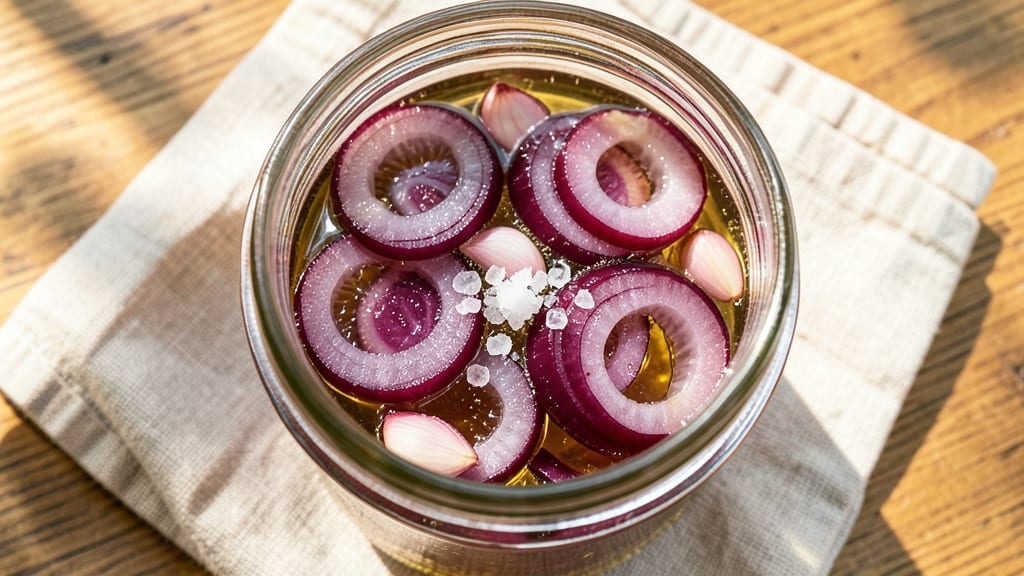
This pickled red onion recipe with rice wine vinegar transforms simple onions into a bright, tangy condiment that elevates everything from tacos to salads. Standing on a step stool in my grandmother’s kitchen in Sicily, I first learned how vinegar preserves crispness while building complex flavor—just like this method.
The secret lies in balancing acidity, sweetness, and salt for that perfect crunch.
The process is straightforward but precise: a 1:1 vinegar-to-water ratio with sugar and salt creates the ideal brine. Optional garlic or chili flakes add depth, while rice wine vinegar lends a delicate, aromatic tang that store-bought versions can’t match.
Ready in just 30 minutes, these onions stay crisp for days, making them a foolproof pantry staple.
What you’ll end up with is a jar of vibrant red onions—bright, tangy, and crunchy—that adds freshness to any dish. Whether you’re topping tacos, sandwiches, or salads, this recipe delivers restaurant-quality flavor with minimal effort.
The best part? It keeps for weeks, so you’ll always have bright, tangy crunch on hand.
Use them immediately or store in the fridge for up to 4 weeks—this versatile condiment turns ordinary meals into extraordinary ones. Let’s get started with the exact measurements and steps you need for perfect pickled onions every time.
Ingredients for pickled red onion recipe rice wine vinegar
Eight essential ingredients transform humble red onions into vibrant, tangy crunch that brightens every dish.
| Ingredient | Amount | Notes |
|---|---|---|
| Red Onions 🧅 | 2 whole | Sliced into 1/4-inch rounds |
| Rice Wine Vinegar 🍶 | 1 cup | Unseasoned, high-quality preferred |
| Water 💧 | 1 cup | Filtered or bottled preferred |
| Granulated Sugar 🍚 | ½ cup | White or raw cane sugar |
| Diamond Crystal Kosher Salt 🧂 | 1 tsp | Fine grain preferred |
| Garlic Cloves 🧄 | 2 cloves | Thinly sliced, optional |
| Red Chili Flakes 🌶️ | ½ tsp | Adjust for heat preference |
| Fresh Black Peppercorns 🌶️ | ¼ tsp | Crushed, optional |
The red onions are the star—sweet, firm varieties like Vidalia or Ruby Red work best. Trader Joe's and Whole Foods carry excellent options, or grab the pre-sliced red onions in the produce section if you're short on time. For the vinegar, Kikkoman or Makura rice wine vinegar delivers that delicate, aromatic tang you can't get from white vinegar. If you're using garlic, smash the cloves lightly before slicing to release more flavor. The sugar and salt are non-negotiable—this isn't just pickling, it's building flavor layers.
No rice wine vinegar? White wine vinegar or apple cider vinegar work in a pinch, though they'll have a slightly different profile. Short on sugar? Honey or agave at half the amount adds subtle sweetness. The chili flakes can be swapped for crushed red pepper, and if you're avoiding garlic, a pinch of asafoetida adds depth without the aroma. For storage, use glass jars with airtight lids—mason jars are perfect. The onions will stay crisp for 4-6 weeks if submerged in the brine, but they're best within the first 2 weeks for maximum crunch.
This brine keeps for up to 3 months in the fridge, so make extra—it's perfect for quick pickling other veggies later. The onions are ready to use immediately, but give them 24 hours to develop full flavor if you can wait. Portion into small jars if you won't use them all at once—they're perfect for individual tacos, sandwiches, or as a garnish. The flavor actually improves slightly after 1 week of refrigeration, so don't rush to eat them all!
Why You'll Love This Recipe
- No-Fuss Pantry Staples: I swear by this recipe because it only needs five things you’re probably already keeping in your cupboards. That sharp rice wine vinegar? It’s the secret weapon—cuts through the onion’s bite while keeping it bright, not sour. Honestly, I’ve made this with whatever vinegar I had on hand, but rice wine gives it that clean, almost umami lift.
- Tangy Crunch in Minutes: Between us, the first time I tried this, I thought, “This is too good to be true.” Thinly sliced onions soak up the vinegar and sugar in under 30 minutes, turning them from sharp to sweet-tart perfection. That first bite? The texture is crisp, the flavor is addictive—like a little flavor bomb in every mouthful.
- Game for Any Plate: I toss these onto tacos, burritos, or even a simple grilled cheese. They’re my go-to for last-minute charcuterie boards or a quick lunch when I’m craving something with pop. (Yes, even on a Tuesday night.) The best part? They keep their crunch for days, so I can prep a jar ahead and forget about it.
- Budget Magic, Zero Waste: A single onion and a handful of sugar stretch into weeks of pickled goodness. I’ve used the last bits in soups, sandwiches, or just straight from the jar—no guilt, no waste. And since it’s just a jar and some time, it’s cheaper than buying fancy toppings. My wallet and my taste buds thank me.
Step-by-step instructions for perfectly tangy pickled red onions
Here's the method that delivers restaurant-quality pickled onions every time—bright, crisp, and bursting with flavor.
Prepare and Sterilize Your Onions and Jars
Peel the 2 whole red onions and slice them into even ¼-inch rounds using a sharp mandoline or chef's knife. I like to keep the slices as uniform as possible—this ensures they pickle evenly and maintain that perfect crunch. Transfer the sliced onions to a large bowl and set aside.
While the onions slice, sterilize your jars by running them through hot, soapy water, then rinsing thoroughly. The jars should be completely dry before use—any moisture can dilute your brine and create a watery pickle instead of the rich, concentrated flavor you want. For best results, I use wide-mouth quart jars, but any clean, airtight container will work.
Create the Perfect Brine Mixture
In a medium saucepan, combine the 1 cup rice wine vinegar, 1 cup water, ½ cup granulated sugar, 1 teaspoon diamond crystal kosher salt, ½ teaspoon red chili flakes, and ¼ teaspoon crushed fresh black peppercorns. Bring the mixture to a gentle simmer over medium heat, stirring occasionally until the sugar and salt fully dissolve—this should take about 3-4 minutes.
Here's the thing—you want the brine to be hot but not boiling when you add the onions. If it boils, the onions will soften too quickly and lose their crisp texture. Once the mixture reaches a gentle simmer, remove it from heat and let it cool slightly for 2-3 minutes. Then, add the 2 thinly sliced garlic cloves if using—they'll infuse the brine with subtle, aromatic depth.
Pack and Preserve the Onions
Carefully pack the sliced red onions into your sterilized jars, dividing them evenly if you're using multiple containers. Pour the hot (but not boiling) brine over the onions, ensuring each slice is fully submerged. Use a wooden spoon or chopstick to press down gently and remove any air bubbles trapped between the slices—this prevents mold and ensures even pickling.
Seal the jars tightly and let them cool to room temperature. Once cool, transfer the jars to the refrigerator and let them pickle for at least 24 hours before using. The longer they sit—up to 2 weeks—the more intense the flavor becomes. I like to give mine 3-4 days for that perfect balance of tangy, sweet, and slightly spicy.
Test and Store for Maximum Freshness
After 24 hours, taste a slice to check the flavor. The onions should be tender but still hold their shape, with a bright tang from the rice wine vinegar and a subtle heat from the chili flakes. If they're too mild, let them pickle another day or two—the flavor will deepen over time. If they're too soft, you may have used jars that weren't properly sterilized or submerged the onions in boiling brine.
Once fully pickled, store the onions in the refrigerator. They'll keep for up to 2 weeks, though I find they're best within the first week. The acidity from the rice wine vinegar preserves them beautifully, but like all fresh pickles, they're at their peak when they're freshest. Use them to top tacos, sandwiches, or salads for an instant burst of flavor!
Pro Tips For Making Pickled Red Onion Recipe Rice Wine Vinegar
- Thin the Slices: Cut onions paper-thin—no thicker than 1/16-inch—or they’ll stay crunchy and underpickled. I used to eyeball it, but a sharp knife and steady hand (or a mandoline if you’re brave) make all the difference. The goal is translucent layers, not chewy rings.
- Boil the Vinegar: Bring the vinegar-water mix to a full boil before dissolving sugar and salt. Cold liquid means uneven flavor distribution, and you’ll end up with clumpy sugar at the bottom. A quick boil—just 30 seconds—ensures everything blends smoothly.
- Use Diamond Salt: Diamond Crystal kosher salt dissolves slower than table salt, so it works better here. If you grab table salt by accident, add it after the sugar dissolves to avoid grainy texture. Trust me, your pickles will thank you.
- Cover and Wait: Seal the jar tightly and let it sit at room temp for at least 2 hours before refrigerating. Rushing this step means the onions won’t soften properly, and the vinegar won’t penetrate evenly. Patience here = restaurant-quality flavor.
Best sauces and condiments for pickled red onion recipe rice wine vinegar
Taco Topping Essentials
These pickled red onions are a game-changer for tacos, especially when paired with lime crema or avocado slices. I like to spoon 2-3 tablespoons of onions per taco—just enough to add that bright tang without overpowering.
For extra depth, mix in ½ teaspoon of smoked paprika with the onions before serving. 🌮
Sandwich Elevation
Add them to banh mi sandwiches or Reuben sandwiches for a crisp, tangy contrast to rich meats and cheeses. I recommend layering ¼ cup of onions on top of the meat, then adding a smear of Dijon mustard before closing the sandwich. The acidity cuts through the fat beautifully.
Salad Brightener
Toss 1-2 tablespoons into kale salads, cobb salads, or greek salads for instant freshness. The vinegar’s tang balances creamy dressings like ranch or tahini, while the onions add texture. I often reserve some for garnishing—just a few slices make a striking presentation. 🥗
Burger Pairing
Pile them on burgers alongside caramelized onions or pickled jalapeños. The acidity in the rice wine vinegar helps cut through the richness of beef, especially in double cheeseburgers. I like to add ½ cup per burger for a bold flavor punch.
Garnish for Soups
Sprinkle over ramen, pho, or minestrone soup just before serving. The onions add a bright, crunchy contrast to warm broths. I recommend 1 tablespoon per bowl—enough to brighten without overwhelming the dish.
Dip Mix-In
Chop them finely and mix into guacamole or hummus for a tangy twist. I like to add 2 tablespoons of chopped onions to 1 cup of guacamole, along with a squeeze of lime. The result is a perfect balance of creamy, spicy, and tangy flavors. 💫
Nutrition facts
Frequently asked questions
Can I use white vinegar instead of rice wine vinegar?
White vinegar works in a pinch, but it lacks the delicate, aromatic depth of rice wine vinegar. For best results, stick with rice wine vinegar—it adds a subtle sweetness and complexity that white vinegar can't match. If you must substitute, use apple cider vinegar for a slightly milder tang.
How do I keep my pickled onions extra crisp?
Slice onions uniformly at ¼-inch thickness and use a sharp knife to avoid crushing. Keep them submerged in the brine, and store in the fridge—never at room temperature. For extra crunch, add 1 tablespoon of cornstarch to the brine before simmering.
Can I make this recipe without sugar?
Yes, but the onions will taste more sour and less balanced. If you omit sugar, reduce the salt to ½ teaspoon to compensate. For a sugar-free alternative, use ½ cup of honey or maple syrup instead—it adds natural sweetness while preserving the tangy flavor.
How long can I store these pickled onions?
They’ll stay fresh in the fridge for up to 4 weeks if fully submerged in brine. For longer storage, transfer to a clean jar with fresh brine and refrigerate for an additional 2-3 weeks. The flavor deepens over time, but texture softens after 3 weeks.
What’s the best way to use up extra brine?
Save it for quick pickling other veggies like radishes, cucumbers, or green beans! Strain out any onion bits, then use the leftover brine as a tangy salad dressing or marinade. It also works well for brining proteins like chicken or tofu.