
Sauces & Condiments
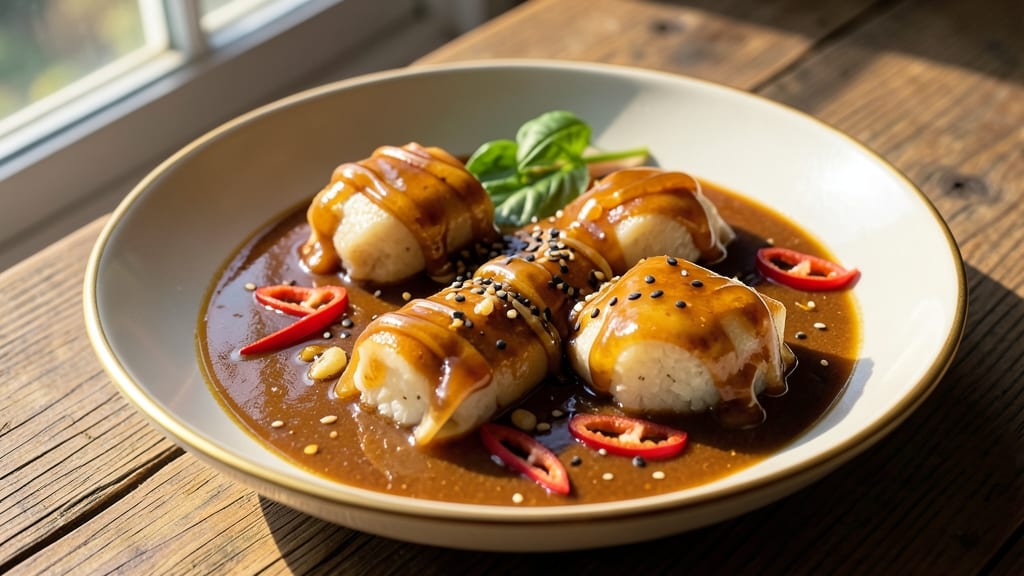
A rice cake sauce recipe that balances sweet and salty perfectly transforms simple rice cakes into an irresistible snack. This sauce combines soy sauce, sesame oil, and a touch of honey for that signature umami-sweet harmony—ready in just 10 minutes with pantry staples.
The secret lies in simmering the ingredients until the flavors meld into a glossy, dippable consistency.
What makes this sauce special is its versatility—it elevates rice cakes, veggies, or even grilled meats with minimal effort. The sauce keeps well in the fridge for up to a week, making it perfect for meal prep.
Whether you're craving a quick snack or need a flavor boost for a dish, this simple recipe delivers professional results without the fuss.
Ingredients for rice cake sauce
Pantry staples blend into a glossy sauce that elevates rice cakes and beyond.
| Ingredient | Amount | Notes |
|---|---|---|
| Soy Sauce 🥢 | ½ cup | Light or dark variety preferred |
| Sesame Oil 🫒 | 2 tbsp | Toasted sesame oil for flavor |
| Honey 🍯 | ¼ cup | Wildflower or clover honey |
| Rice Vinegar 🍶 | 1 tbsp | White or seasoned variety |
| Garlic Cloves 🧄 | 2 cloves | Minced for aromatic base |
| Ginger Root 🌿 | 1 tbsp | Freshly grated preferred |
| Sesame Seeds 🌰 | 1 tbsp | Toasted for garnish |
| Red Pepper Flakes 🌶️ | ½ tsp | Adjust for heat preference |
| Salt 🧂 | ¼ tsp | Kosher or sea salt |
| Water 💧 | ½ cup | For thinning consistency |
The soy sauce forms the sauce's backbone, so high-quality light or dark soy sauce makes all the difference. Kikkoman or Lee Kum Kee are reliable choices, but any well-balanced soy sauce works. Fresh ginger and garlic are ideal, but if you're short on time, bottled minced ginger (the kind in jars) saves prep work. Toasted sesame oil adds depth—avoid the cheaper, unrefined variety—it should smell nutty and rich. For honey, local wildflower adds complexity, but any liquid honey will do. The red pepper flakes can be skipped entirely if you prefer no heat, but they add a subtle kick that balances the sweetness.
No sesame oil? Toasted sesame paste thinned with water works in a pinch, though it'll be thicker. Substitute honey with maple syrup or agave nectar for a vegan option, though honey's floral notes are hard to replicate. Short on rice vinegar? Apple cider vinegar or white vinegar will work, but rice vinegar's mild sweetness is key. The sauce should be glossy but not runny—adjust water as needed. For extra umami, a dash of fish sauce (like Red Boat) adds depth without overpowering. If you're using this sauce for grilled meats, reduce the honey slightly to avoid cloying sweetness.
This sauce keeps beautifully in the fridge for up to 1 week, sealed in an airtight container. For longer storage, transfer to a glass jar and freeze for up to 3 months. The flavors actually improve after a day as the ingredients meld. For meal prep, make a double batch—it's perfect for dipping, marinating, or drizzling over noodles. If the sauce thickens upon reheating, stir in a splash of water or vinegar to restore consistency. Garnish with toasted sesame seeds right before serving to keep them crisp.
Why You'll Love This Recipe
- Pantry Magic: I swear, this sauce comes together with stuff I always have—no special shopping needed. Just a splash of soy sauce, a drizzle of honey, and boom, flavor explosion.
- Garlic-Honey Kiss: That raw garlic minced into honey? It’s like a sweet, punchy hug for your taste buds. The sesame oil ties it all together with a nutty, toasty finish—no fancy techniques required.
- Dip Everything: Between us, I’ve used this on rice cakes, grilled chicken, even cold noodles. It’s my go-to for lazy nights or when I’m feeding a crowd—just pour and pair.
- Leftovers That Last: Make a double batch and store it in the fridge. The flavors deepen overnight, and it’s still spot-on after a week. (Yes, even on a Tuesday night.)
Step-by-step instructions for sweet and salty rice cake sauce
This sauce comes together faster than you can dip your first rice cake.
Prepare the Aromatic Base
Heat a small saucepan over medium-low heat and add the 2 tablespoons sesame oil. Once the oil is shimmering but not smoking, add the 2 cloves minced garlic and 1 tablespoon freshly grated ginger root. Cook for 1-2 minutes until the garlic becomes golden and fragrant—this ensures you capture their full flavor without burning.
Here's the thing—don't rush this step. You'll know it's ready when the mixture smells like a warm Asian street market. If the garlic starts to brown too quickly, reduce the heat slightly. This aromatic base forms the flavor foundation for your sauce.
Combine Wet Ingredients
Pour in the 0.5 cup soy sauce and 1 tablespoon rice vinegar, stirring constantly to incorporate. Let the mixture simmer gently for 2-3 minutes until it begins to reduce slightly and the colors deepen to a rich amber. This reduction concentrates the flavors and removes any raw vinegar sharpness.
Next, add the 0.25 cup honey and 0.5 cup water, stirring well to combine. The sauce should begin to bubble gently. If it thickens too quickly, add 1-2 tablespoons more water to maintain a smooth, pourable consistency. You're aiming for a balance between thick enough to cling to rice cakes and thin enough to drizzle.
Season and Simmer
Add the 0.5 teaspoon red pepper flakes and 0.25 teaspoon salt, stirring until fully dissolved. The red pepper flakes will add subtle heat while the salt rounds out all the flavors. Let the sauce simmer uncovered for 5-7 minutes until it reaches your desired consistency—it should coat the back of a spoon but still be pourable.
Taste and adjust the seasoning if needed. You might want to add a touch more honey for sweetness or a splash of rice vinegar for acidity. This sauce should sing with both sweet and salty notes, with just a hint of spice. The ginger and garlic should be detectable but not overpowering.
Finish and Garnish
Remove the sauce from heat and let it cool for 5 minutes. This resting period allows the flavors to meld together perfectly. Once cooled, stir in the 1 tablespoon toasted sesame seeds just before serving. They'll add a delightful nutty crunch that contrasts beautifully with the smooth sauce.
For the best texture, serve the sauce at room temperature. It pairs perfectly with warm rice cakes, fresh fruit, or even as a dipping sauce for spring rolls. The sesame seeds will sink slightly to the bottom, so give it a quick stir before each use to distribute them evenly.
Pro Tips For Making Rice Cake Sauce
- Sear the Garlic First: I learned this the hard way—raw garlic in this sauce tastes like a medicine cabinet exploded. Mince the cloves fine, then cook them in a dry pan over medium heat until they’re golden and fragrant (about 2-3 minutes). That’s the aromatic foundation your sauce needs.
- Balance the Heat: Sesame oil burns faster than you’d think. Add it last—just before serving—so its nutty aroma shines without turning bitter. A teaspoon is plenty; more’ll overpower the honey’s sweetness and the vinegar’s tang.
- Whisk the Honey Slowly: Dumping honey straight into hot soy sauce can make it seize up like glue. Warm the soy sauce first, then drizzle in honey while whisking constantly. If it thickens too much, thin it with a splash of rice vinegar—just enough to loosen it without killing the flavor.
- Skip the Raw Vinegar: Cold rice vinegar in hot sauce = separation city. Mix it in at room temperature, or even better, warm it slightly first. That way, the acidity blends smoothly instead of curdling like a science experiment gone wrong.
Troubleshooting great rice cake sauce
Sauce Too Thin?
If your sauce ends up too thin after simmering, don’t panic—simmering uncovered for an extra 5 minutes will help thicken it naturally. For quick fixes, mix 1 teaspoon cornstarch with 1 tablespoon cold water, stir into the sauce, and simmer for 1-2 minutes until it reaches your desired consistency.
The key is patience—rushing the simmering process often leads to watery results. 💡
Sauce Too Thick?
A thick sauce happens when the honey or soy sauce reduces too much. Thin it out by adding 1 tablespoon of water or rice vinegar at a time while stirring constantly. For a smoother texture, strain the sauce through a fine-mesh sieve to remove any clumps or excess sesame seeds.
If the sauce is too sticky, a splash of vinegar helps balance the sweetness and restore flow. 🍶
Grainy or Lumpy Texture?
Lumps usually appear when honey or sesame seeds aren’t fully incorporated. To fix this, whisk the sauce vigorously or use an immersion blender for a silky finish. If sesame seeds are clumping, toast them separately and sprinkle on top just before serving.
For a smoother sauce, strain it through a fine-mesh sieve after simmering. 🌰
Flavor Too Mild?
If your sauce lacks depth, boost the umami by adding 1 teaspoon fish sauce (like Red Boat) or ½ teaspoon oyster sauce. For extra aromatic punch, increase the garlic to 3 cloves or add ½ teaspoon grated lemon zest to brighten the flavors.
A pinch of white pepper also adds warmth without overpowering. 🌶️
Sauce Separates When Stored?
Sauces sometimes separate when refrigerated due to the oil and water content. To fix this, gently reheat the sauce over low heat while stirring constantly. If it still separates, whisk in 1 teaspoon honey or rice vinegar to help emulsify it.
Store in an airtight container to prevent future separation. ❄️
Sesame Oil Overpowering?
If the sesame oil flavor dominates, reduce it to 1 tablespoon and balance with 1 extra teaspoon of rice vinegar or honey. For a milder profile, use light soy sauce instead of dark.
If the oil smell is too strong, let the sauce sit at room temperature for 10 minutes before serving—this allows the flavors to mellow slightly. 🫒
Nutrition facts
Frequently asked questions
What’s the best way to store leftover rice cake sauce?
Transfer the sauce to an airtight container and refrigerate for up to 1 week. For longer storage, freeze for 3 months. Reheat gently over low heat, stirring constantly to restore smoothness. Always let it cool before storing to prevent condensation.
Can I make this sauce without honey?
Swap honey for maple syrup or agave nectar (use the same amount) for a vegan option. For a savory twist, reduce honey to 2 tablespoons and add 1 teaspoon mirin to balance flavors. The sauce will still shine—just adjust sweetness to taste.
How can I use this sauce beyond rice cakes?
This versatile sauce works as a dipping sauce for spring rolls, a glaze for grilled chicken, or a marinade for tofu. Drizzle it over steamed veggies or use it to enhance ramen noodles. The sweet-savory balance makes it a perfect all-purpose condiment.
Why did my sauce turn out too salty?
Too much soy sauce or salt can make the sauce overly salty. Fix it by adding 1-2 tablespoons honey or maple syrup to balance the flavors. If the issue persists, thin the sauce with 1 tablespoon water or rice vinegar to dilute the saltiness. Taste as you go!
Can I make this sauce spicier?
Increase the red pepper flakes to 1 teaspoon or add ½ teaspoon cayenne pepper for extra heat. For a smoky kick, stir in ½ teaspoon smoked paprika. Always adjust gradually—start with a pinch and taste before adding more.