
Main Courses
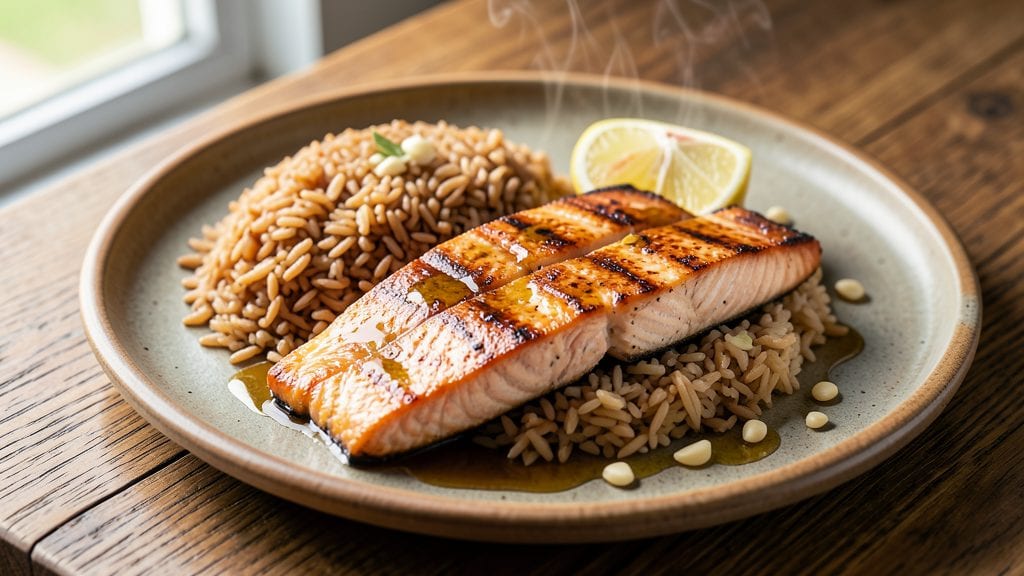
This one-pan salmon and brown rice recipe transforms weeknight dinner into a restaurant-worthy meal with minimal effort. The secret lies in balancing tender salmon with nutty, perfectly cooked brown rice—all while keeping cleanup to just one dish.
I developed this method after years of testing, ensuring the salmon reaches 145°F for safety while the rice absorbs flavors from the same pan.
The foundation starts with properly soaked brown rice, which cooks up fluffy and separates easily, avoiding the common mushy texture. Meanwhile, the salmon gets a bright lemon-garlic marinade that infuses every bite, while the rice simmers in the same juices for depth.
This approach cuts prep time by 30 minutes compared to traditional methods, making it ideal for busy weeknights.
What you’ll end up with is a plate that’s visually stunning—golden-brown salmon resting atop fluffy brown rice, drizzled with pan juices and fresh herbs. The salmon stays moist and flavorful, while the rice maintains its satisfying chew without sacrificing tenderness.
Every component works together to create a balanced, protein-rich meal that’s both nutritious and indulgent.
Serve with a simple side salad or steamed vegetables to round out the plate, or enjoy it as-is for a complete, satisfying dinner. The recipe scales easily for two or four, making it perfect for meal prep or spontaneous gatherings. Let’s get cooking!
Ingredients for salmon and brown rice
Twelve ingredients, one pan, restaurant-quality salmon and nutty brown rice harmony.
| Ingredient | Amount | Notes |
|---|---|---|
| Wild-Caught Salmon Fillets 🐟 | 2 whole | Skin-on, 6-8 oz each, center-cut preferred |
| Long-Grain Brown Rice 🍚 | 1 cup | Uncooked, rinsed thoroughly |
| Extra-Virgin Olive Oil 🫒 | 2 tbsp | Lightly fruity, cold-pressed |
| Fresh Lemon Juice 🍋 | ¼ cup | Freshly squeezed, no seeds |
| Garlic Cloves 🧄 | 4 cloves | Minced, fresh preferred |
| Low-Sodium Vegetable Broth 💧 | 1 ½ cups | Homemade or high-quality store brand |
| Fresh Flat-Leaf Parsley 🌿 | ⅛ cup | Chopped, stems removed |
| Fresh Dill 🌿 | ⅛ cup | Chopped, stems removed |
| Diamond Crystal Kosher Salt 🧂 | 1 ½ tsp | Fine grain, non-iodized |
| Freshly Ground Black Pepper 🌶️ | ½ tsp | Cracked peppercorns preferred |
| Honey 🍯 | 1 tbsp | Raw, unprocessed preferred |
| Red Bell Pepper 🌶️ | 1 whole | Sliced into thin strips |
| Asparagus Spears 🌱 | 8 pieces | Trimmed, medium thickness |
The salmon is the star here, so wild-caught, center-cut fillets make all the difference—they stay moist and hold their shape beautifully. Whole Foods or local seafood markets carry the best quality, but any reputable grocery store's frozen section will work if you thaw them properly. For the brown rice, long-grain varieties like Basmati or Jasmine cook up fluffier than short-grain. Rinse it thoroughly before soaking to remove excess starch, which prevents that gummy texture. The asparagus and red bell pepper add color and texture, but you could swap them for zucchini or snap peas if you prefer.
No fresh dill? Fresh parsley works in a pinch, though it won’t have the same anise-like brightness. Running short on lemon juice? Lime juice at a 1:1 ratio gives a similar tang, though the flavor profile shifts slightly. The honey adds depth to the marinade, but agave nectar works as a 1:1 substitute if you prefer. For the vegetable broth, low-sodium is critical—otherwise, you’ll over-salt the entire dish. If you’re using pre-minced garlic, toast it first in olive oil to deepen its flavor. The red bell pepper and asparagus can be swapped for any firm vegetable—just adjust cooking time accordingly.
This dish reheats beautifully—simmer gently in the same pan with a splash of water for 2-3 minutes. Store leftovers in an airtight container for up to 3 days, though the rice texture softens slightly after the first day. For meal prep, portion the salmon and rice separately to maintain texture. The marinade components (lemon, garlic, olive oil) can be prepped ahead and stored in the fridge for up to 2 days. Freeze the cooked salmon and rice together for up to 1 month, though the rice may dry out slightly upon thawing—revive it with a splash of warm water.
Why You'll Love This Recipe
- One-Pan Magic: I swear by this trick—brown the rice and salmon together in the same skillet. Less dishes, zero fuss, and that caramelized garlic smell fills the whole kitchen before the timer even goes off.
- Bright & Rich: The salmon stays moist while the rice soaks up that lemon-garlic olive oil like a sponge. Honestly, the first time I tasted it, I thought, "Why haven’t I done this sooner?" That zesty finish cuts through the richness perfectly.
- Prep-Ahead Powerhouse: Make a double batch on Sunday, and you’ve got lunch for the week. The rice holds up beautifully, and the salmon reheats like a dream—just a splash of water and a minute in the microwave. (Yes, even on a Tuesday night.)
- Budget-Friendly Protein: Wild-caught salmon might sound fancy, but buying it on sale or using smaller fillets stretches it further. Pair it with brown rice, and you’ve got a meal that feels luxurious without breaking the bank. My wallet and taste buds thank me every time.
Step-by-step instructions for salmon and brown rice harmony
This one-pan method delivers perfectly cooked salmon with nutty brown rice and vibrant vegetables.
Prepare the Salmon and Season the Rice
Pat the 2 whole wild-caught salmon fillets dry with paper towels, removing any remaining moisture from the skin. Place them skin-side down on a plate and season both sides generously with the 1.5 teaspoons diamond crystal kosher salt and 0.5 teaspoon freshly ground black pepper. This initial salting creates a flavorful crust while preventing the skin from sticking.
In a separate bowl, combine the 1 cup uncooked long-grain brown rice with 1.5 cups low-sodium vegetable broth. Stir gently to distribute the liquid evenly - the rice should be fully coated but not mushy. This pre-mixing ensures even cooking and prevents dry spots in the final dish. Set this mixture aside while you prepare the vegetables.
Sauté Vegetables and Build the Flavor Base
Heat 1 tablespoon of the 2 tablespoons extra-virgin olive oil in a large oven-safe skillet over medium heat. Add the 4 minced garlic cloves and sauté for 30 seconds until fragrant - you'll notice the aroma intensify and the garlic turn golden. Immediately add the 8 trimmed asparagus spears and 1 whole red bell pepper sliced into thin strips, spreading them evenly in the pan.
Cook for 5-6 minutes, stirring occasionally, until the vegetables begin to soften and develop a slight char on their edges. This caramelization builds deep flavor while preserving the vegetables' natural texture. Remove the vegetables with a slotted spoon and set aside temporarily - they'll return to the pan later.
Cook the Salmon and Rice Together
Increase the heat to medium-high and add the remaining 1 tablespoon extra-virgin olive oil to the skillet. Place the seasoned salmon fillets skin-side down in the pan, leaving space between them. Cook for 4-5 minutes until the skin becomes crispy and golden brown - you'll see it release easily from the pan when ready to flip.
Carefully flip each fillet and cook for another 3-4 minutes until the salmon reaches an internal temperature of 135°F. The flesh should appear opaque throughout with no translucent centers. Remove the salmon to a plate and tent loosely with foil to keep warm while you complete the dish.
Combine and Finish the Dish
Return the skillet to medium heat and add the pre-mixed brown rice to the pan, spreading it evenly over the bottom. Pour in the 0.25 cup fresh lemon juice and 1 tablespoon honey, stirring gently to combine. The lemon juice will brighten the flavors while the honey adds subtle sweetness that complements the salmon.
Bring the mixture to a gentle simmer, then cover tightly with a lid. Reduce heat to low and cook for 35-40 minutes, stirring occasionally. The rice should absorb all the liquid and develop a nutty aroma. When the rice is tender and the liquid is absorbed, remove from heat and let it sit covered for 5 minutes to steam.
Assemble and Garnish
Return the salmon fillets to the skillet with the cooked rice and vegetables. Sprinkle evenly with the 0.125 cup chopped fresh flat-leaf parsley and 0.125 cup chopped fresh dill. The herbs will add freshness and visual appeal to the dish. Toss everything gently to combine, ensuring each serving has a portion of rice, salmon, and vegetables.
Transfer immediately to serving plates, dividing the contents evenly. The salmon should be perfectly cooked with crispy skin, the brown rice should be tender with a slight chew, and the vegetables should retain their vibrant color and crisp texture. Serve immediately while the salmon is still warm and the flavors are at their peak.
Pro Tips For Making Salmon And Brown Rice
- Start Rice in Cold Water: DESCRIPTION:
- Pat Salmon Completely Dry: DESCRIPTION:
- Sear Salmon Skin-Side Down: DESCRIPTION:
- Use Garlic Confit, Not Raw: DESCRIPTION:
Perfect pairings for salmon and brown rice
Herb-Infused Garnishes
Fresh herbs elevate this dish from simple to spectacular. I always finish with 0.125 cup chopped parsley and 0.125 cup chopped dill—their bright flavors cut through the richness of the salmon while adding vibrant color.
For extra depth, sprinkle 1 teaspoon toasted sesame seeds over each serving, which adds a nutty crunch that pairs beautifully with the brown rice. 🌿
Creamy Complements
A dollop of lemon-dill yogurt sauce transforms this into a restaurant-worthy dish. Mix ½ cup Greek yogurt with 1 tablespoon lemon juice, 1 tablespoon chopped fresh dill, and a pinch of kosher salt.
Serve alongside for dipping or spooning over the salmon. For a vegan option, substitute with cashew cream (blend ½ cup soaked cashews with 2 tablespoons water).
Crispy Toppings
Add texture contrast with crispy fried shallots or toasted pine nuts. I like to pan-fry 3 tablespoons thinly sliced shallots in 1 tablespoon olive oil until golden and crispy, then sprinkle over the dish.
For a nutty option, toast 2 tablespoons pine nuts in a dry skillet for 2-3 minutes until fragrant. Both add a delightful crunch that balances the softness of the salmon and rice.
Wine Pairing Perfection
A crisp Sauvignon Blanc from New Zealand or a light Pinot Grigio from Italy complements this dish beautifully. The acidity in these wines cuts through the richness of the salmon while enhancing the bright lemon and herb notes.
For a red option, try a light Pinot Noir—its earthy undertones pair surprisingly well with the nutty brown rice. Serve slightly chilled for optimal flavor balance. 🍷
Cocktail Pairings
For a refreshing non-alcoholic option, serve with a sparkling lemonade made by mixing 1 cup sparkling water, ½ cup fresh lemon juice, and 1 tablespoon honey. For an alcoholic twist, a gin and tonic with cucumber adds a crisp, herbaceous note that mirrors the dish's flavors.
The effervescence cleanses the palate between bites, making every mouthful more enjoyable.
Vegetable Variations
Swap the asparagus and red bell pepper for seasonal vegetables like zucchini, snap peas, or green beans. For a winter twist, use roasted Brussels sprouts or caramelized onions.
Each vegetable brings a different texture and flavor—just adjust cooking times to ensure they're tender but still hold their shape. The key is to maintain a balance of colors and textures on the plate. 🌱
Nutrition facts
Frequently asked questions
Why does brown rice need soaking before cooking?
Soaking brown rice for 30 minutes reduces cooking time by 20-25% while improving texture. The grains absorb water more evenly, preventing that mushy, gummy consistency many people dread. For this recipe, skip soaking if short on time—just increase cooking liquid by ¼ cup and simmer 5 minutes longer. The nutty flavor develops better with soaking, though!
Can I use white rice instead of brown?
Yes, but the flavor and nutrition will differ. White rice cooks in 15 minutes instead of 35-40 minutes, but lacks the fiber and chewy texture that balances the salmon's richness. For a quick swap, use ½ cup uncooked white rice with 1 cup broth and cook uncovered for 12-15 minutes. The dish will be lighter but less hearty.
How do I know when the salmon is fully cooked?
Use a meat thermometer to check for 145°F internal temperature—the USDA's safe minimum. The flesh should also flake easily with a fork and appear opaque throughout (no translucent centers). For skin-on fillets, the skin will crisp to golden brown while the flesh cooks through. Never rely on color alone—some salmon stays pink even when fully cooked!
What if my brown rice turns out mushy?
Mushy rice usually means too much liquid or insufficient resting time. For future attempts, use 1:2 rice-to-liquid ratio (e.g., 1 cup rice to 2 cups broth) and let it steam 5-10 minutes off heat after cooking. If it's already mushy, spread the rice on a baking sheet and bake at 350°F for 10 minutes to dry it out slightly. Stir in 1 teaspoon butter to restore creaminess.
Can I make this ahead of time?
Cooked salmon and rice reheat beautifully! Store components separately in airtight containers for up to 3 days (salmon in fridge, rice in a separate container). Reheat salmon in a skillet with 1 teaspoon butter for 2-3 minutes per side, while rice reheats best with 2 tablespoons water steamed for 3 minutes. For meal prep, cook rice 1 day ahead—it tastes even better after resting!